

 Náhled
 Sdílet
 Sdílet
 Podrobnosti o díle

 Stáhnout
 Podobné položky
 Rentgenové snímky
 Slideshow
 Statistiky
Gossip on the Stairs


 Zobrazit více
Ručně malovaná olejová reprodukce
Ručně malovaná olejná barva na plátně ve vašem zvoleném rozměru i s rámem, vyrobená našimi umělci na zakázku. ( Přepnout na tisk Přepnout na digitální obraz)




































Vyberte si z našich přednastavených velikostí, které odpovídají původním proporcím díla.

Můžete zadat vlastní rozměry pro konkrétní rám nebo prostor. Pokud se vámi vybraná velikost neshoduje s proporcemi původního obrazu, dílo buď ořízneme, nebo jej doplníme ručně malovanými prvky. Před zahájením výroby vám bude zaslán digitální náhled ke schválení.
Upozorňujeme, že náhled na obrazovce neodpovídá skutečnému ořezu ani rozšíření. Pouze digitální náhled přesně zobrazí finální kompozici.
Ačkoliv je možné zvolit vlastní velikost, pro zachování původních proporcí doporučujeme vybrat rozměr z předdefinovaného seznamu.
Po přijetí objednávky vám tým OriginalUniqueArt.com zašle e-mail s pokyny a poskytne náhledovou verzi.
Celosvětová doprava () za 3–4 týdny namísto standardních 5 týdnů. (11 září). Bez kompromisů v kvalitě.

Zdarma celosvětová expresní doprava

Vysoce kvalitní lněné plátno

Kompletní přepravní pojištění

Záruka vrácení celního poplatku

Záruka přesného barevného shodu

100dená lhůta pro vrácení zboží (pouze při vadách)

100% garance vrácení peněz

Sleva při hromadné objednávce
 Skleněná varianta je dostupná pouze u rozměrů menších než 110 cm

Gossip on the Stairs
Technika reprodukce
Rozměry reprodukce
-


Celková cena za výběr
$ 325
Biografie umělce
The Elegance of an Era: The Life and Art of Otto Erdmann
In the golden twilight of the nineteenth century, as the industrial world began its rapid, soot-stained ascent, there existed a profound longing for the vanished splendor of the past. It was within this cultural tension that Otto Erdmann (1834–1905) carved his legacy, acting as a master weaver of nostalgia. Born in Leipzig to the chemist Otto Linné Erdmann, the artist inherited a sense of scientific precision that would later manifest in the meticulous textures of his brushwork. His journey through the prestigious academies of Leipzig, Dresden, and Munich allowed him to absorb the finest traditions of German genre painting, yet it was his encounter with the works of Ludwig von Hagn that truly ignited his passion for the Rococo Revival.
Erdmann’s artistic soul found its true home in Düsseldorf, a city then pulsating with creative energy. Settling there in 1858, he became a cornerstone of the illustrious Malkasten artists' association, serving on its board and contributing to a community that bridged the gap between classical tradition and modern observation. His work did not merely depict scenes; it resurrected an entire atmosphere of courtly grace. Through his eyes, the viewer is transported into opulent salons and sun-drenched corridors where the light dances across silk gowns and gilded ornaments, capturing a world of aristocratic leisure that felt both intimately real and dreamily distant.
A Mastery of Light and Rococo Revival
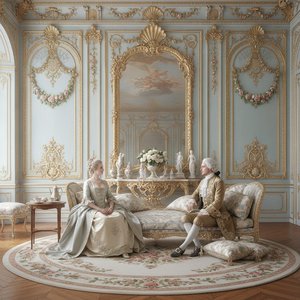
The brilliance of Erdmann’s technique lies in his ability to balance the decorative flourishes of the Rococo style with a profound sense of realism. He did not simply mimic the ornamentation of Louis XIV’s France; he reinterpreted it through a nineteenth-century lens, infusing his compositions with a psychological depth that elevated them above mere decoration. His paintings, such as the captivating Gossip on the Stairs, serve as windows into a highly choreographed social dance. Every fold of fabric, every glint of light on a porcelain tea service, and every subtle glance between figures is rendered with an almost tactile clarity.
This dedication to detail extended beyond the canvas into the realm of illustration, where his ability to capture character and atmosphere made him a sought-after talent for scholarly and high-society publications. His contributions to the Belgian journal L'Illustration Européenne in 1870 demonstrate his versatility as a visual storyteller. Whether he was documenting the intricate patterns of a ballroom or the quiet dignity of an interior scene, Erdmann possessed a unique gift for finding the extraordinary within the elegant.
Legacy and Historical Significance
While some might view the Rococo Revival as a retreat from the pressing realities of the late nineteenth century, Erdmann’s work represents something much more complex: a sophisticated preservation of cultural heritage. He was an artist who understood that beauty is a vital component of the human experience, even when it feels like a memory. His life was a tapestry of diverse interests, ranging from his involvement in theatrical performances to his recognition with the prestigious Order of the Red Eagle in 1898.
Today, the significance of Otto Erdmann resides in his role as a chronicler of an idealized European elegance. His paintings remain enduring testaments to a period of transition, offering a serene refuge of color and light. To study his oeuvre is to witness a master at work, navigating the delicate boundary between historical homage and personal artistic expression, ensuring that the charm of the aristocratic past would never truly fade from the collective memory of the art world.

otto erdmann
1834 - 1905
Rychlé fakta
- Artistic Movement Or Style: Rococo Revival
- Artists Or Movements Influenced By This Artist: ['American Modernism']
- Artists Who Influenced This Artist: ['Ludwig von Hagen']
- Date Of Birth: 1834
- Date Of Death: 1905
- Full Name: Otto Erdmann
- Nationality: German
- Notable Artworks:
- Gossip on the Stairs
- Interior Scene
- Place Of Birth: Germany
Související články

19. století v umění: Top 10 děl a jejich příběhy | OriginalUniqueArt
Prozkoumejte 10 ikonických děl 19. století – od romantismu po impresionismus! Obrazy Courbeta, Moneta a dalších mistrů s příběhy a technikami. Najděte inspiraci pro váš interiér a kvalitní reprodukce na OriginalUniqueArt.com.

The Elegance of Rococo: A Journey Through Pastel Dreams and Ornate Splendor
Embark on an elegant journey through the Rococo era. Discover the delicate beauty of pastel masterpieces, the intricate artistry of 18th-century French masters, and how this era of ornate splendor continues to inspire timeless luxury in fine art collecting.

Top 10 mistrovských děl rokokového umění | OriginalUniqueArt.cz
Prozkoumejte 10 ikonických děl rokokového umění – Fragonard, Boucher a další. Objevte příběhy mistrů, techniky a pastelové barvy tohoto elegantního stylu. Reprodukce obrazů nejvyšší kvality na OriginalUniqueArt.cz!

The Rococo Aesthetic: Opulence, Rebellion & the Pursuit of Pleasure in 18th-Century Art
Explore the opulent world of Rococo art! Discover its origins, key artists like Watteau & Boucher, and lasting influence on design. Expert insights for collectors & enthusiasts.
Rococo Art Guide: Elegance, Ornamentation, and the Era of Luxury
Explore the elegance of Rococo art. From Watteau to Fragonard, discover the history, aesthetics, and masters of 18th-century luxury in this expert guide for art lovers and collectors.