

 Zobrazit v interiéru
 Odeslat
 Sdílet
 Podrobnosti
 Průvodce

 Stáhnout obrázek
 Podobné kousky
 Rentgenové snímky
 Slideshow
 Statistiky
Gino Schmidt
 Oil On Canvas
- WallArt
- Expressionist Portraiture
 1914
1914 95.0 x 68.0 cm
 Museo Nacional Thyssen-Bornemisza
 Přečíst si více
Umělecké dílo zobrazené na této stránce je chráněno autorským zákonem, což znamená, že nemůžeme legálně vytvářet ani prodávat jeho identickou reprodukci. Tato ochrana je vymáhána na základě mezinárodních dohod, jako například Berberská úmluva a národními zákony, včetně těch stanovených v Americký autorský zákon – Díl 17. Všechna práva vyhrazena.
Jako etickou a právní alternativu nabízíme vlastní, ručně malovaná umělecká díla inspirovaná originálem. Naši zdatní a profesionální umělci si pečlivě studují styl, náladu a uměleckou podstatu originálu, aby vytvořili nové, jedinečné dílo, které vyvolává stejný pocit – přičemž zůstává samostatným originálním tvůrčím dílem.
Tato metoda je plně v souladu s autorským právem, protože nezahrnuje kopírování ani duplikování chráněného díla. Jde o kreativní reinterpretaci – nový obraz, který je inspirován originálem, ale není s ním identický.
Ručně malovaná olejová reprodukce
Ručně malované olejné plátno v libovolném rozměru i s rámem, vyrobené našimi umělci na zakázku. ( Přepnout na tiskové verze Přepnout na digitální verzi obrazu)




P118B Kč10

P118H Kč10

P118W Kč10

P438Z Kč10

P508JH Kč12

P508YH Kč12

P805H Kč10

P805Z Kč10

P919BZ Kč10

P919G Kč10

P919XJ Kč10

P959ZH Kč10

P968JZ Kč12

W106C Kč8

W218G Kč10

W218JH Kč8

W218Y Kč10

W307PJ Kč10

W316G Kč10

W316PJ Kč8

W316Y Kč10

W398PJ Kč8

W4111J Kč10

W500HY Kč15

W500JH Kč15

W692G Kč12

W849H Kč8

W940BG Kč15

W953PJ Kč8




Vyberte si z našich přednastavených velikostí, které odpovídají původním proporcím díla.

Zadejte šířku a výšku, které potřebujete pro váš rám nebo stěnu. Protože se jedná o ruční malbu, při výběru jiného formátu může umělec kolem obrazu domalovat o něco více, nebo jej mírně oříznout — rozhodnete si vy. Před zahájením malby vám zašleme digitální náhled ke schválení. Obraz zobrazený na této stránce neodpovídá skutečnému výsledku — pouze digitální náhled jej zobrazuje.
Po přijetí objednávky vám tým OriginalUniqueArt.com zašle e-mail s pokyny a poskytne náhledovou verzi.
Celosvětová doprava () za 3–4 týdny namísto standardních 5 týdnů. (22 říjen). Bez kompromisů v kvalitě.

Zdarma celosvětová expresní doprava

Vysoce kvalitní lněné plátno

Úplné pojištění přepravy

Záruka vrácení celního poplatku

Záruka věrného barevného shodu

100dení lhůta pro vrácení zboží (pouze při vadách výroby)

100% garance vrácení peněz

Sleva při více objednávkách
 Skleněná varianta je dostupná pouze u rozměrů menších než 110 cm

Gino Schmidt
Technika provedení
Velikost reprodukce
-


Celková cena
Kč 6422
The Enigmatic Figure: Gino Schmidt by Oskar Kokoschka
Oskar Kokoschka’s Gino Schmidt, painted in 1914 and currently residing within the hallowed halls of the Thyssen-Bornemisza Museum in Madrid, is not merely a portrait; it's an intensely psychological exploration rendered in oil on canvas. Measuring 95 x 68 cm, this work immediately draws the viewer into a world of quiet introspection, inviting us to decipher the unspoken narrative held within the subject’s downward gaze. Kokoschka, a pivotal figure in early Expressionism, was driven by a profound desire to capture not just appearances but the very essence – the anxieties and emotions – that shaped his subjects. This painting exemplifies that ambition with remarkable power.

A Study in Realism and Psychological Depth
The subject, identified as Gino Schmidt, is presented with a startling degree of realism – his meticulously rendered suit, tie, and the prominent lines of his beard all contribute to an immediate sense of familiarity. Yet, this apparent realism serves merely as a foundation for Kokoschka’s deeper exploration. The background, deliberately blurred, directs our attention entirely onto the man before us, isolating him within a space that feels both tangible and dreamlike. This technique isn't simply stylistic; it reinforces the painting’s central theme: the internal landscape of the individual. Kokoschka masterfully uses light to sculpt the figure, creating subtle shifts in tone that emphasize his features and contribute to an overall sense of dimensionality – a testament to his understanding of chiaroscuro.
The Expressionist Soul
Created during a period of immense social and artistic upheaval, Gino Schmidt is deeply rooted in the tenets of Expressionism. Kokoschka’s work was characterized by its raw emotionality and willingness to confront uncomfortable truths about the human condition. He rejected conventional portraiture, opting instead for a style that prioritized psychological insight over photographic accuracy. The man's contemplative posture, his downward gaze – these are not simply details; they speak volumes about an inner world grappling with uncertainty or perhaps even melancholy. It’s a visual embodiment of the anxieties prevalent in early 20th-century Europe.
Historical Context and Kokoschka’s Legacy
To fully appreciate Gino Schmidt, it's crucial to understand Oskar Kokoschka’s broader artistic trajectory. Born in Croatia (then part of Austria-Hungary) in 1886, his early career was shaped by the Jugendstil movement in Vienna before he embraced Expressionism with fervor. His tumultuous personal life – marked by passionate relationships and emotional instability – undoubtedly informed his art, lending a profound sense of vulnerability to his portraits. Kokoschka’s legacy extends far beyond this single painting; he remains one of the most significant figures in 20th-century art, renowned for his psychologically penetrating depictions of human nature. The Thyssen-Bornemisza Museum offers a rich context for viewing this work alongside other masterpieces by Kokoschka and his contemporaries.
Considering its historical significance and artistic merit, a high-quality reproduction of Gino Schmidt is an exceptional addition to any collection. Explore the exquisite detail and emotional depth of this iconic portrait at OriginalUniqueArt for a stunning representation of Kokoschka’s genius.
Otázky a odpovědi
Mohu si objednat olejnou reprodukci díla "Gino Schmidt"?
Ruční kopie díla „Gino Schmidt“ od Oskar Kokoschka jsou k zakoupení na webu tento web: ručně malovaná olejová reprodukce na lněném plátně, a to prostřednictvím jeho stránky Ručně malovaná reprodukce.
Která barva v díle "Gino Schmidt" nejvíce vyniká?
Dominantní barvou díla „Gino Schmidt“ od Oskar Kokoschka je Phthalo Green (#1f1426).
Jak světlý je celkově obraz "Gino Schmidt"?
Z hlediska vnímané jasnosti je dílo „Gino Schmidt“ od Oskar Kokoschka shadow.
Biografie umělce
A Life Etched in Expression: The World of Oskar Kokoschka
Oskar Kokoschka, born on March 1, 1886, in Pöchlarn, Austria, was a figurehead of early Expressionism, an artist whose work pulsed with the anxieties and passions of a rapidly changing world. His life, marked by both intense personal drama and historical upheaval, became inextricably woven into the fabric of his art. From humble beginnings as the son of a goldsmith and a mother who fostered his artistic inclinations, Kokoschka’s path diverged from conventional expectations. He rejected a scientific career to pursue his calling at the Kunstgewerbeschule in Vienna, a decision that set him on a course toward becoming one of the most psychologically penetrating portraitists of his time. Even as a young student, he displayed an unusual sensitivity and a willingness to challenge artistic norms, traits that would define his entire oeuvre. His early education was steeped in the atmosphere of fin-de-siècle Vienna, a city brimming with intellectual ferment and artistic innovation, yet also shadowed by a growing sense of unease. This duality – beauty and anxiety, tradition and modernity – became a central theme in Kokoschka’s work.The Viennese Years: Portraits and Passion
Kokoschka quickly established himself as a daring portraitist within the vibrant artistic community of Vienna. He didn't aim for mere likeness; instead, he sought to capture the inner turmoil and psychological complexity of his sitters. His portraits were often unsettling, even confrontational, revealing vulnerabilities and hidden depths. This approach resonated with an audience increasingly fascinated by the burgeoning field of psychoanalysis pioneered by Sigmund Freud. The influence of Freud is palpable in Kokoschka’s work, as he delved into the subconscious and explored themes of desire, alienation, and identity. A pivotal moment in his life – and art – was his passionate affair with Alma Mahler, the widow of composer Gustav Mahler. This tumultuous relationship inspired some of his most iconic works, including *The Bride of the Wind (The Tempest)*, a monumental canvas that is both a tribute to Alma and a haunting depiction of their fraught connection. The painting’s swirling forms and intense colors convey a sense of emotional turbulence and impending doom, reflecting the instability of their love affair. It stands as a testament to Kokoschka's ability to translate personal experience into universal themes. He also developed close relationships with other prominent figures of Viennese artistic circles, including Adolf Loos, Peter Altenberg, and Arnold Schönberg.War, Exile, and Artistic Evolution
The outbreak of World War I dramatically altered Kokoschka’s life. He volunteered for service in the Austrian army, experiencing firsthand the horrors of trench warfare. Severely wounded in 1915, his experiences on the front lines left an indelible mark on his psyche and informed his later work. The war years saw a shift in his style, with landscapes becoming increasingly prominent alongside portraits. These landscapes were not idyllic depictions of nature but rather expressions of alienation and despair, reflecting the trauma he had endured. He sought to capture the emotional weight of the conflict, translating the anxieties of a nation into powerful visual metaphors. As political tensions escalated in Europe during the 1930s, Kokoschka found himself targeted by the Nazi regime due to his outspoken opposition to fascism and his association with avant-garde movements deemed “degenerate.” Forced into exile, he fled Austria in 1934, eventually settling in England in 1938. This period of displacement and uncertainty further deepened his sense of isolation but also fueled his artistic creativity. He became a British citizen in 1946, continuing to paint and exhibit internationally while remaining deeply committed to social justice and human rights.Kokoschka’s Enduring Influence
The impact of Kokoschka extends beyond his own artistic output, influencing subsequent generations of artists. Suzanne Sternberg, for example, directly studied under him, absorbing his expressive techniques and philosophical approach to art. His emphasis on emotional honesty and psychological insight resonated with Abstract Expressionists in the mid-20th century and later Neo-Expressionists. Kokoschka’s willingness to confront uncomfortable truths and challenge artistic conventions continues to inspire artists today. He demonstrated that art could be a powerful tool for social commentary, personal expression, and ultimately, a deeper understanding of ourselves and the world around us. His work remains a powerful testament to the enduring power of art to confront difficult truths and illuminate the depths of the human soul.Kokoschka’s Key Works
* *The Bride of the Wind (The Tempest)* – 1920 * *Self-Portrait as Warrior* – 1918 * *Thésée et Antiope* – 1922 * Numerous portraits, including those of Alma Mahler and other prominent figures.
Oskar Kokoschka
1886 - 1980 , Rakousko
Rychlé informace
- Artistic Movement Or Style: Expressionismus
- Artists Or Movements Influenced By This Artist: ['Neo-Expressionisti']
- Date Of Birth: 1. března 1886
- Date Of Death: 22. února 1980
- Full Name: Oskar Kokoschka
- Nationality: Rakouský, Britský
- Notable Artworks:
- The Bride of the Wind
- Self-portrait
- Place Of Birth: Pöchlarn, Rakousko
Související články
The Raw Emotion of Expressionism: A Deep Dive into its History, Characteristics & Enduring Influence
Explore the raw emotion of Expressionism with OriginalUniqueArt. Discover its history, key artists like Kirchner & Munch, and lasting influence on modern art. Expert insights for collectors & enthusiasts.
The Soul of Subjectivity: A Collector's Guide to the Raw Emotion and Lasting Power of Expressionist Art
Discover the profound power of Expressionist art. From the raw intensity of Edvard Munch to the visceral textures of Neo-Expressionism, explore how subjective emotion and distorted reality define this movement. An expert guide for discerning collectors seeking depth and soul in fine art.
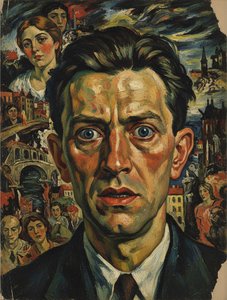
Oskar Kokoschka: A Turbulent Life Painted with Expressionist Intensity
Explore the intense expressionism of Oskar Kokoschka (1886-1980). Discover his psychologically charged portraits, landscapes & 'The Bride of the Wind'. A deep dive into a turbulent life and lasting artistic legacy.

Top 10 děl německého expresionismu: Umění plné emocí pro váš domov | OriginalUniqueArt
Prozkoumejte 10 ikonických děl německého expresionismu od Muncha, Kirchnera a dalších. Objevte příběhy za obrazy plnými emocí a výrazných barev. Reprodukce umění nejvyšší kvality na OriginalUniqueArt.com – inspirace pro váš interiér!
Figurative Expressionism: Emotional Intensity & Subjective Reality in 20th-Century Art
Explore the powerful world of Figurative Expressionism with OriginalUniqueArt. Discover key artists like Kirchner & Beckmann, understand its emotional depth, and learn how to collect this influential 20th-century art movement.


