 Náhled v interiéru
 Sdílet
 Sdílet
 Podrobnosti o díle
 Průvodce

 Stáhnout
 Podobné položky
 Rentgenové snímky
 Slideshow
 Otázky a odpovědi
 Statistiky
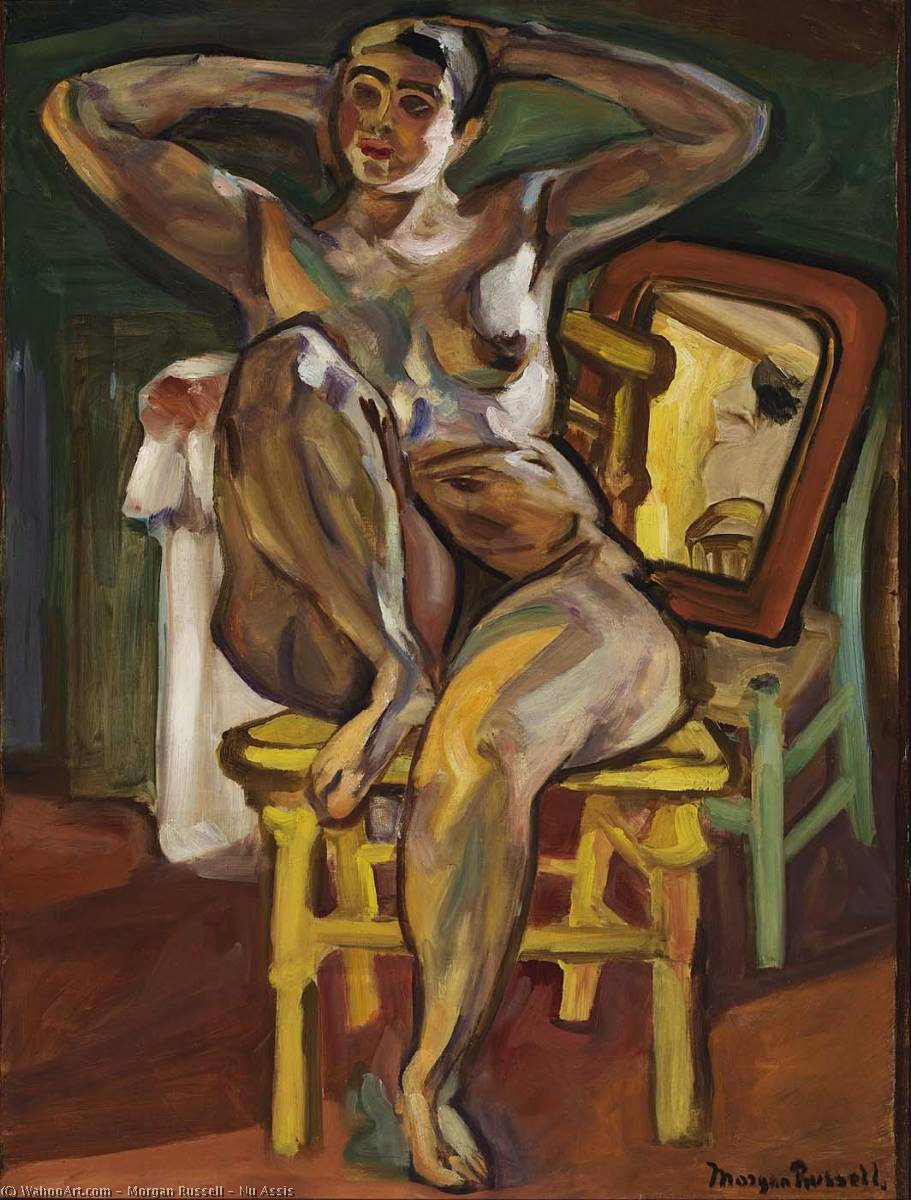
Nu Assis

- 73.0 x 55.0 cm

 Zobrazit více
Získejte soubor připravený k tisku, který svou kvalitou výrazně převyšuje webový náhled. Každý prodávaný digitální obraz pochází z vysokorozlišeného originálu v naší databázi – obvykle o šířce 5 000 až 15 000 pixelů – díky čemuž můžete tisknout ve velkém formátu, provádět těsný střih nebo si s jistotou užít i ty nejjemnější detaily.
Žádný soubor neopustí naše studio bez úprav. Digitální expert kontroluje barvy v porovnání s původním malířským dílem a v případě potřeby je upravuje, poté pomocí profesionálních nástrojů pro retuš zvyšuje ostrost a detailnost — přičemž vždy zůstává věrný tahům štětcem a stylu umělce. Výsledkem je obraz, který vypadá jako malba, nikoliv jako naskenovaný snímek s filtrem.
Schvalování před dokončením: náš expert vám do 72 hodin zašle obraz e-mailem k revizi. Nejsste spokojeni? Můžete požádat o úpravy či opravy, nebo si můžete vyžádat vrácení peněz, pokud kvalita neodpovídá vašim očekáváním.
Tuto kvalitu využívají vydavatelství, designová studia, galerie i tiskárny.
Digitální obrazy
Stáhněte si soubor ve vysokém rozlišení pro osobní prohlížení, tisk nebo kreativní projekty. ( Přepnout na tisk Koupit ručně malovaný obraz)
Součást každé objednávky digitálního obrazu
Profesionální digitální doručení, zaručené
Když si vyberete OriginalUniqueArt.com, nezískáváte pouze obrázek – získáváte digitální umělecké dílo s profesionálně vylepšenými detaily, zpracované s precizností a podpořené zárukou za spokojenost. Zde je vše, co vaše objednávka automaticky obsahuje:

Rychlé doručení e-mailem
Váš digitální obraz ve vysokém rozlišení vám bude zaslán e-mailem do 72 hodin od objednávky – připraven k okamžitému použití.

Digitální soubor s využitím AI
Vaše umělecké dílo je profesionálně optimalizováno pomocí pokročilých nástrojů umělé inteligence a manuální úpravy, což zajišťuje maximální úroveň detailu, ostrosti a přesnosti barev.

Doživotní bezplatné znovuodeslání digitálních obrazů
Soubor jste omylem smazali nebo ztratili? Žádný problém – kdykoliv vám ho znovu zašleme zcela zdarma.

Bez poplatků za dovoz – navždy
Užijte si své umělecké dílo okamžitě bez celních poplatků, daní nebo nákladů na dopravu – digitální stažení je vždy bez daňových povinností.

Záruka přesnosti barev
Díky profesionálním nástrojům a správě barev zajišťujeme, aby váš digitální obraz odrážel původní barvy co nejvěrněji.

100dená záruka spokojenosti
Pokud nebudete s digitálním obrázkem spokojeni, provedeme jeho revizi nebo vám vrátíme 100% platby do 100 dnů – bez jakýchkoliv dotazů.

100% záruka vrácení peněz
Nespokojeni? Získejte plnou náhradu peněz do 100 dnů od obdržení digitálního souboru – bez zbytečných dotazů.

Slevy při hromadných objednávkách
Koupě 3 obrazů ušetří 10% – Koupě 5 obrazů ušetří 15% – Koupě 10+ obrazů ušetří 20%. Ideální pro kreativní projekty, galerie a agentury.
Biografie umělce
The Architect of Color: The Life and Legacy of Morgan Russell
Born into the vibrant, burgeoning energy of New York City on January 25, 1886, Morgan Russell emerged as a transformative force in the landscape of American Modernism. His journey was never merely about the application of pigment to canvas, but rather an architectural pursuit of light and form. Before he became a master of abstract color, Russell’s early inclinations leaned toward the structural precision of architecture and the tactile depth of sculpture. Studying at the Art Students League under the guidance of figures like Arthur Lee and James Earle Fraser, he developed a profound sensitivity to materiality and volume. This sculptural foundation would later become the secret engine behind his most famous innovation, allowing him to treat color not as a surface decoration, but as a structural element capable of creating depth and movement within a two-dimensional plane.
The trajectory of Russell’s career was irrevocably altered by his encounters with the European avant-garde. Supported by the visionary patronage of Gertrude Vanderbilt Whitney, Russell traveled to Paris and Rome, immersing himself in the very heart of the modern revolution. In the legendary salons of Gertrude Stein, he moved among the giants of the era—Picasso, Rodini, and Matisse. These encounters were more than mere social engagements; they were intellectual crucibles. While absorbing the rhythmic fragmentation of Cubism and the emotive power of Fauvism, Russell began to seek a way to synthesize these disparate influences into a uniquely American voice. His time in Paris allowed him to witness the birth of new visual languages, yet he remained driven by a desire to find a method where color could function with the same harmonic complexity as a musical symphony.
The Birth of Synchromism and the Symphony of Sight
In 1912, alongside his collaborator Stanton Macdonald-Wright, Russell co-founded Synchromism, one of the first truly abstract movements in American art. The name itself—derived from the Greek for "with color"—encapsulated their radical mission: to orchestrate colors in a way that mimicked the temporal and emotional progression of music. This was not merely an aesthetic choice but a philosophical rebellion against the stagnant traditions of academic realism. Russell’s "synchromies" sought to move beyond representation, using rhythmic arrangements of hues to evoke sensation and structure. He believed that just as a composer arranges notes to create tension and resolution, a painter could use color temperature and saturation to direct the eye and build a sense of sculptural weight.
The technical brilliance of Russell’s work lies in this very intersection of color and construction. His paintings often possess an unexpected muscularity; even in his most abstract compositions, one can sense the influence of his early sculptural training. He utilized contrasting color relationships to create "optical" forms that seem to push forward or recede into space, effectively painting with light. This approach challenged the viewer to experience art as a dynamic, living entity rather than a static image. Through Synchromism, Russell and Macdonald-Wright provided an essential bridge between European experimentation and the development of a distinct American modernism, proving that abstraction could be both intellectually rigorous and viscerally powerful.
A Lasting Impression on Modernist History
Though the height of the Synchromist movement flourished in the 1910s and 1920s, Morgan Russell’s impact resonated far beyond this period. His ability to marry the structural logic of architecture with the fluid emotion of color helped pave the way for subsequent generations of abstract painters. He remained a pivotal figure in the evolution of modern art, constantly refining his understanding of how visual elements interact to create meaning. His legacy is defined by several key contributions:
- The Innovation of Color Theory: He pioneered the idea that color could serve as a primary structural tool, independent of representational subject matter.
- Cross-Disciplinary Synthesis: By blending sculptural form, architectural logic, and musical rhythm, he expanded the boundaries of what a painting could achieve.
- Founding American Abstraction: As a co-founder of Synchromism, he helped establish an early foothold for abstract expression in the United States, moving the center of gravity away from purely European traditions.
- Intellectual Rigor: His work bridged the gap between the visceral experience of art and the complex philosophical inquiries regarding perception and space.
Today, when we look at the works of Morgan Russell, we see more than just beautiful arrangements of pigment; we see the blueprints of a revolution. He remains a testament to the power of the avant-garde spirit—a man who looked at the world not as a collection of objects to be copied, but as a symphony of light and form waiting to be conducted.

Morgan Russell
1886 - 1953 , United States
Stručné informace
- Full Name: Morgan Russell
- Nationality: American
- Date Of Birth: 1886
- Date Of Death: 1953
- Place Of Birth: New York City
- Notable Artworks:
- Untitled
- Nu Assis
- Artistic Movement Or Style: Synchromism
- Artists Who Influenced This Artist:
- Percyval Tudor-Hart
- Stanton Macdonald-Wright
- Artists Or Movements Influenced By This Artist: ['Cubism']