Náhled
 Sdílet
 Sdílet
 Podrobnosti o díle

 Stáhnout
 Podobné položky
 Rentgenové snímky
 Slideshow
Sir Thomas Cookes (1648–1701), 2nd Bt
 Acrylic On Canvas
- WallArt
- Baroque Portraiture
 1740
1740- Early Modern
 125.0 x 101.0 cm
 Bodleianské knihovny
 Zobrazit více
Giclée / Umělecký tisk
Giclée nebo plátěný tisk muzeální kvality s rychlou výrobou a flexibilními možnostmi povrchové úpravy. ( Koupit ručně malovaný obraz Koupit obrázek)




P118B $10

P118H $10

P118W $10

P438Z $10

P508JH $12

P508YH $12

P805H $10

P805Z $10

P919BZ $10

P919G $10

P919XJ $10

P959ZH $10

P968JZ $12

W106C $8

W218G $10

W218JH $8

W218Y $10

W307PJ $10

W316G $10

W316PJ $8

W316Y $10

W398PJ $8

W4111J $10

W500HY $15

W500JH $15

W692G $12

W849H $8

W940BG $15

W953PJ $8




Vyberte si z našich přednastavených velikostí, které odpovídají původním proporcím díla.

Můžete zadat vlastní rozměry tak, aby výtvor odpovídal konkrétnímu rámu nebo prostoru. Pokud zvolená velikost nebude odpovídat poměru stran původního obrazu, dílo buď ořížeme, nebo obraz rozšíříme pomocí zrcadlového efektu či jednobarevného okraje. Před zahájením výroby vám bude zaslán digitální náhled k schválení.
Mějte prosím na paměti, že náhled na obrazovce neodráží skutečné oříznutí nebo rozšíření. Pouze digitální náhled přesně zobrazí finální kompozici.
Ačkoliv jsou k dispozici i vlastní rozměry, pro zachování původních proporcí doporučujeme vybrat si rozměr z předdefinovaného seznamu.
Celosvětové doručení () do 2 týdnů namísto standardních 4/5 týdnů. (27 srpen)

Zdarma celosvětová expresní doprava

Vysoce kvalitní lněné plátno

Kompletní přepravní pojištění

Záruka vrácení celního poplatku

Záruka přesného barevného shodu

60denní lhůta pro vrácení zboží (pouze při vadách výroby)

100% garance vrácení peněz

Sleva při hromadné objednávce
 Skleněná varianta je dostupná pouze u rozměrů menších než 110 cm

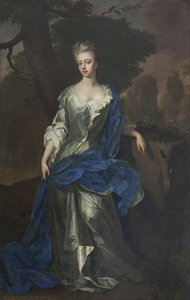
Sir Thomas Cookes (1648–1701), 2nd Bt
Giclée / Umělecký tisk
Rozměry reprodukce
-


Celková cena za výběr
$ 80
Sir Thomas Cookes (1648–1701), 2nd Bt: A Portrait of Aristocratic Grace in the Shadow of Baroque
Michael Dahl’s “Sir Thomas Cookes (1648–1701), 2nd Bt,” painted in 1740, is more than a simple likeness; it's a meticulously crafted tableau of 18th-century English aristocracy. This captivating portrait, measuring 125 x 101 cm, offers a glimpse into the world of a prominent landowner and philanthropist, rendered with Dahl’s signature blend of Baroque elegance and subtle psychological insight. The painting depicts Cookes standing before a doorway – a deliberate compositional choice that subtly anchors him within his social sphere while simultaneously inviting the viewer into his presence.
The subject himself is presented in a manner typical of Dahl's aristocratic clientele: impeccably dressed in a rich red coat adorned with elegant white lace, indicative of wealth and status. His long hair, swept back from his face, contributes to an air of dignified composure. The careful attention to detail – the texture of the fabric, the sheen of the lace, the subtle modeling of the face – speaks volumes about Dahl’s technical mastery. Note also the two figures flanking Cookes; their presence adds a layer of narrative complexity, hinting at familial connections or perhaps the social dynamics within his household. While their identities remain somewhat enigmatic, they serve to enrich the overall composition and provide context for Cookes' position.
The Artist: Michael Dahl – A Swedish Transplant to English Elegance
To fully appreciate “Sir Thomas Cookes,” one must understand the remarkable journey of its creator, Michael Dahl. Born in Stockholm around 1659, Dahl’s artistic trajectory was anything but conventional. Initially trained by Martin Hannibal and later David Klöcker Ehrenstrahl in Sweden, he soon recognized the limitations of the Swedish art scene and embarked on a deliberate quest for further refinement in Italy. This period profoundly influenced his style, introducing him to the principles of Baroque portraiture – particularly its emphasis on dramatic lighting, dynamic compositions, and the portrayal of psychological depth.
However, Dahl’s ambition extended beyond mere stylistic imitation. He skillfully navigated the complex political landscape of Europe, eventually establishing himself as a leading portraitist in England. This transition wasn't merely geographical; it represented a profound cultural shift. Dahl adapted his style to suit English tastes while retaining his distinctive artistic voice. His move was facilitated by connections within London’s art circles, notably through Robert White and Godfrey Kneller, both influential figures who provided him with invaluable experience and access to the burgeoning market for portraiture. The painting's date of 1740 reflects this successful integration into the English art world.
Baroque Techniques & Psychological Nuance
Dahl’s technique in “Sir Thomas Cookes” is a testament to his Baroque training. He employs *chiaroscuro* – the dramatic contrast between light and shadow – with masterful precision, sculpting Cookes' form and creating a sense of three-dimensionality. The light source, seemingly originating from an unseen window above, illuminates Cookes’ face, highlighting his features and conveying a subtle expression of quiet confidence. This isn’t a straightforward depiction of a man; Dahl subtly captures a mood, a personality – a hint of thoughtfulness behind the aristocratic facade.
Furthermore, observe how Dahl utilizes color to enhance the painting's impact. The rich reds and whites of Cookes’ attire stand out against the darker background, drawing the viewer’s eye to the subject. The subtle variations in tone and hue create a sense of depth and realism, while also contributing to the overall atmosphere of elegance and sophistication. Dahl’s ability to capture not just physical likeness but also psychological nuance is what elevates this portrait beyond mere representation.
Symbolism & Context: A Portrait of Power and Propriety
The setting itself – a doorway – carries symbolic weight. It suggests Cookes' position as a gatekeeper, both literally and figuratively, within his social world. The inclusion of the other figures further reinforces this idea, hinting at the complex web of relationships that defined aristocratic life. Sir Thomas Cookes was a man of considerable influence, known for his philanthropic endeavors and his role in shaping local governance. His portrait, therefore, serves as both a celebration of his status and a reflection of the values – power, propriety, and social responsibility – that were highly prized within 18th-century English society.
OriginalUniqueArt’s hand-painted reproductions strive to capture not only the visual details of this remarkable portrait but also the spirit and atmosphere of its time. Each reproduction is created with meticulous attention to detail, ensuring an authentic representation of Dahl's artistry for discerning collectors and art enthusiasts alike.
Biografie umělce
A Life Bridging Worlds: The Artistic Journey of Michael Dahl
Michael Dahl, a name synonymous with the elegance and refined grace of 18th-century portraiture, was a Swedish artist whose presence indelibly shaped the English art scene. Born in Stockholm around 1659 – sources subtly vary between 1658 and 1659 – his life wasn’t confined by national borders but rather defined by an ambitious pursuit of artistic mastery that propelled him across Europe, ultimately establishing him as a leading portraitist in England. His story is one woven with threads of familial sacrifice, rigorous training, a pivotal religious conversion born of opportunity, and the astute navigation of diverse cultural landscapes. The unwavering dedication of his mother, Catarina Dahl, to nurturing his talent formed the bedrock upon which his remarkable career was built – a legacy that would see him immortalize royalty, nobility, and leave behind a collection of exquisite paintings celebrated for their aristocratic allure.From Swedish Foundations to Italian Influences
Dahl’s artistic education commenced in Sweden under Martin Hannibal in 1674, an artist brought from Italy by David Klöcker Ehrenstrahl with the specific purpose of establishing a portrait academy. This initial training provided him with fundamental skills and techniques before he transitioned to study directly under Ehrenstrahl himself – a clear indication of Dahl’s burgeoning potential as a student. However, his ambition extended far beyond the confines of Stockholm. In 1682, he embarked on an extensive European educational odyssey, armed with a passport that facilitated travel and fueled a fervent thirst for artistic knowledge. His arrival in London proved to be a pivotal moment; he found himself under the tutelage of Robert White, a highly skilled engraver and painter, assisting him with engraving projects – including a portrait of King Charles XI of Sweden. This experience was invaluable, providing practical skills and an introduction to the intricacies of the English art world. Yet, it was his encounter with Godfrey Kneller that truly shaped his understanding of the market dynamics—Kneller imparted not only technical expertise but also the crucial pragmatism required to cater to public demand – a stark contrast to Ehrenstrahl’s more court-focused approach. Dahl's travels continued to Paris and then Rome, where he encountered a transformative opportunity.Rome, Conversion, and Patronage
The exiled Queen Christina of Sweden played a pivotal role in Dahl’s career during his time in Rome. Recognizing the strategic advantage of access to influential circles and papal patronage, Dahl underwent a significant religious conversion at her urging. This decision opened doors that would have otherwise remained firmly closed, allowing him to paint portraits of the Queen herself and present his work before Pope Innocent XI, who bestowed upon him a gold medal – a tangible testament to his burgeoning talent. The conversion, while perhaps strategically motivated, underscores Dahl’s remarkable adaptability and willingness to navigate complex social and religious landscapes in pursuit of artistic advancement. It was in Rome that he honed his skills further, absorbing the Baroque aesthetic that would become synonymous with his mature work—a style characterized by dramatic lighting, rich colors, and a sense of theatrical grandeur. The patronage system he encountered there proved instrumental in shaping his artistic vision and establishing him as a respected artist within European circles.A Master of English Portraiture
Upon returning to England, Michael Dahl swiftly established himself as a highly sought-after portraitist. He became renowned for his elegant and refined style, capturing not merely the likeness but also the status and personality of his aristocratic sitters. His portraits are distinguished by rich colors, meticulous attention to detail in textures, and an overall sense of grandeur—a reflection of the Baroque influences he had absorbed during his time in Italy. He painted numerous prominent figures, including Queen Anne, Prince George of Denmark, and a constellation of members from the English nobility. Notable works include striking portraits of Sir William Carew, John Churchill (1st Duke of Marlborough), and Sir Robert Walpole – each capturing the subject’s character with remarkable insight and skill. Perhaps one of his most impressive achievements is the triple portrait of the 2nd Earl of Burlington, the 1st Duke of Kingston upon Hull, and the 3rd Baron Berkeley of Stratton—a masterful display of his ability to balance individual characterization with compositional harmony, showcasing a sophisticated understanding of group portraiture.Legacy and Historical Significance
Dahl’s artistic style was a compelling synthesis of Swedish, Italian, and English influences. He absorbed the technical foundations from Hannibal and Ehrenstrahl, learned market savvy from Kneller, and benefited immensely from the patronage system he encountered in Rome. His work embodies the Baroque aesthetic prevalent during his time but infused with a uniquely refined sensibility—a testament to his artistic versatility. He profoundly influenced subsequent generations of portrait painters with his elegant style and technical proficiency, leaving an enduring mark on English portraiture. Beyond his artistic contributions, Michael Dahl’s success as a Swedish artist flourishing primarily in England highlights the international nature of artistic exchange during the Baroque period. He skillfully navigated different cultural contexts, establishing himself as a leading portraitist whose legacy continues to be admired today. His portraits offer invaluable insights into the lives and appearances of the English aristocracy during the early 18th century, serving as both historical documents and enduring works of art—a window into a bygone era of elegance, power, and artistic brilliance.
Michael Dahl
1658 - 1743 , Švédsko
Rychlé fakta
- Artistic Movement Or Style: Baroko
- Artists Or Movements Influenced By This Artist: ['18. století portrét']
- Artists Who Influenced This Artist:
- Martin Hannibal
- David Ehrenstrahl
- Date Of Birth: 1659
- Date Of Death: 1743
- Full Name: Michael Dahl
- Nationality: Švédský
- Notable Artworks:
- Portrét Královny Anny
- Sir William Carew
- Place Of Birth: Stockholm, Švédsko
Související články
Sir Joshua Reynolds: 25 mistrovských děl a inspirace pro váš interiér | OriginalUniqueArt.com
Objevte 25 ikonických portrétů sira Joshuy Reynoldse! Prozkoumejte klasicistní umění, techniku malby a inspirativní příběhy za jeho mistrovskými díly. Luxusní reprodukce obrazů pro váš interiér na OriginalUniqueArt.com.

Sir Alfred James Munnings: Top 25 Děl Mistra Koní – Umění a Dekorace pro Vaši Sbírku
Prozkoumejte 25 ikonických obrazů Alfreda Jamese Munnings, mistra koní a anglického impresionismu. Obdivujte realistické krajinomalby, jezdecké scény a válečné obrazy. Reprodukce a luxusní dekorace na OriginalUniqueArt.com! Prohlédněte si celou sbírku online.

Barokní drama: Umění, které vnáší velkolepost do domova
Objevte velkolepost barokního stylu v interiéru! Průvodce klíčovými prvky, inspirace a tipy pro integraci do moderního bydlení. Reprodukce umění s .

Barokní mistrovská díla: 10 obrazů, které definovaly umělecký styl | OriginalUniqueArt.cz
Objevte 10 ikonických děl barokního umění – od Caravaggia po Rembrandta. Ponořte se do příběhů mistrů, technik a emocí tohoto velkolepého období. Reprodukce obrazů nejvyšší kvality na OriginalUniqueArt.com! Prozkoumejte celou kolekci online.

The Dramatic Flourish: Exploring the Baroque Movement's Enduring Legacy in Art History
Explore the dramatic world of Baroque art! Discover iconic artists like Caravaggio & Rubens, defining techniques, and its lasting impact on art history. Expert insights for collectors & enthusiasts at OriginalUniqueArt.