Surrealist Expressionism · 1927
The Forest (Max Ernst, 1927)
Max Ernst (1891–1976) vytvořil dílo The Forest. Pochází z roku 1927. Patří k hnutí Surrealist Expressionism. Je vyrobeno z Acrylic On Canvas. Nachází se v Tel Aviv Museum of Art v Tel Aviv, Izrael. Rozměry jsou 25 × 36 cm.
- 1927
- Acrylic On Canvas
- 25 × 36 cm
- Tel Aviv Museum of Art

 Náhled v interiéru

 Ručně malovaná olejná reprodukce
 Sdílet
 Sdílet
 Informační list pro studenty


 Stáhnout
 Podobné položky
 Rentgenové snímky
 Slideshow
 Otázky a odpovědi

 Statistiky
The Forest v kostce
- Název díla
- The Forest
- Autor
- Max Ernst (1891–1976)
- Rok narození umělce
- Brühl, Německo
- Datum vytvoření
- 1927
- Technika
- Acrylic On Canvas
- Rozměry
- 25 × 36 cm
- Kde jej vidět
- Tel Aviv Museum of Art, Tel Aviv, Izrael
- Období
- Early Modern
- Motiv
- moonlit cityscape, surreal forest, urban night, max ernst, german art, 1927 painting
Co przedstawuje dílo The Forest?
A Nocturne of Dreams: Max Ernst’s “The Forest”
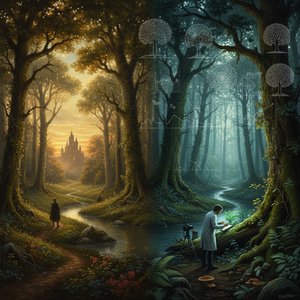
Max Ernst's "The Forest," painted in 1927, isn’t merely a depiction of a landscape; it’s an immersion into the subconscious, a carefully constructed dreamscape rendered with the unsettling beauty characteristic of the artist’s early Surrealist explorations. This intimate canvas – measuring just 25 x 36 cm – holds within its borders a potent collision of natural and urban elements, inviting viewers to contemplate the anxieties and aspirations simmering beneath the surface of modern life. The painting immediately draws the eye upward to a luminous moon dominating the sky, casting an ethereal glow upon the sprawling cityscape below. Buildings rise from the darkness, not as symbols of progress or order, but as strangely distorted monoliths, hinting at a world both familiar and profoundly alien.
Ernst’s technique is deliberately evocative, employing a layered approach that anticipates techniques he would later refine in his collage work. He utilizes loose, expressive brushstrokes, building up the forms of trees and buildings with a sense of urgency and movement. The color palette leans heavily into cool blues and greens, punctuated by the stark white of the moon and the muted tones of the city lights – colors that contribute to the painting’s nocturnal atmosphere and imbue it with a feeling of quiet mystery. Notice how he doesn't meticulously render detail; instead, he favors suggestion and mood, allowing the viewer’s imagination to fill in the gaps.
The Seeds of Surrealism: Ernst’s Intellectual Landscape
Understanding “The Forest” requires acknowledging Max Ernst’s unique artistic trajectory. Born in Brühl, Germany, in 1891, Ernst wasn't a traditional painter; his path was forged through rigorous academic study – philosophy, art history, literature, psychology, and psychiatry at the University of Bonn. This intellectual grounding profoundly shaped his approach to art, moving him beyond mere representation towards exploring the realm of dreams, memory, and the irrational. His father, a teacher of the deaf, instilled in him a sensitivity to the world and a rebellious spirit – qualities that would become central to Ernst’s artistic vision. He was deeply influenced by thinkers like Freud and Jung, particularly their theories on the unconscious mind, which he sought to translate into visual form.
The year 1927 is crucial within this context. It represents a pivotal moment in Ernst's development as a Surrealist, a period marked by experimentation with automatism – a technique of spontaneous creation designed to bypass conscious control and tap directly into the subconscious. "The Forest," therefore, can be seen as a product of this process, a visual manifestation of his inner world.
Symbolic Echoes: Nature Versus Urbanity
The juxtaposition of the forest and the city is laden with symbolic weight. The forest, traditionally associated with nature, instinct, and the primal, stands in stark contrast to the rigid geometry and artificial light of the urban landscape. This isn’t a harmonious blend; rather, it's a tension – a suggestion that the encroachment of modernity threatens to overwhelm the natural world. The moon itself is a potent symbol, often linked to cycles, intuition, and the hidden realms of the unconscious. Its presence elevates the scene beyond a simple cityscape, transforming it into a dreamlike tableau.
Furthermore, consider the distorted forms of the buildings. They aren’t simply architectural structures; they seem to lean inward, almost collapsing under their own weight, mirroring perhaps a sense of unease or anxiety about the future. The trees, though present, are somewhat obscured by the city's glow, hinting at a diminishing connection with nature.
A Timeless Resonance: Reproduction and Artistic Legacy
"The Forest" continues to resonate with viewers today because it taps into fundamental human experiences – the longing for escape, the anxieties of urban life, and the enduring power of the subconscious. OriginalUniqueArt’s meticulously crafted hand-painted reproductions capture not only the visual details of Ernst's original but also its emotional depth and atmospheric quality. Each reproduction is created with the same attention to texture and color as the original, ensuring a faithful representation of this iconic Surrealist masterpiece. Whether you are an art collector seeking to expand your collection or an interior designer searching for a unique piece to elevate a space, a OriginalUniqueArt reproduction of “The Forest” offers a captivating glimpse into the mind of one of 20th-century’s most visionary artists.
Ve kterém muzeu se nachází The Forest?
Tel Aviv Museum of Art
Tel Aviv, Izrael
Světlo tvůrčí inspirace na břehu Středozemního moře V pulzujícím srdci Tel Avivu, města protnutého uměleckou energií a historickým významem, stojí Muzeum umění v Tel Avivu —skutečné svědectví rozkvétající kulturní krajiny Izraele. TAMA, jak mu s láskou říkají návštěvníci, je mnohem více než pouhým úložištěm mistrovských děl; ono do umění vdechuje život, podporuje dialog, inspiruje generace a slouží jako vitální spojovací článek mezi minulostí národa a jeho dynamickou přítomností. Jeho příběh nezačíná v grandiózních sálech, ale v prostých zdech domu prvního starosty Tel Avivu, v prostoru protkaném ozvěnami národa budujícího svou identitu.


Vysokorozlišené fotografie díla The Forest

Chráněno autorským právem: tyto soubory slouží pouze pro osobní prohlídku, nikoliv jako licence k opětovnému zveřejnění.
Max Ernst, The Forest (1927), Tel Aviv Museum of Art.
Odpovědi na otázky k dílu The Forest
Kde je dnes možné vidět dílo „The Forest“ od Max Ernst?
Originál díla „The Forest“ si můžete prohlédnout v instituci Tel Aviv Museum of Art, Tel Aviv, Izrael.
V jakém roce vzniklo dílo „The Forest“ od Max Ernst?
Vznik díla „The Forest“ od Max Ernst se datuje do roku 1927.
Jakou technikou je vytvořeno dílo "The Forest"?
Max Ernst pro dílo „The Forest“ použil/a techniku Acrylic On Canvas. Tato technika definuje materiální podstatu originálního díla.
Jaké jsou rozměry originálu díla „The Forest“ od Max Ernst?
Zaznamenané rozměry díla „The Forest“ od Max Ernst jsou 25 x 36 cm. Reprodukce lze objednat v jiných velikostech při zachování stejných proporcí.
Co zachycuje dílo "The Forest"?
Témata obsažená v díle „The Forest“ od Max Ernst zahrnují moonlit cityscape, surreal forest, urban night, max ernst, german art, 1927 painting, dreamlike scene. Tato témata společně shrnují obsah celého uměleckého díla.
Lze obraz díla „The Forest“ od Max Ernst volně reprodukovat?
Co se týče autorských práv, dílo "The Forest" spadá do stále chráněno autorským právem.
Kdo je autorem díla "The Forest"?
Dílo "The Forest" se připisuje autorovi Max Ernst.
K jakému stylu patří „The Forest“?
Umělecký směr, ke kterému patří dílo „The Forest“ od Max Ernst, je Surrealist Expressionism. Tato klasifikace toto dílo umísťuje mezi související umělce a další umělecká díla.
Do které éry tvorby Max Ernst spadá dílo "The Forest"?
V rámci kariéry umělce Max Ernst spadá dílo „The Forest“ do období Early Surrealism. Tato fáze umožňuje jeho srovnání s dalšími díly tohoto umělce.
O umělci, Max Ernst

1891–1976, Německo
Max Ernst
Život a kořeny Maxa Ernsta Max Ernst přišel na svět 2. dubna 1891 v německém Brühl. Vyrostl v katolické rodině střední třídy jako třetí z devíti dětí. Jeho dětství a mládí formovala klidná, disciplinovaná atmosféra domova, kde jeho otec Philipp působil jako učitel neslyšících.
Také od autora Max Ernst
 Célèbes nebo Žirafa Célèbes1921
 Slon Celebes1921
 Evropa po dešti II1942
 Z tohoto se nic nedozví muži1923
Eseje k tématu The Forest
 Symphony of Sunlight: The Luminous Legacy of Pine Tree Landscapes in Art HistoryExplore the luminous history of pine landscapes through Sorolla and Shishkin. Discover the magic of forest art today.
 Unlocking the Unconscious: The Top 25 Surrealist Masterpieces by Max ErnstStep into the dreamscapes of Max Ernst. Explore 25 iconic Surrealist masterpieces, from pioneering collages to haunting landscapes. Find in…
 The Enchanted Canopy: Exploring Forests in Art History – From Romantic Idealization to Ecological ConsciousnessExplore the rich history of forests in art! Discover Romantic masterpieces by Friedrich & Monet, Symbolist depths, and contemporary visions…