

 Zobrazit v interiéru
 Odeslat
 Sdílet
 Podrobnosti
 Průvodce

 Stáhnout obrázek
 Podobné kousky
 Rentgenové snímky
 Slideshow
 Statistiky
Portrait Arrangement


 Přečíst si více
Ručně malovaná olejová reprodukce
Ručně malované olejné plátno v libovolném rozměru i s rámem, vyrobené našimi umělci na zakázku. ( Přepnout na tiskové verze Přepnout na digitální verzi obrazu)




P118B Kč10

P118H Kč10

P118W Kč10

P438Z Kč10

P508JH Kč12

P508YH Kč12

P805H Kč10

P805Z Kč10

P919BZ Kč10

P919G Kč10

P919XJ Kč10

P959ZH Kč10

P968JZ Kč12

W106C Kč8

W218G Kč10

W218JH Kč8

W218Y Kč10

W307PJ Kč10

W316G Kč10

W316PJ Kč8

W316Y Kč10

W398PJ Kč8

W4111J Kč10

W500HY Kč15

W500JH Kč15

W692G Kč12

W849H Kč8

W940BG Kč15

W953PJ Kč8




Vyberte si z našich přednastavených velikostí, které odpovídají původním proporcím díla.

Můžete zadat vlastní rozměry pro konkrétní rám nebo prostor. Pokud se vámi vybraná velikost neshoduje s proporcemi původního obrazu, dílo buď ořízneme, nebo jej doplníme ručně malovanými prvky. Před zahájením výroby vám bude zaslán digitální náhled ke schválení.
Upozorňujeme, že náhled na obrazovce neodpovídá skutečnému ořezu ani rozšíření. Pouze digitální náhled přesně zobrazí finální kompozici.
Ačkoliv je možné zvolit vlastní velikost, pro zachování původních proporcí doporučujeme vybrat rozměr z předdefinovaného seznamu.
Po přijetí objednávky vám tým OriginalUniqueArt.com zašle e-mail s pokyny a poskytne náhledovou verzi.
Celosvětová doprava () za 3–4 týdny namísto standardních 5 týdnů. (8 říjen). Bez kompromisů v kvalitě.

Zdarma celosvětová expresní doprava

Vysoce kvalitní lněné plátno

Úplné pojištění přepravy

Záruka vrácení celního poplatku

Záruka věrného barevného shodu

100dení lhůta pro vrácení zboží (pouze při vadách výroby)

100% garance vrácení peněz

Sleva při více objednávkách
 Skleněná varianta je dostupná pouze u rozměrů menších než 110 cm

Portrait Arrangement
Technika provedení
Velikost reprodukce
-


Celková cena
Kč 6245
Marsden Hartley’s “Portrait Arrangement”: A Spiritual Landscape of Loss
Marsden Hartley's "Portrait Arrangement," painted in 1914, isn’t merely a depiction of a village scene; it’s a deeply personal and emotionally resonant exploration of memory, loss, and the search for meaning. Created during a pivotal period of his artistic development – a time marked by travel to Europe and grappling with the burgeoning anxieties of World War I – the painting embodies Hartley's evolving style, blending elements of Expressionism, Cubism, and a nascent interest in symbolism. The work stands as a testament to his unique vision, capturing not just appearances but also the intangible atmosphere of a bygone era.
The canvas bursts with color—a vibrant palette dominated by reds, yellows, and blues that evoke both warmth and melancholy. Hartley employs a loose, gestural brushstroke, creating a sense of movement and dynamism within the composition. The figures are rendered in simplified forms, almost abstracted, yet retain a recognizable humanity. Notice how he uses overlapping planes and fragmented perspectives, characteristic of Cubism, to suggest multiple viewpoints simultaneously—a technique that mirrors the fractured nature of memory itself. The background is layered with hints of rural landscapes, suggesting a connection to Hartley’s roots in Maine, while also incorporating elements reminiscent of Berlin's urban sprawl – reflecting his time spent in Germany.
A Portrait of Grief and Remembrance
At the heart of "Portrait Arrangement" lies a profound sense of grief. The central figure, seated in the foreground, is often interpreted as a representation of Hartley’s lost friend, Karl von Freyburg—a Prussian lieutenant killed in action during World War I. The painting isn't a straightforward portrait; instead, it’s an emotional landscape built around this loss. The recurring motif of stars and birds, scattered throughout the scene, adds to the feeling of longing and remembrance. These symbols, according to Hartley himself, represented personal codes and spiritual connections—a way of imbuing the painting with layers of meaning beyond a simple visual representation.
The inclusion of military imagery – subtly integrated into the composition through references to the Iron Cross and other Prussian emblems – speaks to Hartley’s complex relationship with Germany. He had initially been sympathetic to the German cause, but the horrors of war profoundly impacted him, leading to a shift in perspective. The painting can be seen as a meditation on the devastating consequences of conflict and the enduring power of personal connection.
Symbolism and Spiritual Quest
Hartley’s work during this period was deeply influenced by his interest in spirituality and mysticism. He sought to capture not just external reality but also the inner landscape of human experience—the emotions, beliefs, and aspirations that shaped our lives. “Portrait Arrangement” exemplifies this approach, utilizing symbolic elements to convey a sense of profound emotional depth. The arrangement of figures, the use of color, and the incorporation of recurring motifs all contribute to a larger narrative of loss, remembrance, and the ongoing search for meaning.
The painting’s composition is deliberately ambiguous, inviting viewers to project their own interpretations onto the scene. It's not simply a depiction of a village; it’s an invitation to contemplate the complexities of human relationships, the weight of history, and the enduring power of memory. Hartley’s “Portrait Arrangement” remains a poignant and evocative work—a testament to his artistic vision and a powerful expression of the emotional landscape of a troubled era.
Further Exploration & Reproduction
For those seeking deeper insight into this remarkable painting, resources such as the McNay Art Museum's online exhibit offer valuable context. The museum’s website provides detailed information about Hartley’s life and work, including high-resolution images of the original artwork. Furthermore, exploring Marsden Hartley’s broader body of work—particularly his Berlin period paintings—offers a richer understanding of his artistic evolution.
OriginalUniqueArt offers meticulously crafted hand-painted reproductions of “Portrait Arrangement,” allowing art lovers to experience the beauty and emotional depth of this iconic masterpiece in their own homes. Each reproduction is created by skilled artists using traditional techniques, ensuring an authentic representation of Hartley’s original vision. Consider commissioning a custom reproduction—a unique addition to your collection that captures the spirit and essence of this extraordinary work.
Otázky a odpovědi
Jak je známé dílo "Portrait Arrangement" od Marsden Hartley?
Dílo „Portrait Arrangement“ od Marsden Hartley má úroveň popularity Recognized. Tato klasifikace odráží, jak široce je toto dílo známé.
Jak mohu najít umělecká díla podobná dílu „Portrait Arrangement“ od Marsden Hartley?
Díla podobná dílu „Portrait Arrangement“ od Marsden Hartley jsou shromážděna na stránce Podobná díla tohoto díla.
Kdo je autorem díla "Portrait Arrangement"?
Dílo "Portrait Arrangement" vytvořil/a Marsden Hartley. Informace na této stránce popisují originální dílo umělce Marsden Hartley.
Kde se doporučuje umístit obraz s formátem Portrait díla „Portrait Arrangement“?
Formát Portrait díla „Portrait Arrangement“ od Marsden Hartley doporučujeme pro Living Room. Formát i prostor společně určují ideální umístění reprodukce.
Jakou atmosféru má dílo "Portrait Arrangement"?
Celková nálada díla „Portrait Arrangement“ od Marsden Hartley je Calm. Tato nálada popisuje obecnou atmosféru díla.
V jakém roce bylo vytvořeno dílo „Portrait Arrangement“ od Marsden Hartley?
Dílo "Portrait Arrangement" pochází z roku 1914. Toto datum situuje dílo do období tvůrčí činnosti Marsden Hartley i do jeho dobové kontextu.
Kolik let bylo Marsden Hartley, když vzniklo dílo „Portrait Arrangement"]?
Marsden Hartley bylo 37 let, když v roce 1914 vytvořilo dílo „Portrait Arrangement“. Věk je vypočítán z roku narození umělce, 1877.
Biografie umělce
A Spiritual Quest in Paint: The Life and Art of Marsden Hartley
Marsden Hartley, born Edmund Hartley in Lewiston, Maine, on January 4, 1877, was a restless spirit deeply attuned to the profound possibilities within art. His early life unfolded against a backdrop of personal loss and displacement—orphaned young and thrust into factory work—leaving an indelible mark on his artistic vision, shaping a quiet intensity and a persistent search for meaning that would characterize much of his oeuvre. This formative period instilled in him a sensitivity to loneliness, a feeling he consistently explored through his art, transforming personal experience into universal themes. The move to Cleveland with his family offered a crucial turning point, providing access to formal artistic training at the Cleveland School of Art and ultimately leading him to New York City, where he studied under William Merritt Chase at the New York School of Art and later attended the National Academy of Design. However, Hartley’s ambition extended far beyond technical proficiency; he sought a deeper connection—a spiritual resonance—within his work, driven by an admiration for the evocative symbolism of Albert Pinkham Ryder and the transcendentalist philosophies of Walt Whitman, Ralph Waldo Emerson, and Henry David Thoreau – writers who championed individualism and the inherent divinity of nature.Early Years and Influences in New England
Hartley’s artistic journey began rooted in the landscapes of his native New England. His early paintings, such as *The Ice Hole* (1908), demonstrate a nascent inclination towards abstraction, hinting at the mature style he would later develop. These works weren't merely depictions of place; they were attempts to capture an emotional and spiritual essence—a sense of the sublime within the natural world. The stark beauty of Maine’s winter landscapes, with their frozen lakes and snow-laden trees, became a recurring motif, imbued with a melancholic yet strangely hopeful quality. Crucially, Hartley's artistic development was profoundly influenced by his exposure to the writings of American transcendentalists. Whitman’s celebration of individualism and Emerson’s emphasis on intuition and self-reliance resonated deeply with Hartley’s own search for authenticity in art. He sought to capture not just the outward appearance of a scene but also the inner experience it evoked, aligning himself with the broader movement of artistic expressionism that was beginning to emerge at the time. The influence of Albert Pinkham Ryder, whose evocative and often dreamlike paintings explored themes of isolation and spirituality, proved particularly significant, shaping Hartley’s approach to color, composition, and symbolism.A European Awakening: Modernism and Experimentation
A pivotal moment in Hartley's artistic trajectory arrived with his first trip to Europe in 1912, generously funded by Alfred Stieglitz. This journey marked a dramatic shift in his artistic perspective as he immersed himself in the vibrant art scenes of Paris and Berlin. He encountered the burgeoning movements of Cubism and Expressionism, absorbing their innovative techniques and challenging traditional notions of representation. Hartley found kinship with fellow artists like Wassily Kandinsky and Franz Marc, members of the influential Blaue Reiter group, who shared his belief that art could transcend mere imitation and express profound inner truths. The atmosphere of artistic experimentation in Berlin proved particularly stimulating, encouraging him to push the boundaries of his own style. He began to explore bolder color palettes, fragmented forms, and a more expressive use of line—techniques he would later integrate into his work. This period was marked by intense self-reflection and a growing awareness of his own sexuality, experiences that profoundly influenced his artistic output.Return to America and the Regionalist Movement
Following World War I, Hartley returned to the United States, initially settling in New Mexico, where he was captivated by the landscape and the culture of the Native American peoples. He found inspiration in their traditional art forms and spiritual beliefs, incorporating elements of Southwestern motifs into his paintings. However, a growing sense of national identity began to emerge as he moved back east, culminating in his declaration in the late 1930s that he intended to become “the painter of Maine.” This marked a conscious decision to focus on subjects and styles rooted in his native state—a deliberate rejection of European modernism in favor of an American regionalist aesthetic. He began to paint the rugged coastline, dense forests, and small fishing villages of Maine with a renewed sense of purpose, capturing not just their physical appearance but also the spirit and character of the region. His paintings from this period, such as *Mt. Katahdin (Maine), Autumn -2* (1939–40), are characterized by a rich palette, expressive brushwork, and a subtle yet powerful symbolism—a reflection of his own personal history and his deep connection to the land.Legacy and Enduring Significance
Marsden Hartley’s contribution to American art lies not only in his distinctive style—a compelling blend of abstraction, symbolism, and emotional intensity—but also in his unwavering commitment to artistic independence. He resisted easy categorization, constantly evolving and challenging conventional norms throughout his career. His work paved the way for future generations of abstract expressionists and other modernist painters who sought to express their inner worlds through non-representational forms. Hartley’s influence can be seen in the works of artists like Georgia O'Keeffe and Arthur Dove, who also explored the spiritual dimensions of American landscapes. He remains a pivotal figure in the development of American modernism—an artist whose paintings continue to resonate with their profound emotional depth and enduring sense of mystery. His life, marked by both hardship and artistic triumph, serves as a testament to the power of vision and the transformative potential of art.- Key Influences: Albert Pinkham Ryder, Walt Whitman, Ralph Waldo Emerson, Henry David Thoreau, Wassily Kandinsky, Franz Marc.
- Major Movements: American Modernism, Regionalism, Abstract Expressionism (precursor).
- Notable Works: The Ice Hole, Autumn Color, Portrait of a German Officer, Mt. Katahdin (Maine), Autumn -2.

Marsden Hartley
1877 - 1943 , Spojené státy americké
Rychlé informace
- Artistic Movement Or Style: Americký modernismus
- Artists Or Movements Influenced By This Artist: ["Georgia O'Keeffe"]
- Artists Who Influenced This Artist:
- Albert Ryder
- Walt Whitman
- Date Of Birth: 4. ledna 1877
- Date Of Death: 2. října 1943
- Full Name: Marsden Hartley
- Nationality: Američan
- Notable Artworks:
- The Ice Hole
- Autumn Color
- Mt. Katahdin
- Place Of Birth: Lewiston, USA
Související články

Beyond the Lines: Mastering the High-Impact World of Contemporary Abstraction
Master the high-impact world of contemporary abstraction. Discover how bold colors, textures, and modern movements like Abstract Expressionism can transform your space with premium, high-energy art curated for the design-conscious professional.

Arthur Dove: Pioneering American Abstraction & the Poetic Language of Modernism
Explore the groundbreaking work of Arthur Dove, a pioneer of American abstraction. Discover his artistic evolution, influences, and investment potential with OriginalUniqueArt's expert guide.

Geometrická abstrakce: 10 mistrovských děl, které změnily umění | OriginalUniqueArt.cz
Prozkoumejte 10 ikonických děl geometrické abstrakce od Mondriana, Maleviče a Kandinského. Objevte příběhy umělců, techniky a historii tohoto revolučního hnutí. Najděte inspiraci pro moderní dekorace a luxusní reprodukce obrazů na OriginalUniqueArt.com.
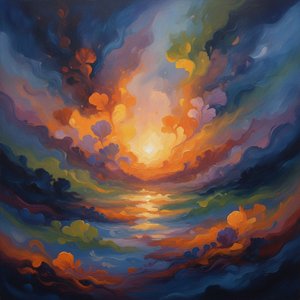
The Soul of Color: A Journey into the Emotional Resonance of Lyrical Abstraction
Embark on a cultural journey through Lyrical Abstraction. Explore how masters like Kandinsky used color and motion to translate emotion into visual poetry. Discover the profound beauty of abstract expressionism and learn to curate emotional resonance in your own art collection.

Top 10 mistrovských děl abstraktního expresionismu | Umění a dekorace s OriginalUniqueArt.com
Prozkoumejte 10 ikonických děl abstraktního expresionismu od Pollocka, Rothka a dalších. Objevte příběhy za obrazy, techniky a barevné palety tohoto revolučního uměleckého hnutí. Reprodukce obrazů s OriginalUniqueArt.com – luxusní dekorace pro váš interiér. Prozkoumejte celou kolekci online!
