

 Zobrazit v interiéru
 Odeslat
 Sdílet
 Podrobnosti
 Průvodce

 Stáhnout obrázek
 Podobné kousky
 Rentgenové snímky
 Slideshow
 Statistiky
Busta Štulda Viléma V.


 Přečíst si více
Ručně malovaná olejová reprodukce
Ručně malované olejné plátno v libovolném rozměru i s rámem, vyrobené našimi umělci na zakázku. ( Přepnout na tiskové verze Přepnout na digitální verzi obrazu)




P118B Kč10

P118H Kč10

P118W Kč10

P438Z Kč10

P508JH Kč12

P508YH Kč12

P805H Kč10

P805Z Kč10

P919BZ Kč10

P919G Kč10

P919XJ Kč10

P959ZH Kč10

P968JZ Kč12

W106C Kč8

W218G Kč10

W218JH Kč8

W218Y Kč10

W307PJ Kč10

W316G Kč10

W316PJ Kč8

W316Y Kč10

W398PJ Kč8

W4111J Kč10

W500HY Kč15

W500JH Kč15

W692G Kč12

W849H Kč8

W940BG Kč15

W953PJ Kč8




Vyberte si z našich přednastavených velikostí, které odpovídají původním proporcím díla.

Zadejte šířku a výšku, které potřebujete pro váš rám nebo stěnu. Protože se jedná o ruční malbu, při výběru jiného formátu může umělec kolem obrazu domalovat o něco více, nebo jej mírně oříznout — rozhodnete si vy. Před zahájením malby vám zašleme digitální náhled ke schválení. Obraz zobrazený na této stránce neodpovídá skutečnému výsledku — pouze digitální náhled jej zobrazuje.
Po přijetí objednávky vám tým OriginalUniqueArt.com zašle e-mail s pokyny a poskytne náhledovou verzi.
Celosvětová doprava () za 3–4 týdny namísto standardních 5 týdnů. (25 říjen). Bez kompromisů v kvalitě.

Zdarma celosvětová expresní doprava

Vysoce kvalitní lněné plátno

Úplné pojištění přepravy

Záruka vrácení celního poplatku

Záruka věrného barevného shodu

100dení lhůta pro vrácení zboží (pouze při vadách výroby)

100% garance vrácení peněz

Sleva při více objednávkách
 Skleněná varianta je dostupná pouze u rozměrů menších než 110 cm

Busta Štulda Viléma V.
Technika provedení
Velikost reprodukce
-


Celková cena
Kč 6408
Marie-Anne Collotova bust of Stadholder William V
Marie-Anne Collotova bust of Stadholder William V představuje fascinující okamžik evropského umění XVIII století – obraz mladého šlechtice, který dokázal zachytit nejen fyzické podobnosti, ale i komplexní osobnost jednoho z nejvýznamnějších politiků své doby. Tento dílo není jen estetickou nádherou; je důkazem pozoruhodného vědeckého přístupu k umění a zároveň odrazem společenských hodnot té doby.Styl a Technika
Collotova busta byla vytvořena ve stylu klasicismu, což byl dominantní estetický směr období osvícenství. Klasicismus kladl důraz na harmonii proporcí, čistotu linie a věrné zobrazení anatomie – hodnoty, které Collot úspěšně aplikovala při práci s tvrdým materiálem alabastru. Použití této hmoty vyžadovalo mimořádnou přesnost a pozornost k detailům, což lze pozorovat zejména ve zpracování vlasů a oblečení šlechtice. Umělec využívá osvětlení pozorovatele takovým způsobem, aby vytvořil dramatický efekt a zvýšil výraz obrazu.Historický Kontext
Busta byla objednána v roce 1782 Catherine II., ruskou císařkou, která si Collotovu práci vycenila jako jednu z nejlepších reprezentací své doby. William V byl mladý šlechtic, který se snažil udržet si moc a stabilitu království během turbulentních dob evropské historie. Jeho busta slouží jako připomínka této doby – období intelektuální obnovy, politických změn a kulturního rozvoje. Collotova práce byla inspirována filozofiemi osvícenství, které kladly důraz na rozum, vědu a vzdělání. Umělec chtěl vytvořit obraz šlechtice jako intelektuálního člověka, který byl zároveň aktivním účastníkem veřejného života.Symbolismus a Význam
Collotova busta není jen estetickým dílem; obsahuje bohatý symbolický význam. Šlechtické oblečení a účesy byly znakem vysokého společenského postavení a vzdělání. Výraz tváře šlechtice vyjadřuje jeho důstojnost, sílu vůle a intelektuální schopnosti. Collotova práce byla vytvořena za vlády Catherine II., která si Collotovu práci vycenila jako jednu z nejlepších reprezentací své doby. Umělec chtěl vytvořit obraz šlechtice jako intelektuálního člověka, který byl zároveň aktivním účastníkem veřejného života. Dílo působí klidem a majestátem – připomínkou zlatého věku evropského umění.Otázky a odpovědi
Kde mohu najít statistiky k dílu „Busta Štulda Viléma V.“ od Marie-Anne Collot?
Stránka Statistiky díla „Busta Štulda Viléma V.“ od Marie-Anne Collot zobrazuje statistiky veřejných návštěv: měsíční návštěvnost tohoto díla, srovnání s nejvíce prohlíženými díly daného umělce a původ jeho návštěvníků.
Pro jaké místo a za jakým účelem se doporučuje dílo "Busta Štulda Viléma V."?
Pro použití (Akcentující prvek) a prostor (Obývací pokoj) jsou u díla „Busta Štulda Viléma V.“ od Marie-Anne Collot uvedeny dvě doporučení.
Jaký národní původ stojí za tím, že Baroque díla „Busta Štulda Viléma V.“?
Dílo v rámci směru Baroque s názvem "Busta Štulda Viléma V." vytvořil umělec narozený v zemi France.
Biografie umělce
A Sculptor of Grace and Precision
In the vibrant artistic landscape of 18th-century France, Marie-Anne Collot emerged as a rare and formidable talent, carving her name into the annals of history through the delicate medium of sculpture. Born in Paris, her journey into the world of fine art began not behind a desk, but before the canvas and clay, serving as a model at the age of fifteen within the esteemed workshop of Jean-Baptiste II Lemoyne. This early immersion in the tactile realities of form and anatomy provided a foundational influence that would later define her career as a master portraitist. Her path was further shaped by her profound connection to Etienne Falconet, serving as both his pupil and daughter-in-law, a relationship that placed her at the very heart of the era's most influential intellectual and creative circles.
The artistry of Collot was characterized by an extraordinary precociousness. Even in her earliest endeavors, such as the terracotta busts produced in Paris during the mid-1760s, she displayed a level of skill that suggested a deep, intuitive understanding of human character. Her work was not merely about capturing physical likeness but about translating the essence of her subjects into three-dimensional form. This talent allowed her to move seamlessly within the prestigious circles of the Enlightenment, finding favor among luminaries such as Diderot and even the imperial court of Russia.
From Paris to the Imperial Court
The trajectory of Collot’s career took a monumental turn when she accompanied Falconet to St. Petersburg. This period in Russia proved to be one of her most significant eras, as she worked amidst the grandeur of the Russian Court during the era of Catherine the Great. It was here that her reputation for excellence was solidified on an international stage. One of her most remarkable achievements involved the creation of the plaster model for the head of Peter the Great, a task undertaken after several attempts by Falconet himself had been rejected by the Empress. Such a feat speaks to a level of technical mastery and an ability to capture the commanding presence required for imperial iconography.
Her recognition was not limited to mere skill; it was formally institutionalized through her election to the Imperial Academy of Arts. By becoming an Academician, she achieved a distinction held by very few women of her time, marking her as a pioneer in a male-dominated discipline. Her presence in Russia allowed her to sculpt the portraits of various members of the Russian Court, earning the marvel of those who witnessed her ability to breathe life into clay and stone. Through these works, Collot bridged the gap between the intimate portrait bust and the monumental demands of imperial legacy.
Legacy of a Portraitist
Though much of her early work has been lost to the passage of time, the historical significance of Marie-Anne Collot remains anchored in her role as a bridge between the Rococo elegance of her mentors and the burgeoning classical sensibilities of the late 18th century. Her life was a testament to the power of mentorship and the breaking of gender barriers within the fine arts. As a sculptor who navigated the complex social and political landscapes of both France and Russia, she left an indelible mark on the art of portraiture.
Her contributions can be summarized through several key facets of her life:
- Artistic Lineage: Trained under the influential Jean-Baptiste II Lemoyne and Etienne Falconet.
- Technical Mastery: Renowned for her exquisite terracotta busts and her pivotal role in the modeling of imperial monuments.
- Historical Distinction: Achieved the prestigious status of Academician at the Imperial Academy of Arts.
- Cultural Connection: A central figure in the artistic dialogues involving Diderot and the Russian Imperial Court.

Marie-Anne Collot
1745 - 1814 , France
Rychlé informace
- Artistic Movement Or Style: Portrait sculptor
- Artists Who Influenced This Artist:
- Jean-Baptiste II Lemoyne
- Etienne Falconet
- Full Name: Marie-Anne Collot
- Nationality: French
- Notable Artworks:
- Terracotta busts of Diderot
- Plaster model for Peter the Great's head
- Place Of Birth: Paris, France
- Date Of Birth: 1745
- Date Of Death: 1814
Související články

Christopher Williams: Deconstructing Representation & Materiality in Contemporary Art
Explore the groundbreaking work of Christopher Williams, a pivotal figure in contemporary art. This analysis delves into his deconstruction of representation, materiality, and institutional critique – essential reading for serious collectors.

Penry Williams: Evoking Welsh Nostalgia Through Impressionistic Landscapes
Explore the captivating world of Penry Williams (1802-1885), a Welsh artist renowned for his evocative Impressionistic landscapes and scenes of Italy. Discover his life, style & legacy with OriginalUniqueArt.

Mary Vaux Walcott: Botanical Precision & Artistic Vision in American Conservation
Discover the exquisite botanical watercolors of Mary Vaux Walcott, celebrated as the 'Audubon of Botany.' Explore her life, art, and lasting impact on American conservation through detailed illustrations & Smithsonian contributions.

Sir William Blake Richmond: A Visionary of Aestheticism & Symbolism
Explore the life & art of Sir William Blake Richmond, a pivotal figure bridging Pre-Raphaelitism and Aestheticism. Discover his stunning portraits, mosaics at St Paul's Cathedral, and lasting influence on Victorian art.
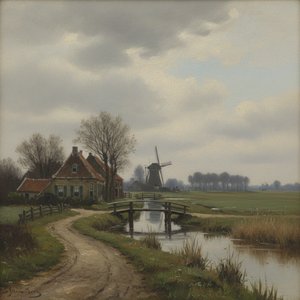
Jacob Henricus Maris: A Master of Dutch Atmospheric Realism & the Intimate Landscape
Explore the captivating world of Jacob Henricus Maris, a leading figure of the Dutch Hague School. Discover his atmospheric landscapes, signature brushstrokes & lasting influence on 19th-century art. Learn more at OriginalUniqueArt.
