

 Sdílet
 Sdílet
 Podrobnosti o díle
 Průvodce

 Stáhnout
 Podobné položky
 Slideshow
 Statistiky
Matrices for printing textiles
 Textile
- Art Deco
 1920
1920 9.0 x 12.0 cm
 Palazzo Fortuny
 Zobrazit více
Ručně malovaná olejová reprodukce
Rukou malované olejné plátno v libovolném rozměru i s rámem, vyrobené našimi umělci na zakázku. ( Přepnout na tisk Přepnout na digitální obraz)




































Vyberte si z našich přednastavených velikostí, které odpovídají původním proporcím díla.

Zadejte šířku a výšku, které potřebujete pro váš rám nebo stěnu. Protože se jedná o ruční malbu, při výběru jiného formátu může umělec kolem obrazu domalovat o něco více, nebo jej mírně oříznout — rozhodnete si vy. Před zahájením malby vám zašleme digitální náhled ke schválení. Obraz zobrazený na této stránce neodpovídá skutečnému výsledku — pouze digitální náhled jej zobrazuje.
Po přijetí objednávky vám tým OriginalUniqueArt.com zašle e-mail s pokyny a poskytne náhledovou verzi.
Celosvětová doprava () za 3–4 týdny namísto standardních 5 týdnů. (25 říjen). Bez kompromisů v kvalitě.

Zdarma celosvětová expresní doprava

Vysoce kvalitní lněné plátno

Kompletní pojištění přepravy

Záruka vrácení celního poplatku

Záruka věrného barevného souladu

100dení lhůta pro vrácení zboží (pouze při vadách výroby)

100% záruka vrácení peněz

Sleva při více objednávkách
 Skleněná varianta je dostupná pouze u rozměrů menších než 110 cm

Matrices for printing textiles
Technika reprodukce
Rozměry reprodukce
-


Celková cena za vybrané možnosti reprodukcí
Kč 6415
A Window into a Spanish Atelier: Exploring ‘Matrices for Printing Textiles’
Mariano Fortuny y Madrazo's “Matrices for Printing Textiles,” created in 1920, isn’t merely a depiction of fabric; it’s a meticulously crafted glimpse into the heart of a vibrant artistic and industrial world. This black-and-white photograph, housed within a serene art studio setting, captures a pivotal moment in Fortuny's career – his innovative approach to textile design and production. The image isn’t simply about patterns; it’s about the process itself: the careful arrangement of matrices, the tools that translated artistic vision into tangible, repeating designs destined for luxurious fabrics.
The composition immediately draws the eye to the two wall hangings dominating the scene. One bursts with a dense floral tapestry, a riot of swirling leaves and stylized blossoms rendered in rich, layered textures. The other presents a more controlled geometric design – a symmetrical framework of repeating motifs that subtly resemble abstracted flowers. Fortuny’s genius lies not just in his aesthetic choices but also in his understanding of how these designs would be realized through the intricate process of matrix creation. Notice the precise lines and angles, suggesting a methodical approach to pattern development, a testament to Fortuny's engineering mind alongside his artistic sensibilities.
The Master of Delphos and Orientalist Influence
Mariano Fortuny (1871-1949) was far more than just a painter; he was a polymath – a designer, stage lighting innovator, architect, and textile pioneer. Born in Granada, Spain, his early life was profoundly shaped by the loss of his father, leading to a move to Paris where his mother introduced him to the world of textiles. This exposure ignited a lifelong fascination with fabrics, culminating in his revolutionary “Delphos” gowns – inspired by ancient Greek drapery and celebrated for their flowing elegance. His work is deeply rooted in Orientalist themes, reflecting a fascination with exotic cultures and incorporating intricate patterns and motifs borrowed from North African and Middle Eastern designs.
Fortuny’s influence extended beyond fashion; he revolutionized theatrical lighting design with his “fortuny cyclorama dome,” a groundbreaking invention that created seamless transitions between scenes through the strategic use of reflected light. This technical innovation, combined with his artistic vision, cemented his reputation as a true innovator and a master of visual storytelling.
Decoding the Symbolism: Craft, Tradition, and Artistic Vision
Beyond the purely decorative, “Matrices for Printing Textiles” speaks to a deeper narrative about craftsmanship, tradition, and the marriage of art and industry. The photograph’s muted tones evoke a sense of timelessness, suggesting a process that has remained largely unchanged for centuries. The studio setting itself – with its worn walls and simple furniture – hints at an environment dedicated to meticulous work and artistic contemplation. The matrices themselves are not just tools; they represent the culmination of creative thought, transforming abstract ideas into reproducible patterns.
Furthermore, the image subtly references Spain’s rich history of textile production. Fortuny's work builds upon a long tradition of intricate weaving and dyeing techniques, while simultaneously pushing the boundaries of design with his innovative approach to pattern creation. The photograph serves as a visual testament to this legacy – a bridge between past and present, artistry and industry.
A Legacy in Reproduction: Bringing Fortuny’s Vision to Life
Today, OriginalUniqueArt offers high-quality reproductions of “Matrices for Printing Textiles,” allowing art lovers worldwide to experience the beauty and intricacy of this remarkable work. Whether adorning a wall or serving as a focal point in an interior design scheme, this print captures the essence of Fortuny’s artistic vision – a celebration of craftsmanship, pattern, and the enduring power of visual storytelling. Consider commissioning a custom-sized reproduction to perfectly complement your space and bring a touch of Spanish elegance into your home.
Otázky a odpovědi
Lze obraz díla „Matrices for printing textiles“ od Mariano Fortuny volně reprodukovat?
Stav autorských práv pro dílo „Matrices for printing textiles“ od Mariano Fortuny: toto dílo spadá do v rámci volného užití – autorská práva vypršela. To určuje, zda lze volně vytvářet reprodukce tohoto obrazu.
Jak výrazný je kontrast v díle „Matrices for printing textiles“ od Mariano Fortuny?
Úroveň kontrastu díla „Matrices for printing textiles“ od Mariano Fortuny je Statement.
O čem "Matrices for printing textiles" je a jakou atmosféru vyzařuje?
„Matrices for printing textiles“ od Mariano Fortuny spojuje floral pattern, geometric design, textile art, art deco style, vintage print, wall decor, spanish art s Elegant atmosférou.
Biografie umělce
Early Life and Inspiration
Mariano Fortuny, a name synonymous with opulent textiles, groundbreaking theatrical lighting, and a captivating blend of artistic disciplines, was born on May 11, 1871, in Granada, Spain. His early life was marked by profound loss – his father, Mariano Fortuny y Marsal, a celebrated genre painter, tragically passed away when the young boy was just three years old. This event profoundly shaped his family’s trajectory, leading them to relocate to Paris, France, where his mother, Cecilia de Madrazo, introduced him to the world of luxurious fabrics and materials, an experience that would irrevocably influence his artistic vision. From a remarkably young age, Fortuny demonstrated a prodigious talent across various mediums: painting, photography, sculpting, architecture, etching, and even theatrical stage lighting design. He wasn’t merely skilled; he possessed an innate curiosity and a relentless drive to innovate, quickly establishing himself as a multifaceted artist with a unique perspective. His childhood was filled with the tactile beauty of textiles – silks, velvets, brocades – each imbued with history and craftsmanship, fueling his desire to master their manipulation and transform them into works of art.Artistic Talents and Revolutionary Inventions
Fortuny’s artistic journey began in earnest during his time in Paris, where he honed his skills and developed a distinctive style characterized by a masterful command of color, texture, and composition. However, it was his inventive spirit that truly set him apart. He wasn't content to simply create beautiful objects; he sought to fundamentally change the way spaces were illuminated and experienced. This drive led to over twenty patented inventions between 1901 and 1934, revolutionizing the world of theatrical design. His most celebrated innovation was undoubtedly the “fortuny cyclorama dome,” a quarter-dome structure constructed from plaster or cloth designed to diffuse light in a seamless manner, creating an illusion of infinite space – a technique that dramatically enhanced stage productions. Fortuny’s treatise, "Eclairage Scenique" (1904), meticulously documented his groundbreaking discovery of reflecting light off various surfaces, demonstrating how manipulating the color, intensity, and properties of light could transform a scene's atmosphere and impact. This wasn’t just about lighting; it was about controlling perception itself. His work extended beyond the stage, encompassing architectural elements and even pioneering techniques in photography.Collaborations and Recognition
Fortuny’s artistic achievements quickly garnered widespread recognition throughout Europe and America during the 1920s. He forged significant collaborations with some of the most influential figures of his time, cementing his place within the international art scene. Perhaps most notably, he worked closely with Richard Wagner, the German composer, whose operas deeply inspired Fortuny’s visual interpretations of dramatic narratives. His designs for the famous opera house, La Scala in Milan, were particularly ambitious, adapting the cyclorama dome to accommodate the theater's vast scale and even inventing a sophisticated suction fan system to maintain the dome’s taut structure – a testament to his engineering ingenuity. Beyond Wagner, Fortuny collaborated with prominent patrons like the Countesses de Bearn, who commissioned elaborate sets for their private theaters, further elevating his reputation as a visionary designer. His work was celebrated by critics and collectors alike, establishing him as a leading figure in the avant-garde movement.Legacy and Enduring Influence
Mariano Fortuny passed away on May 3, 1949, in Venice, Italy, leaving behind a legacy that continues to resonate today. His influence extends far beyond his immediate artistic achievements; he inspired French novelist Marcel Proust, whose writings captured the ethereal beauty and enigmatic allure of Fortuny’s world. The story of his life was even depicted in Pere Gimferrer's novel "Fortuny," offering a fictionalized yet evocative portrayal of the artist’s complex personality and creative process. While Fortuny may have passed away decades ago, his innovations continue to shape theatrical lighting design, textile production, and our understanding of how art can transform spaces and evoke powerful emotions. His work stands as a testament to the power of interdisciplinary creativity and the enduring legacy of a true artistic visionary. Explore more about Mariano Fortuny’s inventions and designs at OriginalUniqueArt's collection, discover the impact of his work on theatrical lighting in the museum destroyed by fire (united states), a story of an unfortunate event that shaped american art history, available at OriginalUniqueArt's blog.
Mariano Fortuny
1871 - 1949 , Španělsko
Rychlé informace o umělci
- Artistic Movement Or Style: Orientalism art
- Artists Or Movements Influenced By This Artist: ['Marcel Proust']
- Artists Who Influenced This Artist: ['Richard Wagner']
- Date Of Birth: 11. května 1871
- Date Of Death: 3. května 1949
- Full Name: Mariano Fortuny y Marsal
- Nationality: Španělský
- Notable Artworks:
- Teagown
- Portrét Henriette
- Place Of Birth: Granada, Španělsko
Související články

Echoes of Time: Exploring the Enduring Appeal & Historical Context of Vintage Art Prints
Explore the captivating world of vintage art prints! Discover their history, collecting tips & enduring appeal. Expert insights on chromolithography and building a legacy collection with OriginalUniqueArt.

The Enduring Legacy of Fine Art Prints: Technique, History & Aesthetic Impact
Explore the rich history & techniques of fine art prints. Discover investment potential, assess authenticity, and learn how to preserve your collection with expert guidance. Trusted insights for discerning collectors.

Giclée Prints: Archival Quality & Aesthetic Nuances for the Discerning Collector
Explore the world of giclée prints with OriginalUniqueArt. Learn about archival quality, aesthetic nuances & investment potential. Expert guidance for discerning art collectors seeking museum-quality reproductions and lasting value.
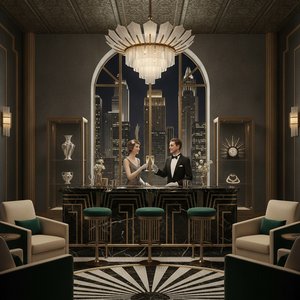
Art Deco Unveiled: The Glamour and Geometry of a Timeless Era
Discover the breathtaking allure of Art Deco. Explore the era's iconic geometry, legendary designers like Erté, and timeless glamour. Perfect for discerning collectors seeking to infuse their spaces with sophisticated modernist elegance and historical prestige.

Mariano Fortuny: A Fusion of Art, Fashion & Design – Exploring a Venetian Innovator's Legacy
Explore the captivating world of Mariano Fortuny – artist, designer & innovator. Discover his revolutionary textiles, iconic Delphos gown, and lasting influence on art, fashion & interiors. A collector's guide to a Venetian master.
