Cubist Sculpture · 1914
Bottlerack (Marcel Duchamp, 1914)
Marcel Duchamp (1887–1968) vytvořil dílo Bottlerack. Pochází z roku 1914. Patří k hnutí Cubist Sculpture. Je vyrobeno z Found Object Art. Rozměry jsou 59 × 37 cm.
- 1914
- Found Object Art
- 59 × 37 cm

 Ručně malovaná olejná reprodukce
 Sdílet
 Sdílet
 Informační list


 Stáhnout
 Podobné položky
 Slideshow
 Otázky a odpovědi

 Statistiky
Bottlerack v kostce
- Název díla
- Bottlerack
- Autor
- Marcel Duchamp (1887–1968)
- Rok narození umělce
- Blainville-Crevon, Francie
- Datum vytvoření
- 1914
- Technika
- Found Object Art
- Rozměry
- 59 × 37 cm
- Pohyb
- Cubist Sculpture
- Období
- Modern
- Motiv
- metal sculpture, industrial art, geometric form, conceptual art, shelf structure, hook arrangement
Co przedstawuje dílo Bottlerack?
The Radical Simplicity of the Everyday
In the early twentieth century, a profound shift occurred in the landscape of modern art, one that moved away from the pursuit of traditional beauty toward a deeper, more intellectual engagement with reality. At the heart of this revolution stands Marcel Duchamp’s Bottlerack, a work created in 1914 that continues to challenge our very definition of what an artwork can be. On its surface, the piece presents a deceptively simple subject: a stack of metal shelves or racks, reminiscent of industrial utility rather than high art. Yet, within this mundane structure lies the seed of a conceptual explosion. By selecting a mass-produced object and elevating it to the status of sculpture, Duchamp bypassed the need for traditional virtuosity, instead inviting us to find profound meaning in the most commonplace of items.
The sculpture embodies the rebellious spirit of Dadaism, an avant-garde movement that emerged as a visceral reaction against the chaos and perceived irrationality of the era. Through the lens of this piece, we see the rejection of established aesthetic conventions in favor of a new, provocative logic. The technique employed—primarily the use of steel tubing and hooks—emphasizes a stark, industrial materiality. There is no attempt to hide the object's utilitarian origins; rather, Duchamp celebrates its geometric precision and structural honesty. This deliberate choice underscores his rejection of "retinal art"—art intended only to please the eye—and instead directs our attention toward the intellectual act of selection and the transformative power of the artist's gaze.
Symbolism and the Birth of the Readymade
Beyond its physical presence, Bottlerack carries a heavy symbolic weight that resonates through the decades. It serves as a primary example of the "readymade," a term Duchamp used to describe ordinary manufactured goods that become art through the mere act of choice and repositioning. The stack of hooks acts as a metaphor for the artist’s intervention into the realm of the everyday, asserting that creativity can be found in appropriation and conceptual thought rather than just skillful execution. This piece is not merely a rack; it is a declaration of independence from the constraints of representation, a monument to the idea that art can exist entirely outside the boundaries of beauty or narrative.
For the modern collector or interior designer, a high-quality reproduction of Bottlerack offers more than just a visual accent; it provides a conversation piece that evokes feelings of detachment, curiosity, and intellectual rigor. The sculpture’s stark lines and industrial aesthetic lend themselves beautifully to contemporary spaces, where they can act as a focal point of minimalist sophistication. To display this work is to invite the spirit of Duchamp into one's environment—to celebrate the beauty of structure and to honor the revolutionary moment when the boundaries between life and art were forever dissolved.
Vysokorozlišené fotografie díla Bottlerack
Chráněno autorským právem: obrázek je uveden pouze pro ilustrační účely.
Další velikosti, výřezy a citace →Marcel Duchamp, Bottlerack (1914).
Odpovědi na otázky k dílu Bottlerack
V jakém roce vzniklo dílo „Bottlerack“ od Marcel Duchamp?
Dílo "Bottlerack" pochází z roku 1914. Toto datum situuje dílo do období tvůrčí činnosti Marcel Duchamp i do jeho dobové kontextu.
V jaké technice je vytvořeno dílo „Bottlerack“ od Marcel Duchamp?
„Bottlerack“ je dílo vytvořené v technice Found Object Art.
Jaké jsou rozměry originálu „Bottlerack“?
Původní rozměry díla "Bottlerack" jsou 59 x 37 cm. Původní rozměry slouží jako užitečný vodítko při výběru velikosti reprodukce.
Jaká témata se objevují v díle „Bottlerack“ od Marcel Duchamp?
„Bottlerack“ od Marcel Duchamp zobrazuje: metal sculpture, industrial art, geometric form, conceptual art, shelf structure, hook arrangement, dada aesthetic.
Patří „Bottlerack“ od Marcel Duchamp do volného tisku?
Co se týče autorských práv, dílo "Bottlerack" spadá do stále chráněno autorským právem.
Kdo vytvořil "Bottlerack"?
Dílo "Bottlerack" vytvořil/a Marcel Duchamp. Informace na této stránce popisují originální dílo umělce Marcel Duchamp.
K kterému uměleckému směru patří „Bottlerack“ od Marcel Duchamp?
Dílo „Bottlerack“ od Marcel Duchamp patří k období směru Cubist Sculpture, který dílu dodává jeho stylistický kontext.
Do jaké fáze tvůrčího rozvoje Marcel Duchamp patří dílo „Bottlerack“?
Dílo „Bottlerack“ pochází z období Dada Era v tvorbě umělce Marcel Duchamp. Tato klasifikace dílo zasazuje do kontextu vývoje jeho tvůrčí dráhy.
Kolik let bylo Marcel Duchamp, když v roce 1914 vytvořil(a) dílo „Bottlerack“?
Při vzniku díla „Bottlerack“ v roce 1914 bylo umělcům Marcel Duchamp (narozenému/é v 1887) 27 let.
O umělci, Marcel Duchamp

1887–1968, Francie
Marcel Duchamp
Život a umění Marcela Duchampa Marcel Duchamp se narodil 28. července 1887 v Blainville v Normandii ve Francii, v náručí světa, kde byl pud tvořit hluboce vžitý do jeho vlastní krve. Byl čtvrtým ze sedmi dětí narozených Eugene'em a Lucií Duchampovou. Bylo to domácovství tvůrců a myslitelů; jeho sourozenci sdíleli tuto tvůrčí neklid, stejně jako jeho bratři Jacques Villon a Raymond Duchamp-Villon, spolu se svou sestrou Suzanne Duchamp-Crotti, kteří všichni vedli životy umělců.
Také od autora Marcel Duchamp
 Nude Descending a Staircase, No.21912
 Smutný mladý muž v vlaku1911
 Given: 1. Vodopád, 2. Světelný plyn1966
 Fontána1917
Eseje k tématu Bottlerack
 Průmyslová estetika v umění: 10 ikonických děl pro váš interiérProzkoumejte 10 ikonických děl, která zachycují sílu a estetiku průmyslové revoluce. Od Monetových továren po realistické scény Maneta – ob…
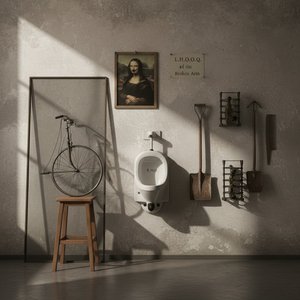 Marcel Duchamp: Challenging Conventions & Redefining Art in the 20th CenturyExplore the revolutionary art of Marcel Duchamp! Discover how his Dadaist readymades challenged artistic conventions & redefined modern art…
 The Radical Evolution of the Bottle in Still Life: From Cubist Deconstruction to Pop Art BoldnessTrace the evolution of bottle still life from Cubism to Pop Art with expert insight. Explore how masters redefined everyday objects now.