

 Náhled
 Sdílet
 Sdílet
 Podrobnosti o díle

 Stáhnout
 Podobné položky
 Rentgenové snímky
 Slideshow
Selifan interrupts Petrouchka cleaning
 Acrylic On Paper
- WallArt
- Expressionistic Surrealism
 1923
1923- High Medieval
 27.0 x 22.0 cm
 Zobrazit více
Giclée / Umělecký tisk
Giclée nebo plátěný tisk muzeální kvality s rychlou výrobou a flexibilními možnostmi povrchové úpravy. ( Koupit ručně malovaný obraz Koupit obrázek)




P118B $10

P118H $10

P118W $10

P438Z $10

P508JH $12

P508YH $12

P805H $10

P805Z $10

P919BZ $10

P919G $10

P919XJ $10

P959ZH $10

P968JZ $12

W106C $8

W218G $10

W218JH $8

W218Y $10

W307PJ $10

W316G $10

W316PJ $8

W316Y $10

W398PJ $8

W4111J $10

W500HY $15

W500JH $15

W692G $12

W849H $8

W940BG $15

W953PJ $8




Vyberte si z našich přednastavených velikostí, které odpovídají původním proporcím díla.

Můžete zadat vlastní rozměry tak, aby výtvor odpovídal konkrétnímu rámu nebo prostoru. Pokud zvolená velikost nebude odpovídat poměru stran původního obrazu, dílo buď ořížeme, nebo obraz rozšíříme pomocí zrcadlového efektu či jednobarevného okraje. Před zahájením výroby vám bude zaslán digitální náhled k schválení.
Mějte prosím na paměti, že náhled na obrazovce neodráží skutečné oříznutí nebo rozšíření. Pouze digitální náhled přesně zobrazí finální kompozici.
Ačkoliv jsou k dispozici i vlastní rozměry, pro zachování původních proporcí doporučujeme vybrat si rozměr z předdefinovaného seznamu.
Celosvětové doručení () do 2 týdnů namísto standardních 4/5 týdnů. (25 srpen)

Zdarma celosvětová expresní doprava

Vysoce kvalitní lněné plátno

Kompletní přepravní pojištění

Záruka vrácení celního poplatku

Záruka přesného barevného shodu

60denní lhůta pro vrácení zboží (pouze při vadách výroby)

100% garance vrácení peněz

Sleva při hromadné objednávce
 Skleněná varianta je dostupná pouze u rozměrů menších než 110 cm

Selifan interrupts Petrouchka cleaning
Giclée / Umělecký tisk
Rozměry reprodukce
-


Celková cena za výběr
$ 80
Popis sběratelského kousku
A Dreamscape Interrupted: Exploring Chagall’s “Selifan Interrupts Petrouchka Cleaning”
Marc Chagall's "Selifan Interrupts Petrouchka Cleaning," created in 1923, isn’t merely a depiction of a domestic scene; it’s an immersion into the artist’s intensely personal and profoundly symbolic world. This black-and-white drawing, rendered with his signature expressive lines and loose hatching, captures a fleeting moment of disruption within a tableau that feels simultaneously familiar and utterly surreal. It's a piece brimming with the echoes of Chagall’s Belarusian upbringing, his Jewish heritage, and the turbulent artistic landscape of post-World War I Europe.
The image presents us with two figures: Selifan, a character drawn from Chagall’s own folklore and often associated with a wandering spirit or mischievous element, and Petrouchka, a young man engaged in the mundane task of cleaning. Selifan, depicted mid-motion, seems to be rushing forward, perhaps carrying laundry – a detail that subtly hints at themes of transition, interruption, and the disruption of routine. The composition is deliberately asymmetrical, creating a dynamic tension that draws the eye across the frame. Notice how Chagall eschews traditional perspective; spatial relationships are flattened, contributing to the dreamlike quality of the scene and suggesting a world unbound by rigid reality.
Line, Shadow, and the Language of Expression
Chagall’s masterful technique lies in his deliberate manipulation of line. The drawing is executed entirely in pen and ink on paper, utilizing hatching, cross-hatching, and stippling to build up tones and textures. This meticulous layering creates a remarkable range of grays, transforming the seemingly simple subject matter into something far more complex and emotionally resonant. The lines aren’t precise or sharply defined; instead, they possess an inherent fluidity and expressiveness – mirroring Chagall's own approach to capturing feeling rather than simply replicating visual reality. The roughness of the texture itself speaks volumes about the immediacy and spontaneity of the creative process.
Symbolism Within a Familiar Scene
Beyond its surface narrative, “Selifan Interrupts Petrouchka Cleaning” is rich in symbolic meaning. The interruption itself can be interpreted as a disruption of order, a challenge to established routines, or perhaps even a representation of the artist’s own creative process – constantly interrupted by inspiration and memory. The presence of the dog adds another layer of whimsicality and reinforces the feeling that we've stumbled upon a scene plucked from a dream. Chagall frequently employed animals in his work as symbols of instinct, intuition, and connection to nature—elements deeply rooted in his Belarusian heritage.
A Window into Chagall’s World
Created during a period of significant artistic experimentation, this drawing exemplifies Chagall's blending of folk art traditions with modernist techniques. It reflects the influence of Primitivism – an early 20th-century movement that sought to capture raw emotion and primal instincts through simplified forms and bold colors (though here, we have monochrome). The work is deeply connected to Chagall’s personal history in Vitebsk, a town brimming with cultural diversity and serving as a constant source of inspiration. Studying this piece offers a fascinating glimpse into the mind of one of the 20th century's most beloved and enigmatic artists – a man who painted not just what he saw, but what he *felt*.
OriginalUniqueArt is proud to offer high-quality hand-painted reproductions of “Selifan Interrupts Petrouchka Cleaning,” allowing you to bring this captivating artwork into your home or office. Each reproduction meticulously recreates Chagall’s expressive style and captures the emotional depth of the original drawing.
Biografie umělce
A Life Painted in Dreams: The World of Marc Chagall
Marc Chagall, born Moishe Shagal in 1887 in the small Belarussian town of Liozna near Vitebsk, wasn’t merely a painter; he was a poet of color, a weaver of dreams, and a chronicler of memory. His life, spanning nearly a century, mirrored the tumultuous currents of the 20th century, yet his art remained steadfastly rooted in a deeply personal vision—one infused with the folklore of his Hasidic Jewish upbringing and an unwavering belief in the power of imagination. Vitebsk itself was more than just a birthplace; it became the emotional core of his artistic universe, a recurring motif populated by flying figures, whimsical animals, and the vibrant hues of remembered landscapes. The town’s unique blend of cultures—Russian Orthodox churches alongside bustling Jewish marketplaces—forged an aesthetic sensibility that would defy easy categorization throughout his long career. Though he sought formal training first with a local sign painter and later in St. Petersburg under Léon Bakst, and then in Paris at the Académie de la Grande Chaumière, Chagall never fully embraced any single artistic movement. He absorbed elements of Cubism, Symbolism, and Fauvism, but always filtered them through his own intensely personal lens, creating a style that was uniquely, unmistakably Chagall.Early Years and Artistic Beginnings
Chagall’s formative years were marked by hardship and displacement. Born into a Jewish family in Vitebsk, he experienced the trauma of pogroms—violent anti-Jewish riots—which instilled in him a profound awareness of persecution and loss. Despite these challenges, Chagall possessed an innate talent for drawing and painting from a young age. He initially studied at Vitebsk Art School, where he honed his skills under Bakst’s guidance, experimenting with theatrical design alongside visual art. This early exposure to the stage would profoundly influence his later work, particularly his use of stylized figures and dramatic compositions. His artistic explorations continued in St. Petersburg, where he developed a distinctive style characterized by bold colors and expressive brushstrokes—a stylistic approach that foreshadowed his groundbreaking achievements to come.The Symbolist Influence and Early Paintings
Chagall’s artistic development was significantly shaped by the Symbolist movement, which championed emotion and imagination over realistic representation. Artists like Gustave Moreau and Edvard Munch served as important inspirations, encouraging him to delve into psychological landscapes and explore themes of spirituality and mythology. His early paintings—such as *I and the Village* (1911)—demonstrate this influence vividly. The village isn’t rendered realistically but as a fragmented collection of recollections, imbued with symbolic meaning. Recurring motifs like birds, apples, and windows reflect Chagall's preoccupation with themes of flight, fertility, and transcendence—concepts central to Jewish mysticism and folklore. These images are not merely decorative; they convey profound emotional resonance, capturing the essence of memory and experience.Cubism and Surrealism: Bridging Formal Movements
While Chagall resisted categorization into any single artistic movement, he skillfully incorporated elements of Cubism and Surrealism into his oeuvre. He embraced Picasso’s pioneering approach to fractured perspectives and geometric abstraction, adapting it to his own expressive style. Simultaneously, he explored the dreamlike imagery and irrational juxtapositions characteristic of Surrealist art—influenced by artists like Dalí and Magritte. This fusion of styles resulted in canvases that defy conventional logic while retaining a palpable sense of emotional intensity. Works like *Over Vitebsk* (1920-1922) exemplify this synthesis, presenting a fantastical depiction of his hometown bathed in luminous colors—a testament to Chagall’s ability to transform personal experience into universal themes.Mature Years and International Recognition
The 1930s witnessed Chagall's ascent to international fame. He established himself as a celebrated artist in Paris, where he continued to produce monumental paintings that captivated audiences worldwide. The outbreak of World War II forced him to flee occupied France for the United States, seeking refuge in New York City—a period marked by profound emotional upheaval and artistic experimentation. During his time in America, Chagall created some of his most iconic works, including *White Crucifixion* (1938), a haunting meditation on suffering and faith that powerfully captured the anxieties of the era. He returned to France after the war, receiving numerous prestigious commissions—including the ceiling of the Paris Opera—and cementing his legacy as one of the greatest artists of the 20th century. His stained glass windows for Jerusalem’s Hadassah Hebrew University Medical Center synagogue stand as a testament to his enduring vision and artistic prowess. Chagall's influence on subsequent generations of artists is undeniable; he bridged the gap between European modernism and Jewish cultural identity, becoming known as “the quintessential Jewish artist of the twentieth century.” His ability to synthesize personal experience, folklore, and universal themes continues to resonate with audiences worldwide. He left behind a body of work that is both deeply personal and universally accessible, inviting viewers to lose themselves in a world painted with dreams and illuminated by hope.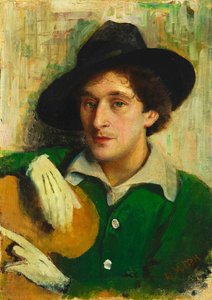
Marc Chagall
1887 - 1985 , Belorusko
Rychlé fakta
- Artistic Movement Or Style: Modernismus, Kubismus
- Artists Or Movements Influenced By This Artist:
- Surrealismus
- Moderní umělci
- Artists Who Influenced This Artist:
- Bakst
- Delaunay
- Borovikovsky
- Date Of Birth: 6 července 1887
- Date Of Death: 28. března 1985
- Full Name: Marc Chagall
- Nationality: Rusko (nyní Bělorus)
- Notable Artworks:
- I a vesnice
- Nad Vitebskem
- Bílá křížová cesta
- Place Of Birth: Liozna, Belarus
Související články

Top 10 slavných obrazů s dominantní černou barvou | OriginalUniqueArt.cz
Prozkoumejte 10 nejslavnějších obrazů s dominantní černou barvou od Van Gogha, Muncha a dalších mistrů. Objevte příběhy za uměleckými díly, techniky a inspiraci. Reprodukce obrazů nejvyšší kvality na OriginalUniqueArt.com.
The Nuances of Graphite: Exploring Emotional Depth & Technical Mastery in Pencil Drawing
Explore the captivating world of graphite drawing! Discover its rich history, master essential techniques like chiaroscuro, and learn how artists evoke emotion through this timeless medium. Expert insights for art enthusiasts.
Top 10 slavných obrazů v odstínech černé – Umění a dekor s OriginalUniqueArt
Prozkoumejte 10 nejslavnějších obrazů ovládaných odstíny černé. Objevte příběhy za uměleckými díly, techniky a inspiraci ikonických mistrů. Reprodukce obrazů s OriginalUniqueArt – luxusní dekorace pro váš domov. Prohlédněte si celou kolekci online!
Top 10 slavných obrazů v odstínech lampové černé – Umění a dekorace s OriginalUniqueArt
Prozkoumejte 10 slavných obrazů ovládaných odstíny lampové černé – od Rembrandta po Maneta. Objevte příběhy umělců, techniky a inspiraci pro váš interiér s OriginalUniqueArt.com. Reprodukce nejvyšší kvality online!

Mastering the Line: A Comprehensive Expert Guide to Technical Precision and Expressive Depth in Drawing
Elevate your artistic practice with this expert guide to mastering the line. Discover advanced techniques in graphite, charcoal, and contour drawing designed for art students seeking technical precision and expressive depth in their fine art studies.



