

 Zobrazit v interiéru
 Odeslat
 Sdílet
 Podrobnosti
 Průvodce

 Stáhnout obrázek
 Podobné kousky
 Rentgenové snímky
 Slideshow
 Statistiky
La Création de l'homme
 Olejová barva
- Obrazová tvorba na stěnu
- Naïve Art
 1958
1958- Modernismus
 43.0 x 27.0 cm
 Přečíst si více
Umělecké dílo zobrazené na této stránce je chráněno autorským zákonem, což znamená, že nemůžeme legálně vytvářet ani prodávat jeho identickou reprodukci. Tato ochrana je vymáhána na základě mezinárodních dohod, jako například Berberská úmluva a národními zákony, včetně těch stanovených v Americký autorský zákon – Díl 17. Všechna práva vyhrazena.
Jako etickou a právní alternativu nabízíme vlastní, ručně malovaná umělecká díla inspirovaná originálem. Naši zdatní a profesionální umělci si pečlivě studují styl, náladu a uměleckou podstatu originálu, aby vytvořili nové, jedinečné dílo, které vyvolává stejný pocit – přičemž zůstává samostatným originálním tvůrčím dílem.
Tato metoda je plně v souladu s autorským právem, protože nezahrnuje kopírování ani duplikování chráněného díla. Jde o kreativní reinterpretaci – nový obraz, který je inspirován originálem, ale není s ním identický.
Ručně malovaná olejová reprodukce
Ručně malované olejné plátno v libovolném rozměru i s rámem, vyrobené našimi umělci na zakázku. ( Přepnout na tiskové verze Přepnout na digitální verzi obrazu)




P118B Kč10

P118H Kč10

P118W Kč10

P438Z Kč10

P508JH Kč12

P508YH Kč12

P805H Kč10

P805Z Kč10

P919BZ Kč10

P919G Kč10

P919XJ Kč10

P959ZH Kč10

P968JZ Kč12

W106C Kč8

W218G Kč10

W218JH Kč8

W218Y Kč10

W307PJ Kč10

W316G Kč10

W316PJ Kč8

W316Y Kč10

W398PJ Kč8

W4111J Kč10

W500HY Kč15

W500JH Kč15

W692G Kč12

W849H Kč8

W940BG Kč15

W953PJ Kč8




Vyberte si z našich přednastavených velikostí, které odpovídají původním proporcím díla.

Zadejte šířku a výšku, které potřebujete pro váš rám nebo stěnu. Protože se jedná o ruční malbu, při výběru jiného formátu může umělec kolem obrazu domalovat o něco více, nebo jej mírně oříznout — rozhodnete si vy. Před zahájením malby vám zašleme digitální náhled ke schválení. Obraz zobrazený na této stránce neodpovídá skutečnému výsledku — pouze digitální náhled jej zobrazuje.
Po přijetí objednávky vám tým OriginalUniqueArt.com zašle e-mail s pokyny a poskytne náhledovou verzi.
Celosvětová doprava () za 3–4 týdny namísto standardních 5 týdnů. (23 říjen). Bez kompromisů v kvalitě.

Zdarma celosvětová expresní doprava

Vysoce kvalitní lněné plátno

Úplné pojištění přepravy

Záruka vrácení celního poplatku

Záruka věrného barevného shodu

100dení lhůta pro vrácení zboží (pouze při vadách výroby)

100% garance vrácení peněz

Sleva při více objednávkách
 Skleněná varianta je dostupná pouze u rozměrů menších než 110 cm

La Création de l'homme
Technika provedení
Velikost reprodukce
-


Celková cena
Kč 6434
The Creation of Man: A Journey Through Chagall’s Dreamscape
Marc Chagall’s *The Creation of Man*, painted in 1958, isn’t merely a depiction of the biblical narrative; it’s an immersive journey into the artist’s deeply personal and profoundly symbolic world. This vibrant pastel masterpiece, executed in the style of Naïve Art – a movement characterized by its directness, emotional intensity, and rejection of academic conventions – immediately captivates with its swirling colors and fantastical imagery. It's a testament to Chagall’s ability to distill complex religious themes into a powerfully emotive visual language, drawing on his Jewish heritage and lifelong fascination with folklore and dreams. The painting pulsates with life, inviting the viewer to step into a world where earthly concerns dissolve amidst a celestial dance of figures and symbols. The composition itself is remarkably dynamic. At its heart stands a winged man, an embodiment of Adam, reaching towards a radiant sun – a potent symbol of divine light and creative energy. This central figure isn’t depicted as a stoic patriarch but rather as a joyous participant in the act of creation, his posture suggesting both vulnerability and exhilaration. Surrounding him is a constellation of figures: a woman representing Eve, a scattering of birds symbolizing freedom and spirituality, musicians playing violins – an echo of Chagall’s own love for music and its ability to transcend earthly boundaries, and even a miniature representation of the artist himself, gazing out from within the scene. These aren’t simply illustrations of biblical events; they are fragments of Chagall’s memory, his emotions, and his deeply held beliefs woven together into a single, unified vision. The use of flattened perspective and simplified forms, hallmarks of Naïve Art, further enhances this sense of immediacy and emotional resonance. Chagall’s embrace of Naïve Art wasn’t simply an aesthetic choice; it was a deliberate rejection of the formal constraints of academic painting. He sought to bypass intellectual analysis and tap directly into the wellspring of intuition and emotion. This approach is evident in the painting’s bold color palette – yellows, blues, reds, and greens swirling together in a joyous, almost hallucinatory manner. These colors aren’t used realistically; instead, they are employed expressively, conveying mood and atmosphere with remarkable power. The loose brushstrokes contribute to this sense of movement and spontaneity, mirroring the feeling of a dream unfolding before the viewer’s eyes. The influence of Delaunay’s Orphism is subtly present in the use of color fields and the blurring of boundaries, adding another layer of complexity to the painting's visual language. Born in 1887 in Liozna, Belarus – a region steeped in Jewish history and folklore – Chagall’s artistic vision was profoundly shaped by his childhood experiences. Vitebsk, his birthplace, provided a rich tapestry of cultural influences: the vibrant marketplace, the imposing churches, and the close-knit community of Jews and Christians coexisting alongside one another. This environment fueled his imagination and informed his distinctive style, which often drew upon Jewish mythology, biblical stories, and personal memories. *The Creation of Man* is therefore not just a representation of Genesis; it’s a deeply rooted expression of Chagall’s own cultural identity and spiritual journey. His association with Expressionism, Cubism, and Surrealism further demonstrates his willingness to experiment with new forms and techniques while retaining his unique artistic voice. ## Symbolic Layers: Unpacking the Visual Language The painting is rich in symbolism, inviting multiple interpretations. The winged man represents not just Adam but also humanity’s aspiration towards transcendence – a yearning for connection with the divine. The sun, as a source of light and life, symbolizes God's creative power. The birds, often associated with freedom and spirituality, suggest the possibility of spiritual liberation through faith. The musical instruments represent the harmony between earthly existence and the realm of the divine. Even the inclusion of Chagall himself within the scene underscores the artist’s role as both creator and observer, inviting us to contemplate our own place in the grand scheme of things. The use of a circular composition further reinforces this sense of unity and interconnectedness, suggesting that all elements are part of a single, harmonious whole. ## A Legacy of Emotion: Chagall's Enduring Influence Marc Chagall’s *The Creation of Man* stands as a powerful testament to the enduring power of art to evoke emotion, stimulate imagination, and explore profound spiritual themes. His distinctive style – characterized by its simplicity, directness, and vibrant color palette – continues to inspire artists today. His work transcends stylistic boundaries, blending elements of Naïve Art with influences from Expressionism, Cubism, and Surrealism. Chagall's legacy extends far beyond the canvas; his art has touched countless lives and remains a source of wonder and inspiration for generations to come. His exploration of Jewish identity, folklore, and religious themes offers a unique perspective on universal human experiences. ## Experience the Magic: Reproductions Available OriginalUniqueArt is proud to offer meticulously crafted hand-painted reproductions of Marc Chagall’s *The Creation of Man*. Each reproduction captures the painting's vibrant colors, dynamic composition, and emotional intensity with exceptional detail and fidelity. Available in a range of sizes and mediums – from luxurious oil on canvas to high-quality giclee prints – these reproductions provide an accessible way to bring this masterpiece into your home or office. View the 5” reproduction here, or explore our other sizes and options at [OriginalUniqueArt Website Link]. Let Chagall’s *The Creation of Man* illuminate your space with its timeless beauty and profound symbolism.Otázky a odpovědi
K jakému stylu patří „La Création de l'homme“?
Směr, ke kterému patří dílo „La Création de l'homme“ od Marc Chagall, je Naïve Art. Tato klasifikace umísťuje toto dílo mezi související umělce a další umělecká díla.
Má dílo „La Création de l'homme“ náhled v rozšířené realitě?
Stránka Náhled v AR díla „La Création de l'homme“ od Marc Chagall využívá rozšířenou realitu k tomu, aby vám toto umělecké dílo zobrazila přímo ve vašem prostoru pomocí kompatibilního zařízení.
Lze obraz díla „La Création de l'homme“ od Marc Chagall volně reprodukovat?
Stav autorských práv pro dílo „La Création de l'homme“ od Marc Chagall: toto dílo spadá do stále chráněno autorským právem. To určuje, zda lze volně vytvářet reprodukce tohoto obrazu.
Biografie umělce
A Life Painted in Dreams: The World of Marc Chagall
Marc Chagall, born Moishe Shagal in 1887 in the small Belarussian town of Liozna near Vitebsk, wasn’t merely a painter; he was a poet of color, a weaver of dreams, and a chronicler of memory. His life, spanning nearly a century, mirrored the tumultuous currents of the 20th century, yet his art remained steadfastly rooted in a deeply personal vision—one infused with the folklore of his Hasidic Jewish upbringing and an unwavering belief in the power of imagination. Vitebsk itself was more than just a birthplace; it became the emotional core of his artistic universe, a recurring motif populated by flying figures, whimsical animals, and the vibrant hues of remembered landscapes. The town’s unique blend of cultures—Russian Orthodox churches alongside bustling Jewish marketplaces—forged an aesthetic sensibility that would defy easy categorization throughout his long career. Though he sought formal training first with a local sign painter and later in St. Petersburg under Léon Bakst, and then in Paris at the Académie de la Grande Chaumière, Chagall never fully embraced any single artistic movement. He absorbed elements of Cubism, Symbolism, and Fauvism, but always filtered them through his own intensely personal lens, creating a style that was uniquely, unmistakably Chagall.Early Years and Artistic Beginnings
Chagall’s formative years were marked by hardship and displacement. Born into a Jewish family in Vitebsk, he experienced the trauma of pogroms—violent anti-Jewish riots—which instilled in him a profound awareness of persecution and loss. Despite these challenges, Chagall possessed an innate talent for drawing and painting from a young age. He initially studied at Vitebsk Art School, where he honed his skills under Bakst’s guidance, experimenting with theatrical design alongside visual art. This early exposure to the stage would profoundly influence his later work, particularly his use of stylized figures and dramatic compositions. His artistic explorations continued in St. Petersburg, where he developed a distinctive style characterized by bold colors and expressive brushstrokes—a stylistic approach that foreshadowed his groundbreaking achievements to come.The Symbolist Influence and Early Paintings
Chagall’s artistic development was significantly shaped by the Symbolist movement, which championed emotion and imagination over realistic representation. Artists like Gustave Moreau and Edvard Munch served as important inspirations, encouraging him to delve into psychological landscapes and explore themes of spirituality and mythology. His early paintings—such as *I and the Village* (1911)—demonstrate this influence vividly. The village isn’t rendered realistically but as a fragmented collection of recollections, imbued with symbolic meaning. Recurring motifs like birds, apples, and windows reflect Chagall's preoccupation with themes of flight, fertility, and transcendence—concepts central to Jewish mysticism and folklore. These images are not merely decorative; they convey profound emotional resonance, capturing the essence of memory and experience.Cubism and Surrealism: Bridging Formal Movements
While Chagall resisted categorization into any single artistic movement, he skillfully incorporated elements of Cubism and Surrealism into his oeuvre. He embraced Picasso’s pioneering approach to fractured perspectives and geometric abstraction, adapting it to his own expressive style. Simultaneously, he explored the dreamlike imagery and irrational juxtapositions characteristic of Surrealist art—influenced by artists like Dalí and Magritte. This fusion of styles resulted in canvases that defy conventional logic while retaining a palpable sense of emotional intensity. Works like *Over Vitebsk* (1920-1922) exemplify this synthesis, presenting a fantastical depiction of his hometown bathed in luminous colors—a testament to Chagall’s ability to transform personal experience into universal themes.Mature Years and International Recognition
The 1930s witnessed Chagall's ascent to international fame. He established himself as a celebrated artist in Paris, where he continued to produce monumental paintings that captivated audiences worldwide. The outbreak of World War II forced him to flee occupied France for the United States, seeking refuge in New York City—a period marked by profound emotional upheaval and artistic experimentation. During his time in America, Chagall created some of his most iconic works, including *White Crucifixion* (1938), a haunting meditation on suffering and faith that powerfully captured the anxieties of the era. He returned to France after the war, receiving numerous prestigious commissions—including the ceiling of the Paris Opera—and cementing his legacy as one of the greatest artists of the 20th century. His stained glass windows for Jerusalem’s Hadassah Hebrew University Medical Center synagogue stand as a testament to his enduring vision and artistic prowess. Chagall's influence on subsequent generations of artists is undeniable; he bridged the gap between European modernism and Jewish cultural identity, becoming known as “the quintessential Jewish artist of the twentieth century.” His ability to synthesize personal experience, folklore, and universal themes continues to resonate with audiences worldwide. He left behind a body of work that is both deeply personal and universally accessible, inviting viewers to lose themselves in a world painted with dreams and illuminated by hope.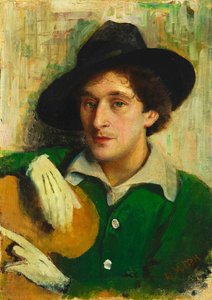
Marc Chagall
1887 - 1985 , Belorusko
Rychlé informace
- Artistic Movement Or Style: Modernismus, Kubismus
- Artists Or Movements Influenced By This Artist:
- Surrealismus
- Moderní umělci
- Artists Who Influenced This Artist:
- Bakst
- Delaunay
- Borovikovsky
- Date Of Birth: 6 července 1887
- Date Of Death: 28. března 1985
- Full Name: Marc Chagall
- Nationality: Rusko (nyní Bělorus)
- Notable Artworks:
- I a vesnice
- Nad Vitebskem
- Bílá křížová cesta
- Place Of Birth: Liozna, Belarus
Související články

The Subdued Radiance of Pastel: Exploring Nuance & Emotion in Art
Explore the nuanced world of pastel art! Discover its history, techniques & emotional power with expert insights from OriginalUniqueArt.com. Find museum-quality reproductions and learn about collecting this delicate medium.
The Magic of Pastel Art: A Guide to Soft Colors and Velvately Textures in Impressionist Masterpieces
Explore the ethereal beauty of pastel art. Discover how Impressionist masters used soft hues and velvety textures to capture light. A professional guide for art enthusiasts seeking to understand, collect, and appreciate the delicate magic of this timeless medium.

Soft Light & Velvet Touch: The Ethereal Magic of Pastel Artistry in Impressionist Masterpieces
Discover the ethereal beauty of pastel art through an Impressionist lens. Explore how masters like Monet and Renoir captured light and velvet textures, and learn to curate a collection of luminous, museum-quality masterpieces for your home.
The Subtleties of Pastel: A Comprehensive Exploration of Technique, History & Emotional Resonance
Explore the captivating world of pastel art! Discover its rich history, Impressionistic masters like Degas, emotional power & unique techniques. Find museum-quality reproductions at OriginalUniqueArt.

The Soft Power of Pastel: A Connoisseur's Guide to History, Technique, and the Art of Texture
Explore the ethereal beauty of pastel art. From Renaissance origins to Impressionist mastery, discover the history, technique, and velvety textures that define this luminous medium in our expert guide for art connoisseurs.


