
 Odeslat
 Sdílet
 Podrobnosti
 Průvodce

 Stáhnout obrázek
 Podobné kousky
 Slideshow
 Statistiky
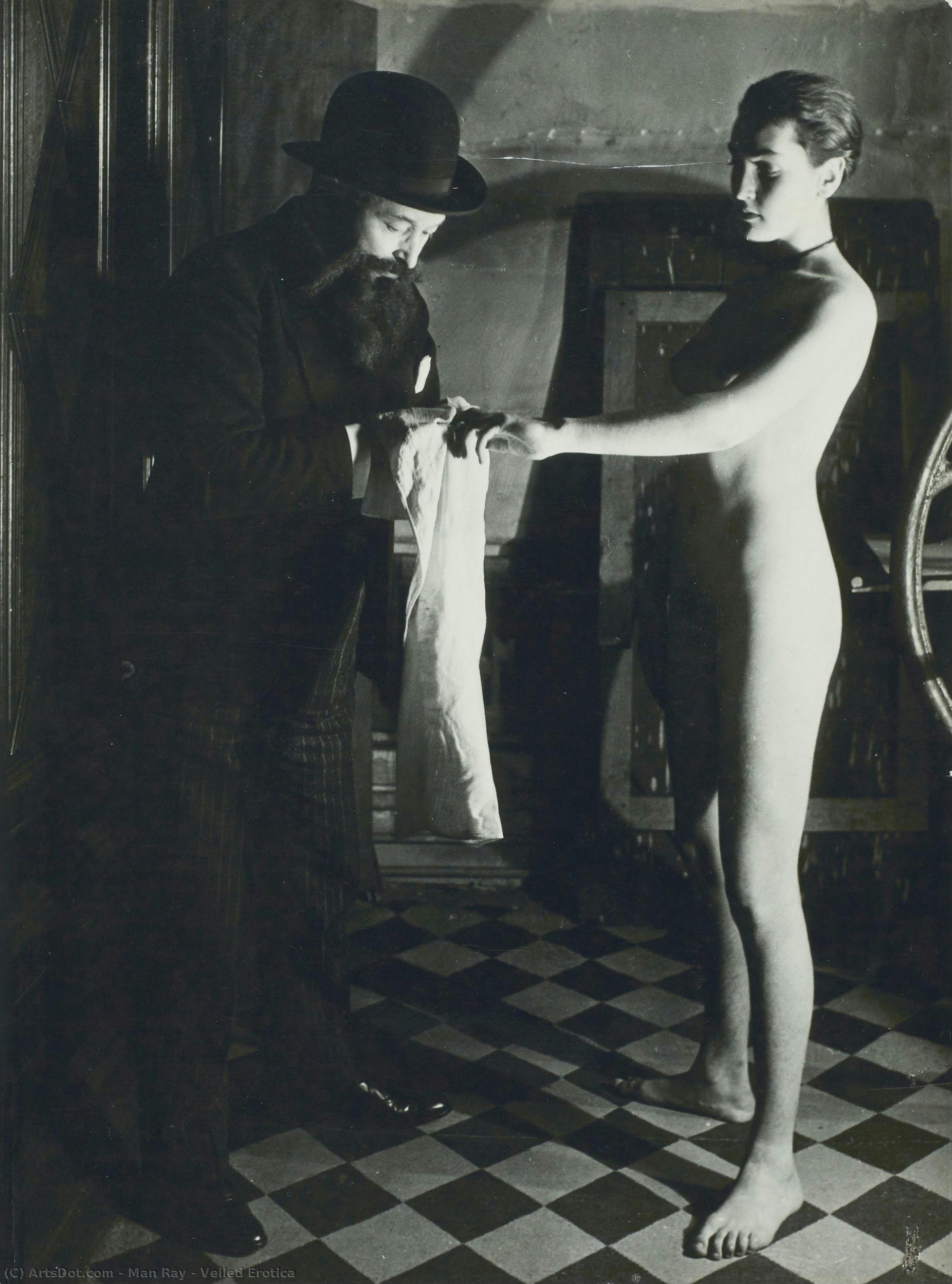
Veiled Erotica


 Přečíst si více
Zakupte si digitální obraz ve vysokém rozlišení a vylepšeném provedení, který nabízí mnohem vyšší kvalitu než online náhled.
Každý soubor je pečlivě připraven našimi specialisty s využitím pokročilých nástrojů a odborné manuální retuše. Zajišťujeme, aby každý obraz disponoval výjimečnou ostrostí, přesnou barevnou věrností a jemnými detaily.
Finální soubor vám bude do 72 hodin zaslán e-mailem, optimalizovaný pro okamžité použití v profesionálním, redakčním i tiskovém prostředí. Nabízíme stejnou kvalitu, které důvěřují špičková designová studia, nakladatelství i galerie.
Digitální obrazy
Stáhněte si soubor ve vysokém rozlišení pro osobní prohlížení, tisk a kreativní projekty. ( Přepnout na tiskové verze Objednat ručně malovanou reprodukci)
Součást každé objednávky digitálního obrazu
Exponenciální digitální doručení, zaručené
Když si vyberete OriginalUniqueArt.com, nezískáváte pouze obrázek – získáváte digitální umělecké dílo s profesionálně vylepšenými detaily, zpracované s precizností a podpořené zárukou za spokojenost. Zde je vše, co vaše objednávka automaticky obsahuje:

Bleskové doručení e-mailem
Váš digitální obraz ve vysokém rozlišení vám bude zaslán e-mailem do 72 hodin od objednávky – připraven k okamžitému použití.

Digitální soubor s podporou AI
Vaše umělecké dílo je profesionálně optimalizováno pomocí pokročilých nástrojů umělé inteligence a manuální úpravy, což zajišťuje maximální úroveň detailu, ostrosti a přesnosti barev.

Doživotní bezplatné znovuodeslání
Soubor jste omylem smazali nebo ztratili? Žádný problém – kdykoliv vám ho znovu zašleme zcela zdarma.

Bez poplatků za dovoz – navždy
Užijte si své umělecké dílo okamžitě bez celních poplatků, daní nebo nákladů na dopravu – digitální stažení je vždy bez daňových povinností.

Záruka přesnosti barev
Díky profesionálním nástrojům a správě barev zajišťujeme, aby váš digitální obraz odrážel původní barvy co nejvěrněji.

100dená záruka spokojenosti
Pokud nebudete s digitálním obrázkem spokojeni, provedeme jeho revizi nebo vám vrátíme 100% platby do 100 dnů – bez jakýchkoliv dotazů.

100% záruka vrácení peněz
Nespokojeni? Získejte plnou náhradu peněz do 100 dnů od obdržení digitálního souboru – bez zbytečných dotazů.

Slevy při hromadných objednávkách
Při koupi 3 obrazů ušetříte 10% – Při koupi 5 obrazů ušetříte 15% – Při koupi 10+ obrazů ušetříte 20%. Ideální pro kreativní projekty, galerie a agentury.
Veiled Erotica: A Surrealist Dialogue Between Form and Function
The American artist Man Ray (1890-1976) fundamentally reshaped the perception of photography, elevating it from mere documentation to a potent artistic medium capable of challenging conventions and exploring subconscious realms. His journey began in New York with paintings—a deliberate rejection of academic realism—but his encounter with Dadaism, spearheaded by Marcel Duchamp in 1915, irrevocably broadened his artistic horizons. This pivotal moment instilled in Ray’s conceptual framework the audacious notion of “ready-made,” epitomized by *The Gift* (1921), a humble flatiron adorned with tacks—a subversive gesture that signaled Dada’s rejection of traditional aesthetics and its embrace of chance and appropriation. Moving to Paris, Ray immersed himself in diverse artistic pursuits, including filmmaking, where he honed his experimental techniques and cemented his reputation as an innovator within the Surrealist movement. His fascination with capturing fleeting moments and unsettling juxtapositions—characteristics that define his oeuvre—established him as a key figure in shaping 20th-century art history.- Subject Matter: The photograph depicts Meret Oppenheim, a Swiss artist who captivated Man Ray’s imagination during the Surrealist era. Her nude form is positioned alongside a monumental printing press wheel, creating an arresting visual contrast between organic vulnerability and industrial power.
- Style: *Veiled Erotica* embodies the Dada aesthetic—characterized by its rejection of rationalism and embrace of absurdity—while simultaneously aligning with Surrealist principles focused on dreamlike imagery and psychological exploration. The composition deliberately disrupts conventional perspectives, inviting viewers to question established norms and confront hidden desires.
- Technique: Ray utilized a contact silver print process, meticulously transferring the image from a negative onto photographic paper. This technique ensured exceptional tonal accuracy and preserved subtle nuances of texture and light—essential elements in conveying the artwork’s emotive impact.
Historical Context: Dadaism and Surrealism – A Revolt Against Tradition
Born in Philadelphia to Russian Jewish immigrant parents, Emmanuel Radnitzky—known universally as Man Ray—was a restless spirit who defied easy categorization. His formative years coincided with the tumultuous period of Dadaism, born from disillusionment with World War I’s horrors and fueled by an uncompromising critique of bourgeois values. Marcel Duchamp's provocative embrace of “ready-made” objects – like *The Gift* – served as a catalyst for Dada artists to dismantle accepted artistic conventions and champion spontaneity and chance. This rebellious spirit swiftly transitioned into Surrealism, championed by André Breton—a movement that sought to liberate the imagination from rational constraints and tap into the subconscious mind.
Symbolism: The Printing Press Wheel – A Representation of Power and Vulnerability
The printing press wheel dominates the composition, symbolizing industrial progress yet simultaneously representing confinement and oppression. Its sheer size underscores the artist’s ambition to confront societal norms—a deliberate provocation intended to unsettle viewers' perceptions. Meret Oppenheim’s nude posture embodies feminine vulnerability juxtaposed against this imposing mechanical element—creating a dynamic tension that speaks to broader themes of control, desire, and resistance.
Emotional Impact: An Enigmatic Portrait – Exploring the Boundaries of Consciousness
*Veiled Erotica* transcends mere visual representation; it invites contemplation on the complexities of human psychology. The photograph’s monochromatic palette enhances its dramatic effect—highlighting textures and contrasts to amplify the artwork's emotive resonance. Ray’s masterful manipulation of light and shadow contributes to an atmosphere of mystery and intrigue, prompting viewers to delve into their own subconscious interpretations—a testament to Surrealism’s enduring power to provoke thought and inspire emotion.
Otázky a odpovědi
Jak lze vysvětlit situaci s autorskými právy u díla „Veiled Erotica“ od Man Ray?
Dílo „Veiled Erotica“ od Man Ray spadá do stále chráněno autorským právem. Autorská práva se počítají od roku úmrtí autora; Man Ray zemřel(a) v roce 1976.
Pro jaké místo a za jakým účelem se doporučuje dílo "Veiled Erotica"?
Pro použití (Accent) a prostor (Living Room) jsou u díla „Veiled Erotica“ od Man Ray uvedeny dvě doporučení.
Pod jakými dalšími jmény je Man Ray známý/á?
Man Ray je známý/á také pod jmény Emmanuel Radnitzky, Rudzitsky, Rudnitsky.
Biografie umělce
A Life Illuminated by Shadows
Emmanuel Radnitzky, a name forever intertwined with the enigmatic “Man Ray,” was more than just an artist; he was a restless spirit who defied easy categorization and relentlessly pursued the boundaries of perception. Born in Philadelphia in 1890 to Russian Jewish immigrant parents, his journey from aspiring painter to pioneering photographer and filmmaker encapsulates the radical artistic ferment of the early 20th century – a period defined by both immense upheaval and exhilarating creative experimentation. The shift from “Manny” Radnitzky to the iconic Man Ray wasn’t merely a stylistic choice; it represented a deliberate assertion of identity, a rejection of conventional labels in favor of an artistic persona unbound by expectation. His family's move to New York City proved to be a pivotal moment, plunging him directly into the heart of the burgeoning modernist scene and instilling within him a lifelong fascination with innovation and challenging established norms. Early influences – the European avant-garde showcased at Alfred Stieglitz’s 291 gallery, and the gritty realism of the Ashcan School – subtly shaped his artistic sensibilities, creating a unique blend that would inform his later work. Though initially dedicated to painting, it was photography that ultimately became his most potent medium for exploring the very nature of seeing and representation. Man Ray wasn't simply capturing images; he was inventing new ways to *perceive* the world around him.Dada, Surrealism, and the Pursuit of the Impossible
Man Ray’s artistic trajectory took a dramatic turn with his encounter with Marcel Duchamp in New York around 1915. This meeting sparked a shared fascination with dismantling traditional notions of art, leading to explorations of “ready-mades” – ordinary manufactured objects elevated to the status of artwork. This rebellious spirit propelled him directly into the heart of the Dada movement, an anti-art protest born from the disillusionment following World War I. Dada artists sought to expose the absurdity and irrationality of modern life, rejecting established values and embracing chance, humor, and provocation. Man Ray’s involvement with Dada wasn't merely a fleeting association; he became a key figure in the movement, collaborating on numerous projects and contributing significantly to its aesthetic and philosophical core. Simultaneously, he was drawn to the burgeoning Surrealist movement, led by André Breton, which sought to unlock the power of the unconscious mind, dreams, and irrationality. Man Ray’s work during this period reflects a fascinating synthesis of these two influential movements – a willingness to embrace chance and spontaneity while simultaneously exploring the hidden depths of the human psyche. He wasn't interested in creating realistic representations; instead, he aimed to capture the *feeling* of reality—its fragmented nature, its underlying anxieties, and its potential for transformation.Rayographs and the Alchemy of Light
Perhaps Man Ray is most famously recognized for his invention of the “rayograph,” a groundbreaking technique that fundamentally altered the possibilities of photography. This serendipitous discovery occurred almost accidentally in 1922 when he began experimenting with placing objects directly onto light-sensitive paper and exposing them to light – without using a camera lens. The resulting images—ethereal, ghostly compositions often imbued with an otherworldly quality—were unlike anything seen before. Rayographs weren’t simply alternative photographic methods; they represented a profound philosophical shift in the way photography was conceived. By eliminating the traditional camera lens, Man Ray stripped away the illusion of objectivity, revealing the inherent subjectivity of the medium itself. These images weren't representations *of* things; they were direct imprints *from* them—capturing not just their physical appearance but also their essence and atmosphere. The process was a form of alchemy, transforming ordinary objects into extraordinary visual experiences. Beyond rayographs, his photographic portraits – particularly those of artists like Lee Miller (who would become both his muse and collaborator) – are renowned for their striking compositions and psychological depth. He experimented relentlessly with solarization—a technique that reverses the tones in an image—multiple exposures, and darkroom manipulation, pushing the boundaries of what photography could achieve and creating a distinctive visual language.Beyond Stillness: Film and a Lasting Legacy
Man Ray’s artistic curiosity extended far beyond still images into the realm of filmmaking. His experimental films, such as *Le Retour à la Raison* (1923) and *L'Étoile de Mer* (1928), were characterized by their surreal imagery, unconventional editing techniques, and a deliberate rejection of traditional narrative structures. These weren’t stories told in a linear fashion; they were visual poems— explorations of form, rhythm, and the subconscious. He employed innovative techniques like stop-motion animation and superimposition to create disorienting and dreamlike effects, often blurring the lines between reality and illusion. While his film work remained relatively small in volume compared to his photography, it was profoundly influential on subsequent generations of avant-garde filmmakers—demonstrating a willingness to challenge cinematic conventions and explore new forms of visual expression. Throughout his long career, Man Ray continued to defy categorization, refusing to be confined by labels or expectations. He died in Paris in 1976, leaving behind a remarkably diverse body of work that continues to inspire and provoke debate. His legacy isn’t simply defined by his technical innovations but also by his unwavering commitment to artistic freedom—a true pioneer who fundamentally altered our understanding of art and its potential.A Continuing Influence
- Photography: Man Ray's techniques, particularly rayography and solarization, continue to be explored and emulated by contemporary photographers seeking innovative ways to capture light and form.
- Surrealism: His contributions significantly shaped the visual language of Surrealism, influencing countless artists across various disciplines.
- Experimental Film: His pioneering work in film laid a crucial foundation for future generations of avant-garde filmmakers who sought to break free from traditional narrative constraints.
- Fashion Photography: Man Ray’s innovative approach to portraiture and composition profoundly influenced the development of modern fashion photography, emphasizing mood, atmosphere, and psychological depth.

Man Ray
1890 - 1976 , Spojené státy americké
Rychlé informace
- Artistic Movement Or Style: Dada, Surrealismus
- Artists Or Movements Influenced By This Artist: ['Surrealismus']
- Artists Who Influenced This Artist: ['Marcel Duchamp']
- Date Of Birth: 27. srpna 1890
- Date Of Death: 18. listopadu 1976
- Full Name: Emmanuel Radnitzky
- Nationality: Američan
- Notable Artworks:
- Rayography
- Le Retour à la raison
- L'Étoile de Mer
- Place Of Birth: Philadelphia, USA