

 Náhled v interiéru
 Sdílet
 Sdílet
 Podrobnosti o díle
 Průvodce

 Stáhnout
 Podobné položky
 Rentgenové snímky
 Slideshow
 Statistiky
Noah and the Flood
 Acrylic On Canvas
- WallArt
- Renaissance Florentine Style
 1425
1425 79.0 x 79.0 cm
 Baptistery of San Giovanni
 Zobrazit více
Giclée / Umělecký tisk
Giclée nebo plátěný tisk muzeální kvality s rychlou výrobou a širokou nabídkou povrchových úprav. ( Koupit ručně malovaný obraz Přepnout na digitální obraz)




P118B Kč10

P118H Kč10

P118W Kč10

P438Z Kč10

P508JH Kč12

P508YH Kč12

P805H Kč10

P805Z Kč10

P919BZ Kč10

P919G Kč10

P919XJ Kč10

P959ZH Kč10

P968JZ Kč12

W106C Kč8

W218G Kč10

W218JH Kč8

W218Y Kč10

W307PJ Kč10

W316G Kč10

W316PJ Kč8

W316Y Kč10

W398PJ Kč8

W4111J Kč10

W500HY Kč15

W500JH Kč15

W692G Kč12

W849H Kč8

W940BG Kč15

W953PJ Kč8




Vyberte si z našich přednastavených velikostí, které odpovídají původním proporcím díla.

Zadejte šířku a výšku, které potřebujete pro váš rám nebo stěnu. Tisk lze pouze oříznout, nikdy však nelze zvětšit obraz nad jeho původní rozměr, proto při výběru jiného formátu dochází ke ztrátě části obrazu. Před samotným tiskem vám zašleme digitální náhled k schválení. Obraz zobrazený na této stránce nenabízí skutečný výřez — ten uvidíte pouze v náhledu.
Celosvětové doručení () do 2 týdnů namísto standardních 4/5 týdnů. (27 říjen)

Zdarma celosvětová expresní doprava

Vysoce kvalitní lněné plátno

Kompletní pojištění přepravy

Záruka vrácení celního poplatku

Záruka věrného barevného souladu

100dení lhůta pro vrácení zboží (pouze při vadách výroby)

100% záruka vrácení peněz

Sleva při více objednávkách
 Skleněná varianta je dostupná pouze u rozměrů menších než 110 cm

Noah and the Flood
Giclée / Umělecký tisk
Rozměry reprodukce
-


Celková cena za vybrané možnosti reprodukcí
Kč 1716
Lorenzo Ghiberti’s Noah and the Flood: A Testament to Resilience and Divine Grace
Florence, 1425 – The air hung heavy with anticipation as Lorenzo Ghiberti meticulously applied pigment to his monumental depiction of Noah's Ark. Commissioned for the Baptistery doors of Florence Cathedral, this ambitious project wasn’t merely a decorative undertaking; it was an attempt to encapsulate the profound narrative of humanity’s redemption from impending doom – a story recounted in Genesis and imbued with layers of symbolic significance. Ghiberti, already renowned for his mastery of bronze sculpture, skillfully transitioned into fresco painting, demonstrating his versatility as one of the foremost artists of the Renaissance.Style and Technique: Embracing Perspective and Detail
Ghiberti’s approach to Noah's Ark exemplifies the burgeoning humanist spirit of the era. Unlike earlier depictions that prioritized theological dogma over human emotion, Ghiberti sought to convey the drama and urgency of the biblical tale with unprecedented realism. He employed linear perspective – a revolutionary technique pioneered by Filippo Brunelleschi – to create an illusionistic space that drew viewers into the scene. Careful observation of nature informed his rendering of the ark itself, capturing its rugged texture and conveying a sense of solidity and stability. The artist’s meticulous attention to detail extended beyond the architectural elements; he painstakingly depicted the faces of Noah and his family, imbuing them with expressions of sorrow, determination, and unwavering faith.Historical Context: Florence Under Medici Patronage
The Baptistery doors project coincided with a period of remarkable artistic flourishing in Florence under the patronage of Cosimo I de’ Medici. The Medicis recognized the transformative power of art as a vehicle for disseminating humanist ideals and bolstering civic pride. Ghiberti's commission was thus inextricably linked to the broader cultural landscape of Renaissance Florence, where artists were increasingly encouraged to engage with classical antiquity and explore innovative artistic methods. Furthermore, the depiction of Noah’s Ark resonated deeply within Florentine society, reflecting anxieties about divine judgment and reaffirming the importance of moral virtue – themes that would continue to dominate artistic discourse throughout the century.Symbolism: Representing Hope Amidst Desolation
The imagery employed in Noah's Ark is replete with symbolic references rooted in Jewish tradition and Christian theology. The ark itself symbolizes God’s covenant with humanity, representing protection from divine wrath and foreshadowing the promise of salvation. The animals depicted on board – lions, bears, oxen, sheep – represent the diversity of creation and symbolize God’s providence over all living beings. Noah's unwavering faith—expressed in his prayerful posture and solemn gaze—represents moral courage and spiritual resilience. Ultimately, the painting conveys a message of hope amidst desolation, reminding viewers that even in the darkest hours, divine grace prevails.Emotional Impact: Capturing the Essence of Biblical Narrative
Ghiberti’s Noah and the Flood transcends mere visual representation; it aspires to evoke profound emotional responses from its audience. The artist skillfully captures the palpable tension of the moment as Noah prepares for the deluge, conveying a sense of apprehension mingled with resolute conviction. The faces of Noah and his family radiate compassion and sorrow—expressions that resonate across centuries and speak to the universal human experience of suffering and redemption. By immersing viewers in this dramatic tableau, Ghiberti achieves an unparalleled feat of artistic storytelling, cementing Noah’s Ark as one of the most enduring symbols of faith and resilience in Western art history.Otázky a odpovědi
Jaká technika byla u díla "Noah and the Flood" použita a v jakém roce vzniklo?
Technikou díla „Noah and the Flood“ od Lorenzo Ghiberti je Acrylic On Canvas a dílo pochází z roku 1425.
Kde si mohu koupit print díla „Noah and the Flood“ od Lorenzo Ghiberti?
Tisk díla „Noah and the Flood“ od Lorenzo Ghiberti si můžete objednat přímo na jeho stránce Kvalitní umělecký tisk: umělecký tisk na bavlněném plátně nebo archivním plátnovém papíře.
K jakému stylu patří „Noah and the Flood“?
„Noah and the Flood“ je dílo z období Renaissance Florentine Style. Tento směr představuje uměleckou tradici, jejíž je dílo součástí.
Biografie umělce
A Florentine Renaissance Forged in Bronze: The Life and Legacy of Lorenzo Ghiberti
Lorenzo Ghiberti, born in 1378 near Florence, Italy, wasn’t simply a sculptor; he was a crucible where the burgeoning spirit of the Renaissance first began to truly solidify. His early life, steeped in the practical artistry of goldsmithing under his stepfather, Bartolo di Michele – a craftsman known for his skill and experience – laid the foundation for a career that would forever alter the course of Florentine art. This initial training instilled within him an unparalleled mastery of metalwork, a deep understanding of form and texture, and a meticulous attention to detail that would become hallmarks of his distinctive style. However, Ghiberti’s ambitions stretched far beyond the confines of the workshop; he possessed a restless intellectual curiosity and a desire to explore the broader currents of artistic innovation sweeping across Italy. Formal painting lessons from Gherardo Starnina broadened his horizons, introducing him to the principles of perspective and composition – skills that would prove invaluable in his later sculptural endeavors. A brief sojourn in Rimini, assisting Carlo I Malatesta with frescoes during a devastating plague outbreak in 1400, exposed him to diverse artistic influences and honed his ability to work under pressure, shaping his approach to large-scale projects. Little did he realize that these formative experiences were preparing him for the monumental competition that would catapult him into the annals of art history.The Baptistery Doors: A Triumph of Skill and Vision
In 1401, Florence held a contest of unparalleled significance – a competition to select an artist to create new bronze doors for the city’s magnificent Baptistery. This commission was considered the most prestigious in the entire region, a testament to the artistic prowess of those chosen to adorn this sacred space. Lorenzo Ghiberti, a young but exceptionally talented sculptor, entered this arena alongside some of the era's most formidable minds, including the towering figure of Filippo Brunelleschi – an architect and engineer whose innovative designs were reshaping the city’s skyline. The challenge was daunting: to depict the *Sacrifice of Isaac* in relief on the doors, a biblical narrative rich with symbolism and theological significance. Ghiberti’s panel wasn't merely a demonstration of technical skill; it was a revelation – a breathtaking display of innovation, grace, and emotional depth. His innovative approach, characterized by remarkably graceful figures, a sophisticated understanding of perspective, and an almost palpable sense of movement, secured his victory with astonishing speed. This triumph wasn’t simply about winning a commission; it was a declaration of a new artistic sensibility, a bold assertion that Florence was on the cusp of a revolutionary era in sculpture. He began work immediately on the North Doors, a project that would consume over two decades and fundamentally transform the Baptistery into a showcase for Renaissance artistry – a space where beauty, skill, and spiritual contemplation converged.The “Gates of Paradise”: A Masterpiece Unveiled
Following the resounding success of the North Doors, Ghiberti was entrusted with an even more ambitious undertaking: the creation of a second set of doors for the Baptistery’s east entrance – doors that would ultimately become known as the *Gates of Paradise*. Completed in 1452, these magnificent panels represent the pinnacle of Ghiberti's artistic achievement and cemented his reputation as one of the greatest sculptors of all time. Each panel depicts scenes from the Old Testament with an unprecedented level of realism, detail, and emotional depth – a testament to Ghiberti’s mastery of bronze casting and relief sculpture. The panels aren’t merely representations of biblical stories; they are immersive narratives brought to life through meticulous attention to anatomy, drapery, and spatial relationships. He pioneered the use of perspective to create a sense of depth and realism that was revolutionary for his time, drawing inspiration from classical antiquity while simultaneously forging a distinctly Renaissance style. The nickname “Gates of Paradise,” bestowed upon these doors by none other than Michelangelo, speaks volumes about their beauty and splendor – a testament to Ghiberti’s ability to capture the ethereal quality of divine grace within the confines of bronze.Style, Influences, and Lasting Impact
Ghiberti's artistic style represents a beautiful synthesis of Gothic elegance and the emerging principles of Renaissance humanism. While rooted in the traditions of medieval craftsmanship – his early training instilled a deep respect for established techniques and materials – he embraced classical antiquity, incorporating elements of Roman art and sculpture into his work. This fusion created a unique aesthetic that was both refined and emotionally resonant. He wasn’t simply imitating the past; he was reinterpreting it through a distinctly Renaissance lens, imbuing ancient forms with new life and meaning. Beyond his technical brilliance, Ghiberti possessed an exceptional understanding of human psychology and emotion – qualities that are evident in the expressive faces and gestures of his figures. His work wasn’t merely decorative; it sought to evoke contemplation, inspire awe, and convey profound spiritual truths. Furthermore, Ghiberti's legacy extends beyond his artistic achievements through *Commentarii*, an autobiographical treatise on art history, theory, and technique – one of the earliest examples of its kind by an artist. This meticulously documented account provides invaluable insights into the Renaissance mindset and offers a unique perspective on the development of Western art.A Legacy Cast in Bronze
Lorenzo Ghiberti’s contributions were instrumental in establishing Florence as a leading artistic center during the Renaissance, and the “Gates of Paradise” remain an enduring symbol of Florentine civic pride and artistic achievement. His innovations paved the way for masters like Leonardo da Vinci and Michelangelo, solidifying his place as a pivotal figure in Western art history. Ghiberti’s meticulous attention to detail, his mastery of perspective, and his ability to imbue his sculptures with emotional depth set a new standard for artistic excellence. *His legacy continues to inspire artists and art lovers alike,* reminding us of the power of human creativity and the enduring beauty of Renaissance artistry.- Major Works: North Doors & East Doors (Gates of Paradise) – Florence Baptistery, Bronze Statues for Orsanmichele.
- Key Influences: Gothic Art, Classical Antiquity, Renaissance Humanism.
- Artistic Style: Blending Gothic elegance with emerging Renaissance principles; naturalistic depictions, innovative use of perspective.
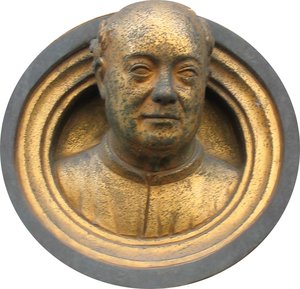
Lorenzo Ghiberti
1378 - 1455 , Itálie
Rychlé informace o umělci
- Artistic Movement Or Style: Renesanční humanismus
- Artists Or Movements Influenced By This Artist:
- Donatello
- Masolino
- Artists Who Influenced This Artist:
- Bartolo di Michele
- Gherardo Starnina
- Date Of Birth: 1378
- Date Of Death: 1455
- Full Name: Lorenzo Ghiberti
- Nationality: Italista
- Notable Artworks:
- Brány Nejsvětějšího Svatého
- Brány Nordsvěte
- Place Of Birth: Florence, Itálie
Související články
Illuminating Faith & Power: A Journey Through Medieval Art (c. 500 – c. 1500)
Explore the rich history of Medieval Art (c. 500 – c. 1500) with OriginalUniqueArt. Discover Byzantine mosaics, Gothic cathedrals & Renaissance masterpieces. Expert insights & museum-quality reproductions.

Sacred Symbols & Golden Light: A Journey Through the Divine Artistry of the Early Medieval Era
Embark on a visual journey through Early Medieval art. Explore the profound beauty of illuminated manuscripts, sacred symbols, and golden light through an expert historical lens, celebrating the enduring legacy of medieval craftsmanship and divine artistry.

Divine Light & Golden Splendor: A Journey Through the Sacred Grandeur of High Medieval Art
Embark on a soulful journey through High Medieval art. Explore the divine light of Gothic cathedrals, Byzantine splendor, and sacred masterpieces that shaped Western history with our expert-led cultural reflections.
Late Medieval Masterpieces: 10 Artworks That Defined an Era | OriginalUniqueArt
Journey through 10 defining Late Medieval masterpieces – from Giotto's frescoes to Jan van Eyck’s realism. Explore the stories, techniques & vibrant colors of Gothic art. Find museum-quality reproductions and elevate your home decor with OriginalUniqueArt.com! Discover all masterpieces on OriginalUniqueArt.com
High Medieval Art: 10 Masterpieces That Shaped an Era | OriginalUniqueArt
Journey through High Medieval Art! Explore 10 iconic masterpieces – from Giotto's frescoes to stunning Gothic cathedrals. Discover the stories behind these timeless paintings, sculptures & illuminated manuscripts. Find museum-quality art reproductions at OriginalUniqueArt.com.