Renesance · 1482
Cavern with ducks (Leonardo Da Vinci, 1482)
Leonardo Da Vinci (1452–1519) vytvořil dílo Cavern with ducks. Pochází z roku 1482. Patří k hnutí Renesance. Je vyrobeno z Tuš na papíře. Nachází se v Royal Library v Windsor, Spojené království. Rozměry jsou 220 × 158 cm.
- 1482
- Tuš na papíře
- 220 × 158 cm
- Royal Library, Windsor

 Náhled v interiéru

 Ručně malovaná olejná reprodukce
 Sdílet
 Sdílet
 Informační list


 Stáhnout
 Podobné položky
 Rentgenové snímky
 Slideshow
 Otázky a odpovědi

 Statistiky
Cavern with ducks v kostce
- Název díla
- Cavern with ducks
- Autor
- Leonardo Da Vinci (1452–1519)
- Rok narození umělce
- Vinci, Itálie
- Datum vytvoření
- 1482
- Technika
- Tuš na papíře
- Rozměry
- 220 × 158 cm
- Kde jej vidět
- Royal Library, Windsor, Spojené království
- Pohyb
- Renesance
- Období
- Renesance
- Motiv
- anatomy, renaissance, leonardo da vinci, scientific study, lung sketch, heart detail
Co przedstawuje dílo Cavern with ducks?
Leonardo Da Vinci & Andrea del Verrocchio – A Synthesis of Genius
Leonardo di ser Piero da Vinci (1452–1519) stands as arguably the most universally recognized figure of the Renaissance—a true polymath whose insatiable curiosity propelled him across disciplines, leaving an indelible mark on art, science, and engineering. His very name has become synonymous with genius, a testament to his extraordinary breadth of talent and visionary thinking.
His apprenticeship under Andrea del Verrocchio in Florence marked the genesis of his artistic journey. Within Verrocchio’s workshop, Leonardo wasn't merely learning to paint or sculpt; he was immersed in an environment that fostered experimentation and observation—a crucible where artistic mastery intertwined with scientific inquiry.
Cavern With Ducks – Anatomical Precision Meets Natural Observation
“Cavern with ducks,” painted around 1482-85, exemplifies this fusion of art and science. It’s a meticulously rendered study focusing on the human anatomy—specifically, detailed sketches of the lungs and heart—a testament to Leonardo's pioneering approach to understanding the intricacies of life’s vital organs.
The artwork showcases Leonardo’s masterful technique using pen and ink on paper. Fine, controlled lines delineate the shapes and textures of the organs with remarkable accuracy, complemented by subtle shading achieved through hatching and cross-hatching techniques. This monochromatic sepia tone evokes the period's traditional materials, emphasizing the precision of the anatomical forms.
Historical Context & Significance – Breaking Boundaries in Scientific Illustration
Created during Leonardo’s early Milanese period, “Cavern with ducks” sits firmly within a broader context—one where scientific exploration was inextricably linked to artistic expression. At a time when anatomical studies were often confined to theoretical treatises, Leonardo's sketches represented a radical departure, pushing the boundaries of observational detail and challenging conventional understandings.
More than just a scientific document, “Cavern with ducks” embodies the Renaissance spirit—a fervent desire for discovery, fueled by intellectual curiosity and underpinned by an unwavering belief in empirical observation. Owning a reproduction of this work connects you to a pivotal moment in history when art and science converged to unlock the secrets of human physiology.
Style & Technique – The Legacy of Leonardo’s Observation
Leonardo's meticulous attention to detail—a hallmark of his artistic style—is palpable throughout “Cavern with ducks.” He employed techniques honed through years of anatomical dissection, resulting in drawings that capture the subtle nuances of muscle structure and vascular arrangement. This dedication to realism reflects Leonardo’s relentless pursuit of understanding the human body, blending artistic mastery with scientific inquiry.
The use of hatching and cross-hatching contributes significantly to the artwork's depth and dimensionality, creating a sense of volume that brings the internal organs to life on paper. The careful rendering of textures—smooth surfaces juxtaposed with intricate vascular networks—further enhances the visual impact, demonstrating Leonardo’s unparalleled skill in conveying anatomical complexity.
Symbolism & Emotional Impact – A Reflection of Renaissance Humanism
Beyond its scientific precision, “Cavern With Ducks” speaks to a deeper philosophical concern—one rooted in Renaissance humanism. The artwork symbolizes not only the pursuit of knowledge but also an appreciation for the beauty and wonder inherent in observing the natural world. Leonardo’s drawings invite viewers to contemplate the profound interconnectedness between art and science, fostering awe and admiration for the intellectual achievements of the era.
The composition—centered on two detailed sketches—creates a balanced visual structure that draws attention to the anatomical forms while simultaneously conveying a sense of contemplative stillness. The mirror writing adds an element of intellectual challenge, reflecting Leonardo’s commitment to rigorous thought and his belief in the transformative power of observation.
Ve kterém muzeu se nachází Cavern with ducks?
Royal Library
Windsor, Spojené království
Původy a dějiny Royal Library Royal Library ve Windsoru ve Spojeném království zahájila svou formální existenci v roce 1757. Založil ji král George II prostřednictvím vytvoření Staré královské knihovny. Tento základní kámen nastavil precedens pro růst sbírky spolu s monarchií, přičemž její evoluce zrcadlí samotný vzestup koruny.


Vysokorozlišené fotografie díla Cavern with ducks

Leonardo Da Vinci, Cavern with ducks (1482), Royal Library. Veřejná doména
Odpovědi na otázky k dílu Cavern with ducks
Kde je dnes možné vidět dílo „Cavern with ducks“ od Leonardo Da Vinci?
Dílo „Cavern with ducks“ od Leonardo Da Vinci je vystaveno v instituci Royal Library, Windsor, Spojené království. Uvedené muzeum se vztahuje k originálu, nikoliv k reprodukcím.
V jakém roce vzniklo dílo „Cavern with ducks“ od Leonardo Da Vinci?
Dílo "Cavern with ducks" pochází z roku 1482. Toto datum situuje dílo do období tvůrčí činnosti Leonardo Da Vinci i do jeho dobové kontextu.
V jaké technice je vytvořeno dílo „Cavern with ducks“ od Leonardo Da Vinci?
Technikou díla „Cavern with ducks“ od Leonardo Da Vinci je Tuš na papíře. Reprodukce mají za cíl věrně zachytit vzhled této techniky.
Jaké jsou rozměry originálu „Cavern with ducks“?
Původní rozměry díla "Cavern with ducks" jsou 220 x 158 cm. Původní rozměry slouží jako užitečný vodítko při výběru velikosti reprodukce.
Co zachycuje dílo "Cavern with ducks"?
Motivy díla „Cavern with ducks“ jsou anatomy, renaissance, leonardo da vinci, scientific study, lung sketch, heart detail, perspective drawing, human form.
Patří „Cavern with ducks“ od Leonardo Da Vinci do volného tisku?
Co se týče autorských práv, dílo "Cavern with ducks" spadá do v rámci volného užití – autorská práva vypršela.
Kdo vytvořil "Cavern with ducks"?
Autorem díla „Cavern with ducks“ je Leonardo Da Vinci. Práce je v katalogu uvedena pod jménem Leonardo Da Vinci.
K kterému uměleckému směru patří „Cavern with ducks“ od Leonardo Da Vinci?
Dílo „Cavern with ducks“ od Leonardo Da Vinci patří k období směru Renesance, který dílu dodává jeho stylistický kontext.
Do jaké fáze tvůrčího rozvoje Leonardo Da Vinci patří dílo „Cavern with ducks“?
V rámci kariéry umělce Leonardo Da Vinci spadá dílo „Cavern with ducks“ do období Early Milanese. Tato fáze umožňuje jeho srovnání s dalšími díly tohoto umělce.
O umělci, Leonardo Da Vinci

1452–1519, Itálie
Leonardo Da Vinci
Raný život a vzdělání Leonarda Da Vinciho Leonardo Da Vinci se narodil 15. dubna 1452 nedaleko toskánského horského městečka Vinci. Jeho kořeny byly definovány specifickou sociální realitou: byl mimotážeňským synem úspěšného notáře Piera Fruosina di Antonia da Vinciho a ženy z nižší společenské vrstvy jménem Caterina Cambi. Tento původ jej od samého počátku zasadil do sociální struktury toskánského venkova.
O umělci Leonardo Da Vinci Významná díla umělce Leonardo Da Vinci
Také od autora Leonardo Da Vinci
 Mona Lisa (La Gioconda)1519
 Poslední večeře1495
 Lady with an Ermine1490
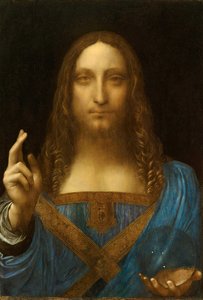 Salvator Mundi1500

Eseje k tématu Cavern with ducks
 25 Must-See Masterpieces: A Journey Through London's Royal CollectionExplore 25 iconic treasures from London's Royal Collection. Discover timeless masterpieces on OriginalUniqueArt.com.
 25 Masterpieces by Leonardo da Vinci: The Ultimate Guide to a Renaissance GeniusJourney through the genius of Leonardo da Vinci. Explore 25 iconic Renaissance masterpieces, from the Mona Lisa to The Last Supper. Discove…
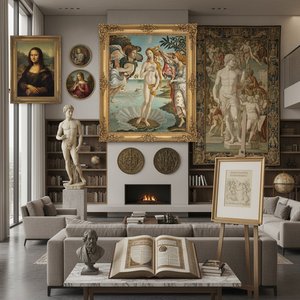 Renesanční humanismus v umění: Top 10 mistrovských děl pro váš interiérProzkoumejte 10 ikonických děl renesance – od Da Vinciho po Michelangela. Objevte příběhy, techniky a nadčasovou krásu humanismu v umění. R…