- Domů

- Digitální fotografie
- Le Corbusier
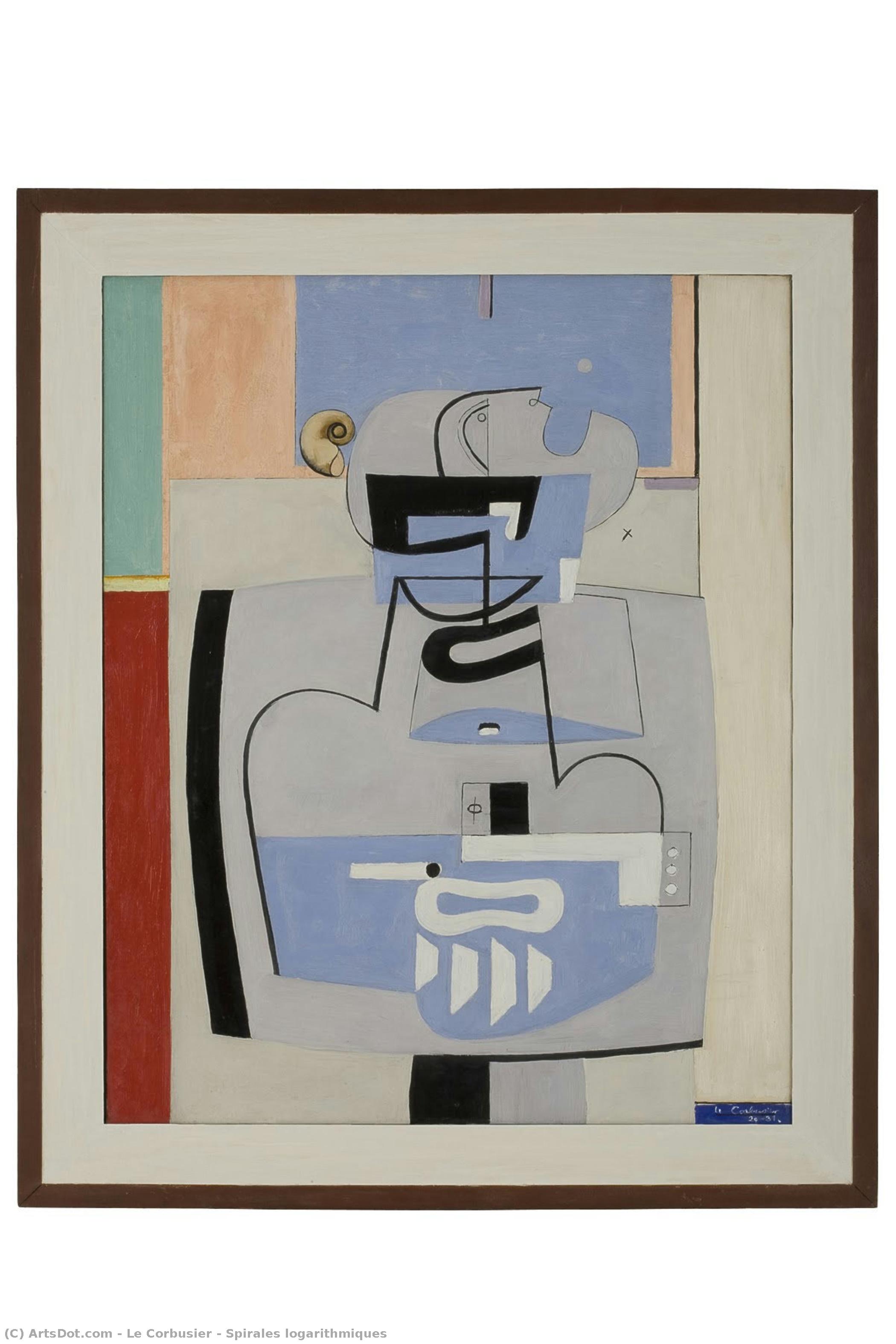
- Spirales logarithmiques
 Koupit tisk Objednat reprodukci
 Sdílet
 Sdílet
 Podrobnosti o díle
 Přidat do oblíbených

 Stáhnout
 Podobné položky
 Rentgenové snímky
 Slideshow
Spirales logarithmiques

 Zobrazit více
Koupě vysoce rozlišeného, vylepšeného digitálního obrazu, který je mnohem kvalitnější než online náhled.
Každý soubor je pečlivě připraven našimi odborníky pomocí pokročilých nástrojů a expertní manuální retuše. Zajišťujeme, aby každý obraz disponoval výjimečnou ostrostí, přesnou barevnou věrností a jemnými detaily.
Finální soubor vám bude do 72 hodin zaslán e-mailem, optimalizovaný pro okamžité použití v profesionálním, redakčním i tiskovém prostředí. Nabízíme stejnou kvalitu, které důvěřují špičková designová studia, nakladatelství i galerie.
Digitální obrazy
Stáhněte si soubor ve vysokém rozlišení pro osobní prohlížení, tisk a kreativní projekty.
Součást každé objednávky digitálního obrazu
Profesionální digitální doručení, zaručeno.
Když si vyberete OriginalUniqueArt.com, nezískáváte pouze obrázek – získáváte digitální umělecké dílo s profesionálně vylepšenými detaily, zpracované s precizností a podpořené zárukou za spokojenost. Zde je vše, co vaše objednávka automaticky obsahuje:

Rychlé doručení e-mailem
Váš digitální obraz ve vysokém rozlišení vám bude zaslán e-mailem do 72 hodin od objednávky – připraven k okamžitému použití.

Digitální soubor s využitím AI
Vaše umělecké dílo je profesionálně optimalizováno pomocí pokročilých nástrojů umělé inteligence a manuální úpravy, což zajišťuje maximální úroveň detailu, ostrosti a přesnosti barev.

Bezplatné doživotní znovuodeslání
Soubor jste omylem smazali nebo ztratili? Žádný problém – kdykoliv vám ho znovu zašleme zcela zdarma.

Bez poplatků za dovoz – navždy
Užijte si své umělecké dílo okamžitě bez celních poplatků, daní nebo nákladů na dopravu – digitální stažení je vždy bez daňových povinností.

Záruka přesnosti barev
Pomocí profesionálních nástrojů a správy barev zajišťujeme, aby váš digitální obraz odrážel původní barvy co nejvěrněji.

60denní záruka spokojenosti
Pokud nebudete s digitální fotografií spokojeni, provedeme její revizi nebo vám vrátíme 100% během 60 dnů – bez jakýchkoliv dotazů.

100% záruka vrácení peněz
Nespokojeni? Získejte plnou částku zpět do 60 dní od přijetí vašeho digitálního souboru – bez jakýchkoliv dotazů.

Slevy při hromadných objednávkách
Koupěte si 3 obrazy, ušetřete 10% - Koupěte si 5, ušetřete 15% - Koupěte si 10+, ušetřete 20%. Ideální pro kreativní projekty, galerie a agentury.
Biografie umělce
The Formative Years: From Watchmaking to Artistic Vision
Charles-Édouard Jeanneret, the man who would become globally recognized as Le Corbusier, emerged from the heart of Switzerland’s watchmaking country, La Chaux-de-Fonds, in 1887. This birthplace profoundly shaped his aesthetic sensibilities. The precision and meticulous craftsmanship inherent in the creation of intricate timepieces instilled within him a deep appreciation for form, function, and the beauty of industrial processes. His father, an artisan specializing in enameling watch cases and boxes, and his mother, a music teacher, fostered a unique environment where artistic expression intertwined with technical skill. Even the austere atmosphere of the local Masonic lodge, L'Amitié, emphasizing rectitude and exactitude, left its mark on the young Jeanneret’s developing worldview. Though he lacked formal architectural training in his youth, he pursued studies at the municipal art school, focusing on applied arts related to watchmaking—a foundation that would unexpectedly inform his later designs. Under the guidance of Charles L'Eplattenier, he honed his skills in painting from nature, cultivating a profound connection with the natural world and an understanding of its underlying structures. Early architectural explorations, like the Villa Fallet (1905) and subsequent projects with René Chapallaz—Villas Jacquemet and Stotzer—revealed a nascent talent blending local alpine styles with emerging geometric patterns, hinting at the revolutionary path he would soon forge.European Wanderings and the Crucible of Modernity
The years between 1907 and 1914 were pivotal for Jeanneret, marked by extensive travels across Europe that served as a crucial education beyond any formal schooling. He immersed himself in the artistic and architectural landscapes of Italy, Budapest, Vienna, Germany, the Balkans, Turkey, Greece, Pompeii, and Rome. These journeys weren’t merely sightseeing; they were intensive studies of form, space, and historical precedent. In Vienna, an encounter with Gustav Klimt proved inspiring, while a brief stint working under Peter Behrens—alongside future titans Ludwig Mies van der Rohe and Walter Gropius—exposed him to the principles of industrial design and standardization. The Florence Charterhouse in Galluzzo left a lasting impression, sparking ideas about worker housing and utopian living spaces – concepts that would later define his urban planning theories. Perhaps most significantly, his observations of the Parthenon in Athens profoundly influenced his architectural thinking, leading him to develop his concept of “the Modulor,” a system of proportions based on the human body. A crucial period followed as a draftsman for Auguste Perret in Paris, where he gained invaluable experience with reinforced concrete construction—a material that would become central to his future designs and allow him to realize his ambitious visions.Purism, The Five Points, and Architectural Revolution
The post-World War I era witnessed the crystallization of Le Corbusier’s architectural philosophy. In 1917, he co-founded *L’Esprit nouveau* with Amédée Ozenfant, advocating for Purism—a movement that rejected ornamentation in favor of essential forms and clarity. This pursuit of purity extended to his architecture, culminating in the articulation of his “Five Points of Architecture” in his seminal 1923 work, *Vers une architecture*. These principles – pilotis (columns), a free plan, a free facade, horizontal windows, and roof gardens—became foundational tenets of modern architecture, liberating buildings from traditional constraints and embracing functionality. The Maison Blanche (1912), built for his parents, served as an early testing ground for these ideas, but it was the Villa Savoye (1931) that truly exemplified them, establishing Le Corbusier as a leading figure in the modernist movement. This iconic structure, with its clean lines, open spaces, and integration of natural light, became a symbol of a new architectural order—one defined by efficiency, rationality, and a rejection of historical styles.Urban Visions, Brutalist Expressions, and Enduring Legacy
Le Corbusier’s influence extended far beyond individual buildings; he envisioned entire cities designed to improve the lives of their inhabitants. His involvement in planning and designing Chandigarh, India’s new capital city, showcased his urban planning theories on a grand scale—a bold attempt to create a modern utopia. The Unité d'Habitation (1952) in Marseille was a pioneering example of modular housing, demonstrating his commitment to providing functional and efficient living spaces for the masses. However, it was with Notre-Dame du Haut (1955), a chapel in Ronchamp, that Le Corbusier revealed a surprising shift in his approach. Departing from the strict geometric principles of his earlier work, he embraced more organic forms and expressive architecture, showcasing a willingness to explore new possibilities. In 1965, Le Corbusier passed away, leaving behind a body of work that continues to inspire and provoke debate. The recognition afforded by UNESCO in 2016—designating seventeen of his architectural works across seven countries as World Heritage Sites—underscores his outstanding contribution to the Modern Movement. His theories and designs profoundly influenced architecture, urban planning, and design worldwide, and his emphasis on functionality, modularity, and modern materials continues to shape contemporary practices. Le Corbusier remains a towering figure in architectural history, a visionary whose ideas continue to resonate today.Notable Works
- Villa Savoye: A quintessential example of the "Five Points of Architecture," embodying modern living.
- Unité d'Habitation: Pioneering modular housing, a prototype for efficient urban dwelling.
- Notre-Dame du Haut: A departure from strict modernism, showcasing expressive and organic forms.
- Chandigarh: A large-scale urban planning project demonstrating his vision for a modern city.
- LC4 Chair: An iconic piece of furniture design, exemplifying comfort and modernist aesthetics.

Le Corbusier
1887 - 1965

