

 Zobrazit v interiéru
 Odeslat
 Sdílet
 Podrobnosti
 Průvodce

 Stáhnout obrázek
 Podobné kousky
 Rentgenové snímky
 Slideshow
 Statistiky
PATRES ET CHEVAL PIE


 Přečíst si více
Giclée / Umělecký tisk
Giclée nebo plátěný tisk muzeální kvality s rychlou výrobou a širokou nabídkou povrchových úprav. ( Objednat ručně malovanou reprodukci Přepnout na digitální verzi obrazu)




P118B $10

P118H $10

P118W $10

P438Z $10

P508JH $12

P508YH $12

P805H $10

P805Z $10

P919BZ $10

P919G $10

P919XJ $10

P959ZH $10

P968JZ $12

W106C $8

W218G $10

W218JH $8

W218Y $10

W307PJ $10

W316G $10

W316PJ $8

W316Y $10

W398PJ $8

W4111J $10

W500HY $15

W500JH $15

W692G $12

W849H $8

W940BG $15

W953PJ $8




Vyberte si z našich přednastavených velikostí, které odpovídají původním proporcím díla.

Můžete zadat vlastní rozměry tak, aby výtvor odpovídal konkrétnímu rámu nebo prostoru. Pokud zvolená velikost nebude odpovídat poměru stran původního obrazu, dílo buď ořížeme, nebo obraz rozšíříme pomocí zrcadlového efektu či jednobarevného okraje. Před zahájením výroby vám bude zaslán digitální náhled k schválení.
Mějte prosím na paměti, že náhled na obrazovce neodráží skutečné oříznutí nebo rozšíření. Pouze digitální náhled přesně zobrazí finální kompozici.
Ačkoliv jsou k dispozici i vlastní rozměry, pro zachování původních proporcí doporučujeme vybrat si rozměr z předdefinovaného seznamu.
Celosvětové doručení () do 2 týdnů namísto standardních 4/5 týdnů. (26 září)

Zdarma celosvětová expresní doprava

Vysoce kvalitní lněné plátno

Úplné pojištění přepravy

Záruka vrácení celního poplatku

Záruka věrného barevného shodu

100dení lhůta pro vrácení zboží (pouze při vadách výroby)

100% garance vrácení peněz

Sleva při více objednávkách
 Skleněná varianta je dostupná pouze u rozměrů menších než 110 cm

PATRES ET CHEVAL PIE
Giclée / Umělecký tisk
Velikost reprodukce
-


Celková cena
$ 80
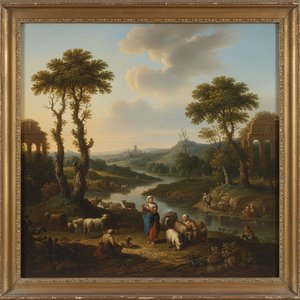
A Pastoral Vision: Karel Dujardin’s “Patres et Cheval Pie”
Karel Dujardin's "Patres et Cheval Pie" (roughly translated as “Father and Horse”) offers a serene yet subtly poignant glimpse into the Dutch Golden Age, capturing a quintessential rural scene imbued with both tranquility and a hint of melancholy. Painted around 1675, this oil on canvas work transports us to an idealized landscape – a carefully constructed tableau of pastoral life dominated by the harmonious relationship between man and beast. Dujardin, a master of atmospheric perspective and meticulous detail, skillfully employs light, color, and composition to evoke a profound sense of peace while simultaneously hinting at the complexities inherent in human interaction with nature.
The scene unfolds within a modestly sized horizontal format, immediately establishing a sense of groundedness. A central figure – a man seated near a magnificent chestnut horse – anchors the composition. This isn’t a dynamic action scene; rather, it's a moment of quiet contemplation. The horse, rendered with remarkable realism and exhibiting patches of white and black that create visual interest against the earthy tones, appears to be receiving care or perhaps simply enjoying the companionship of its rider. To the left, a scattering of sheep or goats adds to the authenticity of the setting, while a low hedge and a substantial building – likely a fortified farmhouse or even a small castle – recede into the distance, establishing depth and framing the central narrative.
The Language of Light and Color
Dujardin’s palette is deliberately restrained, dominated by the warm browns, tans, and muted greens characteristic of Dutch landscape painting. These earthy hues create a sense of groundedness and stability, mirroring the scene's tranquil mood. The artist masterfully utilizes atmospheric perspective – a technique perfected during this period – to suggest distance. Objects in the background, particularly the building, appear paler and less distinct than those closer to the viewer, creating an illusion of depth and drawing our eye towards the central figures. Subtle highlights on the horse’s coat catch the light, lending it volume and vitality, while the diffused lighting throughout the scene contributes to its overall sense of serenity.
The brushwork itself is remarkably smooth and blended, indicative of Dujardin's meticulous technique. Layers of thin glazes are applied to build up color transitions and create a soft, almost velvety texture. While visible brushstrokes exist, they’re carefully controlled, contributing to the painting’s overall sense of refinement and polished beauty. The use of horizontal lines – particularly in the landscape itself and the building walls – reinforces the feeling of stability and order, while vertical lines emphasize the height of the tower, adding a subtle element of grandeur.
Symbolism and the Dutch Golden Age
"Patres et Cheval Pie" is more than just a pretty pastoral scene; it’s a window into the values and sensibilities of the Dutch Golden Age. The presence of the imposing building in the background subtly suggests notions of authority, ownership, and perhaps even nobility – themes frequently explored in Dutch art during this period. However, the painting's core message is one of harmony between humanity and nature, a sentiment deeply rooted in the Calvinist worldview that shaped much of Dutch society. The quiet interaction between man and horse speaks to a reverence for the natural world and a recognition of its inherent beauty.
Dujardin’s work aligns perfectly with the broader artistic trends of his time – a focus on realism, meticulous detail, and an appreciation for atmospheric effects. Drawing inspiration from artists like Nicolaes Berchem, who mentored him, Dujardin inherited a deep understanding of how to capture the subtleties of light and shadow, creating landscapes that are both visually stunning and emotionally resonant. “Patres et Cheval Pie” stands as a testament to his skill and a captivating example of Dutch Golden Age artistry, offering a timeless meditation on the beauty of rural life and the enduring connection between humans and the natural world.
Biografie umělce
A Life Immersed in Light and Landscape
Karel Dujardin, a name resonating softly within the pantheon of Dutch Golden Age masters, was born in Amsterdam in 1626 – though some records suggest 1622. His life unfolded during a period of unprecedented artistic flourishing in the Netherlands, yet his path wasn’t one of immediate acclaim but rather a gradual unfolding of talent nurtured by careful study and extensive travel. Details surrounding his early years remain somewhat elusive, shrouded in the mists of time, however it is widely accepted that he received foundational training under Nicolaes Berchem, a painter celebrated for his idyllic landscapes populated with animals. This mentorship proved pivotal, instilling in Dujardin a deep appreciation for naturalism and a keen eye for capturing the subtle nuances of light and atmosphere. He diligently absorbed Berchem’s techniques—particularly his masterful use of atmospheric perspective—laying the groundwork for his own distinctive artistic style.Early Influences and Artistic Training
Nicolaes Berchem's influence extended beyond mere stylistic imitation; it instilled in Dujardin a profound understanding of how to convey emotion through visual representation. Berchem’s landscapes weren’t merely decorative; they were imbued with spiritual significance, reflecting the humanist ideals prevalent during the era. This ethos permeated Dujardin’s artistic sensibilities, shaping his approach to portraying the natural world and elevating it beyond mere depiction to a form of contemplative observation. Furthermore, Dujardin benefited from exposure to other prominent artists of his time, fostering intellectual curiosity and broadening his artistic horizons.The Roman Period: Bentvueghels and Artistic Transformation
Dujardin’s journey took an unexpected turn when he ventured into Rome in 1650, joining the *Bentvueghels*, a society of predominantly Dutch and Flemish painters who embraced a bohemian lifestyle and often adopted satirical nicknames. This association proved transformative for his artistic development. The Bentvueghels encouraged experimentation and challenged conventional artistic norms, fostering an environment conducive to innovation and self-expression. In Rome, he was known as “Barba di Becco” or "Goat-Beard," a moniker likely referencing his distinctive facial hair—a detail that would later appear in several of his portraits—and it was here that his artistic voice truly began to mature. He immersed himself in the vibrant culture of the Italian Renaissance, absorbing influences from artists like Caravaggio and Raphael, which subtly infused his work with dramatic intensity and compositional sophistication.Italian Landscape Painting: Synthesis and Innovation
Dujardin’s time in Italy profoundly shaped his artistic style. He wasn't merely replicating the landscapes he encountered; instead, he synthesized them with the Dutch tradition of genre painting, creating a unique blend that captivated audiences on both sides of the Alps. His paintings are characterized by meticulous detail and a remarkable ability to depict scenes of everyday life – rural scenes brimming with animals, peasants engaged in their daily routines, and tranquil pastoral settings. He possessed an exceptional talent for capturing the play of light and shadow, imbuing his canvases with a sense of warmth and realism. Like Berchem before him, Dujardin skillfully employed atmospheric perspective—a technique perfected by Rembrandt—to create depth and illusionism, transporting viewers into immersive landscapes that resonated with psychological complexity.Notable Works and Legacy
Among Dujardin’s most celebrated paintings are *Woman Milking a Red Cow*, *Farm Animals in the Shade of A Tree With A Boy And A Sleeping Child*, *Rest at an Italian Inn*, *The Regents of the Spinhuis and Nieuwe Werkhuis, Amsterdam (1669)*, and *Self-Portrait (1662)*. These works exemplify his mastery of genre painting—a genre that flourished during the Dutch Golden Age—and demonstrate his ability to convey profound emotion through subtle visual cues. His meticulous attention to detail—particularly in depictions of animal anatomy—reflects a commitment to scientific observation, aligning him with the burgeoning spirit of empiricism prevalent during his era. Karel Dujardin’s legacy extends far beyond the confines of his lifetime; he remains an enduring symbol of Dutch artistic excellence and continues to inspire admiration for his masterful technique and evocative vision. His paintings are held in prestigious collections worldwide—including the Mauritshuis Royal Picture Gallery in The Hague and the National Gallery in London—testament to their enduring appeal and artistic merit.
Karel Dujardin
1626 - 1678 , Nizozemsko
Rychlé informace
- Artistic Movement Or Style: Zlatá éra nizozemského malířství
- Artists Who Influenced This Artist:
- Nicolaes Berchem
- Rembrandt van Rijn
- Date Of Birth: 27. září 1622 Amsterdam
- Date Of Death: 20. listopadu 1678 Benátky
- Full Name: Karel Dujardin
- Nationality: Nizozemský
- Notable Artworks:
- Žena mléčící červenou kravu
- Ovce ve stínu stromu s chlapcem a spícím dítětem
- Odpočinek u italštiny hospody
- Autorretrát (1662)
- Ředitelé Spinhuisu
- Place Of Birth: Amsterdam, Nizozemsko
Související články

Golden Light & Dutch Skies: The Timeless Magic of Dutch Golden Age Landscapes
Discover the breathtaking beauty of Dutch Golden Age landscapes. Explore the mastery of light, chiaroscuro, and 17th-century realism through an expert art history lens, celebrating the enduring legacy of the Dutch Masters for discerning collectors and art lovers.

Zlatý věk nizozemského malířství: 10 mistrovských děl pro váš domov | OriginalUniqueArt.com
Prozkoumejte 10 ikonických děl nizozemského zlatého věku – Rembrandt, Vermeer a další mistři. Objevte příběhy za obrazy, techniky a inspiraci pro váš interiér s reprodukcemi nejvyšší kvality na OriginalUniqueArt.com.

Golden Light & Dutch Skies: Bringing the Magic of Dutch Golden Age Landscapes into Your Home
Transform your home with the breathtaking light of Dutch Golden Age landscapes. Discover how hand-painted oil reproductions of masterworks like Ruisdael and Vermeer bring timeless elegance, atmosphere, and soulful texture to modern interiors. Elevate your space with museum-quality art.

Masterpieces of Light: A Definitive Guide to the Landscapes of the Dutch Golden Age
Discover the luminous mastery of Dutch Golden Age landscapes. Our expert guide explores the atmospheric realism of masters like Van Goyen and Cuyp. Elevate your space with museum-quality, hand-painted oil reproductions from OriginalUniqueArt.com. Art history, beautifully realized.
Nicolaes Berchem: Dutch Golden Age Pastoralism & the Evolution of Landscape Painting
Explore the captivating world of Nicolaes Berchem, a leading Dutch Golden Age painter. Discover his idyllic landscapes, masterful technique & lasting influence on art history. Learn more at OriginalUniqueArt.
