
 Náhled
 Sdílet
 Sdílet
 Podrobnosti o díle

 Stáhnout
 Podobné položky
 Rentgenové snímky
 Slideshow
Allegory
 Oil On Canvas
- WallArt
- Dutch Golden Age
 1663
1663 116.0 x 97.0 cm
 Statens Museum for Kunst
 Zobrazit více
Giclée / Umělecký tisk
Giclée nebo plátěný tisk muzeální kvality s rychlou výrobou a flexibilními možnostmi povrchové úpravy. ( Koupit ručně malovaný obraz Koupit obrázek)




P118B $10

P118H $10

P118W $10

P438Z $10

P508JH $12

P508YH $12

P805H $10

P805Z $10

P919BZ $10

P919G $10

P919XJ $10

P959ZH $10

P968JZ $12

W106C $8

W218G $10

W218JH $8

W218Y $10

W307PJ $10

W316G $10

W316PJ $8

W316Y $10

W398PJ $8

W4111J $10

W500HY $15

W500JH $15

W692G $12

W849H $8

W940BG $15

W953PJ $8




Vyberte si z našich přednastavených velikostí, které odpovídají původním proporcím díla.

Můžete zadat vlastní rozměry tak, aby výtvor odpovídal konkrétnímu rámu nebo prostoru. Pokud zvolená velikost nebude odpovídat poměru stran původního obrazu, dílo buď ořížeme, nebo obraz rozšíříme pomocí zrcadlového efektu či jednobarevného okraje. Před zahájením výroby vám bude zaslán digitální náhled k schválení.
Mějte prosím na paměti, že náhled na obrazovce neodráží skutečné oříznutí nebo rozšíření. Pouze digitální náhled přesně zobrazí finální kompozici.
Ačkoliv jsou k dispozici i vlastní rozměry, pro zachování původních proporcí doporučujeme vybrat si rozměr z předdefinovaného seznamu.
Celosvětové doručení () do 2 týdnů namísto standardních 4/5 týdnů. (13 srpen)

Zdarma celosvětová expresní doprava

Vysoce kvalitní lněné plátno

Kompletní přepravní pojištění

Záruka vrácení celního poplatku

Záruka přesného barevného shodu

60denní lhůta pro vrácení zboží (pouze při vadách výroby)

100% garance vrácení peněz

Sleva při hromadné objednávce
 Skleněná varianta je dostupná pouze u rozměrů menších než 110 cm

Allegory
Giclée / Umělecký tisk
Rozměry reprodukce
-


Celková cena za výběr
$ 80
Popis sběratelského kousku
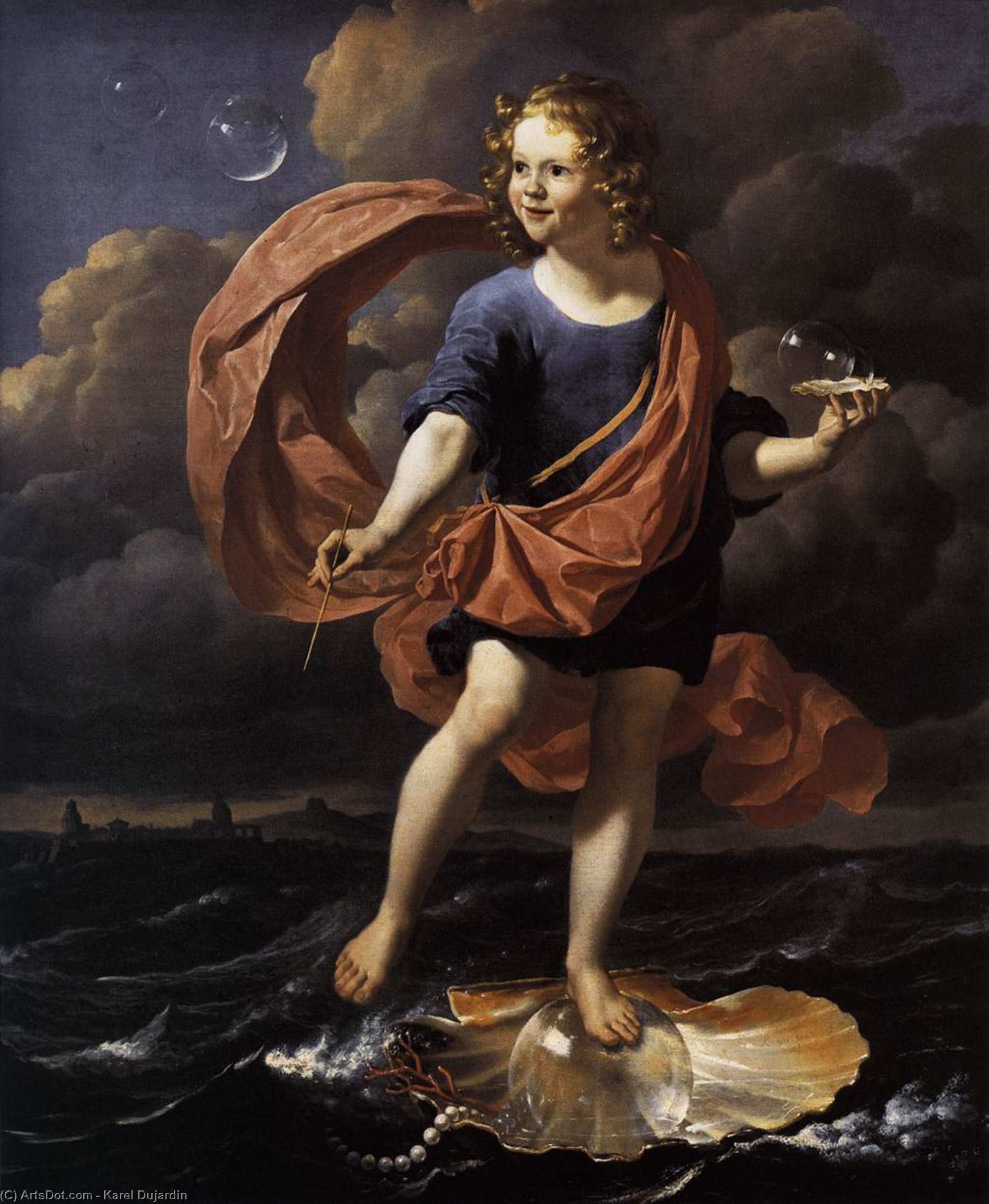
Karel Dujardin’s “Allegory”: A Fleeting Beauty Captured in Light
Karel Dujardin's "Allegory," painted in 1663, is more than just a picturesque scene; it’s a poignant meditation on the ephemeral nature of life and beauty. Born in Amsterdam during the height of the Dutch Golden Age, Dujardin was a master of capturing fleeting moments – particularly those involving light, animals, and idyllic landscapes. This particular work, housed within the National Gallery in London, exemplifies his signature style: a delicate balance between realism and idealized vision, imbued with a subtle melancholy that speaks to the transience of all things.
The painting depicts a young boy, dressed in a vibrant blue tunic and a flowing pink cloak, standing on the back of what appears to be a large sea creature – perhaps a whale or dolphin. He holds a small wand aloft, releasing a flurry of iridescent bubbles into the air. The backdrop is a hazy, cloudy sky, lending an atmospheric quality that enhances the sense of dreamlike serenity. Scattered throughout the scene are other figures, engaged in various activities—a woman tending to flowers, a man sailing a boat, and others enjoying the leisurely pace of life by the water’s edge. The inclusion of these secondary figures subtly underscores the central theme: a shared appreciation for beauty amidst the inevitable passage of time.
A Symbol of Transience: The Bubbles as Metaphor
At first glance, “Allegory” might seem simply a charming depiction of childhood play and a beautiful landscape. However, Dujardin deliberately employs symbolism to elevate the scene beyond mere representation. The bubbles themselves are the key to unlocking the painting’s deeper meaning. In 17th-century Dutch art, blowing bubbles was a well-established motif, representing the fleeting nature of life – much like the delicate spheres themselves. Each bubble rises briefly into the air before bursting, mirroring the transient beauty and joy that characterize human existence.
The boy’s posture—relaxed, almost carefree—suggests an acceptance of this ephemeral quality. He isn't striving to hold onto the bubbles; he simply enjoys their brief appearance. This mirrors a philosophical stance: embracing the present moment rather than clinging to illusions of permanence. The artist masterfully uses light and shadow to further emphasize this theme. The soft, diffused sunlight bathes the scene in a gentle glow, creating an atmosphere of tranquility while simultaneously reminding us that all beauty is ultimately subject to decay.
Dujardin’s Technique: Light, Color, and Detail
Dujardin's skill lies not only in his ability to capture a fleeting moment but also in his meticulous technique. He was known for his incredibly detailed renderings of animals and landscapes, often employing a technique called “grisaille,” where he would build up layers of thin paint to create subtle gradations of tone and texture. This is evident in the rendering of the sea creature’s skin, the delicate folds of the boy's clothing, and the shimmering surface of the bubbles themselves.
The color palette is restrained yet luminous—primarily blues, greens, and browns—creating a sense of harmony and balance. Dujardin expertly utilizes light to model forms and create depth, drawing the viewer’s eye into the scene. The subtle variations in tone suggest a mastery of chiaroscuro, a technique that employs strong contrasts between light and dark to heighten drama and create a sense of realism.
A Window into 17th-Century Dutch Life
"Allegory" offers a fascinating glimpse into 17th-century Dutch life. The scene is populated with figures engaged in typical activities—fishing, sailing, gardening—reflecting the prosperity and leisure enjoyed by many during this period. The inclusion of these everyday details grounds the allegorical theme in a tangible reality, making it all the more poignant. Dujardin’s work also reflects the influence of Italianate art, particularly the idealized landscapes favored by artists working in Rome at the time.
Today, “Allegory” remains a captivating masterpiece—a testament to Dujardin's artistic skill and his profound understanding of human nature. It serves as a beautiful reminder that even the most fleeting moments of beauty are worth cherishing, and that embracing the transience of life is an essential part of finding joy and fulfillment.
Biografie umělce
A Life Immersed in Light and Landscape
Karel Dujardin, a name resonating softly within the pantheon of Dutch Golden Age masters, was born in Amsterdam in 1626 – though some records suggest 1622. His life unfolded during a period of unprecedented artistic flourishing in the Netherlands, yet his path wasn’t one of immediate acclaim but rather a gradual unfolding of talent nurtured by careful study and extensive travel. Details surrounding his early years remain somewhat elusive, shrouded in the mists of time, however it is widely accepted that he received foundational training under Nicolaes Berchem, a painter celebrated for his idyllic landscapes populated with animals. This mentorship proved pivotal, instilling in Dujardin a deep appreciation for naturalism and a keen eye for capturing the subtle nuances of light and atmosphere. He diligently absorbed Berchem’s techniques—particularly his masterful use of atmospheric perspective—laying the groundwork for his own distinctive artistic style.Early Influences and Artistic Training
Nicolaes Berchem's influence extended beyond mere stylistic imitation; it instilled in Dujardin a profound understanding of how to convey emotion through visual representation. Berchem’s landscapes weren’t merely decorative; they were imbued with spiritual significance, reflecting the humanist ideals prevalent during the era. This ethos permeated Dujardin’s artistic sensibilities, shaping his approach to portraying the natural world and elevating it beyond mere depiction to a form of contemplative observation. Furthermore, Dujardin benefited from exposure to other prominent artists of his time, fostering intellectual curiosity and broadening his artistic horizons.The Roman Period: Bentvueghels and Artistic Transformation
Dujardin’s journey took an unexpected turn when he ventured into Rome in 1650, joining the *Bentvueghels*, a society of predominantly Dutch and Flemish painters who embraced a bohemian lifestyle and often adopted satirical nicknames. This association proved transformative for his artistic development. The Bentvueghels encouraged experimentation and challenged conventional artistic norms, fostering an environment conducive to innovation and self-expression. In Rome, he was known as “Barba di Becco” or "Goat-Beard," a moniker likely referencing his distinctive facial hair—a detail that would later appear in several of his portraits—and it was here that his artistic voice truly began to mature. He immersed himself in the vibrant culture of the Italian Renaissance, absorbing influences from artists like Caravaggio and Raphael, which subtly infused his work with dramatic intensity and compositional sophistication.Italian Landscape Painting: Synthesis and Innovation
Dujardin’s time in Italy profoundly shaped his artistic style. He wasn't merely replicating the landscapes he encountered; instead, he synthesized them with the Dutch tradition of genre painting, creating a unique blend that captivated audiences on both sides of the Alps. His paintings are characterized by meticulous detail and a remarkable ability to depict scenes of everyday life – rural scenes brimming with animals, peasants engaged in their daily routines, and tranquil pastoral settings. He possessed an exceptional talent for capturing the play of light and shadow, imbuing his canvases with a sense of warmth and realism. Like Berchem before him, Dujardin skillfully employed atmospheric perspective—a technique perfected by Rembrandt—to create depth and illusionism, transporting viewers into immersive landscapes that resonated with psychological complexity.Notable Works and Legacy
Among Dujardin’s most celebrated paintings are *Woman Milking a Red Cow*, *Farm Animals in the Shade of A Tree With A Boy And A Sleeping Child*, *Rest at an Italian Inn*, *The Regents of the Spinhuis and Nieuwe Werkhuis, Amsterdam (1669)*, and *Self-Portrait (1662)*. These works exemplify his mastery of genre painting—a genre that flourished during the Dutch Golden Age—and demonstrate his ability to convey profound emotion through subtle visual cues. His meticulous attention to detail—particularly in depictions of animal anatomy—reflects a commitment to scientific observation, aligning him with the burgeoning spirit of empiricism prevalent during his era. Karel Dujardin’s legacy extends far beyond the confines of his lifetime; he remains an enduring symbol of Dutch artistic excellence and continues to inspire admiration for his masterful technique and evocative vision. His paintings are held in prestigious collections worldwide—including the Mauritshuis Royal Picture Gallery in The Hague and the National Gallery in London—testament to their enduring appeal and artistic merit.
Karel Dujardin
1626 - 1678 , Nizozemsko
Rychlé fakta
- Artistic Movement Or Style: Zlatá éra nizozemského malířství
- Artists Who Influenced This Artist:
- Nicolaes Berchem
- Rembrandt van Rijn
- Date Of Birth: 27. září 1622 Amsterdam
- Date Of Death: 20. listopadu 1678 Benátky
- Full Name: Karel Dujardin
- Nationality: Nizozemský
- Notable Artworks:
- Žena mléčící červenou kravu
- Ovce ve stínu stromu s chlapcem a spícím dítětem
- Odpočinek u italštiny hospody
- Autorretrát (1662)
- Ředitelé Spinhuisu
- Place Of Birth: Amsterdam, Nizozemsko
Související články

Golden Light & Dutch Skies: The Timeless Magic of Dutch Golden Age Landscapes
Discover the breathtaking beauty of Dutch Golden Age landscapes. Explore the mastery of light, chiaroscuro, and 17th-century realism through an expert art history lens, celebrating the enduring legacy of the Dutch Masters for discerning collectors and art lovers.

Zlatý věk nizozemského malířství: 10 mistrovských děl pro váš domov | OriginalUniqueArt.com
Prozkoumejte 10 ikonických děl nizozemského zlatého věku – Rembrandt, Vermeer a další mistři. Objevte příběhy za obrazy, techniky a inspiraci pro váš interiér s reprodukcemi nejvyšší kvality na OriginalUniqueArt.com.

Golden Light & Dutch Skies: Bringing the Magic of Dutch Golden Age Landscapes into Your Home
Transform your home with the breathtaking light of Dutch Golden Age landscapes. Discover how hand-painted oil reproductions of masterworks like Ruisdael and Vermeer bring timeless elegance, atmosphere, and soulful texture to modern interiors. Elevate your space with museum-quality art.
Nicolaes Berchem: Dutch Golden Age Pastoralism & the Evolution of Landscape Painting
Explore the captivating world of Nicolaes Berchem, a leading Dutch Golden Age painter. Discover his idyllic landscapes, masterful technique & lasting influence on art history. Learn more at OriginalUniqueArt.
Charles Leickert: Capturing the Dutch Golden Age Light – A Comprehensive Study of Technique, Context, and Legacy
Explore the captivating winter landscapes of Charles Leickert, a master of Dutch Golden Age light & atmosphere. Discover his techniques, symbolism, and lasting legacy – a comprehensive study for art enthusiasts and collectors.


