Baroque
St. Peter (José de Ribera)
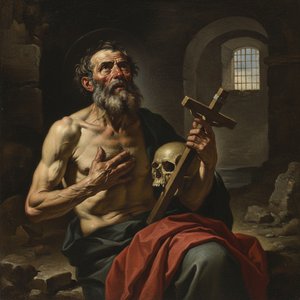
José de Ribera (1591–1652) vytvořil dílo St. Peter. Patří k hnutí Baroque. Je vyrobeno z Oil On Canvas. Nachází se v Museo del Prado v Madrid, Španělsko.
- Oil On Canvas
- Museo del Prado, Madrid

 Náhled v interiéru

 Ručně malovaná olejná reprodukce
 Sdílet
 Sdílet
 Průvodce


 Stáhnout
 Podobné položky
 Rentgenové snímky
 Slideshow
 Otázky a odpovědi

 Statistiky
St. Peter: základní údaje
- Název díla
- St. Peter
- Autor
- José de Ribera (1591–1652)
- Rok narození umělce
- Xativa, Španělsko
- Technika
- Oil On Canvas
- Kde jej vidět
- Museo del Prado, Madrid, Španělsko
- Pohyb
- Baroque
- Období
- Early Modern
- Motiv
- man, beard, book, keys, cloak, brown
Co przedstawuje dílo St. Peter?
The Portrait of St. Peter by Jusepe de Ribera
In this oil painting on canvas, Jusepe de Ribera presents us with a portrait of St. Peter. The subject, a central figure among the apostles of Jesus and recognized as the first Pope, is rendered with a profound sense of presence. Ribera focuses on the man himself, capturing the weight of his role and the character of his lived experience. There is a quiet intensity in the way the figure is presented, inviting a closer look at the weathered details of his countenance.
The work is a significant example of the Baroque style. Through this approach, the artist emphasizes the spiritual and human dimensions of the apostle. The depiction avoids idealization, opting instead for a directness that feels immediate. By focusing on the specific attributes of the saint, Ribera allows the subject to command the space, presenting a figure that is both a religious icon and a man of flesh and bone.
Composition and Visual Elements of the Portrait
The composition is built upon a stable pyramidal structure, with the head of St. Peter forming the apex of the form. He is presented from the waist up, his body turned slightly toward the viewer's left. In his right hand, he holds a book and a set of keys, objects that anchor the figure within the frame. This arrangement directs the eye upward toward his weathered features, creating a sense of quiet, grounded presence.
A strong light source enters from the left, illuminating his face and upper body while casting the rest of the figure into deep shadow. This light creates a sharp contrast against a background that is nearly black, pushing the subject forward into the viewer's space. The color palette is restrained, dominated by warm earth tones—ochre, brown, and gold—which emphasize the textures of his skin and the heavy folds of his clothing.
Technique and Artistic Style of the Work
The work is defined by a profound use of tenebrism, where the subject emerges from a nearly black background into a sharp, focused light. This dramatic chiaroscuro creates a sense of volume, pulling the figure forward and emphasizing the physical presence of the man. Such a heavy interplay of light and shadow reflects the influence of Caravaggio, grounding the religious subject in a palpable, earthly reality. The light source, positioned to the left, carves out the contours of the face and the weathered texture of the skin, casting deep shadows that heighten the emotional weight of the portrait.
Ribera’s approach to the medium is tactile and deliberate. He employs a technique of layering paint to build up depth, allowing the viewer to sense the physical weight of the drapery and the coarse nature of the beard. Visible brushstrokes are not hidden; instead, they contribute to the overall effect, lending a sense of immediacy to the rendering of the fabric and the aged features. Strong, defined lines delineate the eyes, nose, and mouth, providing a structural clarity that balances the more fluid, organic shapes of the figure. The result is a composition that feels both intensely personal and physically substantial.
Other Works by Jusepe de Ribera
The artist's exploration of this particular subject matter is reflected in several other significant pieces within our collection and major institutions. We hold St. Simeon 1 in our catalog, a work that speaks to the same profound human experience found in this portrait. Another notable piece in our collection is The Repentance of Saint Peter, which is currently housed in the Museum of Fine Arts, Lyon.
Beyond our own holdings, Ribera's preoccupation with the themes of remorse and spiritual weight is evident in other historical examples. The work known as Penitent St. Peter, dated about 1630, is held at the Kunsthistorisches Museum in Vienna. This piece shares a similar intensity in its depiction of the apostle's character. Additionally, The Tears of Saint Peter, which dates to 1612, is part of the collection at the Metropolitan Museum of Art in New York. These works collectively illustrate the artist's ability to capture the complexities of faith and the physical reality of the human condition through his characteristic use of light and shadow.
Ve kterém muzeu se nachází St. Peter?
Museo del Prado
Madrid, Španělsko
Historie Museo del Prado Kořeny Museo del Prado jsou neoddělitelně spjaty s královskou kolekcí Španělska a sahají až do 18. století. To, co původně vzniklo jako ambiciózní vize přírodovědné kabinetu za vlády Ferdinanda VII., se postupem času proměnilo v posvátné útočiště pro malířství a sochařství.


St. Peter ve vysokém rozlišení
José de Ribera, St. Peter, Museo del Prado. Veřejná doména
Digitální expert porovnává barvy s původním obrazem a retušuje soubor tak, aby věrně odpovídal tahům štětcem umělce.
Koupit obraz ve vysokém rozlišeníDotazy k St. Peter
Mohu si prohlédnout "St. Peter" v celoplátno formátu slideshow?
K dispozici je sklízivka: stránka Slideshow díla „St. Peter“ od José de Ribera.
Existuje průvodce k dílu „St. Peter“ od José de Ribera?
Stránka Průvodce pro studenty díla „St. Peter“ od José de Ribera nabízí tištěný dvoulistový informační list: samotné umělecké dílo s identifikační tabulkou, časovou osu situující dílo do období života umělce, další díla daného autora, naměřenou barevnou paletu a citace ve čtyřech stylech připravené pro okamžité zkopírování.
Kde je dnes možné vidět dílo „St. Peter“ od José de Ribera?
Originál díla „St. Peter“ si můžete prohlédnout v instituci Museo del Prado, Madrid, Španělsko.
Jaké je historické postavení díla "St. Peter"?
Z historického hlediska je „St. Peter“ dílem stylů Baroque, které patří do širší éry Early Modern.
Jaká je luminance díla „St. Peter“ od José de Ribera?
Luminance zaznamenaná pro dílo „St. Peter“ od José de Ribera je Dark.
Jak sytá je paleta díla "St. Peter"?
Dílo „St. Peter“ od José de Ribera je zachyceno s Clear Color Presence saturací.
Jaké téma a atmosféru spojuje dílo „St. Peter“ od José de Ribera?
„St. Peter“ od José de Ribera zachycuje man, beard, book, keys, cloak, brown, gold, skin v Dramatic náladě. Předmět a atmosféra dohromady definují toto dílo.
Jakým způsobem se styl díla "St. Peter" vztahuje k době svého tvůrce?
Dílo "St. Peter" patří k období Baroque, jehož tvůrce působil v éře – Raná modernita.
Obsahuje "St. Peter" výrazné světlonápadové kontrasty?
Kontrast světla a stínu u díla „St. Peter“ je klasifikován jako Bold. Kontrast popisuje, jak výrazně se liší světlé a tmavé oblasti.
O umělci, José de Ribera

1591–1652, Španělsko
José de Ribera
A Life Forged in Shadow and Light Jusepe de Ribera, známý také jako Lo Spagnoletto – „Španělský malíř“ – byl obdivuhodná postava barokní éry, umělec, jehož plátna pulzovala dramatickou intenzitou a neochvějnou realističností. Narodil se v Xativě, Španělsku, v roce 1591, a jeho cesta ho odvedla daleko od jeho valencijských kořenů, nakonec ho etablovala jako jednoho z nejvýznamnějších malířů 17. století v Neapoli, městě pod španělskou nadvládou. Riberův život nebyl jen kronikou uměleckého vývoje; byl to příběh tkáný útrapami, ambicemi a neochvějným závazkem k zobrazení lidského stavu ve všech jeho surových podobách.
Také od autora José de Ribera
 Magdalena Ventura s manželem a synem1631
 The Clubfoot
 St. Onuphrius1637
 The Duel of Women (The Duel of Isabella de Carazzi and Diambra de Pettinella)1636
Eseje k tématu St. Peter
 Masterpieces of Light: The Top 25 Artworks by Duccio di BuoninsegnaJourney through the divine elegance of Duccio di Buoninsegna. Explore 25 iconic Sienese masterpieces, from the Maestà to the Rucellai Madon…
 Jusepe de Ribera: Dramatic Realism & Spiritual Intensity in the Spanish Golden AgeExplore the powerful Baroque paintings of Jusepe de Ribera, master of tenebrism and dramatic realism. Discover his spiritual intensity, inf…
 Mastering the Shadows: The Dramatic Power of Chiaroscuro and Tenebrism in Baroque Fine ArtExplore the profound drama of chiaroscuro and tenebrism. Discover how masters like Caravaggio used light and shadow to sculpt emotion and v…