

 Zobrazit v interiéru
 Odeslat
 Sdílet
 Podrobnosti
 Průvodce

 Stáhnout obrázek
 Podobné kousky
 Rentgenové snímky
 Slideshow
 Statistiky
Seated Woman


 Přečíst si více
Giclée / Umělecký tisk
Giclée nebo plátěný tisk muzeální kvality s rychlou výrobou a širokou nabídkou povrchových úprav. ( Objednat ručně malovanou reprodukci Přepnout na digitální verzi obrazu)




P118B Kč10

P118H Kč10

P118W Kč10

P438Z Kč10

P508JH Kč12

P508YH Kč12

P805H Kč10

P805Z Kč10

P919BZ Kč10

P919G Kč10

P919XJ Kč10

P959ZH Kč10

P968JZ Kč12

W106C Kč8

W218G Kč10

W218JH Kč8

W218Y Kč10

W307PJ Kč10

W316G Kč10

W316PJ Kč8

W316Y Kč10

W398PJ Kč8

W4111J Kč10

W500HY Kč15

W500JH Kč15

W692G Kč12

W849H Kč8

W940BG Kč15

W953PJ Kč8




Vyberte si z našich přednastavených velikostí, které odpovídají původním proporcím díla.

Zadejte šířku a výšku, které potřebujete pro váš rám nebo stěnu. Tisk lze pouze oříznout, nikdy však nelze zvětšit obraz nad jeho původní rozměr, proto při výběru jiného formátu dochází ke ztrátě části obrazu. Před samotným tiskem vám zašleme digitální náhled k schválení. Obraz zobrazený na této stránce nenabízí skutečný výřez — ten uvidíte pouze v náhledu.
Celosvětové doručení () do 2 týdnů namísto standardních 4/5 týdnů. (22 říjen)

Zdarma celosvětová expresní doprava

Vysoce kvalitní lněné plátno

Úplné pojištění přepravy

Záruka vrácení celního poplatku

Záruka věrného barevného shodu

100dení lhůta pro vrácení zboží (pouze při vadách výroby)

100% garance vrácení peněz

Sleva při více objednávkách
 Skleněná varianta je dostupná pouze u rozměrů menších než 110 cm

Seated Woman
Giclée / Umělecký tisk
Velikost reprodukce
-


Celková cena
Kč 1700
A Fragmented Portrait of Modernity: Exploring Juan Gris’s “Seated Woman”
Juan Gris's "Seated Woman," painted in 1917, isn’t merely a portrait; it’s a carefully constructed meditation on form, space, and the burgeoning anxieties of early 20th-century Europe. This work, rendered in oil on panel with a striking palette of blues, yellows, and blacks, embodies the heart of Cubism's analytical phase – a period where artists sought to dismantle traditional representation and reveal the underlying geometric structures of reality. Gris, deeply influenced by Picasso and Braque, moved beyond simply depicting an individual; he aimed to capture the essence of the subject through a fractured, multi-faceted approach that challenges our perception of what constitutes a recognizable image.
The painting depicts a woman seated in a chair, her hands resting before her face – a pose simultaneously vulnerable and enigmatic. However, it’s crucial to understand that this isn't a realistic portrayal. Gris employs a deliberate distortion of form, breaking the figure into interlocking planes and angles. The chair itself is not rendered as a solid object but rather as a collection of geometric shapes, mirroring the fragmentation of the woman’s image. This technique, central to Cubism, suggests that our understanding of reality is inherently subjective and constructed through individual perception. Notice how the blue tones dominate, creating a sense of depth and receding space, while the yellows introduce warmth and highlight specific areas of the figure – perhaps drawing attention to her face or hands.
The Language of Analytical Cubism
“Seated Woman” is a prime example of Analytical Cubism, a phase characterized by its meticulous deconstruction of objects. Gris’s approach involved meticulously dissecting his subjects into their component parts – lines, angles, and planes – and then reassembling them on the canvas in a way that presented multiple viewpoints simultaneously. This wasn't about creating an illusion of depth; rather, it was about revealing the underlying structure of form. The painting feels almost architectural in its precision, as if the woman has been carefully constructed from geometric blocks. The use of black is particularly significant here – not merely for contrast but to define and delineate the fragmented shapes, adding a layer of intellectual rigor to the composition.
Furthermore, Gris’s choice of color is deliberate. The muted palette—primarily blues, yellows, and blacks—reflects the atmosphere of introspection and uncertainty prevalent during this period. It's a far cry from the vibrant hues often associated with later Cubist works. Instead, it evokes a sense of quiet contemplation, inviting the viewer to engage in a more cerebral appreciation of the artwork.
A Figure Rooted in Early 20th-Century Context
To fully appreciate “Seated Woman,” it’s essential to consider its historical context. Painted in 1917, the work emerged during a time of profound social and artistic upheaval. The rise of industrialization, urbanization, and scientific advancements were challenging traditional notions of reality and identity. Cubism, with its radical departure from representational art, mirrored this broader cultural shift – questioning established conventions and exploring new ways of perceiving the world. Juan Gris’s work reflects a desire to capture not just the appearance of things but also their underlying structure and the way they interact within space.
Juan Gris himself was a pivotal figure in the development of Cubism, initially working as an engineer before dedicating himself fully to art. His meticulous approach, combined with his deep understanding of mathematics and geometry, allowed him to create works that are both intellectually stimulating and visually arresting. “Seated Woman” stands as a testament to his innovative spirit and his profound impact on the course of modern art.
Symbolism and Emotional Resonance
While seemingly abstract, "Seated Woman" is rich in symbolic potential. The woman’s posture – hands covering her face – suggests introspection, perhaps even melancholy or uncertainty. The fragmented nature of her form reflects the fragmentation of experience in a rapidly changing world. The painting doesn't offer easy answers; instead, it invites viewers to contemplate the complexities of human existence and the challenges of navigating an increasingly abstract reality. It’s a work that resonates with a sense of quiet contemplation and intellectual curiosity – a timeless reminder of the power of art to provoke thought and evoke emotion.
Otázky a odpovědi
Kolik lidí si prohlíží „Seated Woman"?
Pro dílo „Seated Woman“ existuje stránka Statistiky. Zobrazuje měsíční počet návštěv tohoto díla i dalších děl daného umělce s rozpadem podle zemí a jazyků.
O jaký typ uměleckého díla se jedná u „Seated Woman“ od Juan Gris?
Dílo „Seated Woman“ od Juan Gris je klasifikováno jako WallArt. Tato kategorie určuje typ uměleckého díla, kterým je originál.
Jaká je nálada díla „Seated Woman“ od Juan Gris?
Celková nálada díla „Seated Woman“ od Juan Gris je Romantic. Tato nálada popisuje obecnou atmosféru díla.
Biografie umělce
A Spanish Visionary of Cubism: The Life and Art of Juan Gris
José Victoriano González-Pérez (23. března 1887, Madrid, Španělsko – 11. května 1927, Boulogne-Billancourt, Francie), známější jako Juan Gris, byl španělský malíř a sochař. Většinu života strávil ve Francii. Jeho dílo je úzce spjato s kubismem, hned poté se stává klíčovým představitelem syntetického kubismu. Jeho tvorba je charakteristická neobvyklou kombinací geometrie a barev, která ztělesňuje moderní vnímání prostoru a formy.Život a rané roky
Narodil se v Madridu, kde mezi lety 1902 a 1904 studoval technické kreslení na Escuela de Artes y Manufacturas (škola umění a řemesel). Během této doby kreslil do místních novin. Od roku 1904 do 1905 se věnoval malířství pod vedením akademického malíře José Maria Carbonera, což mu poskytlo pevné základy v tradičních technikách. V roce 1905 si zvolil pseudonym Juan Gris, který zněl více osobně a odpovídal jeho rostoucímu uměleckému záměru. V téže době se přestěhoval do Paříze, kde začal navštěvovat galerie a setkávat s dalšími umělci. V roce 1906 se Gris rozhodl pro život v Paříži, což bylo klíčové pro jeho pozdější umělecký rozvoj. Zde se stal součástí živé pařírské umělecké scény, kde navštěvoval galerie, setkával s významnými osobnostmi a začal experimentovat s novými směry v malířství. Mezi jeho přátele patřili Henri Matisse, Georges Braque a Fernand Léger – tito muži se stali inspirací pro jeho budoucí tvorbu. V roce 1909 se stal otcem, když Lucie Belin porodila jeho syna George Gonzalez-Gris. Rodina žila v Bateau-Lavoir, známém pařížském uměleckém sídle, až do roku 1922.Parisian Awakening a Embracing Cubism
V roce 1906 se Gris rozhodl pro život v Paříži, což bylo klíčové pro jeho pozdější umělecký rozvoj. Zde se stal součástí živé pařírské umělecké scény, kde navštěvoval galerie, setkával s významnými osobnostmi a začal experimentovat s novými směry v malířství. V roce 1910 se Gris začal vážně věnovat malbě, odklánějíc se od satirického ilustrování a zaměřujíc se na formování vlastního kubistického stylu. Jeho rané práce byly charakterizovány odklonem od tradiční reprezentace, s důrazem na abstrakci jako prostředek k zachycení podstaty tvaru a prostoru. Jeho vliv byl silně ovlivněn Pablem Picassovým dílem, který se stal jeho blízkým přítelem a mentorem.The Geometry of Perception: Style and Key Works
Juan Gris’s artistic output is characterized by an exceptional clarity and intellectual rigor. He didn't simply deconstruct objects; he reconstructed them with deliberate precision, emphasizing geometric forms and a carefully considered palette. This approach led to what became known as his “crystal period,” exemplified in masterpieces like *Still Life Before an Open Window* (1915) and *Place Ravignan* (1915). These works showcase a remarkable interplay of planes and angles, creating a sense of depth and solidity while simultaneously challenging conventional notions of perspective. Gris se nejprve soustředil na analytický kubismus, který byl v té době novým a inovativním směrem v umění. Později se však přikláněl k syntetickému kubismu, ve kterém začal používat papír koláž (papier collé), čímž integroval do svých děl reálné materiály, jako jsou novinové výstřižky a textury. Tato technika přidala další vrstvu složitosti a taktnosti jeho dílům. Mezi klíčová díla z této doby patří *Guitar in front of the sea* (1925), který demonstruje jeho zjednodušené tvary a dodržování kubistických principů, a *Homage à Pablo Picasso* (1912), které signalizovaly jeho rostoucí uznání v avantgardním uměleckém světě. Gris se snažil zachytit realitu ne pouze jako reprezentaci, ale i jako strukturu, kterou lze rozkládat a znovu sestavovat pomocí geometrických tvarů a barev.Influence and Legacy
Juan Gris byl klíčovou postavou kubismu, který ovlivnil mnoho umělců po celém světě. Jeho práce se stala inspirací pro Puristický styl, který propagoval Amédée Ozenfant a Charles Edouard Jeanneret (Le Corbusier). Grisova preference pro jasné a uspořádané formy, harmonické barevné palety a integrace každodenních objektů do jeho umění z něj udělala významnou postavu v 20. století. Jeho dílo se stalo symbolem moderního umění a jeho vliv je patrný dodnes. Jeho práce zůstává důkazem síly kubismu a vizionářského génia Juana Grise – španělského mistra, který přetvořil naše chápání vnímání a reprezentace.
Juan Gris
1887 - 1927 , Španělsko
Rychlé informace
- Artistic Movement Or Style: Kubismus, Syntetický kubismus
- Artists Or Movements Influenced By This Artist:
- Puristé
- Ozenfant
- Le Corbusier
- Artists Who Influenced This Artist:
- Picasso
- Matisse
- Braque
- Date Of Birth: 23. března 1887
- Date Of Death: 11. května 1927
- Full Name: José Victoriano González-Pérez
- Nationality: Španělský
- Notable Artworks:
- Snídaně
- Hommage à Pablo Picasso
- Miller
- Place Of Birth: Madrid, Španělsko
Související články

Serene Blue Backgrounds: Discover Soulful Art to Transform Your Space with Timeless Elegance
Transform your home with soulful blue art. From serene Monet impressions to modern textured sculptures, discover curated masterpieces designed to inspire calm. Explore expert art consultations and bespoke hand-painted reproductions to create your personal sanctuary.
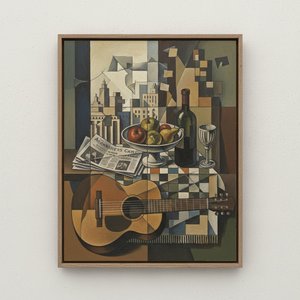
Juan Gris: Cubist Deconstruction & Synthesis – A Comprehensive Exploration
Explore the revolutionary art of Juan Gris – a master of Cubism. Discover his unique approach to deconstruction, vibrant Synthetic Cubist works, and lasting influence on modern art. Expert analysis for collectors.

Deset ikonických obrazů v odstínech šedé modré: Umění a inspirace pro váš domov
Objevte deset ikonických obrazů v odstínech šedé modré od Van Gogha, Moneta a dalších mistrů. Ponořte se do příběhů umění, technik a inspirace pro váš interiér. Reprodukce obrazů nejvyšší kvality na OriginalUniqueArt.com.

The Allure of Azure: Exploring the Symbolic & Aesthetic Depths of Blue in Art History
Explore the rich history of blue in art! Discover its symbolism, from ancient pigments to modern masterpieces by Kandinsky & Seurat. Uncover the psychological impact and cultural meanings behind this captivating hue.
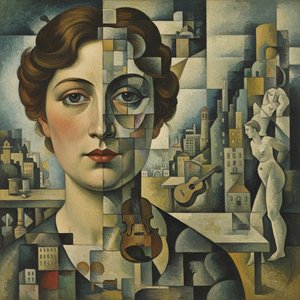
Deconstructing Reality: Cubism's Revolutionary Impact on 20th-Century Art
Explore the revolutionary world of Cubism with OriginalUniqueArt. Discover Picasso & Braque's groundbreaking techniques, its philosophical roots, and lasting impact on modern art. Expert insights for collectors.


