

 Zobrazit v interiéru
 Odeslat
 Sdílet
 Podrobnosti
 Průvodce

 Stáhnout obrázek
 Podobné kousky
 Rentgenové snímky
 Slideshow
 Statistiky
Vita somnium breve
 Akryl na plátně
- Obrazová tvorba na stěnu
- Art Nouveau Modern
 1906
1906 163.0 x 143.0 cm
 Národní muzeum v Krakově
 Přečíst si více
Ručně malovaná olejová reprodukce
Ručně malované olejné plátno v libovolném rozměru i s rámem, vyrobené našimi umělci na zakázku. ( Přepnout na tiskové verze Přepnout na digitální verzi obrazu)




P118B Kč10

P118H Kč10

P118W Kč10

P438Z Kč10

P508JH Kč12

P508YH Kč12

P805H Kč10

P805Z Kč10

P919BZ Kč10

P919G Kč10

P919XJ Kč10

P959ZH Kč10

P968JZ Kč12

W106C Kč8

W218G Kč10

W218JH Kč8

W218Y Kč10

W307PJ Kč10

W316G Kč10

W316PJ Kč8

W316Y Kč10

W398PJ Kč8

W4111J Kč10

W500HY Kč15

W500JH Kč15

W692G Kč12

W849H Kč8

W940BG Kč15

W953PJ Kč8




Vyberte si z našich přednastavených velikostí, které odpovídají původním proporcím díla.

Zadejte šířku a výšku, které potřebujete pro váš rám nebo stěnu. Protože se jedná o ruční malbu, při výběru jiného formátu může umělec kolem obrazu domalovat o něco více, nebo jej mírně oříznout — rozhodnete si vy. Před zahájením malby vám zašleme digitální náhled ke schválení. Obraz zobrazený na této stránce neodpovídá skutečnému výsledku — pouze digitální náhled jej zobrazuje.
Po přijetí objednávky vám tým OriginalUniqueArt.com zašle e-mail s pokyny a poskytne náhledovou verzi.
Celosvětová doprava () za 3–4 týdny namísto standardních 5 týdnů. (24 říjen). Bez kompromisů v kvalitě.

Zdarma celosvětová expresní doprava

Vysoce kvalitní lněné plátno

Úplné pojištění přepravy

Záruka vrácení celního poplatku

Záruka věrného barevného shodu

100dení lhůta pro vrácení zboží (pouze při vadách výroby)

100% garance vrácení peněz

Sleva při více objednávkách
 Skleněná varianta je dostupná pouze u rozměrů menších než 110 cm

Vita somnium breve
Technika provedení
Velikost reprodukce
-


Celková cena
Kč 6408
Vita somnium breve – Josef Mehoffer: Symbolism Encapsulated in Glass
Josef Mehoffer’s “Vita Somnium Breve” (Life is a Short Dream), completed in 1906, stands as a cornerstone of Art Nouveau stained glass artistry and embodies the spirit of Polish symbolism at the turn of the century. Created for Krakowski Zakład Witrażów i Mozaiki S.G. Żeleński – a renowned Krakow workshop established in 1902 – this monumental window is more than just decorative; it’s a carefully crafted visual meditation on mortality and fleeting beauty, reflecting the broader philosophical currents of its time. ### Artistic Style and Technique: The Fluid Embrace of Art Nouveau Mehoffer's approach to stained glass aligns perfectly with the tenets of Art Nouveau, prioritizing organic forms and flowing lines over rigid geometric patterns. Unlike earlier styles focused on religious iconography, “Vita Somnium Breve” leans heavily into natural motifs – specifically a serene forest scene populated by figures representing humanity’s vulnerability before the inevitable passage of time. The artist skillfully employs a technique characterized by delicate etching and enameling onto leaded glass panels. This meticulous process allows for vibrant color palettes—primarily greens, blues, and golds—to shimmer through the translucent material, creating an ethereal glow that captivates the viewer's eye. The intricate detailing captures the textures of bark, foliage, and human drapery with remarkable precision. ### Historical Context: Poland’s Artistic Renaissance Amidst Uncertainty The creation of “Vita Somnium Breve” coincided with a period of significant artistic ferment in Poland – the Young Poland movement (Młoda Polska). Following the partitions of Poland in 1870-1871, artists and intellectuals sought to revitalize Polish culture and identity through expressive art forms. Symbolism, influenced by thinkers like Nietzsche and Tolstoy, gained prominence as a reaction against materialism and championed subjective experience. Mehoffer’s work reflects this intellectual climate, grappling with existential questions about life's brevity and the importance of embracing beauty in the face of decay—themes that resonated deeply within Polish society at the time. The workshop itself was founded to promote Polish artistic heritage and contribute to the nation’s cultural revival. ### Symbolism Within the Composition: Figures Amidst Nature’s Embrace The central figures depicted in “Vita Somnium Breve” – women and children – are positioned amongst stylized trees, symbolizing humanity's connection to the natural world and its inherent fragility. The woman kneeling represents contemplation and acceptance of mortality, while the child embodies innocence and potential for renewal. The overarching forest setting serves as a metaphor for the cyclical nature of life and death, reminding viewers that beauty exists even within impermanence. The use of gold leaf accents adds an element of spiritual luminosity, suggesting transcendence beyond earthly concerns. ### Emotional Impact: A Window Into Reflection Ultimately, “Vita Somnium Breve” transcends mere visual splendor; it invites contemplation on profound themes concerning human existence. Its tranquil atmosphere and harmonious color scheme evoke a sense of serenity and melancholy—a poignant reminder that life is fleeting but filled with moments of exquisite beauty. Reproductions of this masterpiece offer an opportunity to bring this evocative artwork into any interior space, fostering reflection and celebrating the enduring power of artistic expression.Otázky a odpovědi
Kde najdu průvodce k dílu "Vita somnium breve"?
Stránka Průvodce díla „Vita somnium breve“ od Józef Mehoffer nabízí tištěný dvoulistový informační list: samotné umělecké dílo s identifikační tabulkou, časovou osu situující dílo do období života umělce, další díla daného autora, naměřenou barevnou paletu a citace ve čtyřech stylech připravené pro okamžité zkopírování.
Jak je utkaná barevná kompozice díla „Vita somnium breve“ od Józef Mehoffer?
V díle "Vita somnium breve" je Prohlášení kontrast spojen s Nesourodá paleta harmonií.
Jak výrazné jsou barvy díla „Vita somnium breve"]?
Dílo „Vita somnium breve“ od Józef Mehoffer je zachyceno s Jemné barvy saturací a Vyvážené intenzitou.
Biografie umělce
A Life of Color and Glass
Józef Mehoffer arrived in the world in Ropczyce, Poland, in 1869, though his path to the easel was not immediate. Before he embraced the brush, he pursued legal studies, a direction that only shifted after a gift of paints revealed a different vocation. He sought formal training at the Academy of Fine Arts in Kraków under Władysław Łuszczkiewicz, later expanding his horizons through studies in Vienna and Paris at the Académie Colarossi. This period of wandering through Europe’s great art centers allowed him to absorb the diverse currents of his era.
His work became a bridge between the academic traditions of his teachers, such as Jan Matejko, and the emerging avant-garde. He moved with ease between easel painting and the monumental demands of decorative arts. Whether working on portraits, landscapes, or intricate book illustrations, Mehoffer sought a fusion of form and color. His style grew to include elements of Post- Impressionism and the Secession movement, often utilizing bold palettes and fluid lines that mirrored the organic spirit of Art Nouveau.
The Light of Fribourg
While his presence was felt throughout Poland, Mehoffer achieved significant recognition through his work in Switzerland. Between 1895 and 1936, he dedicated decades to a cycle of thirteen stained-glass compositions for the Cathedral of St. Nicholas in Fribourg. This undertaking required immense technical precision, as he treated the lead came not merely as a structural necessity but as an autonomous graphic line. He selected glass of varying thicknesses and textures, using silver stain and vitreous black to manipulate how light moved through the windows.
The success of these windows brought him international attention. At the 1900 Paris World's Fair, his window titled The Martyrs earned a gold medal. This period of his life saw him blending Polish folk motifs with the sophisticated aesthetics of European Art Nouveau. His ability to translate complex religious and symbolic themes into luminous glass remains a central part of his professional identity.
A Decorative Legacy
Mehoffer’s creative output was remarkably broad, refusing to be confined to a single medium. He was as much a designer of furniture, textiles, and posters as he was a painter of canvases. His hand could be found in the mosaics of the Armenian Cathedral in Lviv and the frescoes of Wawel Cathedral. In 1897, he helped found the society Sztuka, an organization that sought to assert the independence of Polish art from the influence of occupying powers.
In his later years, Mehoffer established a home and studio on Krupnicza Street in Kraków. This house, which he purchased in 1932, became a center for musical and literary gatherings, reflecting his role as a figure of the Polish intelligentsia. He lived through the profound shifts of the early twentieth century, continuing to work even during the hardships of the Second World War. When he passed away in Wadowice in 1946, he left behind a body of work that spanned the transition from nineteenth-century tradition to the modern decorative era.

Józef Mehoffer
1869 - 1946
Rychlé informace
- Artistic Movement Or Style:
- Young Poland
- Post-Impressionism
- Secession
- Art Nouveau
- Symbolism
- Artists Who Influenced This Artist:
- Jan Matejko
- Władysław Łuszczkiewicz
- Henri Matisse
- Full Name: Józef Mehoffer
- Nationality: Polish
- Notable Artworks:
- Vita somnium breve
- Three Kings
- The Farewell
- The Muse
- Medusa
- Place Pigalle in Paris
- Place Of Birth: Ropczyce, Poland
- Date Of Birth: 1869
- Date Of Death: 1946
Související články
Jan Matejko: Historical Narrative & National Identity in 19th-Century Polish Painting
Explore the powerful historical paintings of Jan Matejko, Poland's national artist. Discover his iconic works & learn how he shaped Polish identity in the 19th century. High-quality reproductions available.
Top 10 mistrovských děl secese: Umění, které definovalo dobu
Objevte 10 ikonických děl secese od Muchy, Klimta a dalších. Ponořte se do příběhů umění, technik a barev tohoto fascinujícího hnutí. Reprodukce obrazů v muzeální kvalitě na OriginalUniqueArt.com! Prozkoumejte celou kolekci online.
Stanisław Wyspiański: Symbolism, National Identity & the Polish Secession
Explore the life & work of Stanisław Wyspiański, a pivotal figure in Polish Symbolism and the Young Poland movement. Discover his iconic paintings, dramas, and stained glass designs reflecting national identity & artistic innovation.
Luminous Masterpieces: The Captivating Beauty and Timeless Elegance of Stained Glass Artworks
Embark on a visual journey through the luminous world of stained glass art. Discover the exquisite craftsmanship, historical significance, and captivating beauty of masterworks from Art Nouveau to the Gothic era, curated for the discerning fine art enthusiast.
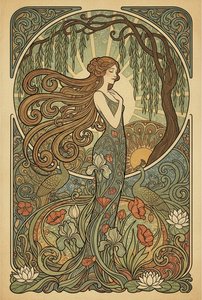
The Flowing Line & Flourishing Form: Exploring Art Nouveau's Aesthetic Legacy
Explore the captivating world of Art Nouveau! Discover its origins, key artists like Horta & Mucha, regional styles, innovative techniques, and lasting influence on architecture & design. A comprehensive guide for art enthusiasts.
