

 Sdílet
 Sdílet
 Podrobnosti o díle
 Průvodce

 Stáhnout
 Podobné položky
 Slideshow
 Statistiky
Brooch


 Zobrazit více
Giclée / Umělecký tisk
Giclée nebo plátěný tisk muzeální kvality s rychlou výrobou a širokou nabídkou povrchových úprav. ( Koupit ručně malovaný obraz Přepnout na digitální obraz)




































Vyberte si z našich přednastavených velikostí, které odpovídají původním proporcím díla.

Zadejte šířku a výšku, které potřebujete pro váš rám nebo stěnu. Tisk lze pouze oříznout, nikdy však nelze zvětšit obraz nad jeho původní rozměr, proto při výběru jiného formátu dochází ke ztrátě části obrazu. Před samotným tiskem vám zašleme digitální náhled k schválení. Obraz zobrazený na této stránce nenabízí skutečný výřez — ten uvidíte pouze v náhledu.
Celosvětové doručení () do 2 týdnů namísto standardních 4/5 týdnů. (25 říjen)

Zdarma celosvětová expresní doprava

Vysoce kvalitní lněné plátno

Kompletní pojištění přepravy

Záruka vrácení celního poplatku

Záruka věrného barevného souladu

100dení lhůta pro vrácení zboží (pouze při vadách výroby)

100% záruka vrácení peněz

Sleva při více objednávkách
 Skleněná varianta je dostupná pouze u rozměrů menších než 110 cm

Brooch
Giclée / Umělecký tisk
Rozměry reprodukce
-


Celková cena za vybrané možnosti reprodukcí
Kč 1711
A Jewel of the Vienna Secession
In the delicate interplay of light and color, the Brooch by Josef Hoffmann emerges as a breathtaking testament to the dawn of modern design. Created around 1910, this exquisite piece serves as more than mere ornamentation; it is a window into the soul of the Wiener Werkstätte era. The artwork presents a mesmerizing close-up of stained glass artistry, where deep, velvety blues collide with vibrant, pulsating reds. At its heart, a pristine white letter 'M' stands as a focal point of geometric clarity, anchored within an intricate web of design that speaks to the precision and elegance of the early 20th-century avant-garde.
The technique employed in this piece reflects the mastery of Hoffmann, a man who redefined the boundaries between architecture and decorative arts. The use of stained glass creates a luminous effect, where light does not simply hit the surface but seems to emanate from within the very fibers of the composition. This translucency allows the bold red border to frame the central motif with a rhythmic intensity, drawing the eye inward toward the delicate white calligraphy. For the discerning collector or interior designer, this piece offers a sophisticated way to introduce a sense of historical grandeur and structural beauty into a contemporary space.
The Legacy of Geometric Elegance
To understand the emotional resonance of this work, one must look to the historical context of its creator. As a founding member of the Vienna Secession, Hoffmann sought to break free from the suffocating traditions of academic art, favoring instead a language of functionalism and geometric purity. This brooch embodies that revolution. The stark contrast between the primary colors and the sharp, clean lines of the central letter evokes a sense of organized passion—a controlled explosion of color that feels both ancient in its glasswork tradition and strikingly modern in its minimalist execution.
Integrating such a piece into a curated collection or a high-end interior provides an immediate touchpoint of intellectual luxury. It invites conversation about the transition from the flowing, organic curves of Art Nouveau to the structured, rhythmic patterns of Art Deco. Whether displayed as a focal point in a gallery setting or used as inspiration for textile and glass decor, the Brooch remains a timeless symbol of an era when every small object was treated with the reverence of a masterpiece. It is an invitation to experience the brilliance of Hoffmann’s vision, where every fragment of color tells a story of architectural precision and artistic liberation.
Otázky a odpovědi
Jak výrazné jsou barvy díla „Brooch“?
Dílo „Brooch“ od Josef Maria Gustav Hoffmann je zachyceno s Subtle Color saturací a Balanced intenzitou.
Kdo je autorem díla "Brooch" a z jakého roku pochází?
Josef Maria Gustav Hoffmann vytvořil/a „Brooch“ v roce 1910.
V jakém formátu je dílo „Brooch"?
Formát díla „Brooch“ je Square. Tato informace vám pomůže při plánování umístění reprodukce.
Biografie umělce
The lines of a life in Moravia and Vienna
Born in Příbor, Croatia, in 1870, Josef Maria Gustav Hoffmann moved through a world shaped by the heavy textures of his father's textile factory. His early years in Brtnice/Pirnitz were far from the studios he would later inhabit. He sat in classrooms that felt like prisons, eventually finding a different kind of discipline at the Higher School of Arts and Crafts in Brno. By 1892, the focus had shifted to the Academy of Fine Arts Vienna. Under the guidance of Otto Wagner, his hands learned the weight of stone and the precision of a draft. He studied alongside Joseph Maria Olbrich, two figures who would soon look at the old ways of ornament and see something that needed to be stripped away.
The years following his return from Italy were marked by a search for a new language. In 1895, he joined a group known as the Siebener Club, a small gathering that would grow into the Vienna Secession. He did not seek to cover buildings in unnecessary layers of cement or molded shapes. Instead, he looked toward the idea of a harmonious ensemble. His work began to favor the square, the cube, and the stark contrast of black and white surfaces. These were forms he believed were intelligible to everyone.
The workshop and the object
In 1903, alongside Koloman Moser and Fritz Wärndorfer, Hoffmann helped establish the Wiener Werkstätte. This was a place where the boundaries between architecture and daily life blurred. He worked on everything from silver and furniture to bookbindings and textiles. His approach to a tea service, for instance, relied on the geometry of cubes and squares. Often, the only decoration present was the mark left by a hammer blow during the crafting process. In some pieces, small, colorful stones were set into these block-like shapes to break the austerity.
His touch extended to much smaller, more delicate surfaces as well. He designed vases for the glass manufactory Loetz that utilized the Biedermeier technique of Cameo glass. These objects featured layers of multi-colored glass, etched and engraved to reveal patterns of green leaves or vertical ribbons. In 1914, his designs for glass continued to reflect a sober taste, using polished geometric shapes that applied an architectural perspective to a handheld object. Even a chair from 1901, made of carved wood and woven cane, showed this same commitment to a unified aesthetic.
A legacy in stone and structure
Architecture remained the foundation of his practice. The Stoclet Palace in Brussels, built between 1905 and 1911, remains his most recognized structural achievement. It stands as a point where modern architecture and Art Deco meet, characterized by its lack of useless ornament. He also shaped the urban fabric of Vienna through projects like the Karlsplatz station and the design of exhibition spaces that housed the works of Gustav Klimt. His vision was often centered on the concept of the Gesamtkunstwerk, a total work of art where every element of an environment is designed by a single mind to create a unified living space.
Throughout his long career, which lasted until his death in 1956, Hoffmann remained a teacher and a practitioner. He taught at the Kunstgewerbeschule from 1899, passing on the importance of authenticity in materials and the unity of decor to new generations. His work was never about grand pronouncements but about the careful integration of architecture, furniture, and the objects of daily life.

Josef Maria Gustav Hoffmann
1870 - 1956 , Croatia
Rychlé informace o umělci
- Artistic Movement Or Style: Vienna Secession, Art Deco, Modernism
- Artists Or Movements Influenced By This Artist: ['Wiener Werkstätte']
- Date Of Birth: 1870
- Date Of Death: 1956
- Full Name: Josef Maria Gustav Hoffmann
- Nationality: Austrian-Moravian
- Notable Artworks: ['Stoclet Palace']
- Place Of Birth: Příbor, Croatia
Související články
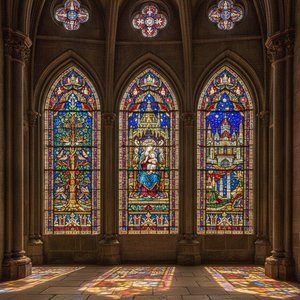
Luminous Masterpieces: The Captivating Beauty and Timeless Elegance of Stained Glass Artworks
Embark on a visual journey through the luminous world of stained glass art. Discover the exquisite craftsmanship, historical significance, and captivating beauty of masterworks from Art Nouveau to the Gothic era, curated for the discerning fine art enthusiast.

Crimson Threads of Narrative: Exploring Symbolism & Representation in Artworks Featuring the Red Dress
Explore the rich symbolism of the red dress in art history! From ancient power displays to iconic portraits like Cézanne’s 'Madame Cezanne', discover the cultural and artistic significance behind this captivating color. Expert analysis & insights.

Top 10 slavných obrazů vládnutých bílou barvou – Umění a inspirace pro interiér
Objevte top 10 slavných obrazů, kde bílá barva hraje klíčovou roli. Claude Monet, Van Gogh a další mistři! Inspirace pro váš interiér a reprodukce umění nejvyšší kvality na OriginalUniqueArt.com.

Deset ikonických obrazů v odstínech šedé modré: Umění a inspirace pro váš domov
Objevte deset ikonických obrazů v odstínech šedé modré od Van Gogha, Moneta a dalších mistrů. Ponořte se do příběhů umění, technik a inspirace pro váš interiér. Reprodukce obrazů nejvyšší kvality na OriginalUniqueArt.com.

The Allure of Azure: Exploring the Symbolic & Aesthetic Depths of Blue in Art History
Explore the rich history of blue in art! Discover its symbolism, from ancient pigments to modern masterpieces by Kandinsky & Seurat. Uncover the psychological impact and cultural meanings behind this captivating hue.