Neoclassicism · 1786
Thomas Witter (John Ramage, 1786)
John Ramage (1748–1802) vytvořil dílo Thomas Witter. Pochází z roku 1786. Patří k hnutí Neoclassicism. Je vyrobeno z Watercolor. Nachází se v Metropolitan Museum of Art v New York, Spojené státy americké. Rozměry jsou 4 × 4 cm.
- 1786
- Watercolor
- 4 × 4 cm
- Metropolitan Museum of Art, New York

 Náhled v interiéru

 Ručně malovaná olejná reprodukce
 Sdílet
 Sdílet
 Informační list


 Stáhnout
 Podobné položky
 Rentgenové snímky
 Slideshow
 Otázky a odpovědi

 Statistiky
Thomas Witter v kostce
- Název díla
- Thomas Witter
- Autor
- John Ramage (1748–1802)
- Rok narození umělce
- Dublin, Irsko
- Datum vytvoření
- 1786
- Technika
- Watercolor
- Rozměry
- 4 × 4 cm
- Kde jej vidět
- Metropolitan Museum of Art, New York, Spojené státy americké
- Pohyb
- Neoclassicism
- Období
- Early Modern
- Motiv
- man, portrait, mustache, white hair, cravat, grayscale
Co przedstawuje dílo Thomas Witter?
Identification of the Portrait of Thomas Witter
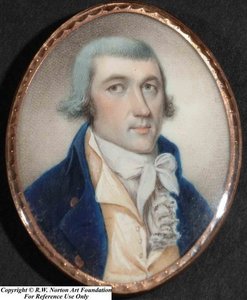
The gaze of Thomas Witter meets the viewer through this intimate watercolor portrait, a work that captures a quiet moment of reflection. Painted by John Ramage in 1786, the piece presents a man caught in a state of contemplation. He appears as a gentleman of his era, his presence rendered with a delicate touch that suggests a life of dignity and perhaps a touch of melancholy. The portrait focuses closely on his head and shoulders, creating a sense of immediate, personal encounter.
This small-scale watercolor painting offers a glimpse into the character of the subject. Ramage, an artist known for his ability to capture individual presence, uses the medium to define the contours of Witter's face and the subtle textures of his attire. The man's white hair and prominent mustache are rendered with precision, framing a face that seems to hold a silent story. Every line and shade works to preserve the likeness of Thomas Witter, ensuring his image remains present and palpable.
Composition and Visual Elements
The portrait centers on the head and shoulders of the subject, all contained within the gentle curves of an oval frame. He gazes downward, his eyes cast toward something unseen, wearing an expression of quiet melancholy or deep contemplation. His white hair is styled with neat precision, and a prominent mustache defines his face. He wears a formal suit, the details of which are anchored by a tie or cravat wrapped carefully around his neck.
A grayscale palette governs the entire scene, moving through a full range of tones from the deepest blacks to the brightest whites. This monochromatic approach creates a sense of stillness. Soft, diffused lighting washes over the man, illuminating his features evenly and avoiding any harsh or jarring shadows. The light settles upon his face, revealing the subtle contours of his features and the texture of his clothing without disrupting the calm atmosphere of the moment.
Technique and Artistic Materials
The artist works within a delicate 4 x 4 cm space, utilizing watercolor on paper to build a quiet, grayscale world. Through the careful layering of gray paint washes, a sense of volume emerges from the flat surface. These tonal variations create a soft, diffused light that settles across the subject, building depth through subtle shifts in shadow rather than harsh lines. The monochromatic palette relies entirely on these gradations to define the form of the man's face and the structure of his attire.
Fine, deliberate lines define the character of the portrait. The artist uses precise strokes to render the details of the mustache and the subtle wrinkles of the skin, capturing a sense of lived experience. These same linear techniques extend to the clothing, where lines trace the heavy folds of the fabric. A tactile contrast exists between the different surfaces; the skin appears smooth under the light, while the texture of the clothing feels slightly more rugged and coarse.
Ve kterém muzeu se nachází Thomas Witter?
Metropolitan Museum of Art
New York, Spojené státy americké
Původy a historie Metropolitan Museum of Art Cesta Metropolitan Museum of Art začala s vizí, kterou sdílel skupina podnikatelů, financierských magnátů i předních umělců a myslitelů. Po své založení v roce 1870 instituce hledala trvalé sídlo, které by mohlo pojmout její neustále rostoucí sbírky. Než se muzeum usadilo na svém současném místě, krátce sídlilo v areálu sídla Douglas Mansion na West 14th Street.


Vysokorozlišené fotografie díla Thomas Witter
John Ramage, Thomas Witter (1786), Metropolitan Museum of Art. Veřejná doména
Odpovědi na otázky k dílu Thomas Witter
Které muzeum uchovává originál díla "Thomas Witter"?
Dílo „Thomas Witter“ od John Ramage je vystaveno v instituci Metropolitan Museum of Art, New York, Spojené státy americké. Uvedené muzeum se vztahuje k originálu, nikoliv k reprodukcím.
V jakém roce bylo vytvořeno dílo „Thomas Witter“ od John Ramage?
Vznik díla „Thomas Witter“ od John Ramage se datuje do roku 1786.
Jakou technikou je vytvořeno dílo "Thomas Witter"?
John Ramage pro dílo „Thomas Witter“ použil/a techniku Watercolor. Tato technika definuje materiální podstatu originálního díla.
Jaké jsou rozměry originálu „Thomas Witter“?
Původní rozměry díla "Thomas Witter" jsou 4 x 4 cm. Původní rozměry slouží jako užitečný vodítko při výběru velikosti reprodukce.
Co zachycuje dílo "Thomas Witter"?
Témata obsažená v díle „Thomas Witter“ od John Ramage zahrnují man, portrait, mustache, white hair, cravat, grayscale. Tato témata společně shrnují obsah celého uměleckého díla.
Patří „Thomas Witter“ od John Ramage do volného tisku?
Dílo „Thomas Witter“ od John Ramage spadá do v rámci volného užití – autorská práva vypršela. Tento stav určuje pravidla pro reprodukci obrazu tohoto díla.
Kdo vytvořil "Thomas Witter"?
Dílo "Thomas Witter" se připisuje autorovi John Ramage.
K kterému uměleckému směru patří „Thomas Witter“ od John Ramage?
Umělecký směr, ke kterému patří dílo „Thomas Witter“ od John Ramage, je Neoclassicism. Tato klasifikace toto dílo umísťuje mezi související umělce a další umělecká díla.
Do které éry tvorby John Ramage spadá dílo "Thomas Witter"?
V rámci kariéry umělce John Ramage spadá dílo „Thomas Witter“ do období Mature Period. Tato fáze umožňuje jeho srovnání s dalšími díly tohoto umělce.
O umělci, John Ramage
1748–1802, Irsko
John Ramage
A Life Bridging Worlds: The Story of John Ramage Born in Dublin, Ireland, in 1748, John Ramage’s life was one of remarkable transition and artistic dedication, a journey that carried him from the refined world of Irish goldsmithing to the burgeoning art scene of colonial America. Details surrounding his early family life remain elusive, yet it is known he received formal training at the Dublin Society of Artists in 1763, laying a foundation in drawing and painting techniques that would serve as the bedrock for his future endeavors. Ramage’s initial career path was notably versatile; he skillfully combined the precision of a goldsmith with the delicate artistry of a miniaturist—a testament to his inherent talent for detail and decorative arts. This early period instilled within him not only technical proficiency but also an appreciation for craftsmanship that would distinguish his work throughout his life.
Také od autora John Ramage
 Gilbert Van Cortlandt1785
 Portrait of a Gentleman1780
 Governor George Clinton1785
 Major Greene, B.A1777
Eseje k tématu Thomas Witter
 25 Masterpieces by Jean-Antoine Watteau: The Essence of Rococo EleganceExplore 25 iconic Rococo masterpieces by Jean-Antoine Watteau. Discover the full collection online at OriginalUniqueArt.com.
 Top 10 mistrovských děl holandského baroka – obrazy a umělci | OriginalUniqueArt.czObjevte 10 ikonických děl holandského baroka! Prozkoumejte příběhy Rembrandta, Vermeera a dalších mistrů. Repliky obrazů nejvyšší kvality p…
 Monochromatic Form: Integrating Black, White, and Gray Abstract Art into Modern Architectural SpacesMaster the art of integrating monochromatic abstraction into modern architecture with expert curation. Elevate your space today.