Olejová verze
 Vše o Přístup do Fonthill







































 U děl nebo reprodukcí, u nichž je jakákoliv strana větší než 105 cm (přibližně 41 palců), bude rám dodán jako sestava v rozloženém stavu. Tato metoda zajišťuje bezpečné doručení a chrání dílo před poškozením během přepravy.


Identification of the Artwork and Artist
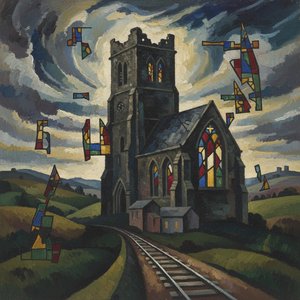
The canvas known as Entrance to Fonthill emerges from the brush of John Piper, a man whose creative spirit remains deeply entwined with the architectural soul of the United Kingdom. Completed in 1940, this work captures a moment of profound stillness amidst the shifting shadows of history. Piper, born in Epsom, England, brings a singular vision to the scene, transforming a specific place into a meditation on the very nature of existence and the weight of what remains when structures fail.
The subject of this painting finds its roots in the ambitious and grandly flawed Fonthill Abbey. This was the dream of William Beckford, a structure that once reached toward the heavens with immense, soaring intent. Through Piper's eyes, we do not see a mere building, but the spirit of an era caught in the act of dissolving. The abbey's presence is felt through the fractured geometry of its ruins, inviting a quiet wonder at the scale of human ambition and the inevitable return of stone to the earth.
Composition and Visual Elements
The architecture does not sit still; instead, it breaks apart into a fragmented and non-linear arrangement. Arches, columns, and walls lose their solid certainty, dissolving into a series of angular shapes and blocky forms. There is a restless energy in how these elements collide, creating a sense of spatial instability that pulls the eye through a maze of stone. The subject matter centers on these abstracted architectural fragments, which seem to drift through a dreamlike space rather than resting upon a solid foundation.
A flattened perspective dominates the scene, stripping away the comfort of a traditional vanishing point. Instead of receding into a deep, realistic distance, the planes overlap and stack, creating a sense of depth through layering rather than mathematical precision. This approach draws heavily from the geometric logic of Cubism, where the structure is dismantled and rearranged. The result is a composition that feels both rigid in its geometry and chaotic in its delivery, echoing the sensibilities of abstract expressionism through its expressive, non-linear movement.
Technique and Material Application
The oil paint clings to the canvas with a heavy, physical presence. Thick impasto brushstrokes build up the surface, creating a landscape of ridges and valleys that catch the light. In the darker areas, the texture becomes particularly rough and impastoed, giving the work a palpable, tactile quality. Every movement of the brush remains visible, leaving behind a record of the artist's hand in the thick layers of pigment.
This heavy application of paint transforms the architectural forms into something sculptural. The surface is not smooth or polished; instead, it feels rugged and layered. These visible brushstrokes define the edges of the arches and columns, using the physical depth of the paint to suggest volume and weight. The interplay between the thick, raised paint and the recessed shadows creates a sense of depth that relies on the actual topography of the medium rather than mere illusion.
Color Palette and Atmosphere
A heavy, pervasive blue dominates the vision, pulling the viewer into a space where light feels filtered through memory. Deep indigo shadows pool within the fractured geometry, grounding the composition in a profound darkness. These somber tones shift and transition into paler cerulean, creating a sense of movement within the stillness. Gray and white accents puncture the blue expanse, tracing the outlines of arches and columns like sudden flashes of light through a heavy mist. These highlights do not brighten the scene so much as they define the skeletal remains of the structure against the encroaching gloom.
The atmosphere feels dreamlike and carries a subtle, unsettling weight. There is a sense of spatial instability that keeps the eye searching, never quite finding a place to rest. This tension is balanced by an undercurrent of quiet contemplation, a stillness that suggests the weight of years passing over stone. The colors do not shout; they whisper of a world caught between being and vanishing. It is a scene of profound solitude, where the cool palette reinforces a mood of wistful remembrance and the quiet acceptance of decay.
Historical and Symbolic Context
The ruins of Fonthill Abbey emerge from the canvas as a meditation on the fragility of human ambition. This structure, once a grand project epitomizing the Romantic fascination with reviving classical ideals, now exists only in fragments. The abbey itself remains a symbol of aristocratic folly and artistic idealism, a place where the lofty dreams of the past meet the inevitable decay of the present. Through this lens, the painting captures a narrative of ambition thwarted, where the scale of the architecture speaks to a struggle against the relentless passage of time.
Within these fractured forms, the architecture functions as a symbol for the erosion of memory and the slow dissolution of cultural heritage. The broken lines and disjointed shapes suggest that history is not a solid, continuous thing, but something that slips through our fingers like sand. As the viewer gazes upon these crumbling elements, there is a sense of witnessing the quiet disappearance of a bygone era. The physical disintegration of the stone mirrors a deeper, psychological loss, inviting a contemplation of what remains when the grand structures of civilization finally succumb to the elements.
Otázky a odpovědi
Je dílo Přístup do Fonthill ručně malované, nebo jde o tisk?
Ručně malováno: zkušený malíř přetvoří Přístup do Fonthill v olejomalbu na lněném plátně.
Jakou velikost si mám vybrat pro Přístup do Fonthill?
Rozměry originálu jsou 64 x 76 cm. Velikosti se pohybují od 28.8 x 34.7 cm (Kč4358) až po 200.5 x 241.1 cm (Kč38608); v tabulce na této stránce jsou uvedeny jednotlivé varianty a jejich ceny.
Jak dlouho trvá doručení?
Doručení trvá 4 až 5 týdnů a zahrnuje bezplatnou expresní přepravu po celém světě; na této stránce je k dispozici i možnost urgentní výroby. Dílo můžete vrátit během 100 dnů s plným vrácením peniędzy, bez jakýchkoliv podmínek.
Kde se nachází originál díla Přístup do Fonthill?
Originál se nachází ve sbírkách The Hepworth Wakefield, Wakefield.
Jakou techniku použil/a John Piper pro dílo Přístup do Fonthill?
Olej na plátně
 Náhled v interiéru

 Sdílet
 Sdílet
 Podrobnosti o díle
 Informační list


 Stáhnout
 Podobné položky
 Rentgenové snímky
 Slideshow
 Otázky a odpovědi

 Statistiky