
 Náhled v interiéru
 Sdílet
 Sdílet
 Podrobnosti o díle
 Průvodce

 Stáhnout
 Podobné položky
 Rentgenové snímky
 Slideshow
 Statistiky
Inferno
 Engraving
- WallArt
- Neoclassical Style
 1793
1793- 19th Century
 160.0 x 270.0 cm
 Národní knihovna Francie
 Zobrazit více
Získejte soubor připravený k tisku, který svou kvalitou výrazně převyšuje náhled na webu. Každý prodávaný digitální obraz pochází z vysokorozlišeného originálu v naší databázi – obvykle o šířce 5 000 až 15 000 pixelů – díky čemuž můžete tisknout ve velkém formátu, provádět těsný střih nebo si s jistotou užít i ty nejjemnější detaily.
Žádný soubor neopustí naše studio bez úprav. Digitální expert kontroluje barvy v porovnání s původním obrazem a v případě potřeby je upravuje, poté pomocí profesionálních nástrojů pro retuš zvyšuje ostrost a detailnost — přičemž vždy zůstává věrný tahům štětcem a stylu umělce. Výsledkem je obraz, který vypadá jako malba, nikoliv jako naskenovaný snímek s filtrem.
Schvalujete ještě před dokončením: náš expert vám digitální obraz zašle e-mailem k revizi do 72 hodin. Nejsste spokojeni? Požádejte o vylepšení či opravy, nebo si můžete vyžádat vrácení peněz, pokud kvalita neodpovídá očekávání.
Tuto kvalitu využívají vydavatelství, designová studia, galerie i tiskárny.
Digitální obrazy
Stáhněte si soubor ve vysokém rozlišení pro osobní prohlížení, tisk nebo kreativní projekty. ( Přepnout na tisk Koupit ručně malovaný obraz)
Součást každé objednávky digitálního obrazu
Profesionální digitální doručení, zaručené
Když si vyberete OriginalUniqueArt.com, nezískáváte pouze obrázek – získáváte digitální umělecké dílo s profesionálně vylepšenými detaily, zpracované s precizností a podpořené zárukou za spokojenost. Zde je vše, co vaše objednávka automaticky obsahuje:

Rychlé doručení e-mailem
Váš digitální obraz ve vysokém rozlišení vám bude zaslán e-mailem do 72 hodin od objednávky – připraven k okamžitému použití.

Digitální soubor s využitím AI
Vaše umělecké dílo je profesionálně optimalizováno pomocí pokročilých nástrojů umělé inteligence a manuální úpravy, což zajišťuje maximální úroveň detailu, ostrosti a přesnosti barev.

Doživotní bezplatné znovuodeslání digitálních obrazů
Soubor jste omylem smazali nebo ztratili? Žádný problém – kdykoliv vám ho znovu zašleme zcela zdarma.

Bez poplatků za dovoz – navždy
Užijte si své umělecké dílo okamžitě bez celních poplatků, daní nebo nákladů na dopravu – digitální stažení je vždy bez daňových povinností.

Záruka přesnosti barev
Díky profesionálním nástrojům a správě barev zajišťujeme, aby váš digitální obraz odrážel původní barvy co nejvěrněji.

100dená záruka spokojenosti
Pokud nebudete s digitálním obrázkem spokojeni, provedeme jeho revizi nebo vám vrátíme 100% platby do 100 dnů – bez jakýchkoliv dotazů.

100% záruka vrácení peněz
Nespokojeni? Získejte plnou náhradu peněz do 100 dnů od obdržení digitálního souboru – bez zbytečných dotazů.

Slevy při hromadných objednávkách
Koupě 3 obrazů ušetří 10% – Koupě 5 obrazů ušetří 15% – Koupě 10+ obrazů ušetří 20%. Ideální pro kreativní projekty, galerie a agentury.
A Descent Into Darkness: Exploring John Flaxman’s Inferno
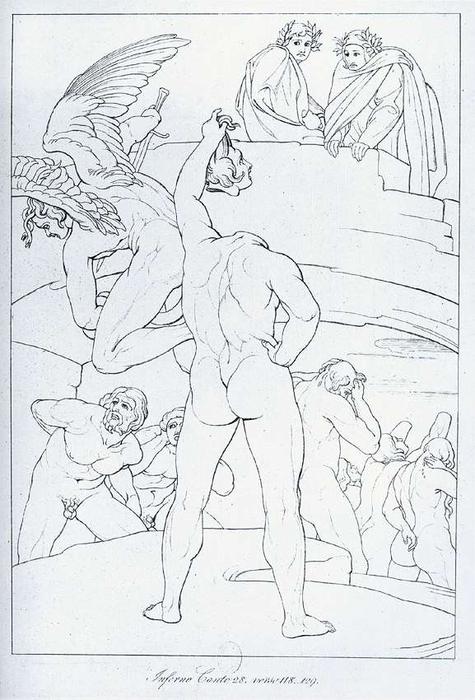
John Flaxman's engraving of Dante Alighieri’s *Inferno*, completed in 1793, stands as a monumental achievement of neoclassical illustration—a testament to both artistic skill and intellectual fervor. More than just a depiction of Dante’s harrowing journey through Hell, it embodies the spirit of Enlightenment thought, grappling with themes of morality, judgment, and divine retribution within a meticulously crafted visual language. Flaxman's work transcends mere representation; it strives to convey the profound psychological drama inherent in Dante’s poetic vision.- Composition & Perspective: Flaxman employs a complex pyramidal arrangement, guiding the viewer’s eye upwards towards a radiant angelic figure—a beacon of hope amidst the pervasive gloom. The flattened perspective characteristic of engraving techniques reinforces the sense of timelessness and universality, emphasizing the enduring relevance of Dante's narrative.
- Line Technique & Texture: Flaxman’s mastery lies in his masterful use of line engraving. Delicate lines delineate musculature and facial expressions with astonishing precision, capturing the agony etched upon the tormented souls depicted. Simultaneously, bolder lines define architectural elements and create a palpable textural illusion—the rough surface of Hell contrasted against the smooth contours of angelic forms.
- Color Palette & Lighting: The absence of color is deliberate; Flaxman eschews pigment to focus on tonal variation—a technique favored by neoclassical artists who sought clarity and restraint. Dramatic lighting casts long shadows, intensifying the emotional impact of the scene and highlighting the psychological torment experienced by the figures.
Symbolism & Narrative Depth
The winged creature dominating the upper portion of the engraving serves as a potent symbol—representing divine grace attempting to penetrate the impenetrable darkness of Hell. Its outstretched wings suggest aspiration, redemption, and the promise of salvation for those who persevere through suffering. The anguished expressions on the faces of Dante’s companions convey the visceral horror of their predicament, mirroring the psychological exploration central to Dante's poem. Flaxman doesn’t merely illustrate Dante; he embodies its philosophical core—a confrontation with inescapable moral responsibility.Historical Context & Influence
Flaxman’s engraving emerged during a period of significant artistic and intellectual upheaval in Britain, coinciding with the rise of Neoclassicism as a reaction against Rococo excess. Inspired by classical sculpture and literature, Flaxman sought to recapture the grandeur and moral seriousness of antiquity—values championed by thinkers like Rousseau and Voltaire. His work profoundly impacted subsequent generations of illustrators and artists, establishing a precedent for conveying complex narratives through stylized visual representations. Flaxman’s *Inferno* remains an iconic image of Enlightenment idealism—a timeless depiction of human suffering illuminated by divine compassion.Conclusion: An Enduring Legacy
John Flaxman's *Inferno* endures not merely as a beautiful engraving but as a powerful distillation of Dante’s poetic genius and the intellectual currents of its time. Its meticulous craftsmanship, symbolic richness, and emotive impact continue to inspire admiration and provoke contemplation—a testament to Flaxman’s enduring contribution to British art history and his ability to transform literature into unforgettable visual experience.Otázky a odpovědi
Kdo vytvořil "Inferno"?
Dílo "Inferno" vytvořil/a John Flaxman. Informace na této stránce popisují originální dílo umělce John Flaxman.
Jaký emocionální tón doprovází styl Neoclassical Style u díla „Inferno“?
Dramatic emoce díla „Inferno“ je doprovázena jeho stylem, který patří k Neoclassical Style.
Jsou barvy díla „Inferno“ od John Flaxman syté, nebo tlumené?
Nasycení barevné palety díla "Inferno" je na úrovni Muted.
Biografie umělce
A Life Etched in Stone and Line
John Flaxman, born in York in 1755, emerged as a pivotal figure bridging the gap between the waning Rococo era and the ascendant Neoclassical movement in Britain. His story is one of remarkable artistic evolution, fueled by both innate talent and diligent study. From humble beginnings assisting his father, a moulder of plaster casts, young John absorbed an early appreciation for form and texture. This practical grounding, coupled with a voracious appetite for classical literature – pursued largely through self-education – laid the foundation for a career that would redefine British sculpture and illustration. His childhood was marked by illness and loss; his mother’s death when he was nine years old profoundly shaped his introspective nature. Yet, even in these early years, his artistic promise shone brightly, winning him accolades from the Society of Arts at just twelve years old. This initial success propelled him into the orbit of London's burgeoning art scene, where friendships with William Blake and Thomas Stothard would prove formative, fostering a lifelong exchange of ideas and creative energy.Wedgwood and the Classical Ideal
Flaxman’s artistic trajectory took a significant turn with his employment by Josiah Wedgwood in 1775. This association wasn't merely a source of income; it was an immersive apprenticeship in translating classical motifs into commercially viable art forms. Modeling reliefs for Wedgwood’s renowned jasperware and basaltware demanded precision, economy of line, and a deep understanding of antique design. The influence of d’Hancarville’s engravings of Greek vases proved particularly potent, shaping Flaxman's aesthetic sensibility towards streamlined elegance and narrative clarity. Designs like the *Apotheosis of Homer* and the *Dancing Hours* weren’t simply decorative elements; they were distillations of classical mythology and allegory, rendered with a newfound emphasis on linear grace. This period honed his skills in relief sculpture, a medium he would masterfully employ throughout his career, particularly in his funerary monuments. It was during this time that Flaxman began to cultivate the style for which he became celebrated – a delicate balance between classical purity and emotional resonance.Roman Reveries and Illustrative Triumph
A transformative journey to Rome in 1787 marked a turning point in Flaxman’s artistic development. Funded partly by Wedgwood, this extended sojourn allowed him to immerse himself directly in the heart of antiquity. He studied not only classical sculpture but also medieval and Renaissance art, broadening his understanding of artistic traditions. More importantly, it was in Rome that he began producing the book illustrations that would secure his lasting fame. Commissions followed for editions of Homer’s *Iliad* and *Odyssey*, Dante’s *Divine Comedy*, and Aeschylus' tragedies. These weren’t mere accompaniments to the text; they were independent works of art, characterized by their stark simplicity, dynamic compositions, and masterful use of line. The illustrations, engraved by figures like Tommaso Piroli, resonated deeply with European audiences, earning Flaxman widespread acclaim – Goethe famously hailed him as “the idol of all dilettanti.” His designs for Dante’s *Divine Comedy*, in particular, proved profoundly influential, inspiring artists such as Goya and Ingres and serving as a crucial resource for art students throughout the 19th century.Monuments to Memory and Lasting Legacy
Upon his return to England, Flaxman established himself as a leading sculptor of funerary monuments. He approached these commissions with a unique sensitivity, eschewing ostentation in favor of restrained elegance and heartfelt emotion. His memorials – found in churches across England, including those dedicated to Thomas Chatterton, Mrs. Morley, and the Rev. Thomas Ball – are characterized by their simplicity, pathos, and rhythmic design. The monument to George Stevens, now housed in the Fitzwilliam Museum, exemplifies his ability to convey profound grief and enduring remembrance through subtle yet powerful forms. While he achieved recognition as a professor of sculpture at the Royal Academy in 1810, it is perhaps his illustrations that cemented his place in art history. John Flaxman’s work represents a synthesis of classical ideals, technical mastery, and emotional depth. He left an indelible mark on British art, influencing generations of artists with his elegant style and unwavering commitment to the power of line. His legacy continues to inspire, reminding us of the enduring beauty and profound meaning that can be found in both stone and ink. He remains a testament to the transformative power of artistic vision.
John Flaxman
1755 - 1826 , United States of America
Stručné informace
- Full Name: John Flaxman
- Nationality: British
- Date Of Birth: 1755
- Date Of Death: 1826
- Place Of Birth: York, United States of America
- Notable Artworks:
- Saint Michael Overcoming Satan
- The Fight for Body of Patroclus
- Apotheosis of Homer
- Dante's Divine Comedy
- Artistic Movement Or Style: Neoclassicism
- Artists Who Influenced This Artist:
- George Romney
- William Blake
- Artists Or Movements Influenced By This Artist:
- Goya
- Ingres