

 Zobrazit v interiéru
 Odeslat
 Sdílet
 Podrobnosti
 Průvodce

 Stáhnout obrázek
 Podobné kousky
 Rentgenové snímky
 Slideshow
 Statistiky
Illustration to


 Přečíst si více
Giclée / Umělecký tisk
Giclée nebo plátěný tisk muzeální kvality s rychlou výrobou a širokou nabídkou povrchových úprav. ( Objednat ručně malovanou reprodukci Přepnout na digitální verzi obrazu)




P118B Kč10

P118H Kč10

P118W Kč10

P438Z Kč10

P508JH Kč12

P508YH Kč12

P805H Kč10

P805Z Kč10

P919BZ Kč10

P919G Kč10

P919XJ Kč10

P959ZH Kč10

P968JZ Kč12

W106C Kč8

W218G Kč10

W218JH Kč8

W218Y Kč10

W307PJ Kč10

W316G Kč10

W316PJ Kč8

W316Y Kč10

W398PJ Kč8

W4111J Kč10

W500HY Kč15

W500JH Kč15

W692G Kč12

W849H Kč8

W940BG Kč15

W953PJ Kč8




Vyberte si z našich přednastavených velikostí, které odpovídají původním proporcím díla.

Zadejte šířku a výšku, které potřebujete pro váš rám nebo stěnu. Tisk lze pouze oříznout, nikdy však nelze zvětšit obraz nad jeho původní rozměr, proto při výběru jiného formátu dochází ke ztrátě části obrazu. Před samotným tiskem vám zašleme digitální náhled k schválení. Obraz zobrazený na této stránce nenabízí skutečný výřez — ten uvidíte pouze v náhledu.
Celosvětové doručení () do 2 týdnů namísto standardních 4/5 týdnů. (24 říjen)

Zdarma celosvětová expresní doprava

Vysoce kvalitní lněné plátno

Úplné pojištění přepravy

Záruka vrácení celního poplatku

Záruka věrného barevného shodu

100dení lhůta pro vrácení zboží (pouze při vadách výroby)

100% garance vrácení peněz

Sleva při více objednávkách
 Skleněná varianta je dostupná pouze u rozměrů menších než 110 cm

Illustration to
Giclée / Umělecký tisk
Velikost reprodukce
-


Celková cena
Kč 1709
A Night of Spectral Revelry: Capturing the Spirit of Tam O'Shanter
To gaze upon this illustration is to be instantly transported to the wild, intoxicating heart of Scottish folklore. It is more than just a depiction; it is a vibrant echo of verse made visible, capturing the breathless moment when earthly revelry collides with supernatural dread. John Faed, master chronicler of Victorian romanticism, has gifted us a scene drawn from Robert Burns’s epic poem, ‘Tam O’Shanter.’ Here, we witness the aftermath of a night fueled by drink and daring—a journey home that proves anything but straightforward.
The composition centers on the raw energy of the moment. We see Tam, caught in the throes of witnessing the spectral dance within the crumbling stones of old Alloway Kirk. The air itself seems thick with unseen magic; the ruins serve not merely as a backdrop, but as a stage for the ethereal ballet performed by the young witches. Faed’s brushwork, characteristic of his Victorian vision, imbues the scene with both meticulous detail and an almost feverish sense of movement.
The Romantic Echo: Context and Craftsmanship
John Faed was deeply embedded in the Scottish Romantic art movement, a period that reveled in the dramatic, the historical, and the supernatural. His work often served as a visual companion to the great oral traditions and literary epics of his time. This piece exemplifies that connection, translating the rhythm and narrative arc of Burns’s verse into tangible pigment. While the photo description suggests elements like riders and open skies—perhaps referencing other scenes in Faed's oeuvre or suggesting the journey *away* from the Kirk—the core subject remains rooted in the terrifying allure of the supernatural gathering.
The technique employed speaks to a skilled hand mastering genre painting infused with fantastic elements. The contrast between the solid, tangible forms of the onlookers and the shimmering, elusive quality of the spirits is masterfully handled. One can almost feel the chill emanating from the decaying stonework, juxtaposed against the flush of adrenaline on Tam’s face as he cries out to the coven.
Symbolism and Emotional Resonance
At its heart, this artwork explores the boundary between civilization and chaos. The ruins themselves are potent symbols—the decay of established order allowing something wilder, older, and more primal to surface. The witches represent the untamed feminine power, the irresistible pull of forbidden knowledge, while Tam embodies the flawed, yet ultimately resilient, human spirit confronting the inexplicable. Emotionally, the piece vibrates with a mixture of terror, exhilaration, and profound curiosity. It asks the viewer: how far would you go for a single night’s unforgettable experience?
For the collector or decorator, this reproduction offers an immediate infusion of dramatic narrative into any space. It speaks to a love of storytelling, history, and the sublime power found in myth. Imagine this piece anchoring a library, a study, or a grand hall—a constant, captivating reminder that beneath the veneer of daily life, magic still stirs.
A Vision for Your Walls
Owning a reproduction of Faed’s work is to curate a piece of literary history. It allows one to possess not just paint on canvas, but a tangible connection to the passionate spirit of Victorian storytelling. The depth of color and the dramatic composition ensure that this artwork will draw the eye, inviting conversation and contemplation long after its initial viewing. It is an heirloom quality piece, perfect for those who appreciate art that demands—and rewards—a deeper dive into its narrative soul.
Otázky a odpovědi
Jak světlý je celkově obraz "Illustration to"?
Vnímaná jasnost díla „Illustration to“ od John Faed je shadow. Lze jej přizpůsobit osvětlení daného prostoru.
Jakým způsobem se styl díla "Illustration to" vztahuje k době svého tvůrce?
Dílo "Illustration to" patří k období Romantic art, jehož tvůrce působil v éře 19th Century.
Jaká témata se objevují v díle „Illustration to“ od John Faed?
Motivy díla „Illustration to“ jsou scottish folklore, witches, epic poem, night scene, horseback ride, halloween.
Biografie umělce
A Legacy of Visionary Storytelling
In the heart of the Victorian era, a period defined by both rigorous realism and an unquenchable thirst for the supernatural, John Faed emerged as a master of the imaginative. Born in 1819 at Barlay Mill near Gatehouse of Fleet, within the ruggedly beautiful landscape of Galloway, Scotland, Faed was destined for a life entwined with the arts. He was part of a remarkable family of creators; his brothers Thomas and James, along with his sister Susan, all shared this profound artistic calling. From the tender age of nine, John demonstrated a precocious talent, capturing the likenesses of local people through delicate miniature portraits. This early mastery of detail would later become a cornerstone of his larger, more complex compositions, where every fold of fabric and flicker of light served to deepen the narrative weight of his subjects.
His journey from the quiet pastoral life of Kirkcudbrightshire to the prestigious halls of the London art establishment is a testament to his relentless dedication. After honing his skills at the Edinburgh School of Design, Faed’s ambitions led him to the Royal Academy in London. It was here that his technical prowess met the grander scale of historical and literary themes. His ascent within the British art hierarchy was marked by significant milestones, including his election as an associate of the Royal Academy in 1849 and achieving full academician status in 1864. These honors were not merely personal triumphs but reflections of a painter who had successfully bridged the gap between the intimate charm of Scottish genre painting and the epic grandeur required by the Victorian taste for historical drama.
The Intersection of Myth and Reality
Faed’s oeuvre is most celebrated for its ability to breathe life into the legends of old. He possessed a unique gift for genre painting—the depiction of everyday life—yet he frequently infused these scenes with elements of the fantastical and the literary. His work often served as a visual echo of the great poets of his time, particularly Robert Burns. In his evocative illustrations of works like Tam O’Shanker, Faed did more than merely illustrate text; he captured the very essence of Scottish folklore, rendering the moment where earthly reality dissolves into spectral revelry. Through his brush, the viewer is transported to a world where the boundaries between the known and the supernatural are perilously thin.
Beyond the shadows of folklore, Faed’s repertoire extended into the realms of religious and historical subjects. His paintings often featured a meticulous attention to detail that spoke to his training as a miniaturist, yet they were imbued with a romantic atmosphere that invited deep contemplation. Whether he was portraying the legendary Merlin or composing intimate scenes of literary giants like Shakespeare and His Friends, Faed utilized a rich palette and a sophisticated understanding of light to create depth and emotion. His ability to balance academic realism with a sense of wonder allowed him to capture the dual spirit of his age: a respect for the tangible world and a profound reverence for the mysteries that lie beneath its surface.
An Enduring Artistic Impression
As the nineteenth century drew to a close, Faed’s influence continued to resonate through the British art scene. Though he retired from active painting in 1893, the impact of his work remained etched in the cultural consciousness of Scotland and beyond. His legacy is defined by several key contributions:
- Mastery of Narrative: The ability to transform static images into unfolding stories that engage the viewer's imagination.
- Cultural Preservation: Using the medium of oil and watercolor to immortalize Scottish legends, literary characters, and historical motifs.
- Technical Versatility: A seamless transition from the precision of miniature portraiture to the expansive scale of historical compositions.
- The Romantic Spirit: A profound contribution to the Scottish Romantic movement, blending observational truth with poetic fantasy.
Today, the works of John Faed stand as windows into a vanished era, reminding us of a time when art was a primary vessel for exploring both the human condition and the magic of the unknown. His life remains a beautiful tapestry of familial tradition, academic excellence, and an unwavering devotion to the power of the visual story.
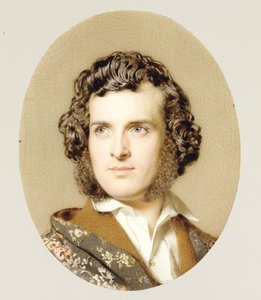
John Faed
1819 - 1902 , United Kingdom
Rychlé informace
- Artistic Movement Or Style: Scottish Romanticism, Genre painting
- Full Name: John Faed
- Nationality: Scottish
- Notable Artworks:
- The Merlin
- Old Mortality
- Self Portrait
- Shakespeare And His Friends
- Tam O'Shanter illustration
- Place Of Birth: Burley, United Kingdom
- Date Of Birth: 1819
- Date Of Death: 1902
Související články
Thomas Edwin Mostyn: A Victorian Genre Painter's Journey from Realism to Romantic Enchantment
Discover the captivating world of Thomas Edwin Mostyn (1864-1930), a Victorian artist renowned for his romantic garden scenes and evocative portraits. Explore his artistic journey, legacy & find high-quality reproductions at OriginalUniqueArt.

Echoes of Time: Exploring the Enduring Appeal & Historical Context of Vintage Art Prints
Explore the captivating world of vintage art prints! Discover their history, collecting tips & enduring appeal. Expert insights on chromolithography and building a legacy collection with OriginalUniqueArt.

John Gilbert: A Comprehensive Exploration of Technique, Context, and Enduring Legacy in Victorian Genre Painting
Explore the life & art of John Gilbert, a prolific Victorian painter renowned for his captivating genre scenes and Venetian-inspired style. Discover his legacy with OriginalUniqueArt.

The Enduring Legacy of Fine Art Prints: Technique, History & Aesthetic Impact
Explore the rich history & techniques of fine art prints. Discover investment potential, assess authenticity, and learn how to preserve your collection with expert guidance. Trusted insights for discerning collectors.

Giclée Prints: Archival Quality & Aesthetic Nuances for the Discerning Collector
Explore the world of giclée prints with OriginalUniqueArt. Learn about archival quality, aesthetic nuances & investment potential. Expert guidance for discerning art collectors seeking museum-quality reproductions and lasting value.