

 Náhled v interiéru
 Sdílet
 Sdílet
 Podrobnosti o díle
 Průvodce

 Stáhnout
 Podobné položky
 Rentgenové snímky
 Slideshow
 Statistiky
Operation
 Oil On Canvas
- WallArt
- Baroque
 1740
1740- Early Modern
 34.0 x 41.0 cm
 Státní Ermitáž
 Zobrazit více
Ručně malovaná olejová reprodukce
Rukou malované olejné plátno v libovolném rozměru i s rámem, vyrobené našimi umělci na zakázku. ( Přepnout na tisk Přepnout na digitální obraz)




P118B Kč10

P118H Kč10

P118W Kč10

P438Z Kč10

P508JH Kč12

P508YH Kč12

P805H Kč10

P805Z Kč10

P919BZ Kč10

P919G Kč10

P919XJ Kč10

P959ZH Kč10

P968JZ Kč12

W106C Kč8

W218G Kč10

W218JH Kč8

W218Y Kč10

W307PJ Kč10

W316G Kč10

W316PJ Kč8

W316Y Kč10

W398PJ Kč8

W4111J Kč10

W500HY Kč15

W500JH Kč15

W692G Kč12

W849H Kč8

W940BG Kč15

W953PJ Kč8




Vyberte si z našich přednastavených velikostí, které odpovídají původním proporcím díla.

Zadejte šířku a výšku, které potřebujete pro váš rám nebo stěnu. Protože se jedná o ruční malbu, při výběru jiného formátu může umělec kolem obrazu domalovat o něco více, nebo jej mírně oříznout — rozhodnete si vy. Před zahájením malby vám zašleme digitální náhled ke schválení. Obraz zobrazený na této stránce neodpovídá skutečnému výsledku — pouze digitální náhled jej zobrazuje.
Po přijetí objednávky vám tým OriginalUniqueArt.com zašle e-mail s pokyny a poskytne náhledovou verzi.
Celosvětová doprava () za 3–4 týdny namísto standardních 5 týdnů. (28 říjen). Bez kompromisů v kvalitě.

Zdarma celosvětová expresní doprava

Vysoce kvalitní lněné plátno

Kompletní pojištění přepravy

Záruka vrácení celního poplatku

Záruka věrného barevného souladu

100dení lhůta pro vrácení zboží (pouze při vadách výroby)

100% záruka vrácení peněz

Sleva při více objednávkách
 Skleněná varianta je dostupná pouze u rozměrů menších než 110 cm

Operation
Technika reprodukce
Rozměry reprodukce
-


Celková cena za vybrané možnosti reprodukcí
Kč 6435
A Glimpse into Domestic Crisis: The Scene of Operation
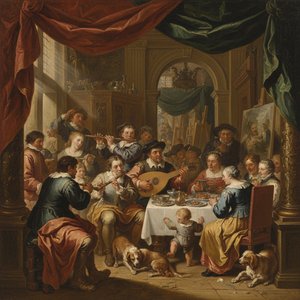
This evocative painting transports us directly into an intimate moment of profound vulnerability—a domestic scene centered around a medical procedure. One can almost hear the hushed urgency in the air, the collective breath held by those gathered around the prone figure on the floor. The composition is rich with human drama; several figures cluster closely, their gestures suggesting focused concern and practiced activity. Objects scattered within the room—bowls, cups, and the simple presence of a chair—are not mere props but integral components of this narrative tableau. It speaks to a time when medicine was both rudimentary and deeply personal, played out within the confines of a private dwelling.
The Hand of Jan Josef Horemans the Elder
Painted around 1740 by Jan Josef Horemans the Elder, this work places us firmly in the milieu of 18th-century Flemish genre painting. Horemans was renowned for his meticulous chronicling of daily life in Antwerp; he possessed an eye that captured the texture of bourgeois existence with almost photographic precision. His style marries a detailed realism with a subtle Baroque sensibility, allowing him to elevate everyday occurrences into moments imbued with narrative weight. To own a reproduction of this piece is to acquire not just a painting, but a tangible connection to the daily rhythms and anxieties of life in the early 18th century.
Technique and Compositional Drama
Observe the masterful handling of light within the room; it seems to illuminate the critical action while leaving corners steeped in suggestive shadow. Horemans employs a rich palette characteristic of the period, allowing the viewer's eye to wander across the varied textures—the folds of clothing, the sheen on the objects, and the pale skin of the woman at the center. The inclusion of the two birds, one high in the corner and another near the floor, adds an unexpected layer of natural symbolism, perhaps representing life observing humanity’s struggle or simply serving as delicate compositional anchors that draw the eye through the scene.
Symbolism and Emotional Resonance for the Modern Collector
Beyond its historical documentation, this artwork resonates with universal themes: caregiving, fragility, and the human instinct to heal. For the collector or interior designer, it offers a powerful focal point—a piece that commands attention while inviting quiet contemplation. It speaks eloquently of community support during times of crisis. Reproducing such a work allows one to bring an atmosphere of thoughtful drama into a modern space, suggesting depth, history, and the enduring power of human connection.
Otázky a odpovědi
Jakou barevnou harmonii představuje dílo „Operation“ od Jan Josef Horemans The Elder?
„Operation“ od Jan Josef Horemans The Elder představuje Unified Palette barevnou harmonii.
Jakou technickou quite byla dílo "Operation" vytvořeno a jaká je jeho velikost?
Dílo „Operation“ je vytvořeno v technice Oil On Canvas a v původní podobě má rozměry 34 x 41 cm.
Jakým způsobem se dílo „Operation“ zapojuje do témat a stylu umělce Jan Josef Horemans The Elder?
Dílo „Operation“ sdílí s ostatními pracemi umělce Jan Josef Horemans The Elder styl období Baroque a opakující se témata: flemish genre scene depiction, daily life antwerp society, baroque realism narrative focus, chronicling bourgeois existence.
Biografie umělce
A Chronicler of Antwerp Life: Jan Josef Horemans the Elder
Jan Josef Horemans the Elder, born in Antwerp in 1682 and passing away in the same city in 1759, stands as a fascinating figure within the tapestry of 18th-century Flemish painting. While not achieving the widespread renown of some contemporaries, his meticulous genre scenes offer an invaluable glimpse into the daily existence of bourgeois life in Antwerp during a period of significant social and economic change. He wasn’t merely recording what he saw; Horemans was crafting narratives, small windows into the habits, anxieties, and quiet dramas unfolding within the homes and streets of his native city. His work provides a unique historical record, painted with a precision that borders on photographic realism yet imbued with a distinctly Baroque sensibility.Early Life and Artistic Formation
Horemans’s artistic journey began in 1694 when he was registered as an apprentice at the Antwerp Guild of Saint Luke, initially under the tutelage of the sculptor Michiel van der Voort the Elder. This early exposure to sculpture likely instilled a keen understanding of form and three-dimensionality that would later manifest in his carefully constructed compositions. He subsequently moved into the studio of Jan van Pee, where he honed his skills as a painter. In 1706, Horemans achieved master status within the Guild, marking a pivotal moment in his career. A year later, he solidified both his personal and professional life through marriage to Maria Francisca van der Voort, the daughter of his first mentor. This familial connection would prove significant, as his son, Jan Josef Horemans the Younger, also followed in his artistic footsteps, creating a legacy that spanned generations. The elder Horemans’s commitment to his craft was further demonstrated by his role as a teacher, guiding both his younger brother Peter Jacob and his son along their own creative paths.The World Within Walls: Themes and Style
Horemans carved out a niche for himself with his genre scenes – intimate depictions of everyday life. Unlike the grand historical or religious paintings that dominated much of the artistic landscape, Horemans focused on the domestic sphere. Interiors teeming with activity—families sharing meals, merchants conducting business, children at play—became his signature subject matter. He also ventured into portraiture and allegorical works, but it was in these smaller, anecdotal scenes that his talent truly shone. His style is characterized by a remarkable attention to detail; objects are rendered with painstaking accuracy, fabrics shimmer with texture, and faces convey subtle emotions. However, Horemans’s palette tended towards darker tones—a characteristic that earned him the nicknames “le brun” (the dark one) and “le sombre” (the shadowy one), distinguishing his work from that of his son, who favored a lighter approach. Despite this somewhat somber coloration, his paintings are far from bleak; they possess a lively energy, capturing the bustle and vibrancy of Antwerp life.Influences and Legacy
While Horemans developed a distinctly personal style, he was undoubtedly influenced by the 17th-century Flemish genre painters who preceded him—artists like Pieter Bruegel the Younger and David Teniers the Younger. He inherited their penchant for detailed observation and narrative storytelling but infused his work with a more refined elegance and a greater emphasis on contemporary subject matter. His paintings reflect a shift in artistic focus, moving away from purely moralistic or allegorical themes towards a more straightforward depiction of everyday reality. The sheer volume of small paintings he produced—often executed as part of larger series—suggests a thriving market for his work among the burgeoning bourgeois class. Horemans’s legacy extends beyond his individual artworks; he is remembered as a leading chronicler of 18th-century Antwerp, providing an invaluable visual record of a society undergoing transformation. His son, Jan Josef Horemans the Younger, continued this tradition, further solidifying the family's place in Flemish artistic history.Historical Significance and Modern Appreciation
Today, Jan Josef Horemans the Elder is increasingly recognized for his unique contribution to Flemish painting. While he may not be a household name, his work offers a compelling window into a specific time and place—a world of bustling commerce, domestic intimacy, and subtle social dynamics. His paintings are prized by collectors and scholars alike for their meticulous detail, narrative richness, and historical significance. The fact that over 300 artworks attributed to him have appeared at auction speaks to the enduring appeal of his vision. Horemans’s scenes aren't merely decorative; they are social documents, offering insights into the material culture, customs, and values of 18th-century Antwerp. He stands as a testament to the power of genre painting—a reminder that even the most seemingly mundane subjects can reveal profound truths about the human condition. His ability to capture the essence of everyday life with such precision and sensitivity ensures his continued relevance in the world of art history.
Jan Josef Horemans The Elder
1682 - 1759 , Belgium
Rychlé informace o umělci
- Full Name: Jan Josef Horemans the Elder
- Nationality: Flemish
- Date Of Birth: 1682
- Date Of Death: 1759
- Place Of Birth: Antwerp, Belgium
- Notable Artworks:
- Operation
- At the Painter's Studio
- Operations in a Surgery
- Artistic Movement Or Style: Genre scenes, portraits
- Artists Who Influenced This Artist: ['Michiel van der Voort']
- Artists Or Movements Influenced By This Artist: ['Rubens']
Související články

The Dramatic Flourish: Exploring the Baroque Movement's Enduring Legacy in Art History
Explore the dramatic world of Baroque art! Discover iconic artists like Caravaggio & Rubens, defining techniques, and its lasting impact on art history. Expert insights for collectors & enthusiasts at OriginalUniqueArt.
Jacob Jordaens: Baroque Dynamism & Genre Innovation of the Antwerp School
Discover Jacob Jordaens, a leading Flemish Baroque painter renowned for his dynamic compositions & realistic genre scenes. Explore his life, art, and lasting influence with OriginalUniqueArt.

Mastering Drama and Light: A Definitive Guide to the Flemish Baroque Art Movement
Explore the dramatic brilliance of the Flemish Baroque movement. Discover how masters like Peter Paul Rubens utilized chiaroscuro and dynamic composition to redefine art history through light, shadow, and unparalleled emotion.

Oil on Canvas: A Historical & Technical Exploration of a Timeless Artistic Medium
Explore the rich history & enduring techniques of oil painting on canvas. Discover the science behind its longevity, conservation practices, and contemporary relevance. Expert insights for art enthusiasts.

Barokní mistrovská díla: 10 obrazů, které definovaly umělecký styl | OriginalUniqueArt.cz
Objevte 10 ikonických děl barokního umění – od Caravaggia po Rembrandta. Ponořte se do příběhů mistrů, technik a emocí tohoto velkolepého období. Reprodukce obrazů nejvyšší kvality na OriginalUniqueArt.com! Prozkoumejte celou kolekci online.