Přepnout na tisk
 Zobrazit více







































 U děl nebo reprodukcí, u nichž je jakákoliv strana větší než 105 cm (přibližně 41 palců), bude rám dodán jako sestava v rozloženém stavu. Tato metoda zajišťuje bezpečné doručení a chrání dílo před poškozením během přepravy.


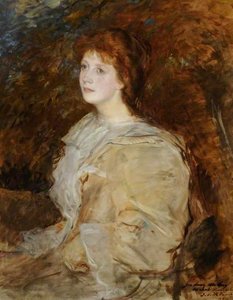
Le Groupe des Six – Jacques-Émile Blanche: Elegance Amidst Parisian Shadows
Jacques-Émile Blanche’s “Le Groupe des Six” (The Group of Six) stands as a quintessential emblem of Belle Époque Paris—a snapshot frozen in time, capturing not merely a gathering of individuals but an atmosphere steeped in intellectual curiosity and artistic camaraderie. Painted in 1886, this portrait transcends mere representation; it's a masterful distillation of Impressionist principles applied to the depiction of social elite.
- Subject Matter: The painting portrays six men seated around a table in what appears to be a dimly lit room. Their faces are turned inwards, engaged in animated conversation—a scene brimming with unspoken ideas and subtle gestures that invite contemplation.
- Style & Technique: Blanche’s signature Impressionist style is evident in his loose brushstrokes and muted color palette. He eschews meticulous detail, prioritizing the conveyance of light and atmosphere above precise anatomical accuracy. The artist skillfully utilizes tonal variations to create depth and texture, particularly noticeable in the folds of clothing and the surfaces of faces.
- Historical Context: “Le Groupe des Six” emerged during a period marked by significant artistic experimentation and social upheaval. Blanche’s circle included prominent figures like Whistler, Monet, Degas, Sisley, and Puvis de Chavannes—artists who were actively challenging academic conventions and exploring new avenues of expression. This painting reflects the broader preoccupation with capturing fleeting moments and conveying psychological nuance characteristic of Impressionism.
Symbolism & Artistic Influences
The composition itself speaks volumes about Blanche’s artistic sensibilities. The subdued lighting contributes to a sense of intimacy and mystery, mirroring the complexities of human relationships. Blanche drew inspiration from Whistler's tonal landscapes—particularly his use of atmospheric perspective—which instilled in him a profound understanding of how light shapes perception. Furthermore, he absorbed elements of Symbolism, subtly hinting at deeper meanings beneath the surface appearance.
- Whistler’s Influence: Blanche meticulously studied Whistler's approach to color and tonal gradation, mirroring his technique in “Le Groupe des Six.”
- Symbolic Gestures: The postures of the men—their gaze downwards, their hands resting on the table—suggest introspection and contemplation. These gestures invite viewers to consider not just what is seen but also what lies beneath.
Emotional Impact & Legacy
"Le Groupe des Six" isn't simply a portrait; it’s an evocative portrayal of intellectual discourse and human connection. Blanche succeeds in capturing the quiet dignity and subtle nuances of his subjects, conveying a feeling of understated elegance and contemplative seriousness. It remains a celebrated masterpiece of Impressionism—a testament to Blanche’s ability to transform observation into artful expression. Its enduring appeal lies in its timeless depiction of human psychology and its masterful execution of Impressionist principles.
- Timeless Elegance: The painting embodies the spirit of Belle Époque Paris, capturing a moment of intellectual vibrancy within a refined setting.
- Psychological Depth: Blanche’s skillful rendering of facial expressions and body language reveals profound insights into human character—a feat rarely achieved in portraiture.
A high-quality reproduction of “Le Groupe des Six” offers an opportunity to bring this iconic artwork into your home, allowing you to appreciate its beauty and contemplate its enduring significance.
Otázky a odpovědi
Jak si mohu prohlédnout náhled reprodukce „Šest skupin“ od Jacques-Émile Blanche?
Náhled díla „Šest skupin“ od Jacques-Émile Blanche si můžete prohlédnout na stránce Náhled v prostoru.
Existuje k dílu „Šest skupin“ od Jacques-Émile Blanche informační list pro studenty?
Stránka Průvodce pro studenty díla „Šest skupin“ od Jacques-Émile Blanche nabízí tištěný dvoulistový informační list: samotné umělecké dílo s identifikační tabulkou, časovou osu situující dílo do období života umělce, další díla daného autora, naměřenou barevnou paletu a citace ve čtyřech stylech připravené pro okamžité zkopírování.
Do které éry tvorby Jacques-Émile Blanche spadá dílo "Šest skupin"?
Dílo „Šest skupin“ pochází z období Mature Impressionism v tvorbě umělce Jacques-Émile Blanche. Tato klasifikace dílo zasazuje do kontextu vývoje jeho tvůrčí dráhy.
 Náhled v interiéru
 Sdílet
 Sdílet
 Podrobnosti o díle
 Průvodce

 Stáhnout
 Podobné položky
 Rentgenové snímky
 Slideshow
 Otázky a odpovědi
 Statistiky