

 Náhled
 Sdílet
 Sdílet
 Podrobnosti o díle

 Stáhnout
 Podobné položky
 Rentgenové snímky
 Slideshow
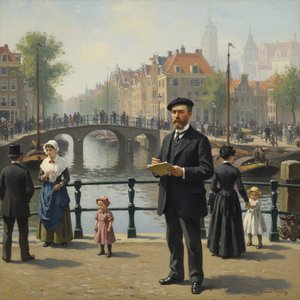
The Drummer


 Zobrazit více
Ručně malovaná olejová reprodukce
Ručně malovaná olejná barva na plátně ve vašem zvoleném rozměru i s rámem, vyrobená našimi umělci na zakázku. ( Koupit tisk Koupit obrázek)




P118B $10

P118H $10

P118W $10

P438Z $10

P508JH $12

P508YH $12

P805H $10

P805Z $10

P919BZ $10

P919G $10

P919XJ $10

P959ZH $10

P968JZ $12

W106C $8

W218G $10

W218JH $8

W218Y $10

W307PJ $10

W316G $10

W316PJ $8

W316Y $10

W398PJ $8

W4111J $10

W500HY $15

W500JH $15

W692G $12

W849H $8

W940BG $15

W953PJ $8




Vyberte si z našich přednastavených velikostí, které odpovídají původním proporcím díla.

Můžete zadat vlastní rozměry pro konkrétní rám nebo prostor. Pokud se vámi vybraná velikost neshoduje s proporcemi původního obrazu, dílo buď ořízneme, nebo jej doplníme ručně malovanými prvky. Před zahájením výroby vám bude zaslán digitální náhled ke schválení.
Upozorňujeme, že náhled na obrazovce neodpovídá skutečnému ořezu ani rozšíření. Pouze digitální náhled přesně zobrazí finální kompozici.
Ačkoliv je možné zvolit vlastní velikost, pro zachování původních proporcí doporučujeme vybrat rozměr z předdefinovaného seznamu.
Po přijetí objednávky vám tým OriginalUniqueArt.com zašle e-mail s pokyny a poskytne náhledovou verzi.
Celosvětová doprava () za 3–4 týdny namísto standardních 5 týdnů. (13 srpen). Bez kompromisů v kvalitě.

Zdarma celosvětová expresní doprava

Vysoce kvalitní lněné plátno

Kompletní přepravní pojištění

Záruka vrácení celního poplatku

Záruka přesného barevného shodu

60denní lhůta pro vrácení zboží (pouze při vadách výroby)

100% garance vrácení peněz

Sleva při hromadné objednávce
 Skleněná varianta je dostupná pouze u rozměrů menších než 110 cm

The Drummer
Technika reprodukce
Rozměry reprodukce
-


Celková cena za výběr
$ 300
Popis díla
A Portrait of Quiet Intensity: Exploring “The Drummer”
Isaac Lazarus Israëls’s “The Drummer,” painted circa 1885, isn't merely a depiction of a woman holding a drum; it’s a carefully constructed tableau brimming with understated emotion and a subtle commentary on the rhythms of everyday life in late 19th-century Amsterdam. Israëls, a pivotal figure within the Dutch Impressionist movement, masterfully captures a moment suspended between observation and engagement, inviting the viewer to contemplate the woman's gaze and the quiet power held within her posture.
The painting immediately draws attention to its central subject – a young woman seated in a simple wooden chair. Her attire is modest, suggesting a rural or working-class background, yet her presence exudes an unexpected dignity. She cradles a drum, not with flamboyant enthusiasm, but with a deliberate and almost reverent hold. The drum itself, rendered with meticulous detail, hints at its purpose – perhaps a source of entertainment, ritual, or even labor. Her eyes are fixed on something beyond the frame, lost in thought, creating an immediate sense of intimacy and inviting speculation about her inner world.
The Amsterdam Impressionist Palette: Technique and Style
Israëls’s technique is distinctly Impressionistic, characterized by loose brushstrokes, a vibrant yet muted color palette, and a focus on capturing the fleeting effects of light. He employs broken colors – applying paint in small, distinct strokes rather than blending them seamlessly – to create an atmospheric quality that suggests both warmth and shadow. The lighting, diffused and soft, washes over the scene, highlighting the textures of the wooden chair, the woman’s clothing, and the drum's surface. Notice how he uses subtle variations in tone to define form and volume, eschewing sharp outlines in favor of a more suggestive approach.
The composition is carefully balanced, with the woman occupying the central space while two figures – a seated man and a standing one – recede into the background. These secondary elements contribute to the sense of a lived-in scene, hinting at a domestic setting or perhaps a village gathering. The inclusion of the handbag adds another layer of detail, grounding the image in the realities of everyday life.
A Window into Dutch Society and Symbolism
“The Drummer” offers a poignant glimpse into the social fabric of Amsterdam during the late 19th century. Israëls was deeply interested in portraying the lives of ordinary people, particularly those who worked with their hands – farmers, laborers, and craftspeople. The woman’s humble attire and contemplative expression speak to the realities of working-class life, while her quiet strength suggests resilience and dignity. The drum itself carries symbolic weight; it can represent rhythm, tradition, community, or even a connection to ancestral roots.
Furthermore, the painting's composition echoes elements of Dutch genre paintings popular at the time, which often depicted scenes from rural life with a focus on realism and social commentary. Israëls’s work aligns with this tradition while simultaneously injecting it with his own distinctive Impressionistic style. The woman’s gaze, directed towards an unseen point, invites us to consider her thoughts and experiences – perhaps reflecting on the past, contemplating the future, or simply finding solace in the present moment.
Rediscovering Israëls: A Legacy of Observation
Isaac Lazarus Israëls remains a significant figure in Dutch art history. His ability to capture the essence of human experience through subtle observation and masterful technique continues to resonate with viewers today. “The Drummer” stands as a testament to his artistic vision, offering a captivating portrait that transcends its simple subject matter to become a profound meditation on life, memory, and the enduring power of quiet contemplation. Reproductions of this evocative work offer a beautiful way to bring Israëls’s insightful perspective into any space.
Biografie umělce
Isaac Israëls: A Pioneer of Amsterdam Impressionism
Isaac Lazarus Israëls (1865 – 1934) stands as a cornerstone of Dutch Impressionist art, embodying the spirit of innovation and artistic exploration that defined the Hague School’s successor. Born into a family steeped in artistic tradition—his father, Jozef Israëls, being one of the most celebrated painters of the Hague School—Israëls inherited an innate appreciation for visual expression and swiftly demonstrated exceptional talent from his formative years. His early education fostered a profound understanding of art history and technique, shaping him into a visionary artist who would leave an indelible mark on the artistic landscape of the late 19th century.- Early Life & Artistic Beginnings: From Scheveningen’s Seaside Breezes to Rembrandt’s Legacy
- The Amsterdam Impressionist Movement: Capturing Urban Vibrancy and Bohemian Spirit
- Travels & Inspiration: Exploring India, Southeast Asia & Embracing Diverse Perspectives
- Notable Works: “Transport of Colonial Soldiers,” “The Coffee Sorters” & Mata Hari’s Portrait – Reflections of His Era
- Legacy & Recognition: An Artist Celebrated Internationally & A Symbol of Dutch Artistic Excellence
Early Life & Artistic Beginnings: From Scheveningen’s Seaside Breezes to Rembrandt’s Legacy
Isaac Lazarus Israëls' childhood was profoundly influenced by his father, Jozef Israëls, a titan of the Hague School. Growing up in Amsterdam amidst a family deeply committed to artistic pursuits instilled within him an unwavering passion for painting and observation. From a young age, he exhibited remarkable aptitude, sketching landscapes with astonishing accuracy and capturing fleeting moments of beauty with sensitivity. At sixteen, Israëls achieved early recognition when he sold “Bugle Practice” to Hendrik Willem Mesdag—a feat considered extraordinary at the time—demonstrating his burgeoning artistic prowess before completing the piece. His studies at the Royal Academy of Art in The Hague solidified his technical foundation and introduced him to fellow artist George Hendrik Breitner, forging a lifelong friendship that would prove instrumental in shaping his artistic trajectory. Israëls’ fascination with Rembrandt’s masterful use of chiaroscuro—the dramatic interplay of light and shadow—served as an enduring inspiration throughout his career.The Amsterdam Impressionist Movement: Capturing Urban Vibrancy and Bohemian Spirit
Israëls became a fervent advocate for the Tachtigers’ philosophy – a movement championing artistic freedom and mirroring content in style. Embracing this ethos, he shifted his focus from traditional subjects to portraying the bustling streets, cafes, and cabarets of Amsterdam.He meticulously documented the city's atmosphere, striving to convey its dynamism and energy through loose brushstrokes and vibrant color palettes. His summers spent in Scheveningen—the Dutch seaside resort—provided him with endless inspiration for capturing the shimmering light on water and sand. Influenced by Impressionist luminaries like Claude Monet and Pierre-Auguste Renoir, Israëls sought to emulate their techniques of capturing fleeting impressions. He skillfully blended realism with expressive brushwork, creating paintings that resonated with both visual beauty and emotional depth.Travels & Inspiration: Exploring India, Southeast Asia & Embracing Diverse Perspectives
Driven by an insatiable curiosity for new experiences and artistic stimuli, Israëls embarked on extensive journeys throughout Europe and Asia.His two-year expedition to India and the Dutch East Indies profoundly broadened his artistic horizons, exposing him to exotic landscapes, cultures, and traditions. These travels fueled his imagination and enriched his oeuvre with motifs inspired by Eastern aesthetics—particularly vibrant colors and intricate patterns. Israëls’ meticulous sketches and paintings from India captured the grandeur of Mughal palaces and the serenity of Hindu temples. He skillfully rendered the textures of Indian textiles and landscapes, demonstrating a remarkable ability to translate visual impressions into artistic representations.Notable Works: “Transport of Colonial Soldiers,” “The Coffee Sorters” & Mata Hari’s Portrait – Reflections of His Era
Israëls' artistic output encompassed a diverse range of subjects—from monumental depictions of colonial expeditions to intimate portraits capturing the essence of human emotion.“Transport of Colonial Soldiers,” commissioned by the Royal Dutch East India Company, exemplifies his commitment to portraying historical events with dramatic realism. Similarly, “The Coffee Sorters” captures the energy and rhythm of daily life in Amsterdam’s coffee houses—a quintessential Impressionist subject. Perhaps his most iconic portrait is that of Mata Hari—a celebrated dancer and suspected spy during World War I. Israëls skillfully rendered Mata Hari's enigmatic gaze and captivating beauty, conveying her allure with subtle nuances of color and light. These paintings serve as poignant reflections of the era in which Israëls lived—characterized by social upheaval, artistic experimentation, and a fascination for capturing psychological complexity.Legacy & Recognition: An Artist Celebrated Internationally & A Symbol of Dutch Artistic Excellence
Isaac Lazarus Israëls’ legacy extends far beyond his impressive body of work.He achieved international acclaim, securing a Gold Medal at the 1928 Olympic Games for his painting “Red Rider”—a testament to his artistic talent and enduring influence. His paintings are now housed in prestigious museums worldwide—including the Van Gogh Museum and Mauritshuis—garnering admiration from art historians and connoisseurs alike. Israëls’ contribution to the development of Amsterdam Impressionism cemented his place as one of the most significant Dutch painters of the 20th century. His unwavering dedication to artistic innovation and his ability to convey emotion through visual expression continue to inspire artists today.
Isaac Lazarus Israels
1865 - 1934 , Německo
Rychlé fakta
- Artistic Movement Or Style: Amsterdam impresionismus
- Artists Or Movements Influenced By This Artist: ['Tachtiger']
- Artists Who Influenced This Artist:
- Jozef Israëls
- George Hendrik Breitner
- Date Of Birth: 3 února 1865
- Date Of Death: 7 října 1934
- Full Name: Isaac Lazarus Israëls
- Nationality: Nizozemský
- Notable Artworks:
- Přesun koloniálních vojáků
- Výsíňka Čajových průmyslovců
- Portrét Mata Hari
- Place Of Birth: Amsterdam, Nizozemsko
Související články
Isaac Lazarus Israëls: A Chronicle of Dutch Life & the Evolution of Impressionistic Realism
Explore the captivating world of Isaac Lazarus Israëls (1865-1934), a leading Dutch Amsterdam Impressionist. Discover his city scenes, portraits & travels through Asia – a chronicle of Dutch life and artistic evolution.

Chiaroscuro and Character: A Definitive Guide to Light and Shadow in the Dutch Baroque Era
Explore the dramatic mastery of the Dutch Baroque era. Discover how masters like Rembrandt used chiaroscuro to transform everyday life into timeless art. An expert guide for collectors and enthusiasts seeking to understand the profound interplay of light and shadow.

Golden Light & Dutch Skies: The Timeless Magic of Dutch Golden Age Landscapes
Discover the breathtaking beauty of Dutch Golden Age landscapes. Explore the mastery of light, chiaroscuro, and 17th-century realism through an expert art history lens, celebrating the enduring legacy of the Dutch Masters for discerning collectors and art lovers.

Top 10 mistrovských děl holandského baroka – obrazy a umělci | OriginalUniqueArt.cz
Objevte 10 ikonických děl holandského baroka! Prozkoumejte příběhy Rembrandta, Vermeera a dalších mistrů. Repliky obrazů nejvyšší kvality pro váš interiér na OriginalUniqueArt.cz – inspirace a umělecké reprodukce online.

Paul Cézanne: 25 mistrovských děl a revoluce v moderním umění | OriginalUniqueArt.cz
Prozkoumejte 25 ikonických děl Paula Cézanna – průkopníka moderního umění a impresionismu. Obdivujte jeho still life, krajiny a portréty. Reprodukce obrazů v nejvyšší kvalitě na OriginalUniqueArt.com. Inspirace pro váš interiér!

