

 Zobrazit v interiéru
 Odeslat
 Sdílet
 Podrobnosti
 Průvodce

 Stáhnout obrázek
 Podobné kousky
 Rentgenové snímky
 Slideshow
 Statistiky
Housemaid with Pram


 Přečíst si více
Giclée / Umělecký tisk
Giclée nebo plátěný tisk muzeální kvality s rychlou výrobou a širokou nabídkou povrchových úprav. ( Objednat ručně malovanou reprodukci Přepnout na digitální verzi obrazu)




P118B $10

P118H $10

P118W $10

P438Z $10

P508JH $12

P508YH $12

P805H $10

P805Z $10

P919BZ $10

P919G $10

P919XJ $10

P959ZH $10

P968JZ $12

W106C $8

W218G $10

W218JH $8

W218Y $10

W307PJ $10

W316G $10

W316PJ $8

W316Y $10

W398PJ $8

W4111J $10

W500HY $15

W500JH $15

W692G $12

W849H $8

W940BG $15

W953PJ $8




Vyberte si z našich přednastavených velikostí, které odpovídají původním proporcím díla.

Můžete zadat vlastní rozměry tak, aby výtvor odpovídal konkrétnímu rámu nebo prostoru. Pokud zvolená velikost nebude odpovídat poměru stran původního obrazu, dílo buď ořížeme, nebo obraz rozšíříme pomocí zrcadlového efektu či jednobarevného okraje. Před zahájením výroby vám bude zaslán digitální náhled k schválení.
Mějte prosím na paměti, že náhled na obrazovce neodráží skutečné oříznutí nebo rozšíření. Pouze digitální náhled přesně zobrazí finální kompozici.
Ačkoliv jsou k dispozici i vlastní rozměry, pro zachování původních proporcí doporučujeme vybrat si rozměr z předdefinovaného seznamu.
Celosvětové doručení () do 2 týdnů namísto standardních 4/5 týdnů. (25 září)

Zdarma celosvětová expresní doprava

Vysoce kvalitní lněné plátno

Úplné pojištění přepravy

Záruka vrácení celního poplatku

Záruka věrného barevného shodu

100dení lhůta pro vrácení zboží (pouze při vadách výroby)

100% garance vrácení peněz

Sleva při více objednávkách
 Skleněná varianta je dostupná pouze u rozměrů menších než 110 cm

Housemaid with Pram
Giclée / Umělecký tisk
Velikost reprodukce
-


Celková cena
$ 80
A Moment Frozen in Time: Isaac Israëls’ “Housemaid with Pram”
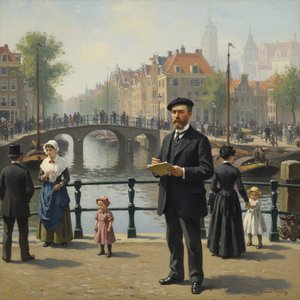
Isaac Lazarus Israëls' "Housemaid with Pram," painted in 1875, isn’t merely a snapshot of urban life; it’s a poignant meditation on the quiet dignity and understated beauty found within the everyday. This watercolor, now housed in the Rijksmuseum in Amsterdam, captures a fleeting moment along a bustling city street – a woman pushing a baby carriage, her face etched with a subtle blend of weariness and contentment. Israëls, a key figure in the Dutch Impressionist movement, masterfully utilizes loose brushstrokes and delicate washes to evoke not just a visual representation but an atmosphere, a feeling of the scene’s transient nature.
Israëls' artistic journey was deeply intertwined with his family history. The son of Jozef Israëls, a renowned Hague School painter known for his realistic depictions of working-class life, Isaac initially followed in his father’s footsteps, exploring similar themes of labor and social realism. However, he quickly developed his own distinct style, moving away from the stark formality of his father's work towards a more impressionistic approach – prioritizing capturing light, color, and mood over precise detail. This shift is powerfully evident in “Housemaid with Pram,” where the focus isn’t on the woman’s physical appearance but rather on her presence within the urban landscape.
The Language of Light and Color
Israëls' technique is characterized by a remarkable sensitivity to light. He employs broken color, layering translucent washes of pigment to create an ethereal quality, as if the scene is bathed in a soft, diffused glow. The muted palette – predominantly blues, greens, and browns – reflects the overcast Amsterdam sky, lending the painting a melancholic yet peaceful atmosphere. Notice how he uses highlights to draw attention to the woman’s face and the details of the pram, while simultaneously blurring the background figures into an indistinct mass. This selective focus directs the viewer's eye and emphasizes the central subject.
The composition itself is carefully constructed. The woman occupies a slightly off-center position, creating a sense of dynamism and inviting the viewer to step into the scene. The placement of the clock tower in the background provides a subtle temporal reference, anchoring the image within a specific moment in time. Israëls’ use of atmospheric perspective – making distant objects appear paler and less distinct – further enhances the illusion of depth and contributes to the painting's overall sense of realism.
Symbolism and Social Commentary
Beyond its aesthetic qualities, “Housemaid with Pram” carries a subtle layer of social commentary. The woman’s posture suggests both responsibility and exhaustion—a common reality for working-class women in 19th-century Amsterdam. The pram itself symbolizes motherhood and the cycle of life, while the bustling street represents the relentless pace of urban existence. Israëls doesn't offer a judgment or moralizing statement; instead, he presents a simple, honest portrayal of a woman’s daily life, inviting viewers to contemplate her experiences and consider the social conditions that shaped them.
The inclusion of other figures in the background – a man standing on the left and another further back on the right – adds to the painting's narrative complexity. They represent the broader context of urban society, highlighting the woman’s place within it. Their presence suggests a community, albeit one largely unseen by the central figure.
A Timeless Portrait of Human Experience
“Housemaid with Pram” is more than just a painting; it's a window into the past—a poignant and evocative depiction of everyday life in 19th-century Amsterdam. Israëls’ masterful use of light, color, and composition creates an image that resonates deeply with viewers today, reminding us of the shared human experiences of labor, motherhood, and the quiet beauty found within the ordinary moments of our lives. Reproductions of this work offer a chance to bring this evocative scene into any space, fostering contemplation and appreciation for Israëls’ enduring legacy.
Biografie umělce
Isaac Israëls: A Pioneer of Amsterdam Impressionism
Isaac Lazarus Israëls (1865 – 1934) stands as a cornerstone of Dutch Impressionist art, embodying the spirit of innovation and artistic exploration that defined the Hague School’s successor. Born into a family steeped in artistic tradition—his father, Jozef Israëls, being one of the most celebrated painters of the Hague School—Israëls inherited an innate appreciation for visual expression and swiftly demonstrated exceptional talent from his formative years. His early education fostered a profound understanding of art history and technique, shaping him into a visionary artist who would leave an indelible mark on the artistic landscape of the late 19th century.- Early Life & Artistic Beginnings: From Scheveningen’s Seaside Breezes to Rembrandt’s Legacy
- The Amsterdam Impressionist Movement: Capturing Urban Vibrancy and Bohemian Spirit
- Travels & Inspiration: Exploring India, Southeast Asia & Embracing Diverse Perspectives
- Notable Works: “Transport of Colonial Soldiers,” “The Coffee Sorters” & Mata Hari’s Portrait – Reflections of His Era
- Legacy & Recognition: An Artist Celebrated Internationally & A Symbol of Dutch Artistic Excellence
Early Life & Artistic Beginnings: From Scheveningen’s Seaside Breezes to Rembrandt’s Legacy
Isaac Lazarus Israëls' childhood was profoundly influenced by his father, Jozef Israëls, a titan of the Hague School. Growing up in Amsterdam amidst a family deeply committed to artistic pursuits instilled within him an unwavering passion for painting and observation. From a young age, he exhibited remarkable aptitude, sketching landscapes with astonishing accuracy and capturing fleeting moments of beauty with sensitivity. At sixteen, Israëls achieved early recognition when he sold “Bugle Practice” to Hendrik Willem Mesdag—a feat considered extraordinary at the time—demonstrating his burgeoning artistic prowess before completing the piece. His studies at the Royal Academy of Art in The Hague solidified his technical foundation and introduced him to fellow artist George Hendrik Breitner, forging a lifelong friendship that would prove instrumental in shaping his artistic trajectory. Israëls’ fascination with Rembrandt’s masterful use of chiaroscuro—the dramatic interplay of light and shadow—served as an enduring inspiration throughout his career.The Amsterdam Impressionist Movement: Capturing Urban Vibrancy and Bohemian Spirit
Israëls became a fervent advocate for the Tachtigers’ philosophy – a movement championing artistic freedom and mirroring content in style. Embracing this ethos, he shifted his focus from traditional subjects to portraying the bustling streets, cafes, and cabarets of Amsterdam.He meticulously documented the city's atmosphere, striving to convey its dynamism and energy through loose brushstrokes and vibrant color palettes. His summers spent in Scheveningen—the Dutch seaside resort—provided him with endless inspiration for capturing the shimmering light on water and sand. Influenced by Impressionist luminaries like Claude Monet and Pierre-Auguste Renoir, Israëls sought to emulate their techniques of capturing fleeting impressions. He skillfully blended realism with expressive brushwork, creating paintings that resonated with both visual beauty and emotional depth.Travels & Inspiration: Exploring India, Southeast Asia & Embracing Diverse Perspectives
Driven by an insatiable curiosity for new experiences and artistic stimuli, Israëls embarked on extensive journeys throughout Europe and Asia.His two-year expedition to India and the Dutch East Indies profoundly broadened his artistic horizons, exposing him to exotic landscapes, cultures, and traditions. These travels fueled his imagination and enriched his oeuvre with motifs inspired by Eastern aesthetics—particularly vibrant colors and intricate patterns. Israëls’ meticulous sketches and paintings from India captured the grandeur of Mughal palaces and the serenity of Hindu temples. He skillfully rendered the textures of Indian textiles and landscapes, demonstrating a remarkable ability to translate visual impressions into artistic representations.Notable Works: “Transport of Colonial Soldiers,” “The Coffee Sorters” & Mata Hari’s Portrait – Reflections of His Era
Israëls' artistic output encompassed a diverse range of subjects—from monumental depictions of colonial expeditions to intimate portraits capturing the essence of human emotion.“Transport of Colonial Soldiers,” commissioned by the Royal Dutch East India Company, exemplifies his commitment to portraying historical events with dramatic realism. Similarly, “The Coffee Sorters” captures the energy and rhythm of daily life in Amsterdam’s coffee houses—a quintessential Impressionist subject. Perhaps his most iconic portrait is that of Mata Hari—a celebrated dancer and suspected spy during World War I. Israëls skillfully rendered Mata Hari's enigmatic gaze and captivating beauty, conveying her allure with subtle nuances of color and light. These paintings serve as poignant reflections of the era in which Israëls lived—characterized by social upheaval, artistic experimentation, and a fascination for capturing psychological complexity.Legacy & Recognition: An Artist Celebrated Internationally & A Symbol of Dutch Artistic Excellence
Isaac Lazarus Israëls’ legacy extends far beyond his impressive body of work.He achieved international acclaim, securing a Gold Medal at the 1928 Olympic Games for his painting “Red Rider”—a testament to his artistic talent and enduring influence. His paintings are now housed in prestigious museums worldwide—including the Van Gogh Museum and Mauritshuis—garnering admiration from art historians and connoisseurs alike. Israëls’ contribution to the development of Amsterdam Impressionism cemented his place as one of the most significant Dutch painters of the 20th century. His unwavering dedication to artistic innovation and his ability to convey emotion through visual expression continue to inspire artists today.
Isaac Lazarus Israels
1865 - 1934 , Německo
Rychlé informace
- Artistic Movement Or Style: Amsterdam impresionismus
- Artists Or Movements Influenced By This Artist: ['Tachtiger']
- Artists Who Influenced This Artist:
- Jozef Israëls
- George Hendrik Breitner
- Date Of Birth: 3 února 1865
- Date Of Death: 7 října 1934
- Full Name: Isaac Lazarus Israëls
- Nationality: Nizozemský
- Notable Artworks:
- Přesun koloniálních vojáků
- Výsíňka Čajových průmyslovců
- Portrét Mata Hari
- Place Of Birth: Amsterdam, Nizozemsko
Související články
Isaac Lazarus Israëls: A Chronicle of Dutch Life & the Evolution of Impressionistic Realism
Explore the captivating world of Isaac Lazarus Israëls (1865-1934), a leading Dutch Amsterdam Impressionist. Discover his city scenes, portraits & travels through Asia – a chronicle of Dutch life and artistic evolution.

Ephemeral Visions: Exploring the Artistic Legacy & Nuances of Watercolor Painting
Explore the captivating world of watercolor painting! Discover its rich history, essential techniques, influential artists & collecting tips from art experts. A comprehensive guide for enthusiasts.

10 legendárních akvarelů, které změnily svět umění | OriginalUniqueArt
Objevte 10 legendárních akvarelů od Turner, Monet a dalších mistrů! Ponořte se do historie umění a inspirujte se pro váš interiér. Kvalitní reprodukce na OriginalUniqueArt.com.

Ephemeral Visions: Exploring the History & Emotional Resonance of Watercolor Painting
Explore the captivating history of watercolor painting, from ancient techniques to modern masters like Kandinsky & Blake. Discover essential artists, collecting tips & the emotional power of this luminous medium. Expert insights for art enthusiasts.

Ephemeral Visions: Exploring the Artistic Legacy & Contemporary Practice of Watercolor Painting
Explore the captivating world of watercolor painting! Discover its rich history, essential techniques, influential artists & collecting tips. A comprehensive guide for art enthusiasts from OriginalUniqueArt.