

 Zobrazit v interiéru
 Odeslat
 Sdílet
 Podrobnosti
 Průvodce

 Stáhnout obrázek
 Podobné kousky
 Rentgenové snímky
 Slideshow
 Statistiky
Konvektor
 Akryl na plátně
- Obrazová tvorba na stěnu
- Functional Minimalism
 1960
1960 45.0 x 61.0 cm
 NEMO Science Museum
 Přečíst si více
Ručně malovaná olejová reprodukce
Ručně malované olejné plátno v libovolném rozměru i s rámem, vyrobené našimi umělci na zakázku. ( Přepnout na tiskové verze Přepnout na digitální verzi obrazu)




P118B $10

P118H $10

P118W $10

P438Z $10

P508JH $12

P508YH $12

P805H $10

P805Z $10

P919BZ $10

P919G $10

P919XJ $10

P959ZH $10

P968JZ $12

W106C $8

W218G $10

W218JH $8

W218Y $10

W307PJ $10

W316G $10

W316PJ $8

W316Y $10

W398PJ $8

W4111J $10

W500HY $15

W500JH $15

W692G $12

W849H $8

W940BG $15

W953PJ $8




Vyberte si z našich přednastavených velikostí, které odpovídají původním proporcím díla.

Můžete zadat vlastní rozměry pro konkrétní rám nebo prostor. Pokud se vámi vybraná velikost neshoduje s proporcemi původního obrazu, dílo buď ořízneme, nebo jej doplníme ručně malovanými prvky. Před zahájením výroby vám bude zaslán digitální náhled ke schválení.
Upozorňujeme, že náhled na obrazovce neodpovídá skutečnému ořezu ani rozšíření. Pouze digitální náhled přesně zobrazí finální kompozici.
Ačkoliv je možné zvolit vlastní velikost, pro zachování původních proporcí doporučujeme vybrat rozměr z předdefinovaného seznamu.
Po přijetí objednávky vám tým OriginalUniqueArt.com zašle e-mail s pokyny a poskytne náhledovou verzi.
Celosvětová doprava () za 3–4 týdny namísto standardních 5 týdnů. (27 září). Bez kompromisů v kvalitě.

Zdarma celosvětová expresní doprava

Vysoce kvalitní lněné plátno

Úplné pojištění přepravy

Záruka vrácení celního poplatku

Záruka věrného barevného shodu

100dení lhůta pro vrácení zboží (pouze při vadách výroby)

100% garance vrácení peněz

Sleva při více objednávkách
 Skleněná varianta je dostupná pouze u rozměrů menších než 110 cm

Konvektor
Technika provedení
Velikost reprodukce
-


Celková cena
$ 300
Convection heater – Inventum and Wim Rietveld
The image captures a deceptively simple yet profoundly influential piece of industrial design: the convection heater created in 1957 by Wim Rietveld for Inventum. More than just a functional appliance, this heater embodies the core tenets of Rietveld’s artistic philosophy – radical minimalism fused with geometric abstraction and an unwavering commitment to material innovation.
A Legacy of Functionalism
Wim Rietveld (1924-1985), son of Gerrit Rietveld—the architect whose Mondrian House remains a cornerstone of modernist architecture—inherited his father’s conviction that form follows function. This guiding principle permeated every aspect of Rietveld's creative process, propelling him to become one of the most celebrated figures in Dutch design during the postwar reconstruction era.
The Gispen Collaboration and Material Exploration
Rietveld’s partnership with W. H. Gispen was pivotal in establishing his reputation. Facing the challenges of rebuilding a nation after World War II, Gispen sought designers who could translate scarcity into beauty—a task Rietveld expertly accomplished. Utilizing materials like steel and plywood – readily available at the time – he pioneered techniques that prioritized structural integrity alongside aesthetic elegance.
Iconic Design: The Mondial Chair
Perhaps Rietveld’s most recognizable creation is the Mondial chair, conceived collaboratively with his father Gerrit Rietveld for Expo 58 in Brussels. This deceptively lightweight chair—constructed primarily from aluminum—demonstrates Rietveld's mastery of geometric form and structural engineering. Its innovative stacking mechanism reflects a desire to maximize efficiency while maintaining visual harmony.
Beyond Function: Geometric Abstraction and Emotional Resonance
The convection heater itself isn’t merely about warmth; it’s a distillation of Rietveld’s aesthetic vision. The polished steel surfaces, perforated along the upper edge for ventilation, speak to a deliberate rejection of ornamentation—a hallmark of modernist design—and instead prioritize pure visual expression. It's a testament to Rietveld's belief that beauty can reside in simplicity and that form should communicate its purpose with unwavering clarity.
Biografie umělce
The Legacy of Functional Elegance: The Life of Wim Rietveld
In the grand tapestry of Dutch modernism, few names resonate with as much quiet authority as Wim Rietveld. Born in 1924 in Utrecht, Wim was more than just a successor to a design dynasty; he was a visionary who translated the radical architectural principles of his father, Gerrit Rietveld, into the intimate language of everyday objects. Growing up in the shadow of the legendary Mondrian House, Wim was immersed from infancy in an environment where geometric abstraction and structural honesty were not merely aesthetic choices but fundamental truths. This early exposure to the avant-scale spatial experiments of his father provided a fertile ground for a career that would eventually redefine the boundaries between industrial utility and artistic grace.
His journey toward mastery began with a rigorous technical foundation, moving from an apprenticeship in construction to formal studies at the Royal Academy of Art in The Hague. This unique blend of technical prowess and artistic intuition allowed him to approach design not as a decorator, but as a constructor. He understood the soul of materials—the strength of steel, the warmth of laminated wood, and the versatility of plywood. As he navigated the post-war reconstruction era, a period marked by both scarcity and a desperate need for renewal, Wim’s work emerged as a beacon of hope, offering solutions that were as durable as they were beautiful.
A Symphony of Steel and Wood: The Design Evolution
The mid-century period saw the blossoming of Rietveld’s most iconic collaborations, most notably his transformative tenure at W. H. Gispen between 1953 and 1957. It was during these years that he truly mastered the art of functional minimalism. Working alongside talented peers like Friso Kramer, Wim sought to strip away the superfluous, leaving behind only the essential essence of form. His designs were characterized by a rhythmic interplay of lines and surfaces, often utilizing mass-production techniques to bring high-quality design to the broader public. The Mondrian Chair stands as a testament to this era, a piece that breathes the same geometric spirit as the De Stijl movement while remaining firmly rooted in the practical needs of modern living.
As his career progressed, Rietveld’s creative reach expanded far beyond the confines of furniture. He became a master of diverse industrial landscapes, applying his minimalist philosophy to everything from household appliances for Inventum to large-scale urban transport solutions for Werkspoor. His ability to imbue even a radiator or a drafting table with a sense of sculptural dignity is what separates him from his contemporaries. Whether it was the award-winning 1407 armchair, which earned him gold at the Milan Triennale, or the sleek, stackable seating that optimized modern office spaces, his work always maintained a certain poetic economy—a way of saying much with very little.
Historical Significance and the Enduring Modernist Spirit
The significance of Wim Rietveld lies in his ability to bridge the gap between the radical, often unapproachable experiments of early modernism and the practical requirements of a changing society. He did not merely design objects; he designed a way of life that valued clarity, efficiency, and aesthetic integrity. His later years, including his role as Head of Industrial Design at the University of Delft, allowed him to mentor a new generation, ensuring that the principles of Dutch functionalism would endure long after his passing in 1985.
Today, the works of Wim Rietveld are cherished not only as museum-grade artifacts but as living components of modern interiors. His legacy is found in:
- The mastery of materials: The seamless integration of metal and wood that defined mid-century Dutch style.
- The democratization of design: Creating high-quality, mass-producible items that brought beauty to the everyday person.
- A lasting aesthetic influence: A minimalist vocabulary that continues to inspire contemporary industrial designers worldwide.
In every clean line and purposeful curve of his creations, one can still feel the pulse of a designer who believed that true beauty is found in the perfect resolution of function and form.

inventum, wim rietveld
1924 - 1985 , Netherlands
Rychlé informace
- Artistic Movement Or Style: Modernism
- Artists Or Movements Influenced By This Artist: ['Industrial design']
- Artists Who Influenced This Artist: ['Gerrit Rietveld']
- Date Of Birth: 1924 Utrecht, Netherlands
- Date Of Death: 1985 Badhoevedorp, Netherlands
- Full Name: Wim Rietveld
- Nationality: Dutch
- Notable Artworks:
- Convection heater
- Mondial chair
- Place Of Birth: Utrecht
Související články

Neo-Abstract Art: The High-Impact Evolution of Modern Visual Energy and Geometric Sophistication
Discover the power of Neo-Abstract art. Explore how bold geometric forms and high-impact visual energy are redefining modern design. Learn to curate sophisticated, high-energy spaces with the latest trends in contemporary abstraction and structural color.

Wassily Kandinsky: Top 25 mistrovských děl abstrakce pro váš interiér | OriginalUniqueArt.com
Prozkoumejte 25 ikonických děl Wassily Kandinského – průkopníka abstraktního umění a expresionismu. Objevte příběhy za barevnými kompozicemi, Bauhaus styl a inspirujte se pro váš interiér s reprodukcemi nejvyšší kvality na OriginalUniqueArt.com.

Geometrická abstrakce: 10 mistrovských děl, které změnily umění | OriginalUniqueArt.cz
Prozkoumejte 10 ikonických děl geometrické abstrakce od Mondriana, Maleviče a Kandinského. Objevte příběhy umělců, techniky a historii tohoto revolučního hnutí. Najděte inspiraci pro moderní dekorace a luxusní reprodukce obrazů na OriginalUniqueArt.com.
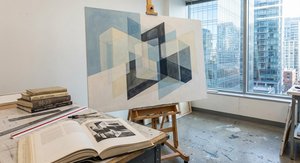
Beyond Form & Color: Geometric Abstraction's Enduring Legacy in Art History
Explore the captivating world of geometric abstraction! Discover its origins, key artists like Malevich & Mondrian, and why this movement remains highly valued by art collectors today. Expert insights at OriginalUniqueArt.

Beyond Form & Color: Geometric Abstraction's Evolution in 20th/21st Century Art
Explore the evolution of geometric abstraction from Cubism to contemporary art. Discover key artists like Malevich & Mondrian, investment insights, and expert collecting advice at OriginalUniqueArt.
