Odeslat
 Sdílet
 Podrobnosti
 Průvodce

 Stáhnout obrázek
 Podobné kousky
 Slideshow
 Statistiky
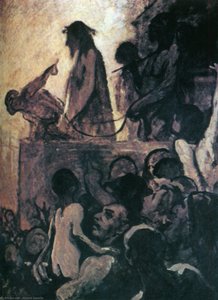
Unknown, maybe Hippolyte Lucien-Joseph Lucas (1807-1878), a Journalist, maybe P.Mendez de Vigo (1790-1860) a Spanish General, but Most Probably the Count Pelet de la Lozere (1785-1871), a Politician


 Přečíst si více
Ručně malovaná olejová reprodukce
Ručně malované olejné plátno v libovolném rozměru i s rámem, vyrobené našimi umělci na zakázku. ( Přepnout na tiskové verze Přepnout na digitální verzi obrazu)




































Vyberte si z našich přednastavených velikostí, které odpovídají původním proporcím díla.

Můžete zadat vlastní rozměry pro konkrétní rám nebo prostor. Pokud se vámi vybraná velikost neshoduje s proporcemi původního obrazu, dílo buď ořízneme, nebo jej doplníme ručně malovanými prvky. Před zahájením výroby vám bude zaslán digitální náhled ke schválení.
Upozorňujeme, že náhled na obrazovce neodpovídá skutečnému ořezu ani rozšíření. Pouze digitální náhled přesně zobrazí finální kompozici.
Ačkoliv je možné zvolit vlastní velikost, pro zachování původních proporcí doporučujeme vybrat rozměr z předdefinovaného seznamu.
Po přijetí objednávky vám tým OriginalUniqueArt.com zašle e-mail s pokyny a poskytne náhledovou verzi.
Celosvětová doprava () za 3–4 týdny namísto standardních 5 týdnů. (26 září). Bez kompromisů v kvalitě.

Zdarma celosvětová expresní doprava

Vysoce kvalitní lněné plátno

Úplné pojištění přepravy

Záruka vrácení celního poplatku

Záruka věrného barevného shodu

100dení lhůta pro vrácení zboží (pouze při vadách výroby)

100% garance vrácení peněz

Sleva při více objednávkách
 Skleněná varianta je dostupná pouze u rozměrů menších než 110 cm

Unknown, maybe Hippolyte Lucien-Joseph Lucas (1807-1878), a Journalist, maybe P.Mendez de Vigo (1790-1860) a Spanish General, but Most Probably the Count Pelet de la Lozere (1785-1871), a Politician
Technika provedení
Velikost reprodukce
-


Celková cena
$ 300
The Enduring Gaze of Parisian Life
This evocative portrait captures more than just the likeness of an elderly gentleman; it arrests a moment in time, freezing the very essence of 19th-century Parisian intellectual life. The subject, whose identity is suggested by the possibilities of a journalist or politician, possesses a gaze that seems to look past the viewer, into some distant, weighty contemplation. Rendered with the unmistakable hand of Honoré Daumier, the piece transcends mere portraiture; it becomes a profound meditation on character, age, and the burdens carried by public life. The style is a masterful negotiation between unflinching realism and the sharp edge of caricature, allowing us to see both the man and the societal role he inhabited.
Technique and Tactile Presence
The medium itself speaks volumes about its creation. Appearing to be modeled in clay or a similar pliable compound, the surface invites the touch. One can almost feel the subtle resistance of the material under the artist's skilled fingers. Daumier’s technique is evident in every visible ridge and groove; these are not flaws, but rather records of the creative struggle—the tool marks that lend an undeniable authenticity to the piece. The soft, diffused lighting used in the original composition accentuates this texture, creating subtle gradations of shadow across the brow and cheekbones. This tactile quality means that even as a reproduction, the artwork retains a palpable sense of three-dimensionality, drawing the eye into its sculpted depths.
A Study in Muted Drama
The color palette is deliberately restrained, dominated by earthy tones—shades of grey, warm beige, and muted brown. This near-monochromatic approach strips away distraction, forcing the viewer to concentrate solely on the contours of the face and the weight of the expression. The composition centers entirely on this bust, presenting it against a neutral void that serves only to amplify its presence. It is a study in negative space as much as it is a portrait of flesh; the emptiness around the subject gives his contemplative state an almost monumental gravity.
Symbolism and Emotional Resonance
To gaze upon this sculpture is to confront themes of wisdom, experience, and perhaps a touch of melancholy. Daumier was renowned for embedding social commentary within his art, and here, that spirit lingers. The subject’s stern yet thoughtful mien suggests an individual who has seen much—the triumphs and the follies of public discourse. For the collector or designer, this piece offers more than mere decoration; it is a conversation starter, a sophisticated nod to the tradition of satirical portraiture that celebrates human complexity over superficial beauty. It imbues any space with an air of cultured depth and historical narrative.
Biografie umělce
A Life Etched in Satire: The World of Honoré Daumier
Honoré-Victorin Daumier, born in Marseille in 1808, was a figure inextricably linked to the turbulent currents of 19th-century France. His early life, shaped by his father’s aspirations as a poet and subsequent relocation to Paris in 1814, immersed him within a city already brimming with artistic fervor. Initially destined for a legal career, Daumier's inclination swiftly shifted towards the visual arts. He began his apprenticeship under Alexandre Lenoir, absorbing the classical techniques and dramatic chiaroscuro favored by Rubens, and further honed his skills at the Académie Suisse. This foundational training wasn’t merely about mastering technique; it was about cultivating a profound sensitivity to the social injustices and political absurdities that permeated Parisian society – an awareness he would translate into his art with searing accuracy.The Sharpened Pen: Caricature and Social Commentary
Daumier's career truly ignited in the wake of the 1830 Revolution, an event that fundamentally reshaped France’s political landscape and simultaneously provided a fertile ground for his burgeoning satirical talent. He quickly established himself as a master lithographer, initially contributing anonymously to various publications before gaining recognition through his work with *Le Charivari*, a fiercely independent comic journal founded by Charles Philipon. It was within the pages of *Le Charivari* that Daumier’s genius truly blossomed. His caricatures weren't simply humorous illustrations; they were biting critiques, exposing the hypocrisy and corruption of the bourgeoisie, the failings of the legal system, and the machinations of the political establishment. He fearlessly lampooned King Louis-Philippe, a figure he viewed as weak and indecisive, earning himself a six-month imprisonment in 1832 for a particularly provocative caricature depicting the monarch as a bloated, decadent figure. This experience, rather than silencing him, served to solidify his commitment to using art as a weapon against injustice – a conviction that fueled his prolific output for decades. His lithographs became visual manifestos, capturing the spirit of dissent and offering a starkly honest portrayal of the realities faced by ordinary people. The sheer volume of his work during this period is staggering—thousands of lithographs documenting Parisian life, political events, and social commentary.Beyond Caricature: Painting and Sculptural Visions
While Daumier is most widely celebrated for his lithography, to reduce him solely to caricature would be a profound oversight. He was also a dedicated painter and sculptor, though recognition for these works came later in his life. His paintings, often depicting scenes of everyday Parisian life – the crowded third-class carriages, the weary laundresses, the pompous lawyers – are imbued with a remarkable sense of realism and empathy. They aren’t idealized representations; rather, they offer unflinching glimpses into hardship, poverty, and the struggles of ordinary people. He masterfully employed loose brushwork and dramatic lighting to convey emotion and atmosphere, anticipating some of the techniques that would later be embraced by the Impressionists. His sculptural work, largely created in clay (many pieces remaining unbaked during his lifetime), reveals a similar commitment to capturing the human form with honesty and emotional depth. These sculptures, rediscovered after his death, demonstrate a remarkable talent for modeling and an ability to convey psychological complexity through subtle gestures – a testament to Daumier’s profound understanding of the human condition.A Lasting Legacy: Influence and Historical Significance
Honoré Daumier's impact on art history is undeniable. He bridged the gap between Romanticism and Realism, laying the groundwork for future generations of artists who sought to depict the world as it truly was – with all its flaws and imperfections. His unflinching social commentary profoundly influenced artists like Gustave Courbet and Édouard Manet, both of whom embraced a more direct engagement with social issues in their work. Furthermore, Daumier’s innovative use of lithography revolutionized printmaking, transforming it from a primarily decorative medium into a powerful tool for political and social critique. His legacy continues to resonate today, reminding us of the enduring power of art to challenge authority, expose injustice, and bear witness to the complexities of the human experience. The Musée d'Orsay in Paris houses a significant collection of his paintings and sculptures, offering visitors a valuable opportunity to immerse themselves in the world he so vividly portrayed. His lithographs are widely accessible through collections like those found on OriginalUniqueArt, ensuring that his satirical genius continues to provoke thought and inspire dialogue – a testament to an artist who dared to hold power accountable. Daumier wasn’t merely an artist; he was a chronicler of his time—a visual poet whose art served as both entertainment and a potent form of social protest.
Honoré Daumier
1808 - 1879 , Francie
Rychlé informace
- Artistic Movement Or Style: Realismus, Satira
- Artists Or Movements Influenced By This Artist: ['Impressionismus']
- Artists Who Influenced This Artist:
- Lenoir
- David
- Date Of Birth: 26. února 1808
- Date Of Death: 10. února 1879
- Full Name: Honoré-Victorin Daumier
- Nationality: Francouzský
- Notable Artworks:
- Rue Transnonain
- Les gens de justice
- Place Of Birth: Paříž, Francie
Související články

The Enduring Form: Exploring Themes & Techniques in Sculpture Across Historical Periods
Explore the rich history of sculpture from ancient masterpieces to contemporary innovations. Discover key techniques, influential artists & investment potential for discerning art collectors.
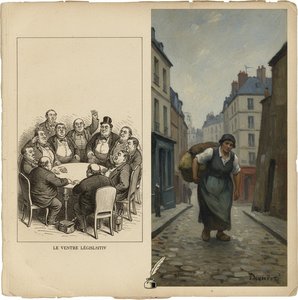
Honoré Daumier: Social Commentary & Artistic Innovation in 19th-Century France
Explore the life & work of Honoré Daumier, a master of 19th-century French realism and satire. Discover his powerful lithographs, paintings, and sculptures critiquing society – and his lasting influence on modern art.

10 legendárních bronzových soch, které změnily umění | OriginalUniqueArt
Objevte 10 legendárních bronzových soch od Michelangela, Rodina a dalších mistrů! Ponořte se do historie umění, technik a příběhů za těmito nadčasovými díly. Najděte inspiraci pro váš interiér s OriginalUniqueArt.com – repliky nejvyšší kvality.

10 legendárních bronzových mistrovských děl, která změnila umění | OriginalUniqueArt
Objevte 10 legendárních bronzových mistrovských děl od Rodina, Donatella a dalších. Ponořte se do historie umění a nechte se inspirovat nadčasovými sochařskými replikami pro váš interiér. Prozkoumejte celou kolekci online na OriginalUniqueArt.com!

The Enduring Form: Sculpture Across History, Technique & Emotional Resonance
Explore the rich history of sculpture with OriginalUniqueArt. Discover key techniques, influential artists & investment potential for discerning collectors. Expert insights into valuing and collecting timeless masterpieces.