Zobrazit v interiéru
 Odeslat
 Sdílet
 Podrobnosti
 Průvodce

 Stáhnout obrázek
 Podobné kousky
 Rentgenové snímky
 Slideshow
 Statistiky
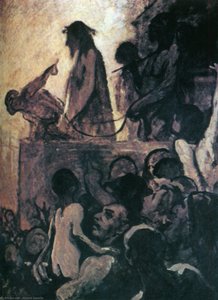
Guizot or the Bore
 Acrylic On Canvas
- WallArt
- Contemporary Realism
 1832
1832 22.0 x 14.0 cm
 Musée d'Orsay
 Přečíst si více
Giclée / Umělecký tisk
Giclée nebo plátěný tisk muzeální kvality s rychlou výrobou a širokou nabídkou povrchových úprav. ( Objednat ručně malovanou reprodukci Přepnout na digitální verzi obrazu)




P118B Kč10

P118H Kč10

P118W Kč10

P438Z Kč10

P508JH Kč12

P508YH Kč12

P805H Kč10

P805Z Kč10

P919BZ Kč10

P919G Kč10

P919XJ Kč10

P959ZH Kč10

P968JZ Kč12

W106C Kč8

W218G Kč10

W218JH Kč8

W218Y Kč10

W307PJ Kč10

W316G Kč10

W316PJ Kč8

W316Y Kč10

W398PJ Kč8

W4111J Kč10

W500HY Kč15

W500JH Kč15

W692G Kč12

W849H Kč8

W940BG Kč15

W953PJ Kč8




Vyberte si z našich přednastavených velikostí, které odpovídají původním proporcím díla.

Zadejte šířku a výšku, které potřebujete pro váš rám nebo stěnu. Tisk lze pouze oříznout, nikdy však nelze zvětšit obraz nad jeho původní rozměr, proto při výběru jiného formátu dochází ke ztrátě části obrazu. Před samotným tiskem vám zašleme digitální náhled k schválení. Obraz zobrazený na této stránce nenabízí skutečný výřez — ten uvidíte pouze v náhledu.
Celosvětové doručení () do 2 týdnů namísto standardních 4/5 týdnů. (25 říjen)

Zdarma celosvětová expresní doprava

Vysoce kvalitní lněné plátno

Úplné pojištění přepravy

Záruka vrácení celního poplatku

Záruka věrného barevného shodu

100dení lhůta pro vrácení zboží (pouze při vadách výroby)

100% garance vrácení peněz

Sleva při více objednávkách
 Skleněná varianta je dostupná pouze u rozměrů menších než 110 cm

Guizot or the Bore
Giclée / Umělecký tisk
Velikost reprodukce
-


Celková cena
Kč 1709
A Stark Portrait of Disillusionment: Honoré Daumier’s “Guizot or the Bore”
Honoré Daumier's "Guizot or the Bore," painted in 1832, isn’t merely a caricature; it’s a meticulously crafted indictment of political complacency and the stifling atmosphere of post-revolutionary France. The image, rendered in stark black and white lithograph, immediately confronts the viewer with a figure that is both recognizable and profoundly unsettling – François Pierre-Guillaume Guizot, a prominent liberal politician whose name became synonymous with tediousness and intellectual stagnation. Daumier doesn’t offer a flattering likeness; instead, he presents a man seemingly carved from granite, his face an impenetrable mask of boredom and self-importance. The details are remarkably precise: the meticulously rendered mustache, the rigid posture, the almost glacial stare directed squarely at the viewer – each element contributes to a portrait of profound detachment. It’s a deliberate choice, reflecting Daumier's lifelong commitment to exposing the hypocrisy and moral failings he observed within French society.The Context of Critique: Political Satire in 19th-Century France
To fully appreciate “Guizot or the Bore,” one must understand the tumultuous political landscape of 1832. Following the July Revolution, France was grappling with the aftermath of Napoleon’s empire and attempting to establish a stable constitutional monarchy under Louis Philippe. Daumier, a staunch republican democrat, used his art as a weapon against what he perceived as the corruption and inertia of the established order. His satirical cartoons, published in newspapers like *Le Charivari*, were wildly popular, offering sharp critiques of politicians, the aristocracy, and the bourgeoisie. Guizot himself was a key figure in this era, advocating for moderate reforms within the existing system – precisely the kind of cautious approach that Daumier so vehemently opposed. The painting isn’t simply a personal jab; it's a broader commentary on the dangers of prioritizing stability over genuine progress and reform.Technique and Symbolism: A Masterclass in Lithography
Daumier’s mastery of lithography is evident throughout “Guizot or the Bore.” The medium itself – stone printing – lends a certain coldness and precision to the image, mirroring the character's impassive demeanor. The stark contrasts between light and shadow are expertly manipulated, creating a dramatic effect that draws attention to Guizot’s face and emphasizing his rigid features. Notice how Daumier utilizes hatching and cross-hatching to build up texture and volume, particularly in the man’s clothing and hair. The background is deliberately devoid of detail, further isolating Guizot and reinforcing the sense of detachment. The very act of creating a lithograph – a process that involved transferring an image from a prepared stone onto paper – speaks to Daumier's commitment to directness and clarity in his artistic expression.Beyond the Portrait: A Reflection on Modernity
“Guizot or the Bore” transcends its immediate subject matter, offering a poignant meditation on the challenges of navigating modernity. The figure’s blank stare suggests an inability to engage with the world around him, a refusal to acknowledge the social and political realities that demand action. Daumier isn't simply criticizing Guizot; he’s critiquing a broader cultural malaise – a tendency towards intellectualism divorced from empathy and social responsibility. The painting resonates powerfully even today, reminding us of the importance of critical thinking, civic engagement, and resisting the allure of complacency. It serves as a timeless warning against allowing self-importance to overshadow genuine concern for the well-being of society. Reproductions of this powerful image continue to provoke thought and discussion, solidifying Daumier’s legacy as one of the most insightful and enduring satirists in art history.Otázky a odpovědi
Do kterého směru a do jaké éry spadá dílo „Guizot or the Bore“ od Honoré Daumier?
Dílo "Guizot or the Bore" patří k období Contemporary Realism, jehož tvůrce působil v éře – 19. století.
Do jakého prostoru se doporučuje umělecké dílo „Guizot or the Bore“ od Honoré Daumier?
Doporučeným prostorem pro „Guizot or the Bore“ od Honoré Daumier je Living Room. Toto doporučení lze samozřejmě přizpůsobit vašemu interiéru.
Jak sytá je paleta díla "Guizot or the Bore"?
Barvy díla „Guizot or the Bore“ od Honoré Daumier mají Subtle Color saturaci. Saturace určuje, jak jsou barvy živé nebo tlumené.
Biografie umělce
A Life Etched in Satire: The World of Honoré Daumier
Honoré-Victorin Daumier, born in Marseille in 1808, was a figure inextricably linked to the turbulent currents of 19th-century France. His early life, shaped by his father’s aspirations as a poet and subsequent relocation to Paris in 1814, immersed him within a city already brimming with artistic fervor. Initially destined for a legal career, Daumier's inclination swiftly shifted towards the visual arts. He began his apprenticeship under Alexandre Lenoir, absorbing the classical techniques and dramatic chiaroscuro favored by Rubens, and further honed his skills at the Académie Suisse. This foundational training wasn’t merely about mastering technique; it was about cultivating a profound sensitivity to the social injustices and political absurdities that permeated Parisian society – an awareness he would translate into his art with searing accuracy.The Sharpened Pen: Caricature and Social Commentary
Daumier's career truly ignited in the wake of the 1830 Revolution, an event that fundamentally reshaped France’s political landscape and simultaneously provided a fertile ground for his burgeoning satirical talent. He quickly established himself as a master lithographer, initially contributing anonymously to various publications before gaining recognition through his work with *Le Charivari*, a fiercely independent comic journal founded by Charles Philipon. It was within the pages of *Le Charivari* that Daumier’s genius truly blossomed. His caricatures weren't simply humorous illustrations; they were biting critiques, exposing the hypocrisy and corruption of the bourgeoisie, the failings of the legal system, and the machinations of the political establishment. He fearlessly lampooned King Louis-Philippe, a figure he viewed as weak and indecisive, earning himself a six-month imprisonment in 1832 for a particularly provocative caricature depicting the monarch as a bloated, decadent figure. This experience, rather than silencing him, served to solidify his commitment to using art as a weapon against injustice – a conviction that fueled his prolific output for decades. His lithographs became visual manifestos, capturing the spirit of dissent and offering a starkly honest portrayal of the realities faced by ordinary people. The sheer volume of his work during this period is staggering—thousands of lithographs documenting Parisian life, political events, and social commentary.Beyond Caricature: Painting and Sculptural Visions
While Daumier is most widely celebrated for his lithography, to reduce him solely to caricature would be a profound oversight. He was also a dedicated painter and sculptor, though recognition for these works came later in his life. His paintings, often depicting scenes of everyday Parisian life – the crowded third-class carriages, the weary laundresses, the pompous lawyers – are imbued with a remarkable sense of realism and empathy. They aren’t idealized representations; rather, they offer unflinching glimpses into hardship, poverty, and the struggles of ordinary people. He masterfully employed loose brushwork and dramatic lighting to convey emotion and atmosphere, anticipating some of the techniques that would later be embraced by the Impressionists. His sculptural work, largely created in clay (many pieces remaining unbaked during his lifetime), reveals a similar commitment to capturing the human form with honesty and emotional depth. These sculptures, rediscovered after his death, demonstrate a remarkable talent for modeling and an ability to convey psychological complexity through subtle gestures – a testament to Daumier’s profound understanding of the human condition.A Lasting Legacy: Influence and Historical Significance
Honoré Daumier's impact on art history is undeniable. He bridged the gap between Romanticism and Realism, laying the groundwork for future generations of artists who sought to depict the world as it truly was – with all its flaws and imperfections. His unflinching social commentary profoundly influenced artists like Gustave Courbet and Édouard Manet, both of whom embraced a more direct engagement with social issues in their work. Furthermore, Daumier’s innovative use of lithography revolutionized printmaking, transforming it from a primarily decorative medium into a powerful tool for political and social critique. His legacy continues to resonate today, reminding us of the enduring power of art to challenge authority, expose injustice, and bear witness to the complexities of the human experience. The Musée d'Orsay in Paris houses a significant collection of his paintings and sculptures, offering visitors a valuable opportunity to immerse themselves in the world he so vividly portrayed. His lithographs are widely accessible through collections like those found on OriginalUniqueArt, ensuring that his satirical genius continues to provoke thought and inspire dialogue – a testament to an artist who dared to hold power accountable. Daumier wasn’t merely an artist; he was a chronicler of his time—a visual poet whose art served as both entertainment and a potent form of social protest.
Honoré Daumier
1808 - 1879 , Francie
Rychlé informace
- Artistic Movement Or Style: Realismus, Satira
- Artists Or Movements Influenced By This Artist: ['Impressionismus']
- Artists Who Influenced This Artist:
- Lenoir
- David
- Date Of Birth: 26. února 1808
- Date Of Death: 10. února 1879
- Full Name: Honoré-Victorin Daumier
- Nationality: Francouzský
- Notable Artworks:
- Rue Transnonain
- Les gens de justice
- Place Of Birth: Paříž, Francie
Související články
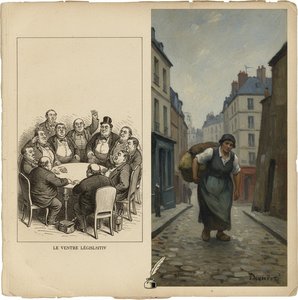
Honoré Daumier: Social Commentary & Artistic Innovation in 19th-Century France
Explore the life & work of Honoré Daumier, a master of 19th-century French realism and satire. Discover his powerful lithographs, paintings, and sculptures critiquing society – and his lasting influence on modern art.
The Sharpest Wit: A Critical Exploration of Satire in Art History – From Hogarth to Contemporary Critique
Explore the history of satire in art! From Hogarth's London to contemporary critique, discover how artists use wit & visual power to reflect and challenge society. Expert insights at OriginalUniqueArt.
Reflecting Society's Shadows: Social Commentary in Art Through the Ages
Explore the powerful history of social commentary in art! Discover key artists like Hogarth & Daumier, movements from Realism to American Social Realism, and how art reflects—and challenges—society. Expert insights at OriginalUniqueArt.
10 legendárních litografií, které změnily umění navždy | OriginalUniqueArt.cz
Objevte 10 legendárních litografií od Toulouse-Lautreca, Muncha a Picassa! Ponořte se do historie umění s OriginalUniqueArt.cz a zkrášlete svůj domov reprodukcemi nejvýznamnějších děl. Prozkoumejte celou kolekci online.
The Sharpest Wit: A Historical Exploration of Satire in Visual Culture
Explore the history of satire in art! From ancient masters like Aristophanes to Goya & Grosz, discover how artists use wit and critique to reflect—and challenge—society. Expert insights at OriginalUniqueArt.