Contemporary Realism · 1957
Falling Warrior (Henry Moore, 1957)
Henry Moore (1898–1986) vytvořil dílo Falling Warrior. Pochází z roku 1957. Patří k hnutí Contemporary Realism. Je vyrobeno z Bronze. Nachází se v Národní muzea Liverpoolu v Liverpool, Spojené království. Rozměry jsou 48 × 147 cm.
- 1957
- Bronze
- 48 × 147 cm
- Národní muzea Liverpoolu

 Ručně malovaná olejná reprodukce
 Sdílet
 Sdílet
 Informační list


 Stáhnout
 Podobné položky
 Slideshow
 Otázky a odpovědi

 Statistiky
Falling Warrior v kostce
- Název díla
- Falling Warrior
- Autor
- Henry Moore (1898–1986)
- Rok narození umělce
- Castleford, Spojené království
- Datum vytvoření
- 1957
- Technika
- Bronze
- Rozměry
- 48 × 147 cm
- Kde jej vidět
- Národní muzea Liverpoolu, Liverpool, Spojené království
- Pohyb
- Contemporary Realism
- Období
- Modern
- Motiv
- bronze sculpture, female figure, reclining pose, minimalism, organic form, tranquility
Co przedstawuje dílo Falling Warrior?
A Symphony of Bronze and Bone: The Essence of Falling Warrior
In the quiet halls of Tate Britain, there exists a moment of profound stillness captured in bronze—a masterpiece that breathes with the weight of history and the lightness of spirit. Henry Moore’s “Falling Warrior,” created between 1956 and 1957, is far more than a mere sculpture; it is a meditation on the very nature of existence. As one approaches this monumental work, the eye is immediately drawn to the fluid, undulating lines that define the female form. The figure lies horizontally, her body a landscape of soft curves and deliberate voids, evoking a sense of both immense strength and heartbreaking vulnerability. It is a piece that does not merely occupy space but commands it, inviting the viewer into a silent dialogue about resilience in the face of inevitable decline.
The brilliance of Moore’s technique lies in his ability to marry the tactile reality of metal with the ethereal quality of movement. Through a masterful process of modeling clay and subsequent bronze casting, Moore achieved a surface texture that feels alive. One can trace the subtle depressions and ridges that mimic the contours of flesh and bone, creating a rhythmic vitality that suggests the figure is caught in a single, breathless moment of transition. His pioneering use of negative space—the intentional piercing of the form—allows light to pass through the sculpture, integrating the surrounding environment into the artwork itself. This interplay of solid mass and hollow void creates a dynamic tension, making the bronze appear deceptively supple, as if the warrior might stir at any moment.
Modernism Rooted in the Earth
To understand the soul of “Falling Warrior,” one must look to the rugged landscapes of Yorkshire, where Henry Moore first learned to see the world. The rolling hills and weathered stones of his youth are echoed in the organic abstractions of this piece. While the sculpture sits firmly within the mid-century movements of Abstract Expressionism and Surrealism, it avoids the coldness often associated with pure abstraction. Instead, Moore utilizes a semi-abstract language to explore deep psychological states. The pose—a female figure with an arm outstretched in what could be interpreted as either defiance or surrender—serves as a universal symbol for the human condition. It captures the duality of our existence: the struggle to remain upright and the eventual, graceful acceptance of our own mortality.
For the discerning collector or interior designer, “Falling Warrior” represents an unparalleled opportunity to introduce a sense of timelessness and intellectual depth into a space. A high-quality reproduction of this work brings with it the prestige of British Modernism and the calming influence of organic form. Whether placed in a sunlit gallery, a sophisticated study, or as a focal point in a contemporary living space, the sculpture’s presence is transformative. It offers more than decoration; it provides a window into a profound aesthetic experience, where the boundaries between the human body and the natural world dissolve into a single, hauntingly beautiful expression of life.
Ve kterém muzeu se nachází Falling Warrior?
Národní muzea Liverpoolu
Liverpool, Spojené království
A Legacy Etched in Stone and Canvas: Unveiling National Museums Liverpool Nestled within the vibrant heart of Liverpool, a city pulsating with maritime history, industrial grit, and an undeniable artistic spirit, lies National Museums Liverpool – an institution far exceeding the simple confines of a mere collection. It’s a living chronicle, a profound testament to Merseyside's evolution, and a celebration of human creativity that spans millennia. Unlike grand, centralized museums often confined to the orbit of London’s cultural sphere, NML thrives on its distinct regional identity, rooted in the Northwest’s resilient spirit and dedicated to making its treasures accessible to all.


Vysokorozlišené fotografie díla Falling Warrior

Protected by copyright: these files are for personal reference, not a licence to republish.
Henry Moore, Falling Warrior (1957), Národní muzea Liverpoolu.
Odpovědi na otázky k dílu Falling Warrior
Které muzeum uchovává originál díla "Falling Warrior"?
Originál díla „Falling Warrior“ od Henry Moore je uložen v instituci Národní muzea Liverpoolu, Liverpool, Spojené království. Reprodukce však umožňuje toto dílo vystavit i ve vašem domově.
V jakém roce vzniklo dílo „Falling Warrior“ od Henry Moore?
Dílo „Falling Warrior“ od Henry Moore vzniklo v roce 1957.
Jakou techniku bylo použito pro dílo „Falling Warrior“ od Henry Moore?
Henry Moore pro dílo „Falling Warrior“ použil/a techniku Bronze. Tato technika definuje materiální podstatu originálního díla.
Jaké jsou rozměry originálu díla „Falling Warrior“ od Henry Moore?
Rozměry originálního díla „Falling Warrior“ od Henry Moore jsou 147 x 48 cm.
Co zachycuje dílo „Falling Warrior“ od Henry Moore?
Motivy díla „Falling Warrior“ jsou bronze sculpture, female figure, reclining pose, minimalism, organic form, tranquility, monumental art.
Lze obraz díla „Falling Warrior“ od Henry Moore volně reprodukovat?
Stav autorských práv pro dílo „Falling Warrior“ od Henry Moore: toto dílo spadá do stále chráněno autorským právem. To určuje, zda lze volně vytvářet reprodukce tohoto obrazu.
Kdo vytvořil "Falling Warrior"?
Dílo "Falling Warrior" vytvořil/a Henry Moore. Informace na této stránce popisují originální dílo umělce Henry Moore.
K kterému uměleckému směru patří „Falling Warrior“ od Henry Moore?
Umělecký směr, ke kterému patří dílo „Falling Warrior“ od Henry Moore, je Contemporary Realism. Tato klasifikace toto dílo umísťuje mezi související umělce a další umělecká díla.
Do které období tvorby Henry Moore patří dílo „Falling Warrior“?
„Falling Warrior“ představuje období Mature Period umělce Henry Moore.
O umělci, Henry Moore

1898–1986, Spojené království
Henry Moore
A Life Sculpted in Form: The World of Henry Moore Henry Spencer Moore, narozený v zemědělském městečku Castleford v severním Yorkshire v roce 1898, se stal jedním z nejvýznamnějších a mezinárodně uznávaných britských sochařů dvacátého století. Jeho cesta od skromných začátků k celosvětovému uznání je svědectvím o neochvějné oddanosti uměleckému prozkoumávání a hluboké spojení s lidskou formou i přírodou. Mooreův otec, vzdělaný muž s vášní pro učení, v něm zanechal zakořeněné přesvědčení o síle vzdělání, směřující ho od těžby k formálnímu vzdělávání. Už jako mladý chlapec projevoval vrozený talent modelovat hlínu a vyřezávat dřevo, což předznamenalo cestu jeho života, která se odehrávala v trojrozměrném prostoru.
Také od autora Henry Moore
 Reclining Figure
 Sculptural Objects (Cramer 47)
 Sheep 1
 A Miner at Work1942
Eseje k tématu Falling Warrior
 Romantic Realism's Finest: 10 Masterpieces for Your Home | OriginalUniqueArtExplore 10 defining masterpieces of Romantic Realism! Discover Courbet, Millet & Daumier's powerful paintings—capturing emotion and social …
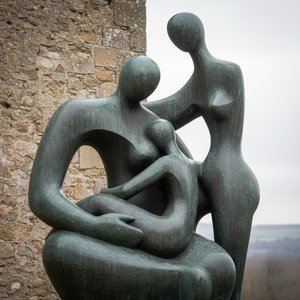 Henry Moore: Sculpting Modernity – Form, Emotion & the Human ConditionExplore the revolutionary sculptures of Henry Moore – abstract forms, reclining figures & powerful expressions of the human condition. Disc…
 Top 10 mistrovských děl kuboexpresionismu: Umění, které změnilo pohled na svět | OriginalUniqueArtProzkoumejte 10 ikonických děl kubismu a expresionismu od Picassa, Braquea a dalších. Objevte příběhy za uměleckými technikami a barevnými …