

 Zobrazit v interiéru
 Odeslat
 Sdílet
 Podrobnosti
 Průvodce

 Stáhnout obrázek
 Podobné kousky
 Rentgenové snímky
 Slideshow
 Statistiky
River Landscape
 Oil
Oil- WallArt
- Dutch Golden Age Painting
 184.0 x 284.0 cm
 Musées Royaux des Beaux-Arts
 Přečíst si více
Ručně malovaná olejová reprodukce
Ručně malované olejné plátno v libovolném rozměru i s rámem, vyrobené našimi umělci na zakázku. ( Přepnout na tiskové verze Přepnout na digitální verzi obrazu)




P118B Kč10

P118H Kč10

P118W Kč10

P438Z Kč10

P508JH Kč12

P508YH Kč12

P805H Kč10

P805Z Kč10

P919BZ Kč10

P919G Kč10

P919XJ Kč10

P959ZH Kč10

P968JZ Kč12

W106C Kč8

W218G Kč10

W218JH Kč8

W218Y Kč10

W307PJ Kč10

W316G Kč10

W316PJ Kč8

W316Y Kč10

W398PJ Kč8

W4111J Kč10

W500HY Kč15

W500JH Kč15

W692G Kč12

W849H Kč8

W940BG Kč15

W953PJ Kč8




Vyberte si z našich přednastavených velikostí, které odpovídají původním proporcím díla.

Zadejte šířku a výšku, které potřebujete pro váš rám nebo stěnu. Protože se jedná o ruční malbu, při výběru jiného formátu může umělec kolem obrazu domalovat o něco více, nebo jej mírně oříznout — rozhodnete si vy. Před zahájením malby vám zašleme digitální náhled ke schválení. Obraz zobrazený na této stránce neodpovídá skutečnému výsledku — pouze digitální náhled jej zobrazuje.
Po přijetí objednávky vám tým OriginalUniqueArt.com zašle e-mail s pokyny a poskytne náhledovou verzi.
Celosvětová doprava () za 3–4 týdny namísto standardních 5 týdnů. (22 říjen). Bez kompromisů v kvalitě.

Zdarma celosvětová expresní doprava

Vysoce kvalitní lněné plátno

Úplné pojištění přepravy

Záruka vrácení celního poplatku

Záruka věrného barevného shodu

100dení lhůta pro vrácení zboží (pouze při vadách výroby)

100% garance vrácení peněz

Sleva při více objednávkách
 Skleněná varianta je dostupná pouze u rozměrů menších než 110 cm

River Landscape
Technika provedení
Velikost reprodukce
-


Celková cena
Kč 6376
A Frozen Moment in Time: Unveiling Hendrick Avercamp’s River Landscape
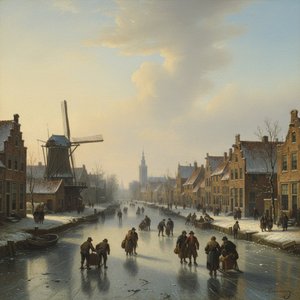
Hendrick Avercamp's “River Landscape,” a captivating oil painting from the Dutch Golden Age, isn’t merely a depiction of a winter scene; it’s a vibrant tableau of daily life frozen in time. Painted around 1613, this remarkable work transports us to a bustling riverside community, offering a rare glimpse into the social and economic rhythms of 17th-century Holland. Avercamp, known for his ability to capture both the stark beauty of winter landscapes and the lively interactions of its inhabitants, masterfully blends topographical detail with narrative storytelling.
The painting immediately draws the eye with its remarkable clarity and color palette. Avercamp’s technique is characterized by a meticulous attention to detail – from the individual faces etched with character to the meticulously rendered boats and buildings lining the riverbank. He employs a layered approach, building up colors through multiple thin glazes of oil paint, creating a luminous quality that seems to capture the shimmering light on the ice. The use of aerial perspective subtly recedes into the distance, guiding the viewer’s eye across the expansive scene. Notice how the details become softer and paler as they move further back, suggesting depth and scale.
A Window into Dutch Society
Beyond its technical brilliance, “River Landscape” offers a fascinating window into Dutch society during the early 17th century. Avercamp wasn’t simply recording a winter scene; he was documenting a thriving community engaged in various activities – fishing, ice skating, trading, and socializing. The painting is populated with recognizable figures: fishermen casting their nets, children playing on the ice, merchants unloading goods, and families gathering around a tavern. These aren't idealized portraits but rather honest representations of everyday life, imbued with a sense of warmth and conviviality despite the harsh winter conditions.
The inclusion of specific details—a woman tending to her laundry, a man repairing a boat, a dog playfully chasing a ball—adds layers of narrative complexity. Avercamp’s background as a mute individual is often cited as contributing to his keen observational skills and ability to capture the nuances of human interaction without relying on verbal communication. He seems to have possessed an extraordinary capacity for noticing and portraying the subtle gestures, expressions, and relationships that define a community.
Symbolism and the Spirit of the Age
The painting’s subject matter—a frozen river teeming with activity—holds symbolic weight within the context of the Dutch Golden Age. The winter landscape represented resilience, resourcefulness, and the ability to thrive in challenging conditions. Ice skating, a popular pastime during the winter months, symbolized leisure and community spirit. Furthermore, the bustling trade along the river highlighted the economic prosperity of the region – a key characteristic of the era.
Avercamp’s work reflects the broader cultural values of the time: a celebration of hard work, family life, and the beauty of the natural world. The painting embodies the spirit of the Dutch Golden Age—a period marked by artistic innovation, economic growth, and social dynamism. It's a testament to Avercamp's skill in capturing not just a scene but an entire way of life.
Bringing the Scene Home: Reproductions and Legacy
Reproductions of “River Landscape” offer a remarkable opportunity to bring this captivating piece of Dutch art into your home or office. The vibrant colors, intricate details, and evocative atmosphere are faithfully reproduced in high-quality prints and canvases. Whether you’re an avid art collector or simply seeking a beautiful addition to your décor, Avercamp's “River Landscape” is sure to be a timeless treasure.
Otázky a odpovědi
Má dílo „River Landscape“ náhled v rozšířené realitě?
Dílo „River Landscape“ nabízí náhled v rozšířené realitě: na stránce Náhled v AR si jej můžete prohlédnout ve vlastním prostoru pomocí kompatibilního zařízení.
Jaká barevná paleta je použita v díle „River Landscape“ od Hendrik Avercamp?
Dílo „River Landscape“ od Hendrik Avercamp využívá Neutrals barevnou paletu. Tato paleta shrnuje celkový barevný charakter díla.
Jak si mohu stáhnout obrázek díla „River Landscape“ od Hendrik Avercamp?
Digitální verzi díla „River Landscape“ od Hendrik Avercamp si můžete stáhnout na stránce Stáhnout jako stažení digitálního obrazu ve vysokém rozlišení.
Biografie umělce
Hendrick Avercamp (1585-1634) - A Pioneer of Dutch Winter
Hendrick Avercamp, a name synonymous with the shimmering, frozen landscapes of the Dutch Golden Age, was born in Amsterdam on January 27, 1585. His life story is as intriguing as his art—a tale marked by both artistic innovation and personal circumstance. From an early age, it became apparent that Avercamp lived within a world experienced differently than most; he was mute, and likely deaf, earning him the affectionate yet defining moniker “de Stomme van Kampen” – the Mute of Kampen. This perceived limitation, however, did not stifle his artistic voice but perhaps sharpened his observational skills, allowing him to translate the nuances of the Dutch winter onto canvas with unparalleled clarity and charm. He initially studied in Amsterdam under Pieter Isaacsz, a portrait painter, and possibly also received guidance from David Vinckboons, whose influence can be seen in Avercamp’s early works. In 1608, he relocated to Kampen, where he would spend the majority of his life and establish himself as a unique and celebrated artist.Capturing a Frozen World: Artistic Style and Innovation
Avercamp stands out as one of the first dedicated landscape painters in 17th-century Holland, a period traditionally dominated by portraiture, history painting, and still life. He carved his niche by specializing in winter scenes—a subject rarely explored with such consistent focus before him. His paintings aren’t merely depictions of cold weather; they are vibrant snapshots of Dutch life unfolding on the ice. Figures skate, sled, play *kolf* (a form of golf played on ice), and simply enjoy the frozen waterways, creating a lively tapestry of human activity against the stark beauty of the winter landscape. Avercamp's skill lies in his ability to convey both the chill of the season and the warmth of communal enjoyment. He masterfully employed aerial perspective, subtly shifting colors and details to create a convincing sense of depth, drawing the viewer into these icy worlds. His technique often involved applying watercolor washes over pen and ink drawings, creating delicate and luminous effects. These smaller works were frequently sold as finished pieces intended for inclusion in collectors’ albums—a testament to their intimate scale and appeal.Influences and Development: From Bruegel to Dutch Realism
While Avercamp forged his own distinctive style, he wasn't working in a vacuum. The influence of Flemish masters like Pieter Bruegel the Elder is evident in his early compositions—the bustling scenes filled with numerous figures engaged in everyday activities. However, Avercamp moved beyond mere imitation, developing a uniquely Dutch sensibility characterized by meticulous detail and a keen observation of light and atmosphere. He embraced the growing trend towards realism within Dutch painting, accurately portraying the clothing, tools, and customs of his time. His work also reflects the climatic conditions of the Little Ice Age, a period of unusually cold winters in Europe, which undoubtedly fueled his fascination with frozen landscapes. Unlike some contemporaries who might idealize their subjects, Avercamp presented a realistic—and often humorous—view of life, including playful details that hint at human foibles and everyday occurrences.Legacy and Historical Significance
Hendrick Avercamp’s impact on Dutch painting is considerable. He not only popularized the winter landscape as a legitimate subject for artistic exploration but also helped to define a distinctly Dutch approach to landscape painting—one that emphasized realism, atmospheric effects, and the depiction of everyday life. His work provided inspiration for later generations of artists and continues to captivate audiences today. Notable collections showcasing his artistry include the Rijksmuseum in Amsterdam, which holds a significant number of his paintings, and the Mauritshuis in The Hague. Avercamp’s legacy extends beyond his artistic achievements; he represents a triumph over adversity, demonstrating that creative expression can flourish even in the face of personal challenges. He died in Kampen on May 15, 1634, leaving behind a body of work that continues to offer a window into the vibrant and often-overlooked world of 17th-century Holland—a world frozen in time, yet brimming with life. ## Notable Works- Winter Landscape with Skaters: Perhaps his most iconic work, this painting exemplifies Avercamp’s mastery of capturing the energy and atmosphere of a Dutch winter scene.
- Street in Delfi: A rare example of Avercamp venturing beyond landscapes, showcasing his skill in depicting town life.
- Enjoying the Ice near a Town: Demonstrates his ability to create dynamic compositions filled with numerous figures engaged in various activities.

Hendrik Avercamp
1585 - 1634 , Nizozemsko
Rychlé informace
- Artistic Movement Or Style: Dutch Golden Age malířství
- Artists Or Movements Influenced By This Artist: ['Pieter Bruegel']
- Artists Who Influenced This Artist:
- Gillis van Coninxloo
- Jan van Goyen
- Date Of Birth: 1585
- Full Name: Hendrick Avercamp
- Nationality: Nizozemský
- Notable Artworks:
- Zimní krajina s bruslaři
- Ulice Delfí
- Place Of Birth: Amsterdam, Nizozemsko
Související články

Zlatý věk nizozemského malířství: 10 mistrovských děl pro váš domov | OriginalUniqueArt.com
Prozkoumejte 10 ikonických děl nizozemského zlatého věku – Rembrandt, Vermeer a další mistři. Objevte příběhy za obrazy, techniky a inspiraci pro váš interiér s reprodukcemi nejvyšší kvality na OriginalUniqueArt.com.

Masterpieces of Light: A Definitive Guide to the Landscapes of the Dutch Golden Age
Discover the luminous mastery of Dutch Golden Age landscapes. Our expert guide explores the atmospheric realism of masters like Van Goyen and Cuyp. Elevate your space with museum-quality, hand-painted oil reproductions from OriginalUniqueArt.com. Art history, beautifully realized.

Golden Light & Dutch Skies: The Timeless Magic of Dutch Golden Age Landscapes
Discover the breathtaking beauty of Dutch Golden Age landscapes. Explore the mastery of light, chiaroscuro, and 17th-century realism through an expert art history lens, celebrating the enduring legacy of the Dutch Masters for discerning collectors and art lovers.
Charles Leickert: Capturing the Dutch Golden Age Light – A Comprehensive Study of Technique, Context, and Legacy
Explore the captivating winter landscapes of Charles Leickert, a master of Dutch Golden Age light & atmosphere. Discover his techniques, symbolism, and lasting legacy – a comprehensive study for art enthusiasts and collectors.

Golden Light & Dutch Skies: Bringing the Magic of Dutch Golden Age Landscapes into Your Home
Transform your home with the breathtaking light of Dutch Golden Age landscapes. Discover how hand-painted oil reproductions of masterworks like Ruisdael and Vermeer bring timeless elegance, atmosphere, and soulful texture to modern interiors. Elevate your space with museum-quality art.

