Přepnout na tisk
 Zobrazit více







































 U děl nebo reprodukcí, u nichž je jakákoliv strana větší než 105 cm (přibližně 41 palců), bude rám dodán jako sestava v rozloženém stavu. Tato metoda zajišťuje bezpečné doručení a chrání dílo před poškozením během přepravy.


The Living Breath of Photography
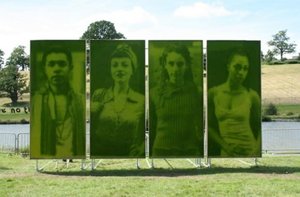
In the evocative work Uncle Charles, the boundary between the organic world and the captured image dissolves into a breathtaking phenomenon known as "photographic photosynthesis." Created by the visionary British duo Heather Ackroyd and Dan Harvey, this piece transcends the static nature of traditional photography. Rather than using silver halides or digital sensors to fix a moment in time, the artists utilize the very essence of life: seedling grass. Through a meticulous process, light is projected through a negative onto vertical surfaces where germinating blades of grass grow, recording the image through the production of chlorophyll. The resulting artwork is not merely a representation of life, but a living, breathing entity that responds to its environment, capturing the profound interplay between light, pigment, and growth.
The visual impact of Uncle Charles is deeply rooted in its connection to the land and its people. This specific work carries a heavy emotional resonance, as it was developed in collaboration with Uncle Charles ‘Chicka’ Madden, a highly respected Gadigal Elder, and his granddaughter Lille Madden. By weaving Indigenous connection into the biological process of the art, Ackroyd & Harvey create a dialogue between the ephemeral nature of plant life and the enduring legacy of First Nations history. The imagery—a poignant black and white portraiture within a gallery setting—serves as a vessel for themes of ancestry, presence, and the deep-seated relationship between human identity and the natural landscape.
A Symphony of Transience and Time
To behold this work is to witness the passage of time in real-time. Because the medium consists of living plant material, the artwork is subject to the natural rhythms of the world; it possesses a temporal dimension that traditional prints lack. The strength of the green hues is dictated by the intensity of light received during the germination phase, creating a lush, verdant depth that feels almost tactile. However, this beauty is inherently fleeting. As UV light interacts with the chlorophyll, a gradual fading may occur, mirroring the inevitable cycles of decay and renewal found in all living things. This inherent fragility invites the viewer to contemplate the concept of transience—the idea that nothing, not even art, is truly permanent.
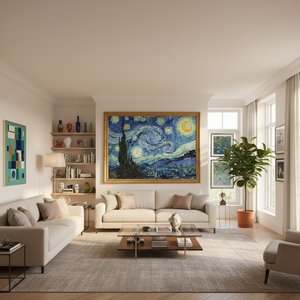
For the discerning collector or interior designer, Uncle Charles offers more than mere decoration; it offers a conversation piece of unparalleled depth. A high-quality reproduction of this work allows one to bring this sense of ecological wonder and historical reverence into a private space. Whether placed in a contemporary gallery-style living room or a sophisticated professional studio, the piece acts as a window into a world where technology and ecology are harmoniously entwined. It serves as a profound reminder of our interconnectedness with the earth, making it an inspiring choice for those who seek art that challenges the intellect while soothing the soul through its organic beauty.
Otázky a odpovědi
K jakému stylu patří „Uncle Charles“?
Umělecký směr, ke kterému patří dílo „Uncle Charles“ od Heather Ackroyd And Dan Harvey, je Contemporary Art. Tato klasifikace toto dílo umísťuje mezi související umělce a další umělecká díla.
Existuje průvodce k dílu „Uncle Charles“ od Heather Ackroyd And Dan Harvey?
Stránka Průvodce pro studenty díla „Uncle Charles“ od Heather Ackroyd And Dan Harvey nabízí tištěný dvoulistový informační list: samotné umělecké dílo s identifikační tabulkou, časovou osu situující dílo do období života umělce, další díla daného autora, naměřenou barevnou paletu a citace ve čtyřech stylech připravené pro okamžité zkopírování.
Jakým způsobem se dílo „Uncle Charles“ zapojuje do témat a stylu umělce Heather Ackroyd And Dan Harvey?
„Uncle Charles“ patří k dílu Heather Ackroyd And Dan Harvey v rámci směru Contemporary Art, jehož typická témata zahrnují ecology and architecture, indigenous connection, climate action activism, living photographic medium, nature and human presence.
 Sdílet
 Sdílet
 Podrobnosti o díle
 Průvodce

 Stáhnout
 Podobné položky
 Slideshow
 Q&A
Q&A Statistiky