
 Náhled v interiéru
 Sdílet
 Sdílet
 Podrobnosti o díle
 Průvodce

 Stáhnout
 Podobné položky
 Rentgenové snímky
 Slideshow
 Otázky a odpovědi
 Statistiky
Desiderius Erasmus


 Zobrazit více
Giclée / Umělecký tisk
Giclée nebo plátěný tisk muzeální kvality s rychlou výrobou a širokou nabídkou povrchových úprav. ( Koupit ručně malovaný obraz Přepnout na digitální obraz)




P118B Kč10

P118H Kč10

P118W Kč10

P438Z Kč10

P508JH Kč12

P508YH Kč12

P805H Kč10

P805Z Kč10

P919BZ Kč10

P919G Kč10

P919XJ Kč10

P959ZH Kč10

P968JZ Kč12

W106C Kč8

W218G Kč10

W218JH Kč8

W218Y Kč10

W307PJ Kč10

W316G Kč10

W316PJ Kč8

W316Y Kč10

W398PJ Kč8

W4111J Kč10

W500HY Kč15

W500JH Kč15

W692G Kč12

W849H Kč8

W940BG Kč15

W953PJ Kč8




Vyberte si z našich přednastavených velikostí, které odpovídají původním proporcím díla.

Zadejte šířku a výšku, které potřebujete pro váš rám nebo stěnu. Tisk lze pouze oříznout, nikdy však nelze zvětšit obraz nad jeho původní rozměr, proto při výběru jiného formátu dochází ke ztrátě části obrazu. Před samotným tiskem vám zašleme digitální náhled k schválení. Obraz zobrazený na této stránce nenabízí skutečný výřez — ten uvidíte pouze v náhledu.
Celosvětové doručení () do 2 týdnů namísto standardních 4/5 týdnů. (10 listopad)

Zdarma celosvětová expresní doprava

Vysoce kvalitní lněné plátno

Kompletní pojištění přepravy

Záruka vrácení celního poplatku

Záruka věrného barevného souladu

100dení lhůta pro vrácení zboží (pouze při vadách výroby)

100% záruka vrácení peněz

Sleva při více objednávkách
 Skleněná varianta je dostupná pouze u rozměrů menších než 110 cm

Desiderius Erasmus
Giclée / Umělecký tisk
Rozměry reprodukce
-


Celková cena za vybrané možnosti reprodukcí
Kč 1763
A Window into Renaissance Humanism: Hans Holbein the Younger’s Portrait of Desiderius Erasmus
Hans Holbein the Younger's portrait of Desiderius Erasmus is more than just a likeness; it’s an intimate encounter with one of the most influential thinkers of the Northern Renaissance. Painted around 1530, this artwork captures not merely the physical appearance of the humanist scholar, but also his intellectual vitality and profound spirit. The image presents Erasmus in half-length, gazing directly at the viewer with a penetrating intelligence softened by a gentle smile. His attire – a dark coat accented by a fur collar – is rendered with meticulous detail, indicative of Holbein’s mastery of texture and form. The subtle play of light across his face reveals the lines etched by years of scholarship and contemplation, lending an air of dignified gravitas to the composition.
Technical Brilliance and Artistic Innovation
Holbein's skill as a portraitist was legendary, and this work exemplifies his remarkable technique. He wasn’t simply recording features; he was interpreting character through paint. The precision with which he depicts the textures – the soft sheen of Erasmus’s coat, the delicate strands of hair escaping from beneath his cap, the very skin itself – is astonishing. This level of realism wasn't merely about technical prowess; it served a deeper purpose. Holbein aimed to convey not just *what* Erasmus looked like, but *who* he was. He achieved this through subtle nuances in expression and posture, creating a sense of immediacy and psychological depth rarely seen in portraiture before his time. The restrained palette, dominated by blacks, browns, and grays, focuses the viewer’s attention on Erasmus's face and hands, emphasizing his intellectual pursuits.
Erasmus: A Champion of Humanist Ideals
To fully appreciate this painting, one must understand the historical context surrounding its creation. Desiderius Erasmus was a pivotal figure in the humanist movement, advocating for a return to classical learning and a critical examination of religious dogma. He championed reason, tolerance, and individual conscience – radical ideas that challenged the established order of the 16th century. Holbein’s portrait reflects these ideals. Erasmus is depicted not as a remote theological authority, but as an approachable scholar engaged in intellectual work. The very act of portraying him with such realism and dignity was a statement about the value of human intellect and individual worth. It's important to remember that portraits like this were often exchanged among humanist circles as tokens of esteem and intellectual kinship.
A Lasting Legacy: Symbolism and Emotional Resonance
The portrait’s enduring appeal lies not only in its technical brilliance but also in its emotional resonance. Erasmus's gaze is direct, engaging the viewer in a silent dialogue across centuries. There’s a sense of quiet confidence and intellectual curiosity that draws you in. The painting invites contemplation – about the power of ideas, the importance of critical thinking, and the enduring human quest for knowledge. Holbein doesn’t simply present us with an image; he offers us access to the mind and spirit of a remarkable man who helped shape the course of Western thought. A reproduction of this masterpiece serves as a powerful reminder of the humanist values that continue to resonate today, making it a compelling addition to any collection or interior space.
Otázky a odpovědi
Kde mohu najít umělecká díla podobná dílu „Desiderius Erasmus“ od Hans Holbein Mladší?
Stránka Podobná díla pro dílo „Desiderius Erasmus“ od Hans Holbein Mladší obsahuje související umělecká díla.
Existuje k dílu „Desiderius Erasmus“ od Hans Holbein Mladší informační list pro studenty?
Průvodce k dílu "Desiderius Erasmus" je stránka Průvodce pro studenty pro dané umělecké dílo – tiskatelný informační list, který zobrazuje dílo spolu s jeho popiskem, údaji o autorství a identifikační tabulkou (umělec, data, technika, původní rozměry, sbírka).
Kde si mohu prohlédnout náhled díla "Desiderius Erasmus"?
Náhled díla „Desiderius Erasmus“ od Hans Holbein Mladší si můžete prohlédnout na stránce Náhled v prostoru.
Biografie umělce
A Life Etched in Detail: The World of Hans Holbein the Younger
Born around 1497 in Augsburg, Germany, Hans Holbein the Younger emerged as a defining figure of the Northern Renaissance—a master portraitist whose work continues to resonate with breathtaking realism and psychological depth. His upbringing within an artistically gifted family laid the foundation for his exceptional talent; his father, Hans Holbein the Elder, was a respected painter and printmaker who instilled in young Hans a meticulous approach to observation and technique. This early training wasn’t merely about mastering brushstrokes or mixing pigments—it was about learning to *see*, to capture not just likeness but the very essence of a subject. Holbein's initial artistic explorations occurred within his father’s workshop, where he honed his skills before embarking on a journey that would lead him through Switzerland and ultimately to the heart of the English court.From Basel to the Tudor Court: A Rising Star
After completing his apprenticeship, Holbein traveled extensively throughout Switzerland, establishing himself as an independent artist with a growing reputation. He spent several formative years in Basel, creating not only striking portraits but also religious works and intricate woodcut designs—most notably the haunting series depicting the *Dance of Death*. These early pieces reveal a burgeoning mastery of composition and a developing fascination with capturing the complexities of human emotion. He admired the work of Albrecht Dürer and other German masters while also studying Italian art during his travels, absorbing their techniques and incorporating them into his own unique style. Holbein’s innovative compositions further enhanced the impact of his work, often employing symbolic objects or backgrounds to convey deeper meaning. It was in 1526 that fate intervened, drawing Holbein towards England, an event that would irrevocably alter his artistic trajectory. He arrived bearing a letter of introduction from Erasmus, the renowned humanist scholar, which opened doors to the influential circles of English society. His talent quickly captivated prominent figures like Sir Thomas More, who became both a patron and a subject for several compelling portraits. This connection proved pivotal, leading Holbein’s appointment as a court painter to King Henry VIII in 1536—a position he held, with some interruptions, until his untimely death in 1543.The Art of Perception: Style and Masterpieces
Holbein's artistic style is characterized by an extraordinary commitment to realism, achieved through painstaking attention to detail in rendering textures, fabrics, and the subtle nuances of facial features. He didn’t simply *paint* portraits; he meticulously constructed them, layer upon layer, capturing not just physical appearances but also the personality and inner life of his sitters. His use of chiaroscuro—the dramatic interplay of light and shadow—created a palpable sense of depth and atmosphere, enhancing the psychological impact of his images. He was particularly adept at portraying human emotion with remarkable accuracy, conveying feelings of solemnity, contemplation, and even vulnerability. The Ambassadors (1533) stands as a testament to this approach—a complex and symbolically rich double portrait showcasing both Holbein’s technical brilliance and intellectual depth. The anamorphic skull subtly embedded within the painting serves as a stark *memento mori*, reminding viewers of the inevitability of death. His numerous portraits of Henry VIII established a lasting image of royal power, while his depiction of Erasmus of Rotterdam captures the scholar's profound intellectual gravitas. Other notable works include the stunning *Portrait of Nikolaus Kratzer* (1528), a masterpiece of realism and scientific detail—a reflection of Holbein’s fascination with humanist scholarship and observation.Legacy and Influence: A Lasting Impression
Holbein’s artistic journey was shaped by a confluence of influences, blending the precision of German artistic traditions with the compositional principles of the Italian Renaissance. He admired the work of Albrecht Dürer and other German masters while also studying Italian art during his travels, absorbing their techniques and incorporating them into his own unique style. His legacy is profound; Holbein’s portraits set a new standard for realism and psychological insight in portraiture, influencing generations of artists who followed. He didn't merely record appearances—he captured moments in time, preserving them for posterity. His depictions of key figures during the Tudor period provide invaluable insights into the lives and personalities of those who shaped English history. He was a true innovator, pushing the boundaries of artistic expression while simultaneously upholding the highest standards of craftsmanship. Holbein’s work continues to inspire artists today—a testament to his enduring genius and the timeless beauty of his vision.
Hans Holbein Mladší
1497 - 1543 , Německo
Rychlé informace o umělci
- Artistic Movement Or Style: Severní Renesance
- Artists Or Movements Influenced By This Artist: ['Pozdější portrétisté']
- Artists Who Influenced This Artist: ['Albrecht Dürer']
- Date Of Birth: c. 1497/98
- Full Name: Hans Holbein der Jüngere
- Nationality: Německý, Švýcarský
- Notable Artworks:
- Ambasadéři
- Portrét Jindřicha VIII.
- Nikolaus Kratzer
- Place Of Birth: Augsburg, Německá republika
Související články
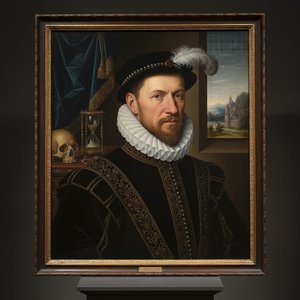
Mastering Detail: The Captivating World of Hans Holbein the Younger’s Northern Renaissance Masterpieces
Explore the breathtaking precision of Hans Holbein the Younger. From Tudor royal portraits to intricate Northern Renaissance details, discover the mastery behind his legendary works and learn how to bring this historical grandeur into your collection with museum-quality reproductions.

The Northern Renaissance: A Flourishing of Realism, Religious Reform & Artistic Innovation
Explore the Northern Renaissance! Discover Jan van Eyck's innovations, religious shifts, & key artists of this influential period. Expert analysis and insights into Early Netherlandish painting at OriginalUniqueArt.
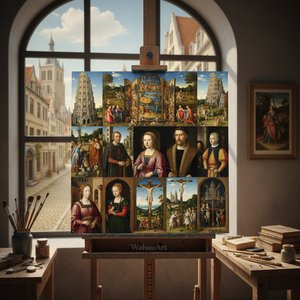
Top 10 mistrovských děl severní renesance – obrazy a umění pro váš domov | OriginalUniqueArt.com
Objevte 10 ikonických děl severní renesance – Jan van Eyck, Dürer a další mistři. Ponořte se do příběhů umění, technik a barev. Reprodukce obrazů pro váš domov na OriginalUniqueArt.com.
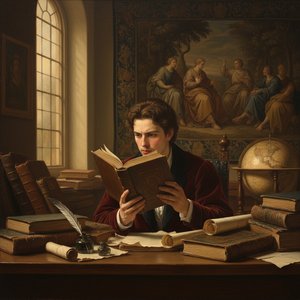
The Intimate Gaze: Study & Intellectual Pursuit in Western Art
Explore the fascinating history of study and intellectual pursuit in Western art! Discover Renaissance scholars, iconic portraits like Holbein's Erasmus, and Leonardo’s studies – a journey through humanist ideals & artistic mastery. Learn more at OriginalUniqueArt.

Hans Holbein the Younger: A Renaissance Portraitist's Mastery of Realism & Psychological Insight
Explore the life & art of Hans Holbein the Younger, a Renaissance master renowned for his strikingly realistic portraits and psychological insight. Discover iconic works like 'The Ambassadors' and delve into his lasting legacy.





