Zobrazit v interiéru
 Odeslat
 Sdílet
 Podrobnosti
 Průvodce

 Stáhnout obrázek
 Podobné kousky
 Rentgenové snímky
 Slideshow
 Statistiky
Poachers in the Snow
 Oil On Canvas
- WallArt
- Realism
 1867
1867- 19th Century
 65.0 x 81.0 cm
 Musée des Beaux-Arts
 Přečíst si více
Giclée / Umělecký tisk
Giclée nebo plátěný tisk muzeální kvality s rychlou výrobou a širokou nabídkou povrchových úprav. ( Objednat ručně malovanou reprodukci Přepnout na digitální verzi obrazu)




P118B $10

P118H $10

P118W $10

P438Z $10

P508JH $12

P508YH $12

P805H $10

P805Z $10

P919BZ $10

P919G $10

P919XJ $10

P959ZH $10

P968JZ $12

W106C $8

W218G $10

W218JH $8

W218Y $10

W307PJ $10

W316G $10

W316PJ $8

W316Y $10

W398PJ $8

W4111J $10

W500HY $15

W500JH $15

W692G $12

W849H $8

W940BG $15

W953PJ $8




Vyberte si z našich přednastavených velikostí, které odpovídají původním proporcím díla.

Můžete zadat vlastní rozměry tak, aby výtvor odpovídal konkrétnímu rámu nebo prostoru. Pokud zvolená velikost nebude odpovídat poměru stran původního obrazu, dílo buď ořížeme, nebo obraz rozšíříme pomocí zrcadlového efektu či jednobarevného okraje. Před zahájením výroby vám bude zaslán digitální náhled k schválení.
Mějte prosím na paměti, že náhled na obrazovce neodráží skutečné oříznutí nebo rozšíření. Pouze digitální náhled přesně zobrazí finální kompozici.
Ačkoliv jsou k dispozici i vlastní rozměry, pro zachování původních proporcí doporučujeme vybrat si rozměr z předdefinovaného seznamu.
Celosvětové doručení () do 2 týdnů namísto standardních 4/5 týdnů. (27 září)

Zdarma celosvětová expresní doprava

Vysoce kvalitní lněné plátno

Úplné pojištění přepravy

Záruka vrácení celního poplatku

Záruka věrného barevného shodu

100dení lhůta pro vrácení zboží (pouze při vadách výroby)

100% garance vrácení peněz

Sleva při více objednávkách
 Skleněná varianta je dostupná pouze u rozměrů menších než 110 cm

Poachers in the Snow
Giclée / Umělecký tisk
Velikost reprodukce
-


Celková cena
$ 80
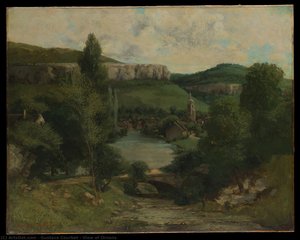
A Stark Winter Tableau: Gustave Courbet’s “Poachers in the Snow”
Gustave Courbet's "Poachers in the Snow," painted in 1867, isn’t merely a depiction of a winter scene; it’s a profound statement about humanity’s relationship with nature and the realities of rural life. This oil-on-canvas masterpiece, now housed within the Musée des Beaux-Arts et d’archéologie de Besançon, France, stands as a cornerstone of the Realist movement, demanding viewers confront the often uncomfortable truths of everyday existence without romantic glossing. Measuring 65 x 81 cm, the painting immediately draws the eye with its muted palette – predominantly whites and browns – mirroring the harshness and unforgiving beauty of a snow-laden landscape. Yet, within this seemingly simple composition lies a complex narrative woven through careful observation and deliberate artistic choices. The scene unfolds with two figures, clad in heavy coats and hats, trudging purposefully through the deep snow. Their postures suggest both weariness and determination, hinting at the difficult labor involved in their pursuit. The man on the left, leading a dog, embodies a cautious approach, while his companion, wielding a stick, exudes a more assertive energy – a clear indication of the illicit activity taking place. Courbet masterfully utilizes light and shadow to create a sense of depth and atmosphere, emphasizing the cold, biting wind that whips across the snow-covered ground. The dogs themselves are integral to the composition, not merely accessories but active participants in this stark drama, their presence adding a layer of companionship amidst the isolation of the scene. The background landscape—a blurred expanse of trees and distant hills—further reinforces the sense of vastness and solitude, underscoring the vulnerability of these figures against the raw power of nature. Courbet’s commitment to Realism is evident in every brushstroke. He eschewed idealized forms and vibrant colors, opting instead for a direct, unvarnished portrayal of reality. The loose application of paint, characteristic of his style, lends a sense of immediacy and spontaneity to the scene, as if captured in a fleeting moment. This deliberate rejection of academic conventions was revolutionary at the time, challenging the prevailing artistic norms that prioritized beauty and grandeur over truth and authenticity. The painting’s subject matter—poaching—was itself controversial, reflecting the social tensions and economic hardships prevalent in rural France during the 19th century. Courbet's choice to depict this illicit activity head-on was a bold statement about his commitment to portraying the lives of ordinary people, regardless of their moral standing. Beyond its immediate subject matter, “Poachers in the Snow” carries significant symbolic weight. The winter landscape can be interpreted as a metaphor for the harsh realities of life—the struggle for survival, the isolation of rural existence, and the conflict between humanity and nature. The figures themselves represent the complexities of human behavior – ambition, desperation, and perhaps even a degree of moral ambiguity. Courbet doesn’t offer judgment; he simply presents the scene as it is, inviting viewers to contemplate its implications. The painting's enduring power lies in its ability to evoke a sense of both melancholy and resilience, reminding us of our shared humanity and our connection to the natural world. It’s a testament to Courbet’s genius that this seemingly straightforward depiction continues to resonate with audiences today, prompting reflection on timeless themes of survival, morality, and the human condition.The Artist's Context: Gustave Courbet and the Rise of Realism
To fully appreciate “Poachers in the Snow,” it’s essential to understand the broader context within which Gustave Courbet was working – the rise of Realism in 19th-century France. Born in Ornans, France, in 1819, Courbet initially trained at the École des Beaux-Arts in Paris, but quickly grew disillusioned with the rigid conventions and idealized subjects favored by the Academy. He rejected the romanticism and historical narratives that dominated the Salon system, instead seeking to depict the world as he saw it – truthfully and without embellishment. Courbet’s artistic development was profoundly influenced by artists like Eugène Delacroix and Théodore Géricault, but he ultimately distanced himself from their Romantic ideals, prioritizing direct observation and a commitment to portraying everyday life. His early works explored landscapes and portraits, gradually shifting towards scenes of rural labor and the lives of working-class individuals. This shift was driven by a desire to break free from the constraints of academic art and to create paintings that reflected the realities of contemporary society. Courbet’s decision to paint subjects considered “unworthy” of artistic attention—such as peasants, laborers, and even criminals—was a deliberate act of rebellion against the established order. The painting "Poachers in the Snow" exemplifies this commitment to Realism. It's not a heroic depiction of hunters; it’s a stark portrayal of individuals engaged in an illegal activity, stripped of any romantic or idealized qualities. Courbet’s focus on detail—the texture of the snow, the weariness of the figures’ faces, the ruggedness of the landscape—creates a powerful sense of immediacy and authenticity. His rejection of traditional artistic techniques—such as smooth brushstrokes and carefully composed backgrounds—further emphasizes his commitment to portraying reality in its rawest form. Courbet's work was often met with criticism and controversy during his lifetime. Many critics dismissed his paintings as crude, vulgar, or lacking in aesthetic merit. However, he remained steadfast in his artistic vision, continuing to produce works that challenged the conventions of the art world and paved the way for future generations of artists. His influence on modern art is undeniable, establishing Realism as a dominant movement and inspiring countless artists to embrace direct observation and social commentary in their work.Technical Details & Artistic Techniques
The execution of “Poachers in the Snow” reveals Courbet’s mastery of oil painting techniques and his meticulous attention to detail. The canvas measures 65 x 81 cm, providing ample space for the artist to capture the vastness of the winter landscape and the physicality of the figures. Courbet employed a technique known as *alla prima*, meaning “at first sight,” which involved completing the painting in a single session without extensive underpainting or sketching. This approach resulted in a sense of spontaneity and immediacy, capturing the fleeting effects of light and shadow with remarkable precision. The color palette is deliberately muted—dominated by shades of white, brown, and gray—to evoke the cold, bleak atmosphere of the winter scene. Courbet skillfully used *chiaroscuro*, the contrast between light and dark, to create a sense of depth and volume, emphasizing the figures’ forms and the texture of the snow-covered ground. The brushstrokes are loose and expressive, contributing to the painting's overall sense of realism and immediacy. Courbet’s technique is characterized by a directness and honesty that reflects his commitment to portraying reality without idealization or embellishment. The composition itself is carefully constructed, with the two figures positioned diagonally across the canvas to create a dynamic and engaging visual arrangement. The use of perspective—particularly in the depiction of the distant hills—adds depth and realism to the scene. Courbet’s attention to detail extends beyond the main subjects to include subtle elements such as the texture of the snow, the folds of the figures’ clothing, and the reflections of light on the ground. These small details contribute significantly to the painting's overall sense of authenticity and immediacy. The artist’s ability to capture these nuances demonstrates his exceptional skill and his unwavering commitment to portraying reality with remarkable accuracy.A Legacy of Realism: Courbet and Beyond
“Poachers in the Snow” stands as a pivotal work in Gustave Courbet’s oeuvre and a defining example of the Realist movement. Its impact extended far beyond its immediate context, influencing generations of artists who followed. Courbet's rejection of academic conventions and his commitment to portraying everyday life without romanticization paved the way for future movements such as Impressionism and Social Realism. Artists like Jean-François Millet, Édouard Manet, and Honoré Daumier were deeply influenced by Courbet’s work, adopting his techniques and exploring similar themes of rural labor and social injustice. Manet's "Le Déjeuner sur l'herbe" (1863), for example, challenged traditional notions of beauty and morality, mirroring Courbet’s own rebellious spirit. Furthermore, Courbet’s legacy extends beyond the realm of painting. His commitment to depicting reality in its rawest form influenced other art forms, including photography and sculpture. The rise of Realism as a dominant movement in 19th-century France marked a significant shift in the history of art, challenging established conventions and opening up new possibilities for artistic expression. For those interested in exploring more of Courbet’s works or delving deeper into the world of Realist art, we recommend visiting the Musée des Beaux-Arts et d’archéologie de Besançon, France, where “Poachers in the Snow” is proudly displayed. Additionally, examining the work of Eugène-Louis Decisy, another prominent figure in the Realist movement, offers a valuable perspective on the diverse range of artistic approaches within this influential movement.Biografie umělce
Štěpnice rebela: Život a odkaz Gustave Courbeta
Narodil se v tiché francouzské vesnici Ornans v roce 1819, když Jean Désiré Gustave Courbet vystoupil jako neústupná síla proti tehdejším zavedeným uměleckým normám. Jeho příběh není pouze příběhem barvy a plátna; je to vyprávění utkané ze vláken společenského komentáře, politického přesvědčení a neochvějného odhodlání zobrazovat svět přesně tak, jak ho viděl – neidealizovaný, syrový a hluboce skutečný. Vyrostl v relativně prosperující buržoazní rodině, kde ho matka povzbuzovala k následování jeho uměleckých náklonností, což byla výchova, která nakonec podchytila revoluci v uměleckém světě. Jeho formální vzdělání začalo v roce 1839 na École des Beaux-Arts v Paříži, ale velmi rychle se začal trápit akademickými konvencemi a romantickým idealismem, které tam převládaly. Ačkoliv uznal vlivy jako Eugène Delacroix či Théodore Géricault, Courbet si vybudoval vlastní cestu, která upřednostňovala pozorování před představivostí a pravdu před tradicí.Zrod realismu: Výzva uměleckým konvencím
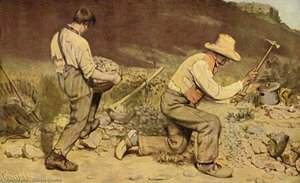
Courbetův umělecký vývoj byl poznamenán záměrným odmítnutím tehdejších estetických standardů. Neměl zájem o mytologické narativy nebo hrdinské alegorie; jeho pohled byl upřen na každodenní život obyčejných lidí, zejména těch, kteří se věnovali práci a venkovské existenci. Toto odhodlání zobrazovat svět bez zdobení – což se později stalo známým jako realismus – se zpočátku setkalo s pohrdáním a posměchem kritiků, kteří byli zvyklí na uhlazenější a idealizované reprezentace. Jeho raná díla zkoumala krajiny a portréty, ale brzy se obrátila k výjeveům ze života dělnické třídy, ztvárněným v monumentálním měřítku, které bylo tradičně vyhrazeno historickým nebo náboženským malbám. Tato záměrná volba nebyla pouze stylistická; byla to prohlášení o vrozené důstojnosti a důležitosti těchto často přehlížených témat. Dílo Lovci kamenů, dokončené v roce 1849, ale tragicky zničené během druhé světové války, tento přístup zosobňovalo – syrový popis dvou dělníků v těžké práci, jejichž tváře jsou skryty za vyčerpáním a strádáním. Tato malba, spolu s dalšími jako Pohřeb v Ornans (1850), napadla samotnou definici toho, co tvoří „hodná“ námět pro vysoké umění.Hlavní díla a umělecká filozofie
Pohřeb v Ornans, kolosální plátno zobrazující provinční pohřeb, vyvolalo obrovský skandál, když bylo vystaveno v letech 1850–1851. Jeho samotná velikost – obvykle vyhrazená velkolepým historickým malbám – v kombinaci s neúprosným realismem a absencí emocionální idealizace šokovala publikum. Courbet nezobrazoval truchící jako vznešené nebo smutkem zlomené postavy; představil je jako obyčejné lidi, jejichž tváře byly vryty směsicí smutku, nuda a rezignace. Tato upřímnost byla revoluční. Jeho umělecká filozofie sahala za námět samotný až k technice. Preferoval přímý styl impasto – nanášení barvy silně na plátno – který zdůrazňoval materiálnost samotného média. Ateliér maláře (1855), alegorické dílo odrážející jeho umělecké přesvědčení a angažovanost v tehdejších sociálních otázkách, dále upevnilo jeho pověst provokativního a nezávislého umělce. Jeho účast na Salon des Refusés v roce 1863 – výstavě děl odmítnutých oficiálním Salónem – mu ugruntovala status rebela a obránce umělecké svobody. I krajiny jako Výhled z lesa Fontainebleau (1855) byly prosyceny smyslem realismu, zachycující přirozenou krásu lesa bez jeho romantizace.Odkaz a historický význam
Vliv Gustave Courbeta na pozdější umělecká hnutí je nepopíratelný. Ačkoliv čerpal inspiraci od dřívějších mistrů, jako byl Caravaggio, pro jejich dramatický realismus a využití světla a stínu, jeho dopad sahal daleko za pouhou imitaci. Hluboce ovlivnil impresionisty i postimpresionisty tím, že je osvobodil od omezení tradiční reprezentace a povzbuzoval je k hledání nových způsobů vidění a zobrazování světa. Jeho důraz na společenský komentář připravil cestu pozdějším umělcům sociálně angažovaným, kteří své dílo využívali jako platformu pro politický aktivismus. Courbet nebyl jen malíř; byl hlasným zastáncem umělecké svobody a politické změny, aktivně se účastnil bouřlivých událostí své doby, včetně Pařížské komuny v roce 1871 – což byla účast, která vedla k jeho období exilu ve Švýcarsku. Zemřel v roce 1877 a zanechal po sobě dílo, které i dnes diváky inspiruje a provokuje.- Pionýr realismu
- Napadl akademické konvence
- Ovlivnil impresionismus a postimpresionismus
- Obránce umělecké svobody

Gustav Courbet
1819 - 1877 , Francie
Rychlé informace
- Artistic Movement Or Style: Realismus
- Artists Or Movements Influenced By This Artist:
- Impressionismus
- Postimpressionismus
- Artists Who Influenced This Artist:
- Delacroix
- Géricault
- Caravaggio
- Date Of Birth: 10 června 1819
- Date Of Death: 31 prosince 1877
- Full Name: Gustave Courbet
- Nationality: Francouzský
- Notable Artworks:
- Štěpnice
- Vlna
- Rocky Seashore
- Place Of Birth: Orléans, Francie
Související články

Evocations of Place: A Historical Journey Through Landscape Art
Explore the rich history of landscape art with OriginalUniqueArt. Discover renowned artists, movements like Impressionism & Romanticism, and expert guidance for collecting timeless pieces. Find your perfect serene escape today!

Romantická krajina v malbě: 10 mistrovských děl, které definovaly umělecký proud | OriginalUniqueArt
Prozkoumejte 10 ikonických děl romantické krajinářské malby! Objevte příběhy Caspara Davida Friedricha, Turnera a dalších mistrů. Reprodukce obrazů nejvyšší kvality pro váš interiér na OriginalUniqueArt.com.

Romantic Realism's Finest: 10 Masterpieces for Your Home | OriginalUniqueArt
Explore 10 defining masterpieces of Romantic Realism! Discover Courbet, Millet & Daumier's powerful paintings—capturing emotion and social realities. Find museum-quality reproductions for your home at OriginalUniqueArt.com.
Realismus v umění: 10 mistrovských děl, které změnily pohled na svět | OriginalUniqueArt.cz
Objevte 10 ikonických děl realismu od mistrů jako Courbet a Manet. Prozkoumejte příběhy, techniky a emoce tohoto revolučního uměleckého směru. Reprodukce obrazů nejvyšší kvality na OriginalUniqueArt.cz – inspirace pro váš interiér!
Top 10 slavných obrazů v odstínech sněhu: Umění a inspirace pro váš domov
Objevte 10 nejkrásnějších obrazů v odstínech sněhu! Od Moneta po Muncha – prozkoumejte příběhy, techniky a inspiraci těchto ikonických děl. Najděte reprodukci svého oblíbeného umění na OriginalUniqueArt.com.