

 Náhled
 Sdílet
 Sdílet
 Podrobnosti o díle

 Stáhnout
 Podobné položky
 Rentgenové snímky
 Slideshow
Piazza San Marco
 Oil On Canvas
- WallArt
- Baroque
 1730
1730 68.0 x 112.0 cm
 Metropolitní muzeum umění
 Zobrazit více
Giclée / Umělecký tisk
Giclée nebo plátěný tisk muzeální kvality s rychlou výrobou a flexibilními možnostmi povrchové úpravy. ( Koupit ručně malovaný obraz Koupit obrázek)




P118B $10

P118H $10

P118W $10

P438Z $10

P508JH $12

P508YH $12

P805H $10

P805Z $10

P919BZ $10

P919G $10

P919XJ $10

P959ZH $10

P968JZ $12

W106C $8

W218G $10

W218JH $8

W218Y $10

W307PJ $10

W316G $10

W316PJ $8

W316Y $10

W398PJ $8

W4111J $10

W500HY $15

W500JH $15

W692G $12

W849H $8

W940BG $15

W953PJ $8




Vyberte si z našich přednastavených velikostí, které odpovídají původním proporcím díla.

Můžete zadat vlastní rozměry tak, aby výtvor odpovídal konkrétnímu rámu nebo prostoru. Pokud zvolená velikost nebude odpovídat poměru stran původního obrazu, dílo buď ořížeme, nebo obraz rozšíříme pomocí zrcadlového efektu či jednobarevného okraje. Před zahájením výroby vám bude zaslán digitální náhled k schválení.
Mějte prosím na paměti, že náhled na obrazovce neodráží skutečné oříznutí nebo rozšíření. Pouze digitální náhled přesně zobrazí finální kompozici.
Ačkoliv jsou k dispozici i vlastní rozměry, pro zachování původních proporcí doporučujeme vybrat si rozměr z předdefinovaného seznamu.
Celosvětové doručení () do 2 týdnů namísto standardních 4/5 týdnů. (22 srpen)

Zdarma celosvětová expresní doprava

Vysoce kvalitní lněné plátno

Kompletní přepravní pojištění

Záruka vrácení celního poplatku

Záruka přesného barevného shodu

60denní lhůta pro vrácení zboží (pouze při vadách výroby)

100% garance vrácení peněz

Sleva při hromadné objednávce
 Skleněná varianta je dostupná pouze u rozměrů menších než 110 cm

Piazza San Marco
Giclée / Umělecký tisk
Rozměry reprodukce
-


Celková cena za výběr
$ 80
Popis sběratelského kousku
Piazza San Marco: A Venetian Masterpiece
The Piazza San Marco in Venice stands as an enduring testament to artistic vision and cultural grandeur—a fact eloquently captured by Giovanni Antonio Canaletto’s monumental oil painting, completed in 1730. More than just a depiction of a public space, this artwork embodies the spirit of Baroque realism, skillfully blending meticulous observation with idealized beauty to transport viewers back to the vibrant heart of Renaissance Venice.- Subject Matter: Canaletto’s canvas pulsates with life—a panorama of St Mark's Square teeming with citizens, merchants, and clergy. Dominating the scene are the iconic St Mark’s Basilica and the Campanile, rendered in breathtaking detail against a backdrop of azure sky and shimmering water reflecting the midday sun.
- Style & Technique: Canaletto adhered to the Baroque tradition's commitment to realism while subtly elevating its aesthetic qualities. Employing linear perspective—a technique pioneered by Filippo Brunelleschi—he draws the eye inward, creating a profound sense of depth and spatial illusion. The artist’s masterful brushwork contributes to textured surfaces that convey both solidity and luminosity.
- Historical Context: Created during Canaletto's prolific period in England, this painting reflects the fascination with Venetian culture prevalent among European elites. It served as a visual chronicle of Venice’s position as a leading commercial power and artistic center—a legacy that continues to inspire admiration today.
Color Palette & Composition
The artist's color palette is deliberately restrained, prioritizing muted earth tones—ochres, browns, and creams—to establish a harmonious tonal foundation. However, splashes of gold adorn the Basilica’s dome, symbolizing divine splendor and reinforcing its spiritual significance. Furthermore, subtle variations in hue capture the atmospheric effects of an overcast day, enhancing the painting's emotional resonance. The symmetrical composition underscores the Piazza’s formal elegance and reinforces its role as a locus of civic pride.Symbolism & Artistic Innovation
Beyond its visual splendor, Canaletto’s work carries symbolic weight—representing Venice’s wealth, power, and cultural heritage. Notably, his pioneering use of atmospheric perspective anticipates Impressionist principles, demonstrating an uncanny ability to convey mood and emotion through nuanced tonal gradations. The artist's meticulous attention to detail—capturing the textures of fabrics, architectural ornamentation, and human faces—elevates Canaletto’s oeuvre beyond mere topographical representation.Emotional Impact & Legacy
Viewing Canaletto’s Piazza San Marco is akin to stepping back in time—experiencing a moment frozen in Venetian history. The painting's luminous quality evokes feelings of serenity and grandeur, transporting the viewer into the bustling heart of one of Europe’s most celebrated cities. Canaletto’s enduring influence on subsequent generations of artists testifies to his mastery of technique and his profound understanding of how art can communicate emotion—a legacy that continues to captivate audiences worldwide.Biografie umělce
Giovanni Antonio Canal: The Master of Venetian Light and Shadow
Giovanni Antonio Canal, better known as Canaletto, emerged from the vibrant heart of Venice in 1697, a city he would come to define through his extraordinary talent for capturing its essence on canvas. His life wasn’t one of grand pronouncements or dramatic battles, but rather a quiet dedication to observing and meticulously rendering the world around him – a world brimming with canals, palaces, bustling markets, and the everyday lives of Venetian citizens. Canaletto's legacy isn't simply that of a painter; he was a chronicler of his time, an artist who elevated topographical views to a new level of artistry and detail, profoundly influencing generations of landscape painters.
Born into a family deeply rooted in the theatrical world – his father, Bernardo Canal, was a skilled scene painter for opera houses – young Giovanni received his initial artistic training under his father’s tutelage. This early exposure to stagecraft instilled within him an understanding of composition, perspective, and the importance of creating a convincing illusion. However, it was his time in Rome between 1718 and 1720 that truly shaped his artistic vision. There, he encountered the work of Giovanni Paolo Pannini, a master of vedute – detailed views of cities – whose meticulous approach to capturing urban landscapes ignited a passion within Canaletto. He quickly adopted Pannini’s techniques, focusing on precise observation and careful rendering of architectural details.
The Rise of a Venetian Veduta Master
Upon his return to Venice in 1722, Canaletto embarked on a career that would span nearly five decades. Initially, he catered to the demands of wealthy patrons – nobles, merchants, and foreign dignitaries – producing lavish series of paintings depicting their homes, gardens, and visits to Venetian landmarks. These works, often commissioned as diplomatic gifts or personal treasures, showcased his remarkable ability to capture light, atmosphere, and the intricate details of Venetian life. He quickly developed a distinctive style, characterized by its clarity, precision, and subtle use of color. Canaletto’s paintings weren't merely reproductions; they were carefully constructed compositions designed to evoke a sense of place and time.
A pivotal moment in his career came with the arrival of Joseph “Consul” Smith, an English merchant who became a devoted admirer of Canaletto’s work. Smith recognized Canaletto’s potential for success in England and secured a lucrative contract to supply him with paintings. This arrangement proved immensely beneficial, opening up new markets and providing Canaletto with a steady stream of commissions. He spent several years in London (1746-1756), producing a series of celebrated views of the city – including Eton College, Buckingham Palace, and Westminster Abbey – that became highly sought after by English collectors. These paintings not only established Canaletto’s reputation abroad but also significantly contributed to his financial prosperity.
Technique and Innovation: The Camera Obscura and Beyond
Canaletto's remarkable accuracy in depicting buildings, streets, and people has long been a subject of scholarly debate. While it was once widely believed that he employed a camera obscura – a device used to project images onto a surface – to aid in his topographical studies, recent research suggests that his meticulous preparatory drawings played an even more significant role. Canaletto was renowned for his painstaking attention to detail, spending countless hours sketching and measuring the scenes he intended to paint. His drawings were incredibly precise, capturing not only the overall composition but also the subtle nuances of light, shadow, and perspective.
Despite the ongoing debate about the use of a camera obscura, there’s no doubt that Canaletto possessed an exceptional eye for detail and a remarkable ability to translate his observations onto canvas. His paintings are characterized by their clarity, precision, and subtle use of color – qualities that have made them enduringly popular with art lovers around the world. He skillfully blended realism with a sense of idealized beauty, creating images that were both informative and aesthetically pleasing.
Legacy and Influence
Canaletto’s influence on 18th-century art is undeniable. His meticulous depictions of Venetian landscapes set a new standard for topographical painting, inspiring countless artists to emulate his technique and style. His work can be found in prestigious museums worldwide, including the National Gallery in London, where it remains one of its most beloved collections. Beyond his individual achievements, Canaletto’s legacy extends to the numerous artists he influenced – particularly his nephew, Bernardo Bellotto, who continued to develop and refine the Venetian veduta tradition.
Canaletto died in Venice in 1768, leaving behind a vast body of work that continues to captivate viewers today. His paintings offer a unique glimpse into the vibrant world of 18th-century Venice – a city of canals, palaces, and bustling markets, rendered with remarkable skill and artistry. His legacy as one of the greatest landscape painters of his time remains secure.
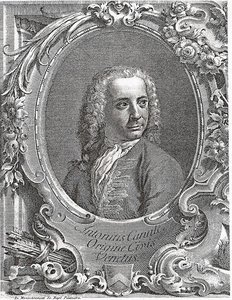
Canaletto
1697 - 1768 , Itálie
Rychlé fakta
- Artistic Movement Or Style: Vedute Benátek
- Artists Or Movements Influenced By This Artist: ['Giovanni Paolo Pannini']
- Artists Who Influenced This Artist: ['Luca Carlevaris']
- Date Of Birth: 18. října 1697
- Date Of Death: 19. dubna 1768
- Full Name: Giovanni Antonio Canal
- Nationality: Italista
- Notable Artworks:
- Zpracovník kamenného mlejna
- Regata na velkém kanálu
- Eton College
- Place Of Birth: Benátky, Itálie
Související články

Giovanni Antonio Canal (Canaletto): A Venetian Master of Light, Space & Societal Observation
Explore the life & art of Giovanni Antonio Canal (Canaletto), a Venetian master renowned for his breathtaking cityscapes. Discover his techniques, legacy, and captivating depictions of 18th-century Venice & London.
Jacopo Tintoretto: 25 mistrovských děl benátského mistra | OriginalUniqueArt.com
Prozkoumejte 25 ikonických děl Jacopa Tintoretta, benátského mistra dramatické renesance. Objevte příběhy za obrazy plnými emocí a světla. Reprodukce obrazů nejvyšší kvality na OriginalUniqueArt.com – inspirace pro váš interiér.

Pietro Longhi's Venetian Scenes: A Study of Rococo Society & Domestic Life
Explore the captivating world of Pietro Longhi's Venetian scenes! Discover insightful analysis of his Rococo masterpieces & social commentary on 18th-century life. Learn about this 'Venetian Hogarth' and his lasting artistic legacy.

Michelangelo Morlaiter: Venetian Landscapes & the Pursuit of Atmospheric Realism
Explore the captivating landscapes of Michelangelo Morlaiter, a key figure in 18th-century Venetian painting. Discover his mastery of atmospheric perspective and lasting influence on Italian art history. Learn more at OriginalUniqueArt.

Francesco Guardi: Venetian Light, Atmospheric Perspective & the Rococo to Neoclassical Transition
Explore the captivating world of Francesco Guardi, master of Venetian light and atmosphere. Discover his transition from Rococo to Neoclassicism, influence on Impressionism & investment potential with OriginalUniqueArt.



