Přepnout na tisk
 Zobrazit více







































 U děl nebo reprodukcí, u nichž je jakákoliv strana větší než 105 cm (přibližně 41 palců), bude rám dodán jako sestava v rozloženém stavu. Tato metoda zajišťuje bezpečné doručení a chrání dílo před poškozením během přepravy.


Giovanni Antonio Boltraffio: Milanese Maestro Shaping Leonardo’s Legacy
Giovanni Antonio Boltraffio – a name perhaps less familiar than his illustrious mentor, Leonardo da Vinci – nevertheless occupies a pivotal position in the annals of Renaissance art. Born around 1467 in Lombardy, Boltraffio's artistic journey unfolded inextricably linked to Leonardo’s groundbreaking studio, where he served as an invaluable assistant for nearly four decades. This prolonged collaboration wasn’t merely practical; it fostered a profound exchange of ideas and techniques, cementing Boltraffio’s role as a crucial conduit between Leonardo’s revolutionary vision and the subsequent flourishing of Northern European painting styles. His formative years instilled in him a meticulous approach to artmaking that would define his distinctive oeuvre.- Early Training & Influence: Boltraffio's aristocratic lineage undoubtedly provided him with privileged access to artistic education, equipping him with foundational skills essential for mastering the complexities of Renaissance painting.
- Leonardo’s Studio – A Crucible of Innovation: Serving Leonardo directly allowed Boltraffio to witness firsthand the maestro’s experimental methods and stylistic explorations—influences that would permeate his own work.
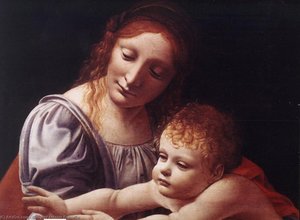
The Virgin and Child (Detail): An Emblematic Renaissance Composition
Boltraffio's artistic output is characterized by a remarkable sensitivity to detail and an unwavering commitment to capturing the essence of human emotion, qualities particularly evident in works like “The Virgin and Child.” Painted circa 1493, this masterpiece exemplifies the stylistic hallmarks of the High Renaissance – a period defined by humanist ideals and unparalleled artistic achievement. The painting depicts Mary cradling Jesus Christ with serene grace, reflecting the profound spiritual contemplation prevalent during the era.- Composition & Technique: Executed on a panel using oil paint—a technique favored for its durability and ability to achieve luminous effects—the artwork showcases Boltraffio’s mastery of chiaroscuro, skillfully manipulating light and shadow to sculpt form and imbue the scene with dramatic depth.
- Symbolism & Color Palette: The deliberate use of color – predominantly blue representing purity and red symbolizing sacrifice – underscores the painting's theological significance, aligning perfectly with Christian iconography of the time.
A Window into Renaissance Spirituality
“The Virgin and Child” transcends mere visual representation; it embodies a deeper spiritual resonance. Boltraffio’s depiction captures not only the physical likenesses of Mary and Jesus but also conveys an atmosphere of tenderness, devotion, and maternal love—themes central to Renaissance humanist thought. The artist's meticulous attention to facial expressions and gestures speaks volumes about his understanding of human psychology and his ability to convey profound emotion through art. Consider commissioning a high-quality reproduction of this iconic artwork to infuse your interior space with the timeless beauty and spiritual contemplation of the Renaissance.Otázky a odpovědi
Jakou náladu a emoci vyjadřuje „Prorodce Marie a dítěte“ od Giovanni Antonio Boltraffio?
V díle "Prorodce Marie a dítěte" doprovází Pokojné náladu Klidná atmosféra emoce.
Lze obraz díla „Prorodce Marie a dítěte“ od Giovanni Antonio Boltraffio volně reprodukovat?
Co se týče autorských práv, dílo "Prorodce Marie a dítěte" spadá do v rámci volného užití – autorská práva vypršela.
Proč má dílo „Prorodce Marie a dítěte“ právě takový autorský status?
Dílo „Prorodce Marie a dítěte“ od Giovanni Antonio Boltraffio spadá do v rámci volného užití – autorská práva vypršela. Autorská práva se počítají od roku úmrtí autora; Giovanni Antonio Boltraffio zemřel(a) v roce 1516.
 Náhled v interiéru
 Sdílet
 Sdílet
 Podrobnosti o díle
 Průvodce

 Stáhnout
 Podobné položky
 Rentgenové snímky
 Slideshow
 Otázky a odpovědi
 Statistiky