Text size

() ·

A painting made for you, by hand

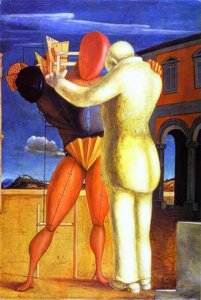
untitled (8848)

Ručně malovaná olejová reprodukce

Rukou malované olejné plátno v libovolném rozměru i s rámem, vyrobené našimi umělci na zakázku. ( Přepnout na tisk Přepnout na digitální obraz)

Popis sbírného předmětu

Giorgio de Chirico's "Ariadne" portrays Ariadne asleep in an empty square, reflecting Schopenhauerian existentialism and capturing the artist’s solitude after relocating to Paris.

Biografie umělce

Giorgio de Chirico (1888-1978) - misterný umělec, zakladatel metafyziky. Jeho díla evokují snové městečka, filozofické myšlenky a ikonické figuríny. Vlivný na surrealismus.

from ·

Chapter 1

How large should it be?

Slide to change the size; the picture on the left shows the frame at its real width. The proportions of the original are kept.

Standardní velikost
na zakázku
CM
INCH

Vyberte si z našich přednastavených velikostí, které odpovídají původním proporcím díla.

šířka
výška

Zadejte šířku a výšku, které potřebujete pro váš rám nebo stěnu. Protože se jedná o ruční malbu, při výběru jiného formátu může umělec kolem obrazu domalovat o něco více, nebo jej mírně oříznout — rozhodnete si vy. Před zahájením malby vám zašleme digitální náhled ke schválení. Obraz zobrazený na této stránce neodpovídá skutečnému výsledku — pouze digitální náhled jej zobrazuje.

Chapter 2

How should it arrive?

Choose the edges of the stretched canvas

Choose your frame

Corner sample of the WhiteWrap canvas edge finish, stretched on masivní dřevo bars
White Kč1
Corner sample of the BlurSideWrap canvas edge finish, stretched on masivní dřevo bars
Blurside Kč1
Corner sample of the ExtendedWrap canvas edge finish, stretched on masivní dřevo bars
Extended Kč1
Corner sample of the P118B picture frame: tvarovaný polystyren, 5 cm wide and 3 cm thick
P118B Kč10
Corner sample of the P118H picture frame: tvarovaný polystyren, 5 cm wide and 3 cm thick
P118H Kč10
Corner sample of the P118W picture frame: tvarovaný polystyren, 5 cm wide and 3 cm thick
P118W Kč10
Corner sample of the P438Z picture frame: tvarovaný polystyren, 5.5 cm wide and 3.5 cm thick
P438Z Kč10
Corner sample of the P508JH picture frame: tvarovaný polystyren, 7 cm wide and 3.5 cm thick
P508JH Kč12
Corner sample of the P508YH picture frame: tvarovaný polystyren, 7 cm wide and 3.5 cm thick
P508YH Kč12
Corner sample of the P805H picture frame: tvarovaný polystyren, 5 cm wide and 3.5 cm thick
P805H Kč10
Corner sample of the P805Z picture frame: tvarovaný polystyren, 5 cm wide and 3.5 cm thick
P805Z Kč10
Corner sample of the P919BZ picture frame: tvarovaný polystyren, 7 cm wide and 3.5 cm thick
P919BZ Kč10
Corner sample of the P919G picture frame: tvarovaný polystyren, 7 cm wide and 3.5 cm thick
P919G Kč10
Corner sample of the P919XJ picture frame: tvarovaný polystyren, 7 cm wide and 3.5 cm thick
P919XJ Kč10
Corner sample of the P959ZH picture frame: tvarovaný polystyren, 5 cm wide and 3 cm thick
P959ZH Kč10
Corner sample of the P968JZ picture frame: tvarovaný polystyren, 6 cm wide and 4 cm thick
P968JZ Kč12
Corner sample of the W106C picture frame: masivní dřevo, 5 cm wide and 3 cm thick
W106C Kč8
Corner sample of the W218G picture frame: masivní dřevo, 5 cm wide and 3 cm thick
W218G Kč10
Corner sample of the W218JH picture frame: masivní dřevo, 5 cm wide and 3 cm thick
W218JH Kč8
Corner sample of the W218Y picture frame: masivní dřevo, 5 cm wide and 3 cm thick
W218Y Kč10
Corner sample of the W307PJ picture frame: masivní dřevo, 6 cm wide and 3 cm thick
W307PJ Kč10
Corner sample of the W316G picture frame: masivní dřevo, 6 cm wide and 3 cm thick
W316G Kč10
Corner sample of the W316PJ picture frame: masivní dřevo, 6 cm wide and 3 cm thick
W316PJ Kč8
Corner sample of the W316Y picture frame: masivní dřevo, 6 cm wide and 3 cm thick
W316Y Kč10
Corner sample of the W398PJ picture frame: masivní dřevo, 5 cm wide and 3 cm thick
W398PJ Kč8
Corner sample of the W4111J picture frame: masivní dřevo, 6.5 cm wide and 3.5 cm thick
W4111J Kč10
Corner sample of the W500HY picture frame: masivní dřevo, 7 cm wide and 5 cm thick
W500HY Kč15
Corner sample of the W500JH picture frame: masivní dřevo, 7 cm wide and 5 cm thick
W500JH Kč15
Corner sample of the W692G picture frame: masivní dřevo, 8 cm wide and 4 cm thick
W692G Kč12
Corner sample of the W849H picture frame: masivní dřevo, 5 cm wide and 3 cm thick
W849H Kč8
Corner sample of the W940BG picture frame: masivní dřevo, 7.5 cm wide and 4.5 cm thick
W940BG Kč15
Corner sample of the W953PJ picture frame: masivní dřevo, 6 cm wide and 3.5 cm thick
W953PJ Kč8
Corner sample of the H24-GOLD picture frame: řezané dřevo s gessu, 10 cm wide and 6 cm thick
H24-GOLD Kč30
Corner sample of the H24-SILVER picture frame: řezané dřevo s gessu, 10 cm wide and 6 cm thick
H24-SILVER Kč30
Corner sample of the H36-GOLD picture frame: řezané dřevo s gessu, 15 cm wide and 6.5 cm thick
H36-GOLD Kč45
Corner sample of the H36-SILVER picture frame: řezané dřevo s gessu, 15 cm wide and 6.5 cm thick
H36-SILVER Kč45

Moulding: . Overall size with the frame: .

Chapter 3

Who paints it, and should anything change?

Examples of what can be changed: Replace face with customer photo; Add pet (e.g., replace cat with dog); Include hidden message in background; Change background landscape or elements.
After order, OriginalUniqueArt.com team will email client for instructions and provide a mockup preview

Celosvětová doprava () za 3–4 týdny namísto standardních 5 týdnů. (2 listopad). Bez kompromisů v kvalitě.

Chapter 4

The finishing touches

A nameplate, as in a museum?

Detaily ryté bronzové plakety

This elegant plaque features the artist's name and the title of the artwork, finely engraved for a timeless presentation.

It is made from bronze with a refined, elegant finish. The text is precisely laser-engraved for a sharp and permanent result. Measuring 9x2 cm, the plaque is compact yet easy to read. It's built to be durable and scratch-resistant, offering a professional, museum-quality look. Mounting is simple thanks to the included adhesive backing.

Detaily průhledné akrylové desky

The plaque includes essential engraved details such as the artist's name, the title of the artwork, the date it was created, the type of media used-like oil on canvas or watercolor-a brief description of the piece, and a QR code that links to the complete artwork information.

It is crafted from clear acrylic, offering a sleek, modern appearance. The text is UV-engraved in black to ensure strong visual contrast. With a size of 10x15 cm, it ensures optimal readability. It comes equipped with two metal hooks for secure wall mounting. The plaque is designed to be weather-resistant, making it suitable for various environments, and it includes interactive features that work seamlessly with smartphone scanning.

Detaily černé akrylové destičky

This elegant plaque includes engraved information such as the artist's name, the title of the artwork, the date it was created, the type of media used (like oil on canvas or watercolor), a short description of the artwork, and a QR code for quick access to more information.

The plaque itself is made from refined black acrylic with a premium finish. The text is laser-engraved in white for high contrast and readability. Its size is 10x15 cm, designed to be easy to read. It comes with two metal hooks for professional mounting. The design is sleek and fits any interior style. It is also weather-resistant and durable, with built-in digital integration for mobile compatibility.

A protective varnish?

When do you need it?

Chapter 5

Your painting, as you ordered it

untitled (8848)

Technika reprodukce

Rozměry reprodukce

-

Vybraní mistři umění

Vyšší míra detailu, jemnosti a delší doba výroby

-

Možnosti rámování reprodukcí

-

-

U děl nebo reprodukcí, u nichž je jakákoliv strana větší než 105 cm (přibližně 41 palců), bude rám dodán jako sestava v rozloženém stavu. Tato metoda zajišťuje bezpečné doručení a chrání dílo před poškozením během přepravy.

Vyžaduje se odborná montáž – nejedná se o produkt pro svépomocnou realizaci (DIY).
Sestava musí být složena a plátno napnuto zkušeným profesionálním rámovačem s použitím dřevěného lepidla (není součástí balení), kleští na napínání plátna a svorek pro udržení pravých úhlů křížů během schnutí lepidla. Nesprávná montáž nebo nerovnoměrné napnutí plátna může způsobit trvalé poškození uměleckého díla, které není kryto naší zárukou.

  • Jsou zahrnuty všechny lišty z masivního dřeva, přesně na míru nařezané.

  • Sestavuje se pomocí součástí balení (šroubů), plus dřevěného lepidla na rohové spoje, které není součástí balení a musí jej zajistit váš rámovač.

  • Vyžaduje se profesionální nářadí, které není součástí sady: kleště na napínání plátna a svorky pro udržení kolmosti příček během schnutí lepidla.

Důležité:
Spoje v rozích vyžadují lepidlo na dřevo, tyčinky musí být přichyceny pomocí svorek, dokud lepidlo zcela neuschne, a pro napnutí plátna na sestavený rám je zapotřebí kleští na natahování plátna. Žádný z těchto náčiní není součástí sady. Před objednáním této velikosti prosím zajistěte zkušeného profesionálního rámovače.

Popisek díla

-

-

Ochranný lak

Lesklý lak (zvýrazňuje barvy, chrání před světlem a vlhkostí)

-

Přizpůsobit své umělecké dílo

Příklady možných úprav: nahrazení obličeje fotografií zákazníka; přidání domácího mazlíčka (např. výměna kočky za psa); vložení skrytého vzkazu do pozadí; změna krajiny nebo prvků v pozadí.

-

Prioritní doručení

Celosvětové doručení () za 3–4 týdny namísto standardních 5 týdnů. (2 listopad). Bez kompromisů v kvalitě.

-

Expresní doručení

Celosvětová doprava () do 5 týdnů. (9 listopad).

V ceně

Celková cena za vybrané možnosti reprodukcí

Kč 6515

Celková cena Kč 6515

Skleněná varianta je dostupná pouze u rozměrů menších než 110 cm

Included with every order

  • Zdarma celosvětová expresní doprava
  • Vysoce kvalitní lněné plátno
  • Kompletní pojištění přepravy
  • Záruka vrácení celního poplatku
  • Záruka věrného barevného souladu
  • 100dení lhůta pro vrácení zboží (pouze při vadách výroby)
  • 100% záruka vrácení peněz
  • Sleva při více objednávkách

A Dreamscape of Surrealism: Exploring Giorgio de Chirico’s “Ariadne”

Giorgio de Chirico's "Ariadne," completed in 1913, stands as a cornerstone of Surrealist art and a testament to the artist’s profound engagement with philosophical ideas. More than just a depiction of myth—the tale of Ariadne abandoning Theseus on Naxos—it embodies a deeper exploration into the human psyche, mirroring de Chirico's own anxieties about isolation and displacement during his relocation to Paris following World War I. The painting resides within the Metropolitan Museum of Art’s collection, where its haunting beauty continues to captivate audiences worldwide.
  • Subject Matter & Narrative Context: De Chirico draws inspiration from Greek mythology, specifically the story of Ariadne—a princess abandoned by her lover Theseus—to convey a narrative of abandonment and vulnerability. However, unlike traditional depictions emphasizing heroic action, “Ariadne” presents a serene, almost melancholic scene of slumbering beauty within an unsettling urban space.
  • Style & Technique: The artwork exemplifies Surrealist style, characterized by illogical perspective, dreamlike atmosphere, and juxtaposition of incongruous elements. De Chirico meticulously employs graphite alongside oil paint on canvas, layering textures to create a palpable sense of stillness punctuated by subtle distortions—a technique that deliberately disrupts conventional realism.

Symbolism: Echoes of Schopenhauer & Nietzsche’s Philosophy

De Chirico's artistic vision was heavily influenced by the existential philosophies of Arthur Schopenhauer and Friedrich Nietzsche. The desolate square—a recurring motif in his oeuvre—represents a void, mirroring Schopenhauer’s concept of “Will”—the relentless striving that underlies all existence—and highlighting the inherent loneliness of human consciousness. Similarly, Nietzsche's ideas about overcoming nihilism resonate within the painting’s stillness; Ariadne’s repose suggests an acceptance of fate and a confrontation with the abyss.
  • Spatial Illusion & Perspective: De Chirico masterfully manipulates spatial illusion, employing distorted perspective to heighten the unsettling atmosphere. The elongated shadows cast by unseen buildings contribute to this sense of disorientation, mirroring Nietzsche’s critique of Western metaphysics and its inability to grasp fundamental truths.

Emotional Impact & Artistic Legacy

“Ariadne” transcends mere visual representation; it evokes a profound emotional response—a palpable feeling of melancholy and contemplation. The painting's muted palette—dominated by earthy tones—underscores its contemplative mood, inviting viewers to confront existential questions about life, death, and the human condition. De Chirico’s influence extends far beyond Surrealism, shaping subsequent generations of artists who sought to explore the subconscious mind and challenge conventional artistic conventions. It remains a powerful emblem of the Surrealist movement's ambition to liberate art from rational constraints and unlock the mysteries of inner experience.
  • Concluding Remarks: Ultimately, “Ariadne” serves as an enduring reminder that art possesses the capacity to illuminate not only visual beauty but also the complexities of human thought and emotion—a legacy that continues to inspire artists and collectors alike.

Otázky a odpovědi

Jakou barvu v kompozici díla „untitled (8848)“ od Giorgio de Chirico dominuje?

Hlavní barvou díla „untitled (8848)“ od Giorgio de Chirico je Espresso (#3c2825).

Je dílo "untitled (8848)" typické pro to, co Giorgio de Chirico obvykle vytvářel/a?

„untitled (8848)“ zachycuje roman arcades, shadows, masks, surrealism, mythology, isolation, perspective, zatímco v díle umělce Giorgio de Chirico se setkáváme s tématy jako schopenhauer philosophy, surrealist style, mythological symbolism, artistic alienation, legacy exploration. Porovnání těchto dvou aspektů odhaluje, jak toto dílo navazuje na obvyklá témata tohoto autora.

Který prostor nejlépe ladí s barvami díla „untitled (8848)“ od Giorgio de Chirico?

Dílo „untitled (8848)“ od Giorgio de Chirico s svou paletou Earthy se doporučuje do Living Room. Barvy jsou jedním z důvodů tohoto doporučení.

More about this painting

Náhled v interiéru Náhled v AR Přepnout na tisk Přepnout na digitální obraz Sdílet
Podrobnosti o díle Průvodce Přidat do oblíbených Stáhnout Podobné položky Rentgenové snímky Slideshow Q&A Statistiky

In numbers

  • 29frames to choose from
  • standard sizes, in its own proportions
  • 5weeks to paint and deliver it

About the original

Giorgio de Chirico

Giorgio de Chirico

1888 - 1978, Řecko

Quick facts about Giorgio de Chirico

  • Artistic Movement Or Style: Metafyzické umění
  • Artists Or Movements Influenced By This Artist: ['Surrealismus']
  • Artists Who Influenced This Artist:
    • Böcklin
    • Klinger
  • Date Of Birth: 10. července 1888
  • Date Of Death: 20. listopadu 1978
  • Full Name: Giorgio de Chirico
  • Nationality: Italský
  • Notable Artworks:
    • Enigma podzimu
    • Zmatení myslitele
  • Place Of Birth: Volos, Řekosko

Biografie umělce

Giorgio de Chirico: Vize einer surrealistischen Seele

Giorgio de Chirico, geboren 1988 in Volos, Griechenland, als Sohn italienischer Eltern – einer Genuesischen Baronin und eines sizilianischen Barons – begann seine künstlerische Reise mit einer einzigartigen Mischung aus klassischem Erbe und einem wachsenden Gefühl der modernen Entfremdung. Seine frühe Ausbildung an der Theatralisch-Mathematischen Schule in Athen legte eine solide Grundlage in traditionellen Techniken, doch erst seine Studien in München entfachten seinen kreativen Geist. Dort, inmitten des intellektuellen Aufbruchs Europas vor dem Ersten Weltkrieg, begegnete er Werken von Arnold Böcklin und Max Klinger – Künstlern, deren symbolische Landschaften und geisterhafte Bilder sein eigenes künstlerisches Konzept tiefgreifend prägten. Ebenfalls entscheidend für seine Entwicklung waren die philosophischen Strömungen der Zeit – die Schriften von Friedrich Nietzsche, Arthur Schopenhauer und Otto Weininger, die Themen wie Existenzialismus, die Irrationalität menschlicher Begierden und die subjektive Natur der Realität erforschten. Diese Ideen wurden zu den Eckpfeilern seiner bahnbrechenden künstlerischen Vision.

Die Geburt der Metaphyschen

Um 1909 begann sich aus seinen Erkundungen ein einzigartiger Stil herauszudecken – ein Stil, den er selbst “Metaphysische” Kunst nannte. Dies war nicht nur eine stilistische Innovation; es war ein tiefgreifender Versuch, die verborgenen Realitäten unter der Oberfläche des Alltags aufzudecken, die verstörende Poesie in vertrauten Räumen zu enthüllen. Ein entscheidendes Ereignis ereignete sich während eines Besuchs in Florenz und einer Erfahrung im Piazza Santa Croce – ein Moment, der seine ikonische Serie “Metaphysischer Stadtplatz” inspirierte. Diese Gemälde zeichnen sich durch ihre unheimliche Stille, lange dramatische Schatten, willkürliche Perspektiven und die Präsenz klassischer Architektur, kontrastierend mit verstörenden Elementen wie leeren Mannequins und bedrohlichen Statuen aus. Das Ergebnis ist tief beunruhigend und erzeugt ein Gefühl von Nostalgie, Isolation und einer fast unerträglichen Sehnsucht nach etwas Verlorenem oder Unattainablem. De Chirico gründete die *Scuola Metafisica*, die einen tiefgreifenden Einfluss auf Surrealismus hatte, obwohl er sich später von dessen Interpretationen seiner Arbeit distanzierte. Seine Gemälde waren nicht dazu gedacht, Träume darzustellen, sondern vielmehr eine Realität jenseits der sichtbaren Welt zu zeigen – ein Reich, in dem Zeit und Raum fließen und die Grenzen zwischen Bewusstsein und Unterbewusstsein verschwimmen. Werke wie *Die Qualen des Denkers*, *Das Rätsel eines Herbstnachmittags* und *Das Lied der Liebe* veranschaulichen diese beunruhigende Ästhetik und laden den Betrachter ein, über die Geheimnisse der Existenz und die Zerbrechlichkeit menschlicher Wahrnehmung nachzudenken.

Einflüsse und künstlerische Entwicklung

De Chiricos frühe Arbeiten zeigten deutliche Einflüsse von Böcklin und Klinger, insbesondere in Bezug auf die Verwendung von Symbolik und die Darstellung von melancholischen Landschaften. Die Begegnungen mit den philosophischen Ideen Nietzsches, Schopenhauers und Weiningers prägten seine Sichtweise der Welt und führten zu einer Auseinandersetzung mit Themen wie Isolation, Entfremdung und dem Streben nach Sinn in einer scheinbar sinnlosen Existenz. Die Erfahrung im Piazza Santa Croce in Florenz war ein entscheidender Moment, der ihn dazu brachte, die traditionelle Malerei zu hinterfragen und eine neue Art des Sehens zu entwickeln – eine, die sich auf die Darstellung von Realitäten konzentrierte, die jenseits der sichtbaren Welt lagen. Nach dem Ersten Weltkrieg begann De Chirico, seine frühere Metaphysische Kunst zu verlassen und stattdessen einen traditionelleren neoklassischen oder neobarocken Stil zu verfolgen. Diese Entscheidung stieß auf heftige Kritik, da viele Kritiker beklagten, dass er seinen innovativen Geist aufgegeben habe. Dennoch blieb De Chirico seiner künstlerischen Vision treu und erkundete weiterhin verschiedene Stile und Themen, während er sich stets für Handwerkskunst und technische Meisterschaft einsetzte.

Ein Vermächtnis der Mystik

Trotz der Kritik hatte De Chiricos Werk einen nachhaltigen Einfluss auf nachfolgende Generationen von Künstlern. Seine innovative Verwendung von Raum, Perspektive und Symbolik stellte traditionelle künstlerische Normen in Frage und ebnete den Weg für neue Formen des Ausdrucks. Sein Werk ist ein entscheidender Übergang zwischen dem Symbolismus der späten 19. Jahrhunderts und dem Aufstieg des Surrealismus im frühen 20. Jahrhundert. Er wurde direkt von Künstlern wie René Magritte und Salvador Dalí beeinflusst, die seine metaphysischen Gemälde als Inspiration für ihre eigenen traumhaften Welten nutzten. Sein Werk hatte auch Einfluss auf spätere Bewegungen wie den Magic Realism, der die Darstellung alltäglicher Realität mit einem erhöhten Gefühl von Mysterium und psychologischer Tiefe suchte. Heute werden De Chiricos Gemälde in bedeutenden Museen auf der ganzen Welt ausgestellt, darunter das Museum, das seinem Werk gewidmet ist, in der Nähe der Spanischen Treppe in Rom, wodurch sein Vermächtnis als eine der wichtigsten Figuren der Kunst des 20. Jahrhunderts gesichert bleibt. Er hinterließ nicht nur ein Werk von Kunst, sondern auch eine neue Art zu sehen – eine Art, die Welt als einen Ort verborgener Bedeutungen, verstörender Schönheit und bleibender Mystik wahrnimmt.

Schlüssel-Einflüsse & künstlerische Linie

  • Beeinflusst von: Arnold Böcklin, Max Klinger, Friedrich Nietzsche, Arthur Schopenhauer
  • Beeinflusst: Surrealismus, insbesondere Künstler wie René Magritte und Salvador Dalí. Sein Werk hatte auch Einfluss auf spätere Bewegungen wie Magic Realism.

Rychlé informace

  • Artist: Giorgio de Chirico
  • Influences:
    • Schopenhauer
    • Nietzsche
  • Notable elements or techniques: Roman arcades, mannequins
  • Year: 1913
  • Location: Metropolitan Museum of Art

Artový kvíz

U každé otázky je pouze jedna správná odpověď.

Otázka 1:
What artistic movement is Giorgio de Chirico associated with?
Otázka 2:
The painting depicts a scene featuring Roman arcades and what other prominent element?
Otázka 3:
Which philosopher influenced Giorgio de Chirico's artistic vision?
Otázka 4:
What is the predominant color palette used in “Ariadne”?
Otázka 5:
The painting’s imagery reflects themes of existentialism, primarily focusing on: