Olejová verze
 Vše o John Foster







































 U děl nebo reprodukcí, u nichž je jakákoliv strana větší než 105 cm (přibližně 41 palců), bude rám dodán jako sestava v rozloženém stavu. Tato metoda zajišťuje bezpečné doručení a chrání dílo před poškozením během přepravy.


Identification of the Portrait of John Foster
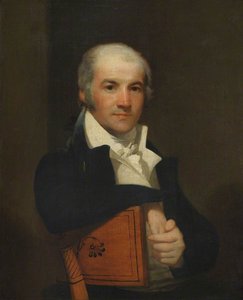
This formal portrait of John Foster was executed by the American artist Gilbert Stuart. Painted around 1790, the work captures a man of significant standing during a transformative period in history. Stuart, a painter noted for his ability to document the likeness and character of prominent figures, brings a sense of quiet dignity to this specific commission.
The subject is presented in a three-quarter view, a choice that allows for a nuanced study of his features and presence. Rather than a direct, confrontational gaze, this positioning offers a more contemplative perspective of Foster. The composition focuses on the individual, utilizing the subtle interplay of light and shadow to define his persona. It is a direct encounter with a man of authority, rendered with the steady hand of a specialist in portraiture.
Composition and Visual Elements
The composition is structured to convey a sense of importance and authority. The subject is presented in a three-quarter view, standing and facing slightly to the right with an outstretched arm. This gesture, combined with the formal pose, gives the figure a commanding presence. Behind him, the arrangement of draped fabric and a classical column provides a structured, dignified backdrop. Depth is achieved through a careful layering of these elements, placing the figure firmly in front of the architectural and textile details.
The color palette is dominated by rich, warm tones, specifically reds, golds, and browns. These hues create a sense of weight and gravity. Lighting is used with precision, focused primarily on the face and upper body to create highlights that emphasize his features and the texture of his clothing. While the background remains darker to draw the eye toward the subject, the overall perspective appears somewhat flattened, a characteristic typical of portraiture from this period.
Style and Artistic Technique
Executed in oil on canvas, this portrait adheres to the Neoclassical tradition, emphasizing a commitment to realism and the use of classical forms. The artist employs a technique rooted in careful observation, focusing on the precise rendering of details to capture both a physical likeness and the underlying character of the subject. There is a deliberate attention paid to the textures of the era, from the fine strands of the wig to the heavy folds of the robes and the subtle features of the face.
The brushwork is characterized by lines that are generally soft and blended, which lends a sense of naturalism to the figure. This approach avoids harsh edges, allowing the forms to emerge through gradual gradations of tone. By utilizing this method, the artist achieves a lifelike quality that prioritizes the dignity of the sitter. The interplay of light and shadow is used to define the contours of the face and hands, providing a sense of weight and presence to the composition.
Symbolism and Subject Matter
This formal portrait is composed to convey a sense of profound status and dignity. Every element of the subject's presentation is calculated to communicate his position within the social and legal hierarchy of the era. The presence of the judge's wig and the heavy robes are not merely decorative; they function as direct symbols of his profession and the weight of his authority. Through these specific attributes, the sitter is immediately identified as a man of significant legal standing.
The composition utilizes a three-quarter view, presenting Foster with an outstretched arm. This gesture offers a subtle nuance to his otherwise imposing presence, perhaps acting as an invitation or a sign of openness toward the viewer. It softens the rigidity of his official attire, adding a layer of human character to the formal requirements of the portrait. The interplay between his professional regalia and this singular movement creates a portrait that is as much about his persona as it is about his office.
Related Works by Gilbert Stuart
In considering the broader scope of Stuart's career, one finds a consistent focus on the faces of leadership and the social elite. His ability to capture the essence of prominent figures in early American history is a defining characteristic of his oeuvre. This particular portrait of John Foster belongs to a lineage of works where the sitter's status is communicated through a quiet, dignified presence. You might find a similar approach to character in his 1789 portrait of John Fitzgibbon.
The artist's reputation is perhaps most closely tied to his depictions of George Washington. He produced many versions of his Athenaeum Portrait of Washington, a work that has become a central part of the American visual identity. These various iterations demonstrate his commitment to capturing a specific likeness while navigating the demands of his patrons. His work remains a vital record of the individuals who shaped the early years of the United States.
Otázky a odpovědi
Je dílo John Foster ručně malované, nebo jde o tisk?
Ručně malováno: zkušený malíř přetvoří John Foster v olejomalbu na lněném plátně.
Jakou velikost si mám vybrat pro John Foster?
Velikosti se pohybují od 37.3 x 26.8 cm (Kč4358) až po 248.6 x 178.3 cm (Kč35732); v tabulce na této stránce jsou uvedeny jednotlivé varianty a jejich ceny.
Jak dlouho trvá doručení?
Doručení trvá 4 až 5 týdnů a zahrnuje bezplatnou expresní přepravu po celém světě; na této stránce je k dispozici i možnost urgentní výroby. Dílo můžete vrátit během 100 dnů s plným vrácením peniędzy, bez jakýchkoliv podmínek.
Jakou techniku použil/a Gilbert Stuart pro dílo John Foster?
Oil On Canvas
 Náhled v interiéru

 Sdílet
 Sdílet
 Podrobnosti o díle
 Informační list


 Stáhnout
 Podobné položky
 Rentgenové snímky
 Slideshow
 Otázky a odpovědi

 Statistiky