Cubist
untitled (Georges Braque)
Georges Braque (1882–1963) vytvořil dílo untitled. Patří k hnutí Cubist. Je vyrobeno z Oil On Canvas.
- Oil On Canvas

 Náhled v interiéru

 Ručně malovaná olejná reprodukce
 Sdílet
 Sdílet
 Informační list


 Stáhnout
 Podobné položky
 Rentgenové snímky
 Slideshow
 Otázky a odpovědi

 Statistiky
untitled v kostce
- Název díla
- untitled
- Autor
- Georges Braque (1882–1963)
- Rok narození umělce
- Argenteuil, Francie
- Technika
- Oil On Canvas
- Pohyb
- Cubist
- Období
- Modern
- Motiv
- geometric shapes, monochrome palette, fragmented composition, chair arrangement, analytical cubism, spatial illusion
Co przedstawuje dílo untitled?
The Architecture of Perception: Deconstructing Reality in Braque’s Vision
In the quiet revolution that redefined the boundaries of modern vision, Georges Braque’s “untitled (7718)” emerges as a profound meditation on the nature of sight itself. This seminal work of Analytic Cubism does not merely present a still life; it orchestrates a complex symphony of fragmented forms and muted tones that challenge the viewer to look beyond the surface. At first glance, one perceives the familiar—a chair, perhaps, adorned with the humble artifacts of daily existence: vases, books, bottles, and a bowl. Yet, as the eye lingers, the solidity of these objects begins to dissolve into a rhythmic dance of geometric planes. Braque invites us into a world where the boundaries between object and space are intentionally blurred, creating an immersive experience that transcends mere representation.
The mastery of this piece lies in its radical technique, a meticulous deconstruction of form that was revolutionary for the dawn of the 20th century. Eschewing the vibrant, emotive colors of Fauvism, Braque employs an austere and sophisticated palette dominated by grayscale, subtle browns, and soft beiges. This monochromatic approach serves a higher intellectual purpose: it strips away the distraction of color to focus the viewer's attention on the structural integrity of the composition. Through layered brushstrokes and a careful interplay of light and shadow, the artist creates a sense of depth through overlapping triangles, rectangles, and cubes. The result is a tactile, textured surface that feels both intellectually rigorous and deeply contemplative.
A Legacy of Innovation and Emotional Resonance
To understand this artwork is to understand the historical seismic shift occurring in Paris around 1908. Influenced by the structural lessons of Cézanne, Braque sought to capture the essence of an object from multiple viewpoints simultaneously. This was not a pursuit of visual accuracy, but an exploration of how we perceive reality through time and movement. The painting embodies the scientific and mathematical fascinations of its era, reflecting a desire to find the underlying geometric truth within the chaos of the physical world. There is a profound sense of order hidden within the apparent fragmentation, a structured logic that guides the gaze across the canvas along vertical axes and angular intersections.
For the discerning collector or interior designer, this reproduction offers more than just a decorative element; it provides a focal point of intellectual depth and quiet elegance. The somber, muted atmosphere of the piece lends itself beautifully to sophisticated spaces, where its complex textures can interact with natural light to create an aura of timelessness. Whether placed in a contemporary studio or a classic study, Braque’s work evokes a sense of introspection and stability. It is a piece that does not shout for attention but rather commands it through its subtle complexity, making it an enduring choice for those who appreciate art that stimulates the mind as much as it delights the eye.
Vysokorozlišené fotografie díla untitled
Protected by copyright: these files are for personal reference, not a licence to republish.
Georges Braque, untitled.
Odpovědi na otázky k dílu untitled
Jakou techniku bylo použito pro dílo „untitled“ od Georges Braque?
„untitled“ je dílo vytvořené v technice Oil On Canvas.
Co zachycuje dílo „untitled“ od Georges Braque?
Motivy díla „untitled“ jsou geometric shapes, monochrome palette, fragmented composition, chair arrangement, analytical cubism, spatial illusion, texture variation.
Je dílo „untitled“ volné z autorských práv?
Stav autorských práv pro dílo „untitled“ od Georges Braque: toto dílo spadá do stále chráněno autorským právem. To určuje, zda lze volně vytvářet reprodukce tohoto obrazu.
Kdo vytvořil "untitled"?
Dílo "untitled" se připisuje autorovi Georges Braque.
K kterému uměleckému směru patří „untitled“ od Georges Braque?
Dílo „untitled“ od Georges Braque patří k období směru Cubist, který dílu dodává jeho stylistický kontext.
Do které éry tvorby Georges Braque spadá dílo "untitled"?
Dílo „untitled“ pochází z období Mature Period v tvorbě umělce Georges Braque. Tato klasifikace dílo zasazuje do kontextu vývoje jeho tvůrčí dráhy.
Proč má dílo „untitled“ právě takový autorský status?
Dílo „untitled“ od Georges Braque spadá do stále chráněno autorským právem. Autorská práva se počítají od roku úmrtí autora; Georges Braque zemřel(a) v roce 1963.
Jakým způsobem se dílo „untitled“ vpisuje do celkové tvorby umělce Georges Braque?
V rámci tvorby umělce Georges Braque se dílo „untitled“ řadí do stylu Cubist a doplňuje tak motivy analytical cubism, formal experimentation, spatial distortion, geometric reduction, legacy braque’s contribution.
Jaké je místo díla „untitled“ mezi opakovanými tématy umělce Georges Braque?
„untitled“ zachycuje geometric shapes, monochrome palette, fragmented composition, chair arrangement, analytical cubism, spatial illusion, texture variation, zatímco v díle umělce Georges Braque se setkáváme s tématy jako analytical cubism, formal experimentation, spatial distortion, geometric reduction, legacy braque’s contribution. Porovnání těchto dvou aspektů odhaluje, jak toto dílo navazuje na obvyklá témata tohoto autora.
O umělci, Georges Braque
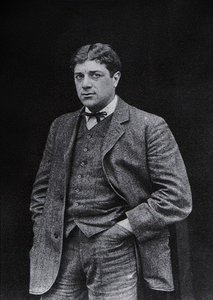
1882–1963, Francie
Georges Braque
Raný život, rodina a vzdělání Georges Braque se narodil v roce 1882 ve francouzském Argenteuili. Jeho první roky života uplynuly ve Le Havru, v domácnosti, kterou definovaly praktické aspekty dekorace a práce s barvami. Vyrostl v rodině malířů a dekoračních řemeslníků, což ho již od útlulí ponořilo do hmatatelné reality jeho řemesla. Toto výchovné prostředí mu poskytlo pevný základ technické zručnosti a řemeslné preciznosti, které později zásadně ovlivnily jeho přístup k plátnu.
Také od autora Georges Braque
 Mandolina1910
 Muž s kytarou1914
 Domy v L’estaquu
 Harbor v Normansku1909
Eseje k tématu untitled
 From Cézanne to Cubism: The Revolutionary Evolution of Modern Art's Structural VisionExplore the profound transition from Cézanne’s structural Post-Impressionism to the revolutionary fractured forms of Cubism. A sophisticate…
 Mastering Cubism: The Top 25 Georges Braque ArtworksJourney through the revolutionary world of Georges Braque. Explore 25 iconic Cubist masterpieces, from geometric abstractions to timeless s…
 Georges Braque: The Architect of Form and the Soul of Cubist RevolutionExplore the profound legacy of Georges Braque, a master of Cubism. Discover how his technical craftsmanship and collaboration with Picasso …