Cubism · 1913
Guitar ''Program statue d'epouvante'' (Georges Braque, 1913)
Georges Braque (1882–1963) vytvořil dílo Guitar ''Program statue d'epouvante''. Pochází z roku 1913. Patří k hnutí Cubism. Je vyrobeno z Acrylic On Canvas. Rozměry jsou 73 × 100 cm.
- 1913
- Acrylic On Canvas
- 73 × 100 cm

 Náhled v interiéru

 Ručně malovaná olejná reprodukce
 Sdílet
 Sdílet
 Informační list


 Stáhnout
 Podobné položky
 Rentgenové snímky
 Slideshow
 Otázky a odpovědi

 Statistiky
Guitar ''Program statue d'epouvante'' v kostce
- Název díla
- Guitar ''Program statue d'epouvante''
- Autor
- Georges Braque (1882–1963)
- Rok narození umělce
- Argenteuil, Francie
- Datum vytvoření
- 1913
- Technika
- Acrylic On Canvas
- Rozměry
- 73 × 100 cm
- Pohyb
- Cubism
- Období
- Modern
- Motiv
- cubist still life, geometric forms, musical instruments, art & intellectuals, fragmented composition, muted color palette
Co przedstawuje dílo Guitar ''Program statue d'epouvante''?
A Cubist Still Life: Deconstructing Form in Braque’s ‘Guitar ''Program statue d'epouvante''’
Georges Braque’s *Guitar ''Program statue d'epouvante''* (1913) is a pivotal example of Analytical Cubism, showcasing the artist’s revolutionary approach to representation. Measuring 73 x 100 cm, this work isn’t merely a depiction of objects; it’s an intellectual exploration of form and perception, inviting viewers into a fragmented world where reality is dissected and reassembled.Subject & Composition: A Dialogue Between Art Forms
The artwork presents a still life featuring an acoustic guitar alongside a stack of books. However, Braque doesn't offer a traditional rendering. Instead, both objects are broken down into geometric shapes – rectangles, triangles, and overlapping planes – creating a dynamic composition within a circular frame. The arrangement isn’t accidental; it suggests a deliberate interplay between musicality (the guitar) and intellectual pursuit (the books), hinting at the interconnectedness of artistic disciplines. The title itself, translating to “Program statue of fright,” adds an intriguing layer, suggesting a conceptual framework or perhaps even a playful subversion of traditional still life conventions.Style & Technique: The Essence of Analytical Cubism
*Guitar ''Program statue d'epouvante''* exemplifies the core tenets of Analytical Cubism. Braque, alongside Pablo Picasso, pioneered this style by rejecting traditional perspective and embracing multiple viewpoints simultaneously. The color palette is deliberately restrained – muted browns, grays, and off-whites dominate – emphasizing form over coloristic expression. The technique relies heavily on layering pencil or charcoal strokes to build up tones and textures, creating a sense of solidity despite the fragmented forms. Lines are sharply defined, further contributing to the geometric abstraction. This isn’t about replicating what the eye sees but rather conveying an object's essential structure through intellectual analysis.Historical Context: A Revolution in Visual Language
Created during a period of intense artistic experimentation, this work reflects the radical shifts occurring in early 20th-century art. Braque and Picasso were challenging centuries-old conventions of representation, influenced by Paul Cézanne’s emphasis on geometric forms and their own shared explorations. The emergence of Cubism marked a turning point in art history, paving the way for abstract art movements that would follow. 1913 was a crucial year; it saw the full development of Analytical Cubism before Braque began to incorporate collage elements into his work.Symbolism & Emotional Impact: Beyond Representation
While seemingly abstract, *Guitar ''Program statue d'epouvante''* carries symbolic weight. The guitar, a symbol of artistic expression and harmony, is deconstructed alongside the books, representing knowledge and intellect. This juxtaposition suggests a contemplation on the nature of creativity itself – how ideas are formed, broken down, and reassembled. The overall effect isn’t necessarily emotional in a traditional sense; rather, it evokes a feeling of intellectual curiosity and invites viewers to actively participate in deciphering the artwork's meaning. The flattened perspective and lack of strong shadows contribute to a sense of ambiguity and spatial disorientation, challenging our perceptions of reality.For Collectors & Designers
This piece, or a high-quality reproduction, would be a striking addition to any collection focused on modern art. Its muted palette and geometric forms lend themselves well to contemporary interiors, adding a sophisticated touch without overwhelming the space.- Ideal for: Modern living rooms, studies, or galleries.
- Complements: Minimalist furniture, neutral color schemes, and other abstract artworks.
- Considerations: The artwork’s intellectual nature makes it a conversation starter and a focal point for contemplation.
Vysokorozlišené fotografie díla Guitar ''Program statue d'epouvante''
Protected by copyright: these files are for personal reference, not a licence to republish.
Georges Braque, Guitar ''Program statue d'epouvante'' (1913).
Odpovědi na otázky k dílu Guitar ''Program statue d'epouvante''
V jakém roce vzniklo dílo "Guitar ''Program statue d'epouvante''"?
Vznik díla „Guitar ''Program statue d'epouvante''“ od Georges Braque se datuje do roku 1913.
Jakou techniku bylo použito pro dílo „Guitar ''Program statue d'epouvante''“ od Georges Braque?
Georges Braque pro dílo „Guitar ''Program statue d'epouvante''“ použil/a techniku Acrylic On Canvas. Tato technika definuje materiální podstatu originálního díla.
Jaké jsou skutečné rozměry díla „Guitar ''Program statue d'epouvante''“ od Georges Braque?
Původní rozměry díla "Guitar ''Program statue d'epouvante''" jsou 73 x 100 cm. Původní rozměry slouží jako užitečný vodítko při výběru velikosti reprodukce.
Co zachycuje dílo "Guitar ''Program statue d'epouvante''"?
„Guitar ''Program statue d'epouvante''“ od Georges Braque zobrazuje: cubist still life, geometric forms, musical instruments, art & intellectuals, fragmented composition, muted color palette, spatial ambiguity.
Je dílo „Guitar ''Program statue d'epouvante''“ volné z autorských práv?
Stav autorských práv pro dílo „Guitar ''Program statue d'epouvante''“ od Georges Braque: toto dílo spadá do stále chráněno autorským právem. To určuje, zda lze volně vytvářet reprodukce tohoto obrazu.
Kdo je autorem díla "Guitar ''Program statue d'epouvante''"?
Dílo "Guitar ''Program statue d'epouvante''" se připisuje autorovi Georges Braque.
K kterému uměleckému směru patří „Guitar ''Program statue d'epouvante''“ od Georges Braque?
Dílo „Guitar ''Program statue d'epouvante''“ od Georges Braque patří k období směru Cubism, který dílu dodává jeho stylistický kontext.
Do jaké fáze tvůrčího rozvoje Georges Braque patří dílo „Guitar ''Program statue d'epouvante''“?
Dílo „Guitar ''Program statue d'epouvante''“ pochází z období Early Cubism v tvorbě umělce Georges Braque. Tato klasifikace dílo zasazuje do kontextu vývoje jeho tvůrčí dráhy.
V jakém věku vytvořil/a Georges Braque dílo „Guitar ''Program statue d'epouvante''"?
Georges Braque vytvořil/a dílo „Guitar ''Program statue d'epouvante''“ v возрасте 31 let. Umělec se narodil/a v 1882 a dílo je datováno na 1913.
O umělci, Georges Braque
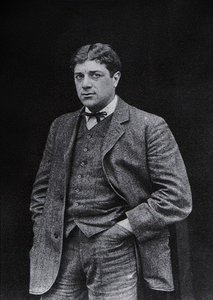
1882–1963, Francie
Georges Braque
Raný život, rodina a vzdělání Georges Braque se narodil v roce 1882 ve francouzském Argenteuili. Jeho první roky života uplynuly ve Le Havru, v domácnosti, kterou definovaly praktické aspekty dekorace a práce s barvami. Vyrostl v rodině malířů a dekoračních řemeslníků, což ho již od útlulí ponořilo do hmatatelné reality jeho řemesla. Toto výchovné prostředí mu poskytlo pevný základ technické zručnosti a řemeslné preciznosti, které později zásadně ovlivnily jeho přístup k plátnu.
Také od autora Georges Braque
 Mandolina1910
 Muž s kytarou1914
 Domy v L’estaquu
 Harbor v Normansku1909
Eseje k tématu Guitar ''Program statue d'epouvante''
 Mastering Cubism: The Top 25 Essential Georges Braque ArtworksJourney through the revolutionary world of Georges Braque. Explore 25 iconic Cubist masterpieces, from geometric abstractions to Fauvist co…
 Georges Braque: The Architect of Form and the Soul of Cubist RevolutionExplore the profound legacy of Georges Braque, a master of Cubism. Discover how his technical craftsmanship and collaboration with Picasso …
 Za hranicemi reprezentace: Dekódování emocí a významů v moderním abstraktním uměníProzkoumejte hluboký svět abstraktního expresionismu a odhalte sílu emocí v dílech Marka Rothka. Odborná analýza, historie a inspirace pro …