

 Náhled
 Sdílet
 Sdílet
 Podrobnosti o díle

 Stáhnout
 Podobné položky
 Rentgenové snímky
 Slideshow
 Statistiky
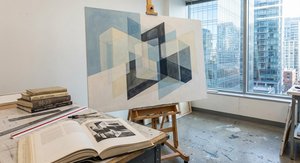
Étude, 1929 1930

 Zobrazit více
Ručně malovaná olejová reprodukce
Ručně malovaná olejná barva na plátně ve vašem zvoleném rozměru i s rámem, vyrobená našimi umělci na zakázku. ( Přepnout na tisk Přepnout na digitální obraz)




































Vyberte si z našich přednastavených velikostí, které odpovídají původním proporcím díla.

Můžete zadat vlastní rozměry pro konkrétní rám nebo prostor. Pokud se vámi vybraná velikost neshoduje s proporcemi původního obrazu, dílo buď ořízneme, nebo jej doplníme ručně malovanými prvky. Před zahájením výroby vám bude zaslán digitální náhled ke schválení.
Upozorňujeme, že náhled na obrazovce neodpovídá skutečnému ořezu ani rozšíření. Pouze digitální náhled přesně zobrazí finální kompozici.
Ačkoliv je možné zvolit vlastní velikost, pro zachování původních proporcí doporučujeme vybrat rozměr z předdefinovaného seznamu.
Po přijetí objednávky vám tým OriginalUniqueArt.com zašle e-mail s pokyny a poskytne náhledovou verzi.
Celosvětová doprava () za 3–4 týdny namísto standardních 5 týdnů. (13 září). Bez kompromisů v kvalitě.

Zdarma celosvětová expresní doprava

Vysoce kvalitní lněné plátno

Kompletní přepravní pojištění

Záruka vrácení celního poplatku

Záruka přesného barevného shodu

100dená lhůta pro vrácení zboží (pouze při vadách)

100% garance vrácení peněz

Sleva při hromadné objednávce
 Skleněná varianta je dostupná pouze u rozměrů menších než 110 cm

Étude, 1929 1930
Technika reprodukce
Rozměry reprodukce
-


Celková cena za výběr
$ 300
Biografie umělce
A Pioneer of Concrete Art: Fritz Glarner’s Relational Vision
Born in Zurich, Switzerland, in 1899 and ultimately finding his home in the United States, Fritz Glarner stands as a pivotal figure in the development of concrete art – a movement that sought to strip away representational imagery and embrace pure geometric form. His journey wasn’t one of sudden revelation but rather a gradual evolution, deeply rooted in the principles of Piet Mondrian and culminating in his own distinctive “relational painting.” Glarner's work represents a fascinating dialogue with modernism, a deliberate rejection of illusionistic space while simultaneously exploring the dynamic potential within simplified shapes and colors.
Early influences were decidedly European. His formative years in Naples, Italy, exposed him to classical art and architecture, while his studies at the Reggio Instituto di Belle Arti further solidified his understanding of artistic tradition. However, it was his time in Paris during the 1920s and early 30s that proved transformative. Here, he encountered the burgeoning Abstraction-Création group, a collective dedicated to exploring non-objective art – a crucial stepping stone towards his own unique style.
The Mondrian Connection: Diagonal Dynamics
Glarner’s artistic trajectory became inextricably linked with that of Piet Mondrian. He was profoundly influenced by Mondrian's theories of “dynamic symmetry,” particularly the artist’s rigorous system for organizing space and color based on horizontal and vertical lines intersecting at right angles. Yet, Glarner didn’t simply replicate Mondrian’s aesthetic; he actively pushed against its perceived rigidity. He introduced a crucial element – the diagonal – into the strict geometric framework, creating a sense of movement and spatial depth that was absent in Mondrian's earlier work. This subtle but significant alteration fundamentally shifted the visual experience of his paintings.
This innovation led to what Glarner termed “relational painting.” Rather than focusing on a single, dominant form or color, he developed a system where each element – line, shape, and hue – was intrinsically linked to its surrounding counterparts. The composition wasn’t about creating a static image but rather establishing a dynamic equilibrium between the elements, a carefully orchestrated interplay of relationships. He maintained Mondrian's commitment to a limited palette of primaries—red, yellow, and blue—and expanded upon Mondrian’s use of black lines, employing a range of grays to add further nuance and depth.
The Tondo Form: A Circular System
Glarner’s most recognizable output is the “tondo,” a circular format that became his signature. Within this contained space, he meticulously arranged simplified geometric forms according to his relational principles. The circle itself isn't merely a frame; it actively participates in the composition, creating a sense of unity and suggesting an infinite expanse beyond its boundaries. The tondo form provided a powerful visual metaphor for Glarner’s artistic philosophy – a contained system governed by precise rules yet capable of generating complex and engaging results.
His work is often described as “non-illusionistic,” meaning that it deliberately avoids creating the illusion of depth or perspective. Instead, he sought to represent space through the relationships between forms, suggesting volume and dimension through their arrangement within the circular field. This approach was a radical departure from traditional painting techniques and aligned with the core tenets of concrete art.
Legacy and Recognition
Fritz Glarner’s influence extends far beyond his own lifetime. His work is recognized as a cornerstone of concrete art, a movement that profoundly shaped the course of 20th-century abstraction. His paintings are held in prestigious collections, including the Museo Cantonale d’Arte of Lugano, Switzerland, and the Governor Nelson A. Rockefeller Empire State Plaza Art Collection in Albany, New York. His legacy lies not only in his distinctive visual style but also in his pioneering approach to composition and his unwavering commitment to exploring the fundamental principles of art.
Glarner’s life was marked by both artistic achievement and personal hardship. A serious injury sustained during a transatlantic voyage in 1966 forced him to return to Switzerland, where he ultimately passed away in Locarno in 1972. Despite the challenges he faced, his artistic vision continued to resonate, solidifying his place as one of the most important figures in the history of concrete art.

Rychlé fakta
- Artistic Movement Or Style: Concrete Art, Neoplasticism
- Artists Or Movements Influenced By This Artist:
- De Stijl
- Bauhaus
- Artists Who Influenced This Artist: ['Piet Mondrian']
- Date Of Birth: July 20, 1899
- Date Of Death: September 18, 1972
- Full Name: Fritz Glarner
- Nationality: Swiss-American
- Notable Artworks:
- Étude
- Tondo (Studie)
- Place Of Birth: Zurich, Switzerland
Související články

Beyond Form & Color: Geometric Abstraction's Evolution in 20th/21st Century Art
Explore the evolution of geometric abstraction from Cubism to contemporary art. Discover key artists like Malevich & Mondrian, investment insights, and expert collecting advice at OriginalUniqueArt.
Beyond Form & Color: Geometric Abstraction's Enduring Legacy in Art History
Explore the captivating world of geometric abstraction! Discover its origins, key artists like Malevich & Mondrian, and why this movement remains highly valued by art collectors today. Expert insights at OriginalUniqueArt.

Neo-Abstract Art: The High-Impact Evolution of Modern Visual Energy and Geometric Sophistication
Discover the power of Neo-Abstract art. Explore how bold geometric forms and high-impact visual energy are redefining modern design. Learn to curate sophisticated, high-energy spaces with the latest trends in contemporary abstraction and structural color.

Cubist Expressionism: The Profound Intersection of Geometric Structure and Raw Emotion
Discover the profound intersection of geometry and emotion in Cubist Expressionism. Explore art history through our expert analysis of modern masters and find museum-quality, hand-painted oil reproductions of iconic masterpieces for your collection.

Geometrická abstrakce: 10 mistrovských děl, které změnily umění | OriginalUniqueArt.cz
Prozkoumejte 10 ikonických děl geometrické abstrakce od Mondriana, Maleviče a Kandinského. Objevte příběhy umělců, techniky a historii tohoto revolučního hnutí. Najděte inspiraci pro moderní dekorace a luxusní reprodukce obrazů na OriginalUniqueArt.com.