

 Náhled v interiéru
 Sdílet
 Sdílet
 Podrobnosti o díle
 Průvodce

 Stáhnout
 Podobné položky
 Rentgenové snímky
 Slideshow
 Q&A
Q&A Statistiky
Ti-Tree Glade


 Zobrazit více
Ručně malovaná olejová reprodukce
Rukou malované olejné plátno v libovolném rozměru i s rámem, vyrobené našimi umělci na zakázku. ( Přepnout na tisk Přepnout na digitální obraz)




P118B Kč10

P118H Kč10

P118W Kč10

P438Z Kč10

P508JH Kč12

P508YH Kč12

P805H Kč10

P805Z Kč10

P919BZ Kč10

P919G Kč10

P919XJ Kč10

P959ZH Kč10

P968JZ Kč12

W106C Kč8

W218G Kč10

W218JH Kč8

W218Y Kč10

W307PJ Kč10

W316G Kč10

W316PJ Kč8

W316Y Kč10

W398PJ Kč8

W4111J Kč10

W500HY Kč15

W500JH Kč15

W692G Kč12

W849H Kč8

W940BG Kč15

W953PJ Kč8




Vyberte si z našich přednastavených velikostí, které odpovídají původním proporcím díla.

Zadejte šířku a výšku, které potřebujete pro váš rám nebo stěnu. Protože se jedná o ruční malbu, při výběru jiného formátu může umělec kolem obrazu domalovat o něco více, nebo jej mírně oříznout — rozhodnete si vy. Před zahájením malby vám zašleme digitální náhled ke schválení. Obraz zobrazený na této stránce neodpovídá skutečnému výsledku — pouze digitální náhled jej zobrazuje.
Po přijetí objednávky vám tým OriginalUniqueArt.com zašle e-mail s pokyny a poskytne náhledovou verzi.
Celosvětová doprava () za 3–4 týdny namísto standardních 5 týdnů. (28 říjen). Bez kompromisů v kvalitě.

Zdarma celosvětová expresní doprava

Vysoce kvalitní lněné plátno

Kompletní pojištění přepravy

Záruka vrácení celního poplatku

Záruka věrného barevného souladu

100dení lhůta pro vrácení zboží (pouze při vadách výroby)

100% záruka vrácení peněz

Sleva při více objednávkách
 Skleněná varianta je dostupná pouze u rozměrů menších než 110 cm

Ti-Tree Glade
Technika reprodukce
Rozměry reprodukce
-


Celková cena za vybrané možnosti reprodukcí
Kč 6460
A Golden Afternoon in the Australian Bush
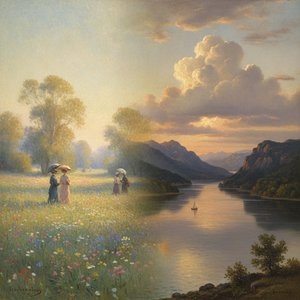
In the quiet heart of Frederick McCubbin’s "Ti-Tree Glade," time seems to decelerate, inviting the viewer into a sanctuary of light and shadow. Completed around 1910, this masterpiece serves as a luminous window into the soul of Australian Impressionism. The painting captures more than just a grove of eucalyptus trees; it distills the very essence of the Heidelberg School’s mission—to find profound beauty within the rugged, often overlooked textures of the Victorian bushland. As sunlight filters through a canopy of golden and verdant leaves, the scene unfolds with a serene stillness that feels both intimate and eternal. The composition is masterfully balanced, using atmospheric perspective to blur distant foliage, which creates an expansive sense of depth that draws the eye deep into the sun-drenched glade.
The presence of life within this tranquil landscape adds a delicate layer of movement to the stillness. Two birds, perched and in flight, punctuate the greenery, acting as small, vibrant reminders of the ecosystem's vitality. For the collector or interior designer, this piece offers a sense of organic tranquility, making it an ideal focal point for spaces designed for contemplation and peace. The warmth of the palette—dominated by ochres, soft yellows, and deep forest greens—brings a natural, grounding energy to any room, evoking the nostalgic glow of a late afternoon in the wild.
Mastery of Light and Impressionistic Technique
McCubbin’s technical prowess is on full display through his use of broken brushstrokes and layered washes, techniques that allow him to mimic the dappled, flickering light characteristic of the Australian wilderness. Influenced by his exposure to European masters like J.M.W. Turner and the French Impressionists, McCubbin moved away from rigid realism toward a more fluid, emotive style. He employs a technique reminiscent of plein air painting, where the artist works directly from nature to capture fleeting atmospheric effects. This results in a texture that feels alive; the paint itself seems to vibrate with the heat and light of the midday sun.
The artist’s ability to manipulate tonal variations creates a sensory experience for the viewer. One can almost feel the dry warmth of the air and hear the rustle of the eucalyptus leaves. This mastery of color and light elevates the subject matter from a simple landscape to a sophisticated study of light's interaction with the Australian environment. For those seeking a high-quality reproduction, these fine details—the subtle transitions from shadow to brilliance—are what make a hand-painted version of this work so captivating and much more than a mere decoration.
A Symbol of Resilience and National Identity
Beyond its aesthetic splendor, "Ti-Tree Glade" carries deep symbolic weight. The ti-tree itself, a hardy and drought-resistant shrub, serves as a metaphor for the resilience and endurance of the Australian spirit. During the era in which McCubbin painted, the bush was often viewed through a lens of struggle and survival; however, McCubbin chose to portray it as a place of solace and quiet majesty. His work helped shape a unique visual language for a young nation, moving away from colonial perspectives to embrace the authentic, rugged beauty of the local landscape.
This painting resonates with a profound emotional depth, offering a sense of connection to the land that is both nostalgic and revitalizing. It captures a moment of quiet melancholy intertwined with the triumph of nature's enduring beauty. Whether displayed in a sophisticated gallery setting or as a centerpiece in a curated home collection, "Ti-Tree Glade" remains an evocative testament to the power of the Australian landscape to inspire awe, reflection, and a deep sense of belonging.
Otázky a odpovědi
Jak světlý je celkově obraz "Ti-Tree Glade"?
Celkově je dílo „Ti-Tree Glade“ hodnoceno jako balanced. Vnímaná jasnost popisuje, jak světlé nebo tmavé se dílo jeví.
Kolik lidí si prohlíží „Ti-Tree Glade"?
Statistiky k dílu „Ti-Tree Glade“ od Frederick McCubbin naleznete na stránce Statistiky tohoto díla: měsíční návštěvnost díla, návštěvnost děl daného umělce a rozpis nedávných návštěvníků podle zemí a jazyků.
Kdo vytvořil dílo "Ti-Tree Glade" a v jakém roce?
Dílo "Ti-Tree Glade" vytvořil/a Frederick McCubbin v roce 1910.
Biografie umělce
Frederick McCubbin (1855-1917): A Life Rooted in the Australian Landscape
Frederick McCubbin, born in Melbourne on February 25th, 1855, stands as a cornerstone of Australian art, inextricably linked to the nation’s evolving identity and its unique visual language. His journey from humble beginnings – the son of bakers who instilled in him a strong work ethic – to becoming a pivotal figure in the Heidelberg School is a testament to his dedication and artistic vision. McCubbin's early life was marked by diverse experiences, working as a solicitor’s clerk and assisting in the family bakery before fully embracing his calling as a painter. These formative years, though seemingly disparate, imbued him with a deep understanding of everyday Australian life, a theme that would resonate profoundly throughout his oeuvre. He received foundational training at the National Gallery of Victoria's School of Design, studying under esteemed artists like Eugene von Guerard and George Folingsby, honing his skills in landscape painting while absorbing the prevailing artistic currents of the time. A crucial turning point arrived with his enduring friendship with Tom Roberts, a bond that would shape the course of Australian art history.Early Influences and Artistic Formation
McCubbin’s formative years instilled within him not only practical skills but also a profound appreciation for observation and detail—qualities that would prove invaluable in his subsequent artistic endeavors. His education at William Willmott's West Melbourne Common School and St. Paul’s School provided him with a solid academic grounding, while his apprenticeship as a coach painter exposed him to the craft of visual representation. Crucially, he encountered Louis Buvelot, a Swiss-born artist whose naturalistic landscapes of the domesticated Australian countryside had a significant impact on McCubbin's artistic sensibilities. This encounter fostered an interest in capturing the essence of place and conveying its atmosphere—a preoccupation that would characterize much of his work throughout his career. The School of Design at Carlton, where he studied under Thomas Clark and George Folingsby, further honed his technique and introduced him to the stylistic conventions of academic painting, albeit one that McCubbin swiftly transcended.The Heidelberg School: Pioneering Impressionism in Australia
McCubbin’s artistic breakthrough occurred in 1885 with the establishment of Box Hill Artists' Camp alongside Tom Roberts, Arthur Streeton and Charles Conder—a pivotal moment in the genesis of the Heidelberg School movement. Rejecting the rigid formalism of European academic art, these artists sought to depict Australian life and landscapes with unprecedented immediacy and authenticity. They ventured into the bushland surrounding Melbourne, embracing the rugged beauty and challenging conditions of the Australian environment. McCubbin’s contribution during this period was instrumental in defining a distinctly Australian aesthetic—one characterized by loose brushwork, vibrant color palettes, and a focus on capturing fleeting moments of light and atmosphere. Paintings like *Down on His Luck* (1889) and *On the Wallaby Track* (1896) exemplify this approach, portraying scenes of rural life with remarkable sensitivity and detail—scenes that simultaneously celebrate the splendor of nature and convey the hardships endured by ordinary Australians. The Heidelberg School’s rejection of academic conventions was a deliberate assertion of artistic independence and a commitment to representing Australia in its own terms.Major Achievements and Artistic Legacy
McCubbin's oeuvre encompasses a remarkable range of subjects—from intimate portraits to monumental history paintings—each imbued with a distinctive stylistic signature. However, he is perhaps best remembered for his landscapes, particularly those depicting the Australian bush during the late 1890s and early 1900s. His masterpiece *The Pioneer* (1904), commissioned by the Commonwealth Government to commemorate Australia Day, stands as an iconic representation of this era—a painting that captures the spirit of exploration and settlement with breathtaking grandeur. McCubbin’s ability to convey emotion and atmosphere through color and brushwork cemented his reputation as one of Australia's foremost landscape painters. His influence extended beyond his own artistic output; he mentored numerous aspiring artists, fostering a tradition of Australian Impressionism that continues to inspire creativity today. Furthermore, McCubbin’s work played a crucial role in shaping the national iconography of Australia—particularly through depictions of pioneering life and the heroic struggles of early settlers—contributing to the formation of a mythic narrative about the nation's origins. His enduring legacy resides not only in his stunning visual creations but also in his unwavering commitment to capturing the soul of Australia—a mission that continues to resonate with audiences worldwide.
Frederick McCubbin
1855 - 1917 , Austrálie
Rychlé informace o umělci
- Artistic Movement Or Style: Heidelberská škola
- Artists Who Influenced This Artist:
- Eugene von Guerard
- George Folingsby
- Date Of Birth: 25 února 1855
- Date Of Death: 20 prosince 1917
- Full Name: Frederick McCubbin
- Nationality: Australský
- Notable Artworks:
- On the Wallaby Track
- Down on His Luck
- The Pioneer
- Place Of Birth: Melbourne, Austrálie
Související články

Evocations of Place: A Historical Journey Through Landscape Art
Explore the rich history of landscape art with OriginalUniqueArt. Discover renowned artists, movements like Impressionism & tonalism, and expert guidance for collecting timeless pieces. Find your perfect serene escape today!
Capturing the Light: A Journey Through the Soul of American Impressionism and the Hudson River School
Explore the luminous beauty of American Impressionism and the Hudson River School. Discover a curated journey through light, landscape, and history, celebrating the enduring legacy of masters through exquisite, hand-painted oil reproductions for the discerning art lover.

Paul Cézanne: 25 mistrovských děl a revoluce v moderním umění | OriginalUniqueArt.cz
Prozkoumejte 25 ikonických děl Paula Cézanna – průkopníka moderního umění a impresionismu. Obdivujte jeho still life, krajiny a portréty. Reprodukce obrazů v nejvyšší kvalitě na OriginalUniqueArt.com. Inspirace pro váš interiér!

Evocations of Place: A Historical Journey Through Landscape Art
Explore the rich history of landscape art with OriginalUniqueArt. Discover renowned artists, movements like Impressionism & Romanticism, and expert guidance for collecting timeless pieces. Find your perfect serene escape today!

Evoking Nature's Sublime: A Comprehensive Exploration of 19th-Century Landscape Painting
Explore the captivating world of 19th-century landscape painting! Discover renowned artists like Friedrich & Monet, key movements, and find the perfect artwork to bring nature's serenity into your home. Expert insights at OriginalUniqueArt.
