

 Náhled
 Sdílet
 Sdílet
 Podrobnosti o díle

 Stáhnout
 Podobné položky
 Rentgenové snímky
 Slideshow
 Statistiky
In the Tropics


 Zobrazit více
Giclée / Umělecký tisk
Giclée nebo plátěný tisk muzeální kvality s rychlou výrobou a flexibilními možnostmi povrchové úpravy. ( Koupit ručně malovaný obraz Přepnout na digitální obraz)




P118B $10

P118H $10

P118W $10

P438Z $10

P508JH $12

P508YH $12

P805H $10

P805Z $10

P919BZ $10

P919G $10

P919XJ $10

P959ZH $10

P968JZ $12

W106C $8

W218G $10

W218JH $8

W218Y $10

W307PJ $10

W316G $10

W316PJ $8

W316Y $10

W398PJ $8

W4111J $10

W500HY $15

W500JH $15

W692G $12

W849H $8

W940BG $15

W953PJ $8




Vyberte si z našich přednastavených velikostí, které odpovídají původním proporcím díla.

Můžete zadat vlastní rozměry tak, aby výtvor odpovídal konkrétnímu rámu nebo prostoru. Pokud zvolená velikost nebude odpovídat poměru stran původního obrazu, dílo buď ořížeme, nebo obraz rozšíříme pomocí zrcadlového efektu či jednobarevného okraje. Před zahájením výroby vám bude zaslán digitální náhled k schválení.
Mějte prosím na paměti, že náhled na obrazovce neodráží skutečné oříznutí nebo rozšíření. Pouze digitální náhled přesně zobrazí finální kompozici.
Ačkoliv jsou k dispozici i vlastní rozměry, pro zachování původních proporcí doporučujeme vybrat si rozměr z předdefinovaného seznamu.
Celosvětové doručení () do 2 týdnů namísto standardních 4/5 týdnů. (16 září)

Zdarma celosvětová expresní doprava

Vysoce kvalitní lněné plátno

Kompletní přepravní pojištění

Záruka vrácení celního poplatku

Záruka přesného barevného shodu

100dená lhůta pro vrácení zboží (pouze při vadách)

100% garance vrácení peněz

Sleva při hromadné objednávce
 Skleněná varianta je dostupná pouze u rozměrů menších než 110 cm

In the Tropics
Giclée / Umělecký tisk
Rozměry reprodukce
-


Celková cena za výběr
$ 80
A Vision of Tropical Paradise: Frederic Edwin Church’s “In the Tropics”
Frederic Edwin Church's "In the Tropics," painted in 1856, isn’t merely a landscape; it’s an immersive experience, a portal to a world teeming with vibrant life and dramatic grandeur. This monumental canvas, now housed within the Smithsonian American Art Museum, captures the essence of South America – specifically, the region along the Rio Magdalena in Colombia – through Church's masterful command of light, color, and scale. More than just a depiction of scenery, it’s a testament to the Romantic movement’s fascination with nature’s power and beauty, imbued with a profound sense of awe and spiritual connection. The painting immediately draws the viewer into its depths, utilizing a strong perspective that guides the eye along the winding river towards the imposing snow-capped peaks in the distance – a deliberate strategy designed to evoke both the immensity of the landscape and the feeling of being utterly dwarfed by it.The Language of Light and Color
Church’s technique is characterized by an almost obsessive attention to detail, meticulously rendered through layers of oil paint that create a remarkable sense of texture and depth. He employed a technique known as “luminism,” popularized during this period, which prioritized capturing the effects of light on surfaces rather than simply depicting objects in their true colors. Notice how the sunlight filters through the dense foliage, casting dappled shadows across the riverbanks and illuminating the textures of the rocks and vegetation with an ethereal glow. The color palette is dominated by warm hues – rich golds, deep browns, vibrant oranges, and hints of turquoise – creating a sense of warmth and inviting tranquility despite the painting’s imposing scale. Church masterfully utilizes atmospheric perspective, subtly lightening and desaturating distant elements to further enhance the illusion of depth and distance, mimicking how our eyes naturally perceive landscapes from afar. The careful blending of colors and the subtle gradations of light contribute significantly to the painting's overall luminosity and realism.A Romantic Vision Rooted in Scientific Observation
“In the Tropics” emerged during a pivotal moment in American art history – the rise of the Hudson River School, a movement that championed the depiction of America’s natural landscapes with unprecedented detail and emotional intensity. Church’s work was deeply influenced by the writings of Alexander von Humboldt, a German naturalist who advocated for a scientific approach to understanding nature. Humboldt's emphasis on the interconnectedness of all things – science, art, and spirituality – resonated profoundly with Church, who sought to capture not just the visual beauty of the tropics but also its underlying order and harmony. The painting reflects this intellectual curiosity through its meticulous observation of detail, from the individual leaves on the palm trees to the textures of the rocks and mountains. It’s a testament to the belief that art could be both aesthetically pleasing and intellectually stimulating.Symbolism and Emotional Resonance
Beyond its technical brilliance, “In the Tropics” is rich in symbolic meaning. The towering mountain range represents majesty, endurance, and perhaps even the divine—a powerful symbol of nature's strength and timelessness. The winding river symbolizes life’s flow, connecting the viewer to the heart of the landscape. The small figure near the riverbank serves as a poignant reminder of humanity’s place within this vast and awe-inspiring world – a tiny speck against the backdrop of immense natural beauty. The painting evokes a powerful sense of wonder, humility, and connection with nature—a feeling that transcends mere visual appreciation. It invites contemplation on our relationship to the environment and our own smallness in the face of creation’s grandeur.A Legacy of Grandeur
“In the Tropics” remains one of Frederic Edwin Church's most celebrated works, a cornerstone of American landscape painting. Its scale, technical mastery, and evocative imagery continue to captivate audiences today. Reproductions of this iconic masterpiece offer a remarkable opportunity to bring its breathtaking beauty into any space, transforming interiors into portals to a world of tropical splendor and reminding us of the enduring power of nature’s majesty. It's a piece that speaks volumes about the Romantic spirit and the profound connection between art, science, and the human soul.Biografie umělce
A Pioneer of American Landscape: The Life and Art of Frederic Edwin Church
Frederic Edwin Church, born in Hartford, Connecticut, on May 4th, 1826, emerged as a pivotal figure in the blossoming landscape tradition of 19th-century America. His lineage was steeped in New England history—a direct descendant of Puritan pioneers—and his family’s prosperity afforded him opportunities rare for aspiring artists of the time. This financial stability allowed Church to dedicate himself wholeheartedly to his artistic pursuits, a path that would ultimately lead him to become one of the most celebrated and influential painters of the Hudson River School. His early training began at the age of eighteen under the tutelage of Thomas Cole, the very founder of this distinctly American art movement. These formative years spent in Catskill, New York, were crucial, instilling in Church a deep reverence for nature and a commitment to capturing its grandeur on canvas. The apprenticeship wasn’t merely technical; it was an immersion into a philosophy that saw landscape not just as scenery, but as a reflection of the divine and a symbol of national identity.The Early Years and Influences: A Foundation in Tradition
Church's artistic journey began with a rigorous training under Thomas Cole, a key figure in establishing the Hudson River School. Cole’s emphasis on capturing the sublime beauty of the American wilderness—a blend of Romanticism and scientific observation—proved profoundly influential. Church spent several years studying alongside Cole in his Catskill studio, absorbing not only technical skills but also Cole's belief that landscape could convey profound spiritual and patriotic messages. This early exposure to Cole’s work shaped Church’s own artistic vision, instilling a deep respect for nature and a desire to depict it with both accuracy and emotional intensity. Beyond Cole, Church was deeply affected by the writings of Alexander von Humboldt, whose explorations of South America highlighted the interconnectedness of all natural phenomena. Humboldt's emphasis on scientific observation and his belief that art could be used to communicate these discoveries resonated strongly with Church, inspiring him to incorporate elements of scientific detail into his paintings. The family’s wealth also played a crucial role, providing Church with the financial security to pursue his artistic ambitions without the constraints of commercial pressures.The Rise of a Master: Style and Major Works
Church quickly distinguished himself from his contemporaries through a remarkable ability to blend meticulous realism with a romantic sensibility. His paintings are characterized by an astonishing level of detail, capturing the textures of foliage, the play of light on water, and the imposing scale of mountains with breathtaking accuracy. However, this wasn’t simply photographic representation; Church infused his work with a dramatic flair, employing sweeping panoramic views, vibrant color palettes, and a masterful command of atmospheric perspective. He was particularly known for his ability to render light—its shifting qualities, its reflections on water surfaces, and its effect on distant landscapes—with unparalleled skill. His most celebrated works include *The Oxbow* (1836), a groundbreaking depiction of the Connecticut River Valley that exemplifies his synthesis of observation and imagination; *Mount Holyoke* (1845-46), which captures the grandeur of the Vermont mountain range with dramatic lighting and atmospheric effects; and, perhaps most famously, *The Heart of the Andes* (1859). This monumental canvas, measuring nearly seven feet wide, was exhibited in a specially constructed gallery in New York City, illuminated by skylights to mimic the natural light of the Andean mountains. The exhibition created an immersive experience for viewers, solidifying Church’s reputation as a master showman and an artist capable of transporting his audience to distant lands.Ventures into the Wild: Travels and Artistic Inspiration
Driven by a thirst for firsthand experience and inspired by Humboldt's writings, Church embarked on daring expeditions to remote corners of the world. These journeys—to South America in 1853 and 1857, and later to the Arctic regions—provided him with an unparalleled wealth of visual material. He meticulously documented his observations through sketches and watercolors, which he would later transform into large-scale paintings. His travels weren’t merely about collecting picturesque scenes; they were a quest to understand the underlying geological and botanical processes that shaped these landscapes. The resulting paintings—such as *Niagara* (1858-59), depicting the majestic Niagara Falls—demonstrated his ability to convey not just the visual beauty of these places but also their scientific complexity. Church’s approach was revolutionary, blending artistic expression with scientific inquiry and challenging conventional notions of landscape painting.Legacy and Impact: A Lasting Influence
Frederic Edwin Church's influence on American landscape painting is undeniable. He elevated the genre to new heights of artistic achievement and popular acclaim, inspiring generations of artists to explore the beauty and majesty of the natural world. His innovative exhibition practices—presenting single paintings in dramatic settings—set a precedent for future art displays and helped to cultivate a broader public appreciation for art. Beyond his painting, Church was also a dedicated conservationist, advocating for the preservation of Niagara Falls and playing a role in the establishment of national parks. He understood that art could be a powerful tool for raising awareness about environmental issues and inspiring action. His home, Olana, designed and built with his own hands overlooking the Hudson River, stands as a testament to his artistic vision and his deep connection to the landscape. Church’s legacy continues to resonate today, reminding us of the enduring power of nature and the importance of preserving it for future generations.
Frederic Edwin Church
1826 - 1900 , Spojené státy americké
Rychlé fakta
- Artistic Movement Or Style: Hudson River School
- Artists Or Movements Influenced By This Artist: ['Americká krajina']
- Artists Who Influenced This Artist:
- Thomas Cole
- Humboldt
- Date Of Birth: 4. května 1826
- Date Of Death: 7. dubna 1900
- Full Name: Frederic Edwin Church
- Nationality: Američan
- Notable Artworks:
- Srdce Andů
- Niagarské vodopády
- Oxbow
- Place Of Birth: Hartford, USA
Související články
Wild & Untamed: The High-Impact Energy of American Romanticism and the Hudson River School
Experience the raw power of American Romanticism. Explore the high-impact energy of the Hudson River School through premium, hand-painted oil reproductions that capture the sublime beauty and untamed spirit of the American wilderness for discerning collectors.
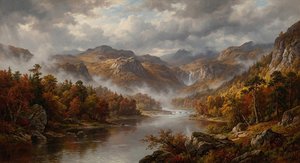
Top 10 mistrovských děl Hudson River School: Krajina jako umělecký odkaz
Prozkoumejte 10 ikonických děl Hudson River School – Cole, Church, Bierstadt a další. Objevte romantismus v americké krajinomalbě a inspirujte se pro luxusní dekorace s OriginalUniqueArt.com!
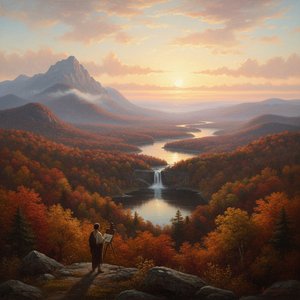
The Sublime Landscape: Exploring the Hudson River School Movement
Explore the captivating world of the Hudson River School! Discover the history, artists, and defining characteristics of this iconic American art movement. Learn about Romanticism's influence & find inspiration for your collection.
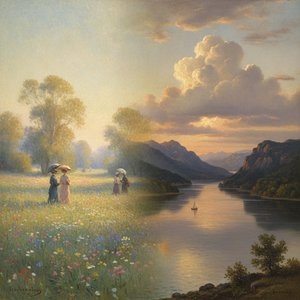
Capturing the Light: A Journey Through the Soul of American Impressionism and the Hudson River School
Explore the luminous beauty of American Impressionism and the Hudson River School. Discover a curated journey through light, landscape, and history, celebrating the enduring legacy of masters through exquisite, hand-painted oil reproductions for the discerning art lover.
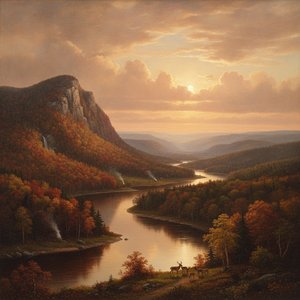
The Hudson River School: A Definitive Guide to America's Romantic Landscape Tradition
Explore the profound legacy of the Hudson River School. Discover how masters like Thomas Cole captured the American sublime through Romanticism and Luminism. A definitive guide for art historians and collectors seeking to understand America's wild beauty.


