
 Náhled v interiéru
 Sdílet
 Sdílet
 Podrobnosti o díle
 Průvodce

 Stáhnout
 Podobné položky
 Rentgenové snímky
 Slideshow
 Q&A
Q&A Statistiky
Queen Victoria (1819–1901)

- 320.0 x 180.0 cm


 Zobrazit více
Giclée / Umělecký tisk
Giclée nebo plátěný tisk muzeální kvality s rychlou výrobou a širokou nabídkou povrchových úprav. ( Koupit ručně malovaný obraz Přepnout na digitální obraz)




P118B Kč10

P118H Kč10

P118W Kč10

P438Z Kč10

P508JH Kč12

P508YH Kč12

P805H Kč10

P805Z Kč10

P919BZ Kč10

P919G Kč10

P919XJ Kč10

P959ZH Kč10

P968JZ Kč12

W106C Kč8

W218G Kč10

W218JH Kč8

W218Y Kč10

W307PJ Kč10

W316G Kč10

W316PJ Kč8

W316Y Kč10

W398PJ Kč8

W4111J Kč10

W500HY Kč15

W500JH Kč15

W692G Kč12

W849H Kč8

W940BG Kč15

W953PJ Kč8




Vyberte si z našich přednastavených velikostí, které odpovídají původním proporcím díla.

Zadejte šířku a výšku, které potřebujete pro váš rám nebo stěnu. Tisk lze pouze oříznout, nikdy však nelze zvětšit obraz nad jeho původní rozměr, proto při výběru jiného formátu dochází ke ztrátě části obrazu. Před samotným tiskem vám zašleme digitální náhled k schválení. Obraz zobrazený na této stránce nenabízí skutečný výřez — ten uvidíte pouze v náhledu.
Celosvětové doručení () do 2 týdnů namísto standardních 4/5 týdnů. (3 listopad)

Zdarma celosvětová expresní doprava

Vysoce kvalitní lněné plátno

Kompletní pojištění přepravy

Záruka vrácení celního poplatku

Záruka věrného barevného souladu

100dení lhůta pro vrácení zboží (pouze při vadách výroby)

100% záruka vrácení peněz

Sleva při více objednávkách
 Skleněná varianta je dostupná pouze u rozměrů menších než 110 cm

Queen Victoria (1819–1901)
Giclée / Umělecký tisk
Rozměry reprodukce
-


Celková cena za vybrané možnosti reprodukcí
Kč 1737
A Portrait of an Era: Queen Victoria by Franz Xaver Winterhalter
- Franz Xaver Winterhalter’s “Queen Victoria” (1864) is more than just a royal portrait; it's a meticulously crafted window into the heart of Victorian England. Executed during a period of unprecedented imperial expansion and societal transformation, this painting embodies the dignity, power, and carefully constructed image of Queen Victoria herself. Winterhalter, already established as the court painter to several European royalty, expertly captured the essence of his subject – a woman simultaneously representing tradition and modernity.
- The scene unfolds with remarkable detail. Queen Victoria is seated upon a plush red velvet chair, a symbol of wealth and authority, her posture radiating composure and regal bearing. The crown she wears isn't merely an emblem of sovereignty; it’s a visual anchor to centuries of British history and the weight of responsibility she carried. The sash around her waist further emphasizes her status as a monarch, a deliberate choice reflecting the era’s emphasis on decorum and hierarchy.
Technical Mastery and Winterhalter's Style
- Winterhalter was renowned for his mastery of scale and detail, particularly in portraiture. His technique involved layering thin glazes of oil paint – a hallmark of the academic style prevalent at the time – to achieve luminous colors and smooth transitions. Notice the subtle gradations in Victoria’s gown, the delicate rendering of her jewelry, and the precise detailing of the clock faces. These elements weren't simply decorative; they were carefully considered to reinforce the Queen’s image and the painting’s overall grandeur.
- The artist’s use of light is particularly noteworthy. A soft, diffused illumination bathes the scene, highlighting Victoria’s face and creating a sense of depth and volume. This technique, combined with his meticulous attention to texture – from the velvet of her chair to the sheen of her crown – elevates the portrait beyond a mere likeness into a powerful statement of visual artistry.
Symbolism and Historical Context
- Painted in 1864, during Victoria’s reign as Empress of India, the painting is deeply intertwined with the burgeoning British Empire. The clocks within the composition subtly symbolize time – a relentless force governing both the Queen's life and the vast empire she presided over. The setting itself, though seemingly private, speaks to the immense public scrutiny Victoria endured throughout her life.
- Winterhalter’s portraits were commissioned not just by royalty but also by wealthy industrialists and merchants eager to associate themselves with the prestige of the British monarchy. This painting represents a significant investment in social standing and a testament to Victoria's enduring influence on European society.
Emotional Impact and Artistic Legacy
- “Queen Victoria” possesses an undeniable emotional resonance, capturing not just the Queen’s physical appearance but also her inherent dignity and strength. The painting invites viewers to contemplate the complexities of leadership, power, and the enduring legacy of a remarkable woman.
- Franz Xaver Winterhalter's work continues to be admired for its technical brilliance, historical significance, and ability to evoke a powerful sense of atmosphere. This reproduction offers an exceptional opportunity to own a piece of art history – a tangible connection to one of the most iconic figures of the Victorian era.
Otázky a odpovědi
Jaké barvy dominují dílu „Queen Victoria (1819–1901)“ od Franz Xaver Winterhalter?
Barevná identita díla „Queen Victoria (1819–1901)“ od Franz Xaver Winterhalter: paleta v odstínech Earthy, s převládající barvou Gray (#80695a).
Jaká jsou práva k reprodukci díla „Queen Victoria (1819–1901)“ v instituci Doncaster Mansion House?
Autorskoprávní status díla „Queen Victoria (1819–1901)“ od Franz Xaver Winterhalter je jasný: toto dílo spadá do v rámci volného užití – autorská práva vypršela. Jeho umístění v instituci Doncaster Mansion House tento stav nemění.
Jaký emocionální náboj nese dílo „Queen Victoria (1819–1901)“ od Franz Xaver Winterhalter?
„Queen Victoria (1819–1901)“ od Franz Xaver Winterhalter vyzařuje Nostalgic emocionální náboj.
Biografie umělce
A Painter of Kings and Queens: The Life and Art of Franz Xaver Winterhalter
Franz Xaver Winterhalter, born in 1805 in the secluded Black Forest village of Menzenschwand, embarked on a remarkable journey from humble beginnings to become one of Europe’s most celebrated portraitists. His story isn't merely about artistic skill; it’s a chronicle of an era – the transition from Romanticism to Victorian grandeur, where meticulous detail and carefully crafted images defined power and status. The son of a farmer and resin producer, Winterhalter’s early life was rooted in the rhythms of rural Germany, yet his innate artistic talent quickly distinguished him. A strong family bond, particularly with his painter brother Hermann, nurtured his creative spirit, while foundational training at a Benedictine monastery and later under Karl Ludwig Schüler in Freiburg provided the essential building blocks for his future success. This initial grounding proved crucial as he moved to Munich, securing support from Baron von Eichtal and ultimately studying at the Academy of Arts, though the academy’s rigid academic approach didn't fully align with his artistic vision. It was Joseph Karl Stieler, a master of fashionable portraiture, who truly shaped Winterhalter’s development during these formative years, guiding him towards capturing the elegance and sophistication that would become hallmarks of his work.From Karlsruhe to Parisian Heights: Establishing a Royal Reputation
Winterhalter's breakthrough arrived in 1828 when he was appointed drawing master to Sophie Margravine of Baden at Karlsruhe. This appointment wasn’t simply a job; it was an introduction to the intricate world of European royalty, offering him immediate access to influential patrons and a chance to hone his skills. His talent for capturing likeness with remarkable accuracy and imbuing his subjects with an air of refined elegance quickly gained recognition, leading to commissions from Grand Duke Leopold of Baden and his wife. However, it was Paris that truly cemented Winterhalter’s fame. Arriving in the French capital in the 1830s, he skillfully navigated the competitive artistic landscape, exhibiting genre scenes like *Il dolce Farniente* and *Il Decameron*. These works showcased his academic training while subtly hinting at a burgeoning Romantic sensibility – a delicate balance between tradition and innovation. He began to build a reputation for capturing the fashionable elegance of Parisian society, attracting attention from influential figures in the art world. It was during this period that he developed his signature style: a meticulous attention to detail, a luminous color palette, and an uncanny ability to render fabrics and jewels with breathtaking realism.The Victorian Embrace: A Painter of Imperial Majesty
Winterhalter’s burgeoning reputation extended beyond France, reaching the heart of the British Empire. In 1841, he was summoned to England, initiating a prolific relationship that would define his career. He became *the* portraitist for Queen Victoria and her family, creating over one hundred portraits that served as both official records and intimate glimpses into their lives. These weren’t merely formal commissions; they were carefully constructed narratives about power, status, and identity. His ability to blend realism with a subtle degree of flattery – presenting his sitters at their most idealized while retaining their individual personalities – proved irresistible to the British monarchy. The portrait of Queen Victoria in 1843, a small and exquisitely detailed work, exemplifies this skill perfectly. It’s a testament to Winterhalter's ability to capture not just physical likeness but also a sense of vulnerability and grace within the confines of royal protocol. This success solidified his position as *the* portraitist of European royalty, sought after by Empress Eugénie in France, Empress Elisabeth of Austria, and countless other noble figures across the continent.Style and Legacy: Beyond Likeness
While often criticized by artistic circles for prioritizing flattery over radical innovation, Winterhalter’s work holds a significant place in art history. His style is characterized by its meticulous detail, luminous color palette, and an extraordinary ability to capture the textures of fabrics and jewels with breathtaking realism. He skillfully blended Romantic sensibilities with Neoclassical precision, creating portraits that were both visually stunning and psychologically insightful. His paintings weren’t simply representations; they were carefully constructed narratives about power, status, and identity. Though he wasn't a revolutionary in the same vein as Delacroix or Courbet, his influence was pervasive, establishing a standard for royal portraiture that endured for decades. His works provide invaluable historical documentation of 19th-century European society, offering a captivating window into the lives of royalty and aristocracy.A Lasting Impression
Franz Xaver Winterhalter died in Frankfurt in 1873, leaving behind a vast body of work that continues to be celebrated for its technical brilliance and historical significance. His paintings can be found in prominent museums and royal collections around the world, including the National Portrait Gallery in London, the Musée d’Orsay in Paris, and Buckingham Palace. His legacy lies not just in the beauty of his portraits but also in their ability to transport us back to an era of opulent courts, intricate diplomacy, and unwavering social hierarchies. He remains a vital figure for understanding the visual culture of 19th-century Europe and the role of art in shaping perceptions of power and status.- His ability to capture the essence of his sitters, combined with his mastery of technique, ensured his place as a leading portraitist of his time.
- He established a standard for royal portraiture that endured for decades.
- His works offer invaluable insights into the lives of royalty and aristocracy.
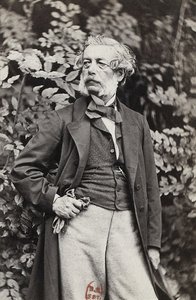
Franz Xaver Winterhalter
1805 - 1873 , Německo
Rychlé informace o umělci
- Artistic Movement Or Style: Portrétní, Romantismus
- Artists Or Movements Influenced By This Artist: ['Robertsovi']
- Artists Who Influenced This Artist: ['Stieler']
- Date Of Birth: 20. dubna 1805
- Date Of Death: 8. července 1873
- Full Name: Franz Xaver Winterhalter
- Nationality: Německý
- Notable Artworks:
- Císařovna Evženie
- Alžběta Rakouská
- Place Of Birth: Menzenschwand, Německo
Související články

Sir Francis Grant: Portraiture, Patronage & Victorian Society
Explore the life & work of Sir Francis Grant, a leading Victorian portraitist. Discover his aristocratic clientele, role at the Royal Academy, and enduring artistic legacy. Learn about art patronage in 19th-century Britain.
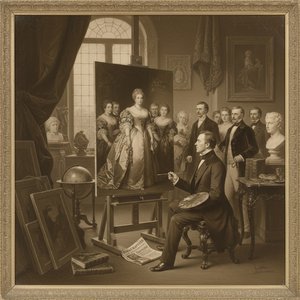
George Hayter: Portraiture, Power & Victorian Society's Canvas
Explore the life & work of George Hayter, Queen Victoria’s Principal Painter. Discover his iconic Victorian portraits, historical masterpieces, and lasting impact on British art history. Learn more at OriginalUniqueArt.
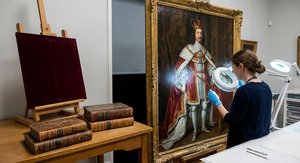
The Majesty of Representation: Exploring Regal Imagery in Art History
Explore the captivating history of royal portraiture with OriginalUniqueArt. Discover the symbolism, artistry, and enduring legacy of regal imagery in art. Expert insights for collectors & enthusiasts.

Franz Xaver Winterhalter: Court Painter, Academician & Embodiment of Mid-19th Century Portraiture
Explore the life & art of Franz Xaver Winterhalter, the celebrated court painter of the 19th century. Discover his exquisite portraits of royalty and aristocracy – a symbol of prestige and refined taste.
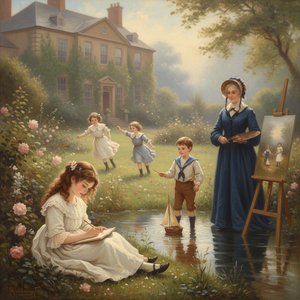
James Sant: Capturing Victorian Childhood & the Evolving Landscape of British Genre Painting
Explore the life & art of James Sant (1820-1916), renowned Victorian portraitist to Queen Victoria. Discover his captivating depictions of childhood, landscapes, and aristocratic society. Learn about his legacy & find fine art reproductions.

