
 Náhled v interiéru
 Sdílet
 Sdílet
 Podrobnosti o díle
 Průvodce

 Stáhnout
 Podobné položky
 Rentgenové snímky
 Slideshow
 Otázky a odpovědi
 Statistiky
The Spring

- 70.0 x 68.0 cm


 Zobrazit více
Giclée / Umělecký tisk
Giclée nebo plátěný tisk muzeální kvality s rychlou výrobou a širokou nabídkou povrchových úprav. ( Koupit ručně malovaný obraz Přepnout na digitální obraz)




P118B Kč10

P118H Kč10

P118W Kč10

P438Z Kč10

P508JH Kč12

P508YH Kč12

P805H Kč10

P805Z Kč10

P919BZ Kč10

P919G Kč10

P919XJ Kč10

P959ZH Kč10

P968JZ Kč12

W106C Kč8

W218G Kč10

W218JH Kč8

W218Y Kč10

W307PJ Kč10

W316G Kč10

W316PJ Kč8

W316Y Kč10

W398PJ Kč8

W4111J Kč10

W500HY Kč15

W500JH Kč15

W692G Kč12

W849H Kč8

W940BG Kč15

W953PJ Kč8




Vyberte si z našich přednastavených velikostí, které odpovídají původním proporcím díla.

Zadejte šířku a výšku, které potřebujete pro váš rám nebo stěnu. Tisk lze pouze oříznout, nikdy však nelze zvětšit obraz nad jeho původní rozměr, proto při výběru jiného formátu dochází ke ztrátě části obrazu. Před samotným tiskem vám zašleme digitální náhled k schválení. Obraz zobrazený na této stránce nenabízí skutečný výřez — ten uvidíte pouze v náhledu.
Celosvětové doručení () do 2 týdnů namísto standardních 4/5 týdnů. (4 listopad)

Zdarma celosvětová expresní doprava

Vysoce kvalitní lněné plátno

Kompletní pojištění přepravy

Záruka vrácení celního poplatku

Záruka věrného barevného souladu

100dení lhůta pro vrácení zboží (pouze při vadách výroby)

100% záruka vrácení peněz

Sleva při více objednávkách
 Skleněná varianta je dostupná pouze u rozměrů menších než 110 cm

The Spring
Giclée / Umělecký tisk
Rozměry reprodukce
-


Celková cena za vybrané možnosti reprodukcí
Kč 1756
A Vision of Rebirth: The Ethereal Essence of Franz Ritter von Stuck
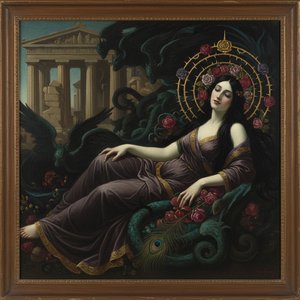
In the delicate interplay of light and shadow within The Spring, one finds more than a mere depiction of a season; one encounters a profound visual poem. Completed in 1902, this masterpiece by the German Symbolist master Franz Ritter von Stuck serves as an immersive gateway into the soul of renewal. The painting presents a young woman, poised with a grace that feels both ancient and immediate, bathed in an ethereal glow that seems to emanate from within the canvas itself. As she rests amidst the skeletal beauty of bare branches, her presence acts as a catalyst for life, signaling the transition from winter's slumber to the vibrant awakening of the natural world. For the discerning collector or interior designer, this work offers a rare emotional depth, bringing a sense of serene vitality and timeless elegance to any curated space.
The composition is a masterful study in Symbolist intrigue and Impressionistic sensitivity. Stuck utilizes a shallow perspective that draws the viewer into an intimate encounter with the subject, focusing our gaze on the soft contours of her face and the lush texture of her flowing hair. The organic lines of the surrounding flora mirror the natural curves of the female form, creating a rhythmic harmony that suggests an unbreakable bond between humanity and the earth. While the painting is anchored in the symbolic traditions of the late 19th century, Stuck’s technique breathes with a modern vitality; his use of impasto—the thick, tactile application of oil paint—builds a rich surface that captures the fleeting nuances of light. This textural depth ensures that the artwork remains dynamic, shifting in character as light hits the canvas from different angles.
Symbolism and the Language of Nature
Every element within The Spring is laden with intentional meaning, designed to evoke a sense of abundance and purity. The subject’s nudity is not merely an aesthetic choice but a profound symbol of vulnerability and an unadorned connection to the primordial world. This theme of innocence is further enriched by the presence of plump grapes held within her grasp, a classical motif representing fertility, plenty, and the cyclical nature of life. Against a backdrop of hazy azure skies and muted earth tones, these symbols resonate with a quiet power, inviting contemplation on the eternal cycles of growth and decay.
For those seeking to integrate fine art into a sophisticated interior, this piece provides a versatile emotional anchor. Its palette—a harmonious blend of cool blues, verdant greens, and warm browns—complements both contemporary minimalist settings and more opulent, classical decors. The painting does not merely occupy a wall; it transforms an environment, infusing it with a dreamlike atmosphere that encourages stillness and reflection. To possess a reproduction of such a significant work is to invite the spirit of the Belle Époque into the modern home, celebrating a moment in art history where myth, nature, and human emotion converged in perfect, luminous balance.
Otázky a odpovědi
Je dílo „The Spring“ od Franz von Stuck spíše světlé, nebo tmavé?
„The Spring“ má celkovou jasnost balanced a jeho luminanci je Gentle Luminance.
Kde mohu najít statistiky k dílu „The Spring“ od Franz von Stuck?
Statistiky k dílu „The Spring“ od Franz von Stuck naleznete na stránce Statistiky tohoto díla: měsíční návštěvnost díla, návštěvnost děl daného umělce a rozpis nedávných návštěvníků podle zemí a jazyků.
Pro koho je dílo "The Spring" vhodné jako dárek a k jakému účelu?
Dílo „The Spring“ od Franz von Stuck doporučujeme jako dárek pro Seasonal Gift, zejména pro Accent. Jako dárek můžete věnovat reprodukci tohoto uměleckého díla.
Biografie umělce
Franz Ritter von Stuck: The Last Prince of Munich’s Art
Franz Ritter von Stuck, a name inextricably linked to the evocative power of German Symbolism, emerged from the verdant landscapes of Bavaria in 1863, not as a forester's son destined for rural life, but as an artist with an undeniable and burning creative spirit. From his early years sketching caricatures and capturing fleeting moments of beauty, it became clear that young Franz was meant to pursue a different path – one that would ultimately lead him to become one of the most influential figures in the art world of his generation. His journey from a budding illustrator to a celebrated painter, sculptor, and architect is a testament to talent, innovation, and an unwavering commitment to artistic expression. Stuck wasn’t merely an artist; he was a cultural phenomenon, a “Prince of Art” as he became known during his lifetime, skillfully bridging the gap between the established traditions of 19th-century academic art and the burgeoning currents of modernism that were reshaping the artistic landscape.The Seeds of Symbolism: Early Influences and Artistic Beginnings
Franz’s early life in Tettenweis, a small village near Passau, provided a stark contrast to the vibrant artistic hub of Munich, where he eventually found his calling. Initially destined for a life following in his father's footsteps as a forester, young Franz quickly demonstrated an extraordinary aptitude for drawing and caricature – skills honed through countless hours spent capturing the nuances of human expression. This early talent led him to Munich in 1878, first to the School of Applied Arts and then to the prestigious Academy of Fine Arts from 1882-1884. It was during his time at the Academy that he encountered the profound influence of Arnold Böcklin’s hauntingly beautiful mythological scenes – images steeped in mystery, symbolism, and a melancholic beauty that deeply resonated with young Franz's own artistic sensibilities. Böcklin’s work served as a crucial catalyst, shaping his future artistic vision and inspiring him to explore themes of mythology, the subconscious, and the interplay between reality and dream. Furthermore, Stuck’s early exposure to the works of Pre-Raphaelites and Gustave Moreau – artists known for their rich symbolism, intricate detail, and evocative use of color – further broadened his artistic horizons and contributed to the development of his distinctive style.The Rise to Prominence: The Munich Secession and Artistic Rebellion
Stuck’s ascent to prominence was remarkably swift and dramatic. His breakthrough arrived in 1889 with *The Guardian of Paradise*, an arresting painting exhibited at the Munich Glass Palace, instantly captivating critics and securing him a gold medal. This wasn't simply a display of technical skill; it announced a new artistic voice – one that blended classical precision with mythological subject matter and an undercurrent of Symbolist mystery. Recognizing the need for greater creative freedom and a rejection of the conservative constraints imposed by established art institutions, Stuck played a pivotal role in co-founding the Munich Secession in 1892 alongside like-minded artists. This bold act of artistic rebellion marked a turning point in German art history, challenging traditional norms and paving the way for new forms of expression. The Secession’s influence extended beyond painting; it also encompassed sculpture, architecture, and design, reflecting Stuck's broader vision as an artist deeply engaged with all aspects of culture. The year 1893 saw him further cement his reputation with *The Sin*, a powerfully dramatic work that explored themes of desire, temptation, and moral ambiguity – a subject matter that would become a recurring motif in his oeuvre.A World of Desire and Myth: Recurring Themes and Artistic Style
The artistic universe of Franz von Stuck is profoundly shaped by recurring motifs and symbolic imagery. Mythology remained a constant source of inspiration, drawing from the rich narratives of Greek, Roman, and biblical traditions – stories he reimagined with a distinctly personal flair and imbued with his own unique symbolism. These weren’t mere retellings; they were explorations of the human condition filtered through the lens of ancient myths, revealing timeless truths about love, loss, beauty, and mortality. Equally prominent was his fascination with sensuality and the *femme fatale* – a recurring figure in his paintings who embodied both allure and danger. His depictions of Salome, for example, were not simply portraits of beautiful women; they delved into the psychological complexities of female power, desire, and its potential consequences. Underlying all these themes was a deep reverence for classical art, evident in his meticulous technique, anatomical accuracy, and masterful use of composition – qualities inherited from Böcklin and refined through years of study. Stuck’s style can be characterized as a potent blend of classical precision, Symbolist mysticism, and a distinctly sensual approach to the human form.Legacy and Recognition: A Teacher, a Knight, and an Enduring Influence
In 1895, Franz von Stuck took on another crucial role – that of teacher at the Munich Academy, where he mentored generations of aspiring artists. He instilled in his students not only technical skills but also a spirit of creative independence and a willingness to challenge conventional norms. Among those who benefited from his guidance were luminaries such as Paul Klee, Hans Purrmann, and Josef Albers – demonstrating the breadth of his influence on the development of modern art. His dedication to art was further recognized in 1905 when he was ennobled, becoming “Ritter von Stuck” – a testament to his growing prestige and contribution to German culture. He continued to receive accolades throughout Europe during the remainder of his life, solidifying his position as one of the leading artists of his time. Franz Ritter von Stuck died on August 30, 1928, in Munich; his funeral address fittingly described him as “the last prince of art of Munich’s great days.” His Villa Stuck in Munich remains a poignant reminder of his life and work, offering invaluable insights into his artistic vision and the cultural milieu of late 19th and early 20th-century Germany. His legacy endures not only through his paintings and sculptures but also through the countless artists he inspired, ensuring that the spirit of Franz von Stuck continues to resonate within the art world today.Major Works
- The Spring (1886): A vibrant depiction showcasing his early mastery of color and composition.
- Dissonance (1893): An unsettling portrayal embodying emotional turmoil through a woman playing the violin.
- Salome (various versions): Perhaps his most iconic work, depicting the biblical story with striking sensuality and psychological depth.
- Athlete (1892): A powerful sculpture demonstrating his skill in three-dimensional form.

Franz von Stuck
1863 - 1928 , Německo
Rychlé informace o umělci
- Artistic Movement Or Style: Symbolismus, Art Nouveau
- Artists Or Movements Influenced By This Artist:
- Klee
- Kandinský
- Artists Who Influenced This Artist:
- Böcklin
- Pre-Raphaeliti
- Date Of Birth: 23. února 1863
- Date Of Death: 30. srpna 1928
- Full Name: Franz Ritter von Stuck
- Nationality: Německý
- Notable Artworks:
- Guardian Paradise
- Salome
- Syn
- Place Of Birth: Tettenweis, Německo
Související články

Oil on Canvas: A Historical & Technical Exploration of a Timeless Artistic Medium
Explore the rich history & enduring techniques of oil painting on canvas. Discover the science behind its longevity, conservation practices, and contemporary relevance. Expert insights for art enthusiasts.
Franz von Stuck: Symbolism, Decadence & the Pursuit of Ideal Beauty
Explore the captivating world of Franz von Stuck, a leading Symbolist painter. Discover his mythological masterpieces, decadent themes, & investment potential. Expert analysis for discerning collectors.

The Enduring Legacy of Oil on Canvas: Technique, History & Aesthetic Impact
Explore the rich history & techniques of oil painting – from Renaissance masters to Impressionism. Discover pigments, layering methods, and why this timeless medium endures. Expert insights for artists & art enthusiasts.

The Enduring Power of Painting: A Historical & Contemporary Exploration of Form and Emotion
Explore the rich history & enduring techniques of oil painting with OriginalUniqueArt. Discover masterpieces, learn about art collecting, and find authentic handmade reproductions crafted by skilled artists.

The Enduring Allure of the Nude: A Historical & Artistic Exploration of the Human Form
Explore the captivating history of nude art! Discover iconic paintings & artists from classical to modern eras. Uncover symbolism, techniques & find museum-quality reproductions at OriginalUniqueArt.