Menu
Zobrazit v interiéru Zkusit v AR Přepnout na tiskové verze Přepnout na digitální verzi obrazu Odeslat
Podrobnosti Průvodce Přidat do oblíbených Stáhnout obrázek Podobné kousky Rentgenové snímky Slideshow Statistiky

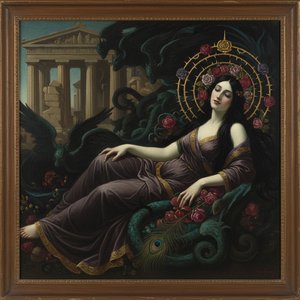
The Seesaw

Delve into the mesmerizing Symbolist masterpiece 'The Seesaw' by Franz Ritter von Stuck (1863-1928). Explore its evocative imagery and artistic influences at Villa Stuck & WikiArt Store.

Franz Ritter von Stuck byl německý symbolistický malíř a sochař známý svými dramatickými mytologickými obrazy, silnými sochami a klíčovou rolí v Mnichovské sekci. Jeho dílo kombinuje klasickou preciznost s tajemným a vášnivým světem.

Ručně malovaná olejová reprodukce

Ručně malované olejné plátno v libovolném rozměru i s rámem, vyrobené našimi umělci na zakázku. ( Přepnout na tiskové verze Přepnout na digitální verzi obrazu)

P118B $10
P118H $10
P118W $10
P438Z $10
P508JH $12
P508YH $12
P805H $10
P805Z $10
P919BZ $10
P919G $10
P919XJ $10
P959ZH $10
P968JZ $12
W106C $8
W218G $10
W218JH $8
W218Y $10
W307PJ $10
W316G $10
W316PJ $8
W316Y $10
W398PJ $8
W4111J $10
W500HY $15
W500JH $15
W692G $12
W849H $8
W940BG $15
W953PJ $8

Standardní velikost
na zakázku
CM
INCH

Vyberte si z našich přednastavených velikostí, které odpovídají původním proporcím díla.

šířka
výška

Můžete zadat vlastní rozměry pro konkrétní rám nebo prostor. Pokud se vámi vybraná velikost neshoduje s proporcemi původního obrazu, dílo buď ořízneme, nebo jej doplníme ručně malovanými prvky. Před zahájením výroby vám bude zaslán digitální náhled ke schválení.
Upozorňujeme, že náhled na obrazovce neodpovídá skutečnému ořezu ani rozšíření. Pouze digitální náhled přesně zobrazí finální kompozici.
Ačkoliv je možné zvolit vlastní velikost, pro zachování původních proporcí doporučujeme vybrat rozměr z předdefinovaného seznamu.

Příklady možných změn: nahrazení obličeje vlastní fotografií; přidání domácího mazlíčka (např. nahrazení kočky psem); vložení skrytého vzkazu do pozadí; změna krajiny nebo prvků v pozadí.
Po přijetí objednávky vám tým OriginalUniqueArt.com zašle e-mail s pokyny a poskytne náhledovou verzi.

Celosvětová doprava () za 3–4 týdny namísto standardních 5 týdnů. (20 září). Bez kompromisů v kvalitě.

why_choose_icon
Zdarma celosvětová expresní doprava
why_choose_icon
Vysoce kvalitní lněné plátno
why_choose_icon
Úplné pojištění přepravy
why_choose_icon
Záruka vrácení celního poplatku
why_choose_icon
Záruka věrného barevného shodu
why_choose_icon
100dení lhůta pro vrácení zboží (pouze při vadách výroby)
why_choose_icon
100% garance vrácení peněz
why_choose_icon
Sleva při více objednávkách

Celková cena

$ 300

reproduction

The Seesaw

Technika provedení

Velikost reprodukce

-

Celková cena

$ 300

Rychlé informace

  • Artistic style: Art Nouveau
  • Title: The Seesaw
  • Year: 1898
  • Location: Museum Villa Stuck, Munich
  • Influences: Arnold Böcklin
  • Subject or theme: Mythology; Balance
  • Artist: Franz Ritter von Stuck

Kvíz o umění

U každé otázky je pouze jedna správná odpověď.

Otázka 1:
What artistic movement is Franz Von Stuck’s ‘The Seesaw’ primarily associated with?
Otázka 2:
Where is ‘The Seesaw’ currently housed?
Otázka 3:
What prominent artist influenced Franz Von Stuck's style and vision?
Otázka 4:
The painting utilizes a predominantly black and white color scheme. What is the purpose of this color choice?
Otázka 5:
What symbolic element is present in the image – specifically, what birds are depicted?

A Symphony of Symbolism and Delicate Technique

In the quiet, evocative realm of German Symbolism, few works capture the delicate tension between stability and uncertainty as poignantly as Franz Ritter von Stuck’s “The Seesaw.” Completed in 1898, this masterpiece transcends a simple depiction of two figures to become a profound exploration of psychological equilibrium. As one gazes upon the canvas, the viewer is immediately drawn into a world where the physical act of play is imbued with a heavy, almost melancholic significance. The painting serves as a cornerstone of an era that sought to move beyond mere representation, instead using the canvas to illuminate the hidden, often turbulent truths of the human experience.

The composition is masterfully asymmetrical, a deliberate choice by Stuck to mirror the precarious nature of the subject itself. One woman remains firmly planted upon the earth, her gaze directed upward in a moment of quiet contemplation, while her companion leans precariously against the central pole, seeking balance amidst movement. This structural imbalance creates a palpable sense of tension, suggesting a struggle for stability within an ever-shifting reality. The presence of nature—a solitary tree and the subtle inclusion of birds in the background—adds a layer of atmospheric depth, grounding this symbolic drama within a dreamlike, mythic landscape.

The Mastery of Color and Light

Stuck’s technical prowess is most evident in his sophisticated use of color and light to direct the viewer's emotional response. The palette is dominated by muted, monochromatic shades of grey and brown, creating an atmosphere that feels both timeless and slightly somber. However, this subdued environment is brilliantly interrupted by a singular, striking element: the splash of crimson on the seated woman’s dress. This bold contrast does more than just catch the eye; it serves as a focal point for the painting's emotional intensity, highlighting her vulnerability and adding a pulse of life to an otherwise hushed scene.

The artist employed a technique characterized by painstaking, delicate brushwork, a hallmark of the Symbolist movement. Every stroke contributes to a sense of atmospheric depth, where the boundaries between the figures and their environment feel soft yet intentional. For the discerning collector or interior designer, this interplay of light and shadow offers an incredible versatility. The painting possesses a quiet authority that can anchor a room, providing a sophisticated focal point that invites long periods of reflection and conversation.

A Timeless Legacy for the Modern Collector

To possess a reproduction of “The Seesaw” is to bring a piece of art history into the contemporary home. Franz Ritter von Stuck, often referred to as the “Prince of Art,” was a figure who bridged the gap between the rigid academic traditions of the 19th century and the burgeoning energy of modernism. His ability to blend classical precision with deep, psychological mystery makes his work eternally relevant. This painting does not merely decorate a space; it transforms it, offering an intellectual and emotional depth that resonates with anyone drawn to the beauty of the unseen.

Whether you are seeking to inspire guests in a curated gallery setting or looking for a soulful addition to a private study, this work stands as a testament to the power of Symbolism. It is a piece that rewards repeated viewing, revealing new layers of meaning with every encounter—a true investment in the enduring legacy of German fine art.


Biografie umělce

Franz Ritter von Stuck: The Last Prince of Munich’s Art

Franz Ritter von Stuck, a name inextricably linked to the evocative power of German Symbolism, emerged from the verdant landscapes of Bavaria in 1863, not as a forester's son destined for rural life, but as an artist with an undeniable and burning creative spirit. From his early years sketching caricatures and capturing fleeting moments of beauty, it became clear that young Franz was meant to pursue a different path – one that would ultimately lead him to become one of the most influential figures in the art world of his generation. His journey from a budding illustrator to a celebrated painter, sculptor, and architect is a testament to talent, innovation, and an unwavering commitment to artistic expression. Stuck wasn’t merely an artist; he was a cultural phenomenon, a “Prince of Art” as he became known during his lifetime, skillfully bridging the gap between the established traditions of 19th-century academic art and the burgeoning currents of modernism that were reshaping the artistic landscape.

The Seeds of Symbolism: Early Influences and Artistic Beginnings

Franz’s early life in Tettenweis, a small village near Passau, provided a stark contrast to the vibrant artistic hub of Munich, where he eventually found his calling. Initially destined for a life following in his father's footsteps as a forester, young Franz quickly demonstrated an extraordinary aptitude for drawing and caricature – skills honed through countless hours spent capturing the nuances of human expression. This early talent led him to Munich in 1878, first to the School of Applied Arts and then to the prestigious Academy of Fine Arts from 1882-1884. It was during his time at the Academy that he encountered the profound influence of Arnold Böcklin’s hauntingly beautiful mythological scenes – images steeped in mystery, symbolism, and a melancholic beauty that deeply resonated with young Franz's own artistic sensibilities. Böcklin’s work served as a crucial catalyst, shaping his future artistic vision and inspiring him to explore themes of mythology, the subconscious, and the interplay between reality and dream. Furthermore, Stuck’s early exposure to the works of Pre-Raphaelites and Gustave Moreau – artists known for their rich symbolism, intricate detail, and evocative use of color – further broadened his artistic horizons and contributed to the development of his distinctive style.

The Rise to Prominence: The Munich Secession and Artistic Rebellion

Stuck’s ascent to prominence was remarkably swift and dramatic. His breakthrough arrived in 1889 with *The Guardian of Paradise*, an arresting painting exhibited at the Munich Glass Palace, instantly captivating critics and securing him a gold medal. This wasn't simply a display of technical skill; it announced a new artistic voice – one that blended classical precision with mythological subject matter and an undercurrent of Symbolist mystery. Recognizing the need for greater creative freedom and a rejection of the conservative constraints imposed by established art institutions, Stuck played a pivotal role in co-founding the Munich Secession in 1892 alongside like-minded artists. This bold act of artistic rebellion marked a turning point in German art history, challenging traditional norms and paving the way for new forms of expression. The Secession’s influence extended beyond painting; it also encompassed sculpture, architecture, and design, reflecting Stuck's broader vision as an artist deeply engaged with all aspects of culture. The year 1893 saw him further cement his reputation with *The Sin*, a powerfully dramatic work that explored themes of desire, temptation, and moral ambiguity – a subject matter that would become a recurring motif in his oeuvre.

A World of Desire and Myth: Recurring Themes and Artistic Style

The artistic universe of Franz von Stuck is profoundly shaped by recurring motifs and symbolic imagery. Mythology remained a constant source of inspiration, drawing from the rich narratives of Greek, Roman, and biblical traditions – stories he reimagined with a distinctly personal flair and imbued with his own unique symbolism. These weren’t mere retellings; they were explorations of the human condition filtered through the lens of ancient myths, revealing timeless truths about love, loss, beauty, and mortality. Equally prominent was his fascination with sensuality and the *femme fatale* – a recurring figure in his paintings who embodied both allure and danger. His depictions of Salome, for example, were not simply portraits of beautiful women; they delved into the psychological complexities of female power, desire, and its potential consequences. Underlying all these themes was a deep reverence for classical art, evident in his meticulous technique, anatomical accuracy, and masterful use of composition – qualities inherited from Böcklin and refined through years of study. Stuck’s style can be characterized as a potent blend of classical precision, Symbolist mysticism, and a distinctly sensual approach to the human form.

Legacy and Recognition: A Teacher, a Knight, and an Enduring Influence

In 1895, Franz von Stuck took on another crucial role – that of teacher at the Munich Academy, where he mentored generations of aspiring artists. He instilled in his students not only technical skills but also a spirit of creative independence and a willingness to challenge conventional norms. Among those who benefited from his guidance were luminaries such as Paul Klee, Hans Purrmann, and Josef Albers – demonstrating the breadth of his influence on the development of modern art. His dedication to art was further recognized in 1905 when he was ennobled, becoming “Ritter von Stuck” – a testament to his growing prestige and contribution to German culture. He continued to receive accolades throughout Europe during the remainder of his life, solidifying his position as one of the leading artists of his time. Franz Ritter von Stuck died on August 30, 1928, in Munich; his funeral address fittingly described him as “the last prince of art of Munich’s great days.” His Villa Stuck in Munich remains a poignant reminder of his life and work, offering invaluable insights into his artistic vision and the cultural milieu of late 19th and early 20th-century Germany. His legacy endures not only through his paintings and sculptures but also through the countless artists he inspired, ensuring that the spirit of Franz von Stuck continues to resonate within the art world today.

Major Works

  • The Spring (1886): A vibrant depiction showcasing his early mastery of color and composition.
  • Dissonance (1893): An unsettling portrayal embodying emotional turmoil through a woman playing the violin.
  • Salome (various versions): Perhaps his most iconic work, depicting the biblical story with striking sensuality and psychological depth.
  • Athlete (1892): A powerful sculpture demonstrating his skill in three-dimensional form.
Franz von Stuck

Franz von Stuck

1863 - 1928 , Německo

Rychlé informace

  • Artistic Movement Or Style: Symbolismus, Art Nouveau
  • Artists Or Movements Influenced By This Artist:
    • Klee
    • Kandinský
  • Artists Who Influenced This Artist:
    • Böcklin
    • Pre-Raphaeliti
  • Date Of Birth: 23. února 1863
  • Date Of Death: 30. srpna 1928
  • Full Name: Franz Ritter von Stuck
  • Nationality: Německý
  • Notable Artworks:
    • Guardian Paradise
    • Salome
    • Syn
  • Place Of Birth: Tettenweis, Německo