

 Zobrazit v interiéru
 Odeslat
 Sdílet
 Podrobnosti
 Průvodce

 Stáhnout obrázek
 Podobné kousky
 Rentgenové snímky
 Slideshow
 Statistiky
Isabelle (Isabeau) d


 Přečíst si více
Giclée / Umělecký tisk
Giclée nebo plátěný tisk muzeální kvality s rychlou výrobou a širokou nabídkou povrchových úprav. ( Objednat ručně malovanou reprodukci Přepnout na digitální verzi obrazu)




P118B Kč10

P118H Kč10

P118W Kč10

P438Z Kč10

P508JH Kč12

P508YH Kč12

P805H Kč10

P805Z Kč10

P919BZ Kč10

P919G Kč10

P919XJ Kč10

P959ZH Kč10

P968JZ Kč12

W106C Kč8

W218G Kč10

W218JH Kč8

W218Y Kč10

W307PJ Kč10

W316G Kč10

W316PJ Kč8

W316Y Kč10

W398PJ Kč8

W4111J Kč10

W500HY Kč15

W500JH Kč15

W692G Kč12

W849H Kč8

W940BG Kč15

W953PJ Kč8




Vyberte si z našich přednastavených velikostí, které odpovídají původním proporcím díla.

Type the width and the height you need, to fit your frame or your wall. A print can only be cut, never made bigger than the picture, so a size with a different shape loses a part of the image. We send you a digital mockup to approve before we print anything. The picture shown on this page does not show the real cut — only the mockup does.
Celosvětové doručení () do 2 týdnů namísto standardních 4/5 týdnů. (14 říjen)

Zdarma celosvětová expresní doprava

Vysoce kvalitní lněné plátno

Úplné pojištění přepravy

Záruka vrácení celního poplatku

Záruka věrného barevného shodu

100dení lhůta pro vrácení zboží (pouze při vadách výroby)

100% garance vrácení peněz

Sleva při více objednávkách
 Skleněná varianta je dostupná pouze u rozměrů menších než 110 cm

Isabelle (Isabeau) d
Giclée / Umělecký tisk
Velikost reprodukce
-


Celková cena
Kč 1685
The Enigmatic Beauty: Isabelle (Isabeau) d’Hauteville
François Clouet’s “Isabelle (Isabeau) d’Hauteville” is not merely a portrait; it's a carefully constructed window into the world of 16th-century French courtly life. Painted in 1547, this exquisite depiction captures the essence of Isabelle, Countess of Beauvais, a woman whose life was intertwined with intrigue, power, and ultimately, tragedy. The painting immediately draws the eye to her serene countenance – a subtle blend of intelligence, melancholy, and quiet dignity. Her long, flowing hair, rendered in delicate shades of brown and gold, frames a face marked by both youthful beauty and an underlying sense of experience. The pearl necklace, a symbol of wealth and status, rests gracefully around her neck, while the simple white dress speaks to her noble birth and the restrained elegance expected of women within the French aristocracy.
The Master's Hand: Technique and Style
Clouet was a master of observation, renowned for his ability to capture the subtle nuances of human expression. This portrait exemplifies his meticulous approach – every detail, from the delicate folds of the fabric to the precise rendering of her eyes, is executed with remarkable precision. The artist employs a technique known as ‘pointillé,’ utilizing tiny, closely spaced dots of black chalk and red chalk to build up tones and textures. This method creates an astonishing level of detail and luminosity, particularly evident in the shimmering effect of the pearls and the soft sheen of her hair. Clouet’s style is rooted in the Flemish tradition – a preference for naturalism and realistic representation—but he infuses it with a distinctly Italianate grace, reflecting the influence of Renaissance art that was flourishing at the time. The composition itself is carefully balanced, drawing the viewer's eye to Isabelle’s face while subtly suggesting her position within the broader context of French courtly society.
- Medium: Black chalk and red chalk on paper
- Size: 34 x 23.8 cm (approximately)
- Style: Renaissance portraiture, blending Flemish naturalism with Italianate grace
A Royal Life in Miniature
Isabelle d’Hauteville's life was a complex tapestry woven with threads of political maneuvering and personal drama. Born into the powerful House of Bavaria, she became Queen of France through her marriage to Charles VI, a union that significantly strengthened the French monarchy. However, Charles’s descent into mental illness created a power vacuum and plunged the court into turmoil. Isabelle skillfully navigated this turbulent period, acting as regent during his periods of incapacity and aligning herself with various factions—a strategy that ultimately led to her exile from Paris and a dramatic end. The portrait itself offers a poignant glimpse into this era, capturing not only Isabelle’s beauty but also hinting at the burdens she carried and the challenges she faced.
Further research reveals that the painting is based on drawings by Clouet, which were then copied in the 18th century. The original drawings are now found in the Musée Conde, Chantilly, and the British Museum. The portrait was acquired by Pierpont Morgan in 1909 and later donated to the Morgan Library & Museum.
Symbolism and Emotional Resonance
Beyond its technical brilliance, “Isabelle (Isabeau) d’Hauteville)” is rich in symbolic meaning. The pearl necklace represents her status and wealth, while her gaze—direct yet contemplative—suggests a quiet strength and resilience. The subdued colors and the carefully controlled composition evoke a sense of melancholy and introspection, reflecting the tragic circumstances of her life. This portrait isn't simply a likeness; it’s an invitation to contemplate the complexities of power, love, and loss within the gilded confines of 16th-century France. It remains a testament to François Clouet’s artistic skill and his ability to capture the essence of human experience.
Otázky a odpovědi
Jak silný je kontrast v díle „Isabelle (Isabeau) d“ od Francouz Clouet?
Úroveň kontrastu díla „Isabelle (Isabeau) d“ od Francouz Clouet je Serene.
O jaký typ díla se jedná u „Isabelle (Isabeau) d"]?
„Isabelle (Isabeau) d“ je dílo typu WallArt.
K kterému umělci je dílo "Isabelle (Isabeau) d" připisováno?
Autorem díla „Isabelle (Isabeau) d“ je Francouz Clouet. Práce je v katalogu uvedena pod jménem Francouz Clouet.
Biografie umělce
A Legacy of Likeness: The World of François Clouet
François Clouet, a name synonymous with the refined portraiture of the French Renaissance, emerged from a lineage steeped in artistic skill and courtly favor. Born around 1510 in Tours, France, his life unfolded against a backdrop of evolving artistic sensibilities and the opulent world of the Valois monarchy. He wasn’t merely a painter; he was a chronicler of an era, capturing the essence of kings, queens, and courtiers with a meticulousness that continues to captivate viewers today. The shadow of his father, Jean Clouet, loomed large – both artists shared not only a profession but also the familiar nickname ‘Janet,’ leading to occasional confusion in attributing their works across generations. Yet, François carved his own distinct path, blending Flemish naturalism with an emerging Italianate grace, and establishing himself as one of France’s most celebrated portraitists.Inheriting a Tradition: Early Life and Artistic Formation
The early years of François Clouet remain somewhat veiled in historical obscurity, but his artistic trajectory was undeniably shaped by the legacy of his father. Jean Clouet, originating from the Southern Netherlands, brought with him to the French court the meticulous detail and realistic approach characteristic of Flemish painting. This foundation formed the bedrock of François’s training. A pivotal moment arrived in 1541 when François inherited his father's estate, formally stepping into his artistic inheritance and assuming the responsibilities that came with it. This wasn’t simply a transfer of property; it was an assumption of a role within the very fabric of the French court. The Clouet family also enjoyed a unique connection to the Italian Renaissance through Jean’s time in Amboise, exposing François to the burgeoning ideals and innovative techniques emanating from Italy – a subtle but significant influence that would later manifest in his work. He absorbed not just technique, but an understanding of how art could serve as both documentation and celebration of power and status. He diligently studied the works of Leonardo da Vinci and other masters of Florentine painting, absorbing their principles of observation and anatomical accuracy.The Art of Revelation: Style and Major Works
François Clouet’s oeuvre is defined by a remarkable precision and elegance. His portraits weren’t merely likenesses; they were insightful studies of character, capturing not only physical features but also the personality and social standing of his subjects. He possessed an extraordinary ability to convey royal authority and sophistication, as evidenced in several notable depictions of Francis I, examples of which reside in prestigious collections like the Uffizi Gallery and the Louvre Museum. Beyond Francis I, Clouet’s brush immortalized other key figures of the era. He likely painted portraits of Catherine de' Medici at Versailles, contributing to a visual record of her influential reign. Perhaps one of his most celebrated achievements is the chalk drawing of Mary, Queen of Scots, held in the Bibliothèque nationale – a work that showcases his mastery of capturing delicate features and conveying emotional depth with astonishing subtlety. Other notable works include portraits of Elizabeth of Austria (Louvre), Marguerite of France (Chantilly), and Charles IX (Château de Chantilly).- Elaborate Detail: A meticulous attention to detail permeates his work, evident in the intricate rendering of clothing, jewelry, and facial features – every element contributing to a sense of realism and opulence.
- Accurate Drawing: Clouet’s portraits are grounded in precise anatomical rendering and skillful use of line, demonstrating a mastery of draftsmanship that underpinned his artistic vision.
- Exquisite Completeness: His compositions convey a sense of wholeness and personality, going beyond mere physical representation to capture the inner life of his subjects. He didn’t just paint faces; he painted individuals.
A Defining Aesthetic: Characteristics of Clouet’s Art
Several hallmarks define François Clouet's distinctive style. His paintings often possess a quiet dignity, a restrained elegance that reflects the refined sensibilities of the French court. The use of light and shadow – *chiaroscuro* – is subtle yet effective, adding depth and dimension to his portraits without resorting to dramatic contrasts. He skillfully blended Flemish naturalism with Italianate grace, creating an artistic idiom that was both grounded in observation and imbued with humanist ideals. This approach distinguished him from many of his contemporaries and cemented his reputation as one of the foremost portraitists of his time. ## A Lasting Impression: Historical Significance and Legacy François Clouet’s contributions to French Renaissance art are profound. He played a crucial role in establishing portraiture as a prominent genre in France, elevating the status of the artist and providing invaluable visual records of the royal court. He bridged the gap between medieval artistic traditions and the emerging Renaissance ideals, incorporating naturalism and humanistic principles into his work. As a court painter for multiple French monarchs – Francis I, Henry II, Francis II, and Charles IX – he documented the lives and appearances of key figures in French history, creating a visual archive that continues to inform our understanding of this period. His meticulous style and attention to detail profoundly influenced subsequent generations of French portraitists, solidifying his place as a pivotal figure in the development of French art. He died on December 22, 1572, shortly after the tumultuous St. Bartholomew's Day Massacre – a poignant end for an artist who had dedicated his life to immortalizing the world around him.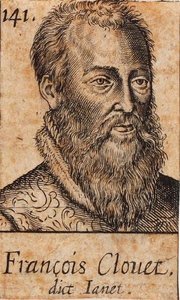
Francouz Clouet
1510 - 1572 , Francie
Rychlé informace
- Artistic Movement Or Style: Renárové portréty
- Artists Or Movements Influenced By This Artist: ['Francouzští malíři']
- Artists Who Influenced This Artist:
- Jean Clouet
- Leonardo da Vinci
- Date Of Birth: c. 1510
- Date Of Death: 1572
- Full Name: François Clouet
- Nationality: Francouzský
- Notable Artworks:
- Portrét Františka I.
- Mary, královna Švýcarská
- Place Of Birth: Tours, France
Související články
Top 25 uměleckých děl Musée d'Orsay: Impresionismus a mistři moderny | OriginalUniqueArt.com
Prozkoumejte 25 ikonických uměleckých děl Musée d'Orsay! Objevte příběhy Monetových leknínů, Van Goghovy slunečnic a dalších mistrů impresionismu. Reprodukce obrazů nejvyšší kvality na OriginalUniqueArt.com – inspirace pro váš interiér.
Charles-François Daubigny: Pioneering Atmospheric Light & Barbizon Realism
Explore the life & art of Charles-François Daubigny, a pivotal Barbizon School painter. Discover his innovative landscapes, mastery of light, and influence on Impressionism. High-quality reproductions available.
François Boucher: Rococo Master of Myth, Sensuality, and the French Court
Explore the captivating world of François Boucher, master of Rococo painting! Discover his iconic works, aristocratic patronage, and lasting influence on French art history. Learn more at OriginalUniqueArt.

François Flameng: Bridging Academic Tradition & Impressionistic Sensibility
Explore the captivating works of François Flameng, a celebrated French painter bridging academic tradition & Impressionistic sensibilities. Discover his portraits, landscapes, and poignant WWI art with insights from OriginalUniqueArt.

Jean-François Millet: Realism, Rural Life & the Poetic Depiction of Labor
Explore the life & work of Jean-François Millet, a founder of Realism. Discover his poignant depictions of rural France, iconic paintings like 'The Angelus,' and lasting influence on art history. Learn more at OriginalUniqueArt.

